
Helical Piles vs. Push Piers: Which Foundation Repair Method is Right for Your Home?
Foundation instability is a silent threat to residential integrity, affecting millions of homeowners across the United States. According to recent industry data, approximately 25% of all homes in the U.S. have experienced some form of foundation damage, with soil conditions being the primary catalyst for structural failure. When soil shifts, sinks, or expands, it creates uneven pressure on your home's base, leading to cracks, sticking doors, and potentially catastrophic collapse if left unaddressed. Choosing the correct stabilization method is not merely a cosmetic decision but a critical engineering choice that determines the long-term safety of your property. (About Walder Foundation Products)
Understanding Helical Piles and Their Mechanics
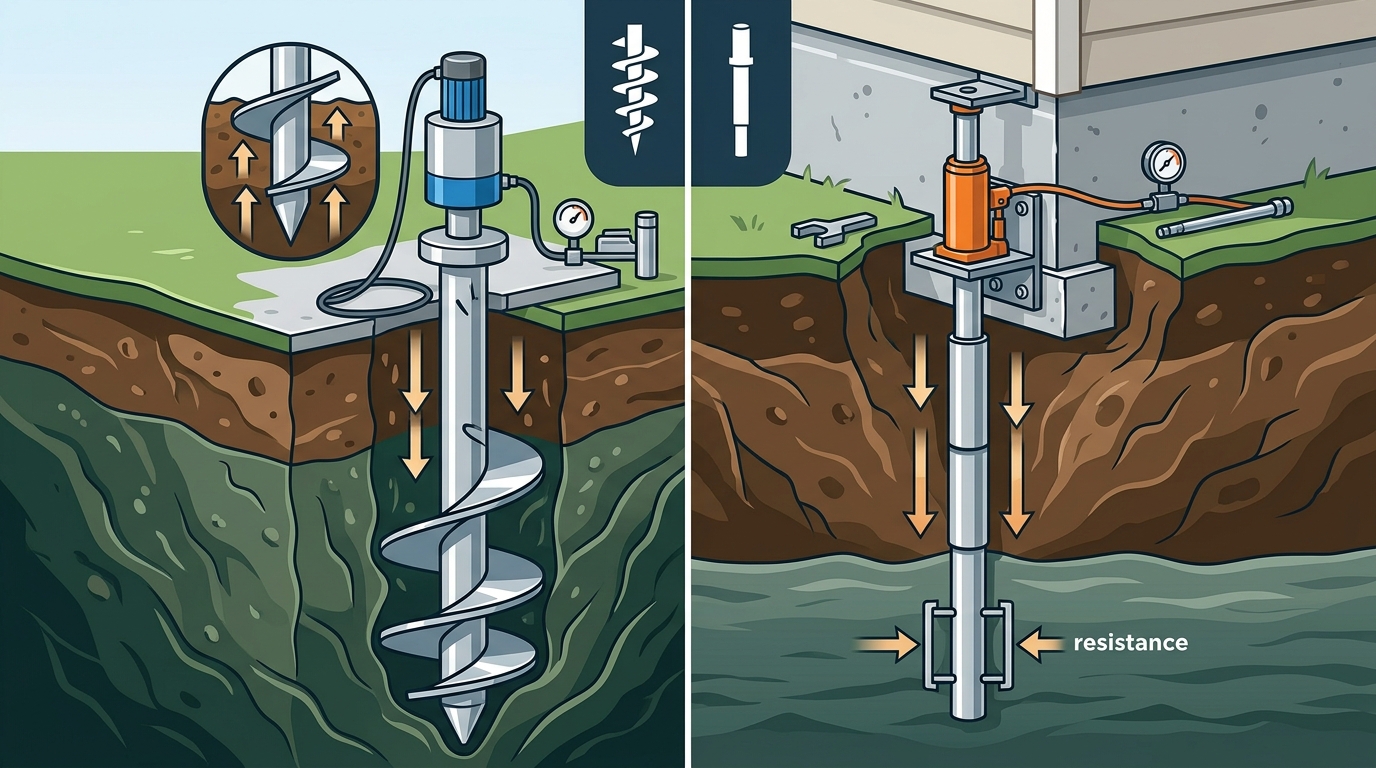
Helical piles, often referred to as helical piers or screw piles, are a specialized type of deep foundation support system. Helical piles are steel shafts with one or more helical bearing plates welded to them, designed to be screwed into the ground like a giant screw. This mechanical installation method allows the pile to bypass weak, unstable surface soils and reach deeper, more competent load-bearing strata.
The primary advantage of this design is its ability to provide immediate structural support. Because the helical plates act as anchors, the pile derives its holding power from the friction and bearing capacity of the surrounding soil. This makes them exceptionally effective in both compression and tension applications, meaning they can hold a home down against uplift or pull it up during settlement, depending on the engineering requirements.
At Walder Foundation Products, we supply high-grade helical pile components, including lead sections and extensions, that are engineered to meet rigorous structural standards. The modular nature of these systems allows contractors to extend the pile depth as needed during installation, ensuring that the foundation is anchored in soil with sufficient density to support the home's weight.
The Mechanics of Push Piers
Push piers, also known as resistance piers, operate on a different mechanical principle. Push piers are driven into the ground using the weight of the structure itself. A hydraulic push machine is attached to the home, and the pier is forced into the earth until it reaches a load-bearing stratum or bedrock.
This method relies heavily on the existing weight of the building to drive the pier deeper. While effective in many scenarios, this dependency can be a limitation. If the soil is too loose or lacks the necessary friction to support the driving force, or if the structure is too light to provide adequate resistance, push piers may not achieve the required depth or stability. Furthermore, the installation process requires significant access to the foundation perimeter, which can be challenging in tight urban lots or homes with extensive landscaping.
Key Advantages of Helical Piles Over Push Piers
While both systems serve to stabilize settling foundations, helical piles offer several distinct advantages that make them the preferred choice for many complex foundation repair projects.
1. Minimal Vibration and Noise
One of the most significant benefits of helical piles is the quiet, vibration-free installation process. Because they are screwed into the ground rather than hammered or pushed with high force, there is minimal disturbance to the surrounding soil and the home's structure. This is particularly advantageous for homes with existing cracks or delicate architectural features that could be damaged by the vibrations associated with driving push piers.
2. Immediate Load Capacity
Helical piles can be loaded immediately after installation. The torque used to screw the pile into the ground provides a direct correlation to its load-bearing capacity. Engineers can verify the installation depth and torque values in real-time, ensuring that the pile meets the design specifications before the home is lifted. Push piers, by contrast, often require verification of depth and bearing capacity through more complex testing methods, which can delay the lifting process.
3. Versatility in Soil Conditions
Helical piles perform exceptionally well in a wider range of soil types. They are effective in loose soils, fill dirt, and even areas with high water tables where push piers might struggle to gain purchase. The screwing action allows the helical plates to compact the surrounding soil, increasing its density and further enhancing the pile's stability. This makes them ideal for coastal regions or areas prone to flooding, where soil saturation is a common concern.
4. Environmental Impact
The installation of helical piles generates less spoil than other foundation methods. Since the soil is displaced rather than excavated, there is less need for large-scale digging and backfilling, which reduces the environmental footprint of the project. This is an increasingly important consideration for eco-conscious homeowners and sustainable construction practices.
Installation Process and Soil Compatibility
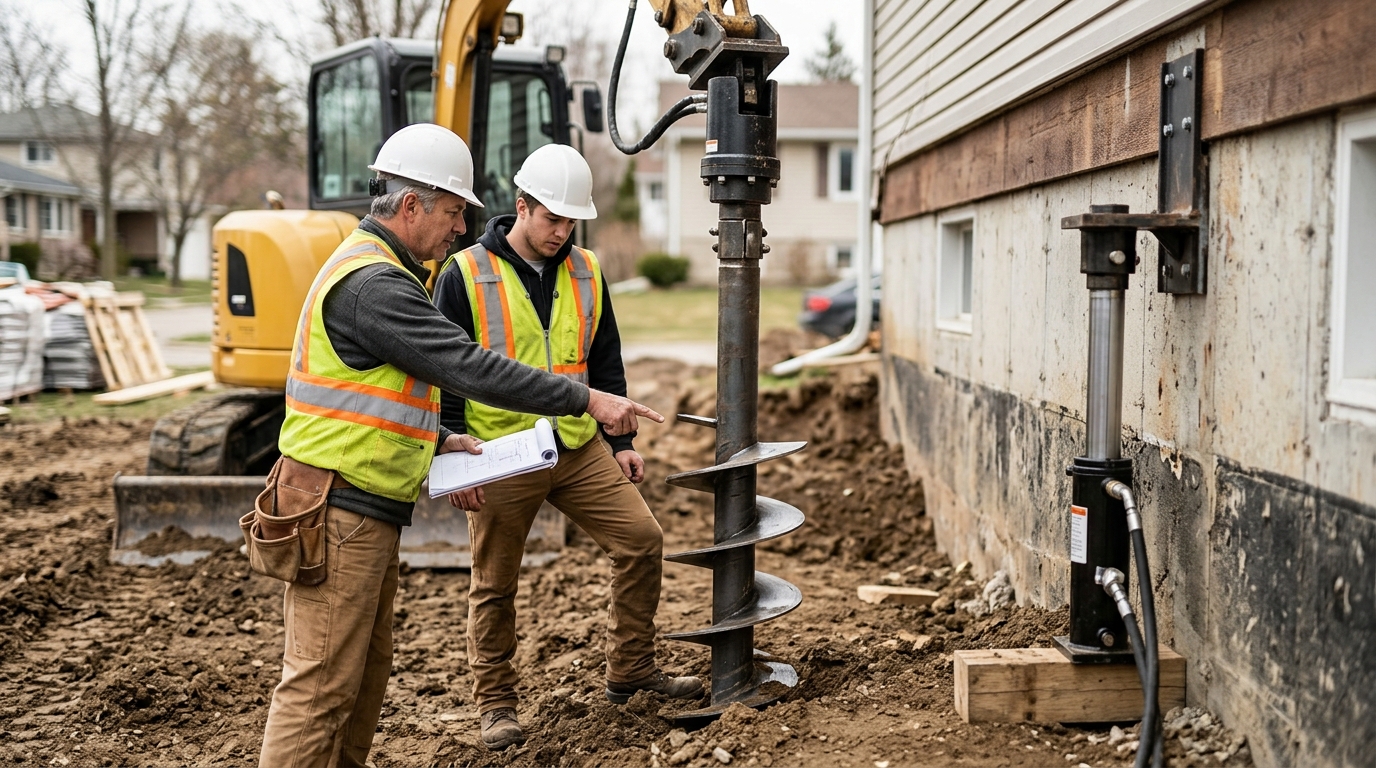
The installation of helical piles begins with the attachment of a hydraulic motor to an excavator or drill rig. The lead section is screwed into the ground until it reaches the designated torque value, indicating that it has reached the competent load-bearing layer. Extensions are then added as needed to achieve the required depth. This process is precise and controlled, allowing for adjustments in real-time.
In contrast, push pier installation involves excavating holes next to the foundation, attaching hydraulic jacks to the pier sections, and using the home's weight to drive them down. This method is less flexible in terms of soil conditions. If the soil is too soft, the pier may not penetrate deeply enough. If the soil is too hard, the hydraulic pressure required may exceed the capacity of the equipment or damage the foundation during the driving process.
For homeowners in Ashland, VA, and surrounding regions, soil composition varies significantly. Clay-heavy soils, common in Virginia, can expand and contract with moisture changes, putting immense pressure on foundations. Helical piles are particularly well-suited for these conditions because they bypass the active clay layer and anchor into stable soil below, preventing future movement.
Cost Analysis and Long-Term Value
When comparing costs, it is important to look beyond the initial price tag. Helical piles often have a higher upfront material cost due to the complexity of the steel components. However, the installation process is typically faster and requires less excavation, which can reduce labor costs. Additionally, the precision of helical pile installation reduces the risk of over-correction or under-correction, minimizing the need for future repairs.
Push piers may have a lower material cost, but the labor intensity and potential for extended installation times can offset these savings. Furthermore, in cases where push piers fail to reach adequate depth, additional equipment or alternative methods may be required, increasing the overall project cost.
Investing in the right foundation repair system is an investment in your home's longevity. According to industry reports, proper foundation repair can increase property value by up to 15% and prevent costly structural damage that can run into tens of thousands of dollars. Choosing the correct system from the start ensures that your investment is protected.
Comparative Summary
| Feature | Helical Piles | Push Piers |
|---|---|---|
| Installation Method | Screwed into ground | Hydraulically pushed |
| Vibration/Noise | Low | High |
| Soil Versatility | High (loose, wet, clay) | Moderate (requires friction) |
| Load Verification | Real-time torque check | Depth verification |
| Immediate Loading | Yes | Often requires curing/verification |
| Best For | Light structures, wet soils, tight access | Heavy structures, stable soils |
Key Takeaways
- Helical piles are screwed into the ground, providing immediate load capacity and minimal vibration during installation.
- Push piers rely on the home's weight to drive the pier into the earth, which can be a limitation in loose or light-soil conditions.
- Soil versatility is a major advantage for helical piles, making them suitable for wet, loose, or clay-heavy soils common in Virginia.
- Real-time verification is possible with helical piles through torque monitoring, ensuring engineering precision.
- Environmental impact is lower with helical piles due to reduced excavation and spoil generation.
- Long-term value is maximized by choosing the correct system for your specific soil and structural needs.
- Professional assessment is critical to determine which system is appropriate for your home's unique foundation issues.
Frequently Asked Questions
Can helical piles be used for new construction?
Yes, helical piles are increasingly used in new construction for both residential and commercial buildings. They provide a fast, reliable foundation solution that can be installed in various soil conditions without the need for extensive excavation.
Are helical piles more expensive than push piers?
While the material cost for helical piles may be higher, the overall project cost can be comparable or even lower due to reduced labor and excavation requirements. The long-term durability and precision often justify the initial investment.
How deep do helical piles need to be installed?
The depth of helical piles depends on the soil conditions and the load requirements of the structure. They are installed until they reach a competent load-bearing stratum, which is determined by torque values and engineering specifications.
Can helical piles be removed if needed?
Yes, one of the unique advantages of helical piles is that they can be unscrewed and removed if necessary. This makes them a sustainable option for temporary structures or sites where future excavation is planned.
What is the lifespan of a helical pile foundation?
Helical piles are typically made of galvanized or epoxy-coated steel, providing excellent corrosion resistance. With proper installation, they can last for decades, often outlasting the structure they support.
Do helical piles work in rocky soil?
Helical piles can be installed in rocky soil, but it may require specialized equipment or pre-drilling. The helical plates are designed to penetrate various soil types, but extreme rock conditions may present challenges.
How do I know if my home needs helical piles or push piers?
A professional foundation inspection is necessary to determine the best repair method. Factors such as soil type, foundation weight, and the extent of settlement will influence the recommendation.
Secure Your Home's Foundation Today
Foundation repair is not a DIY project. It requires expert knowledge, precise engineering, and high-quality materials to ensure your home remains safe and stable. Walder Foundation Products is your trusted source for premium foundation repair supplies, including helical piles, push piers, and all necessary accessories. Visit our product catalog to explore our comprehensive range of foundation solutions. For personalized assistance, contact our team at Walder Foundation Products to discuss your project needs and get expert guidance.