
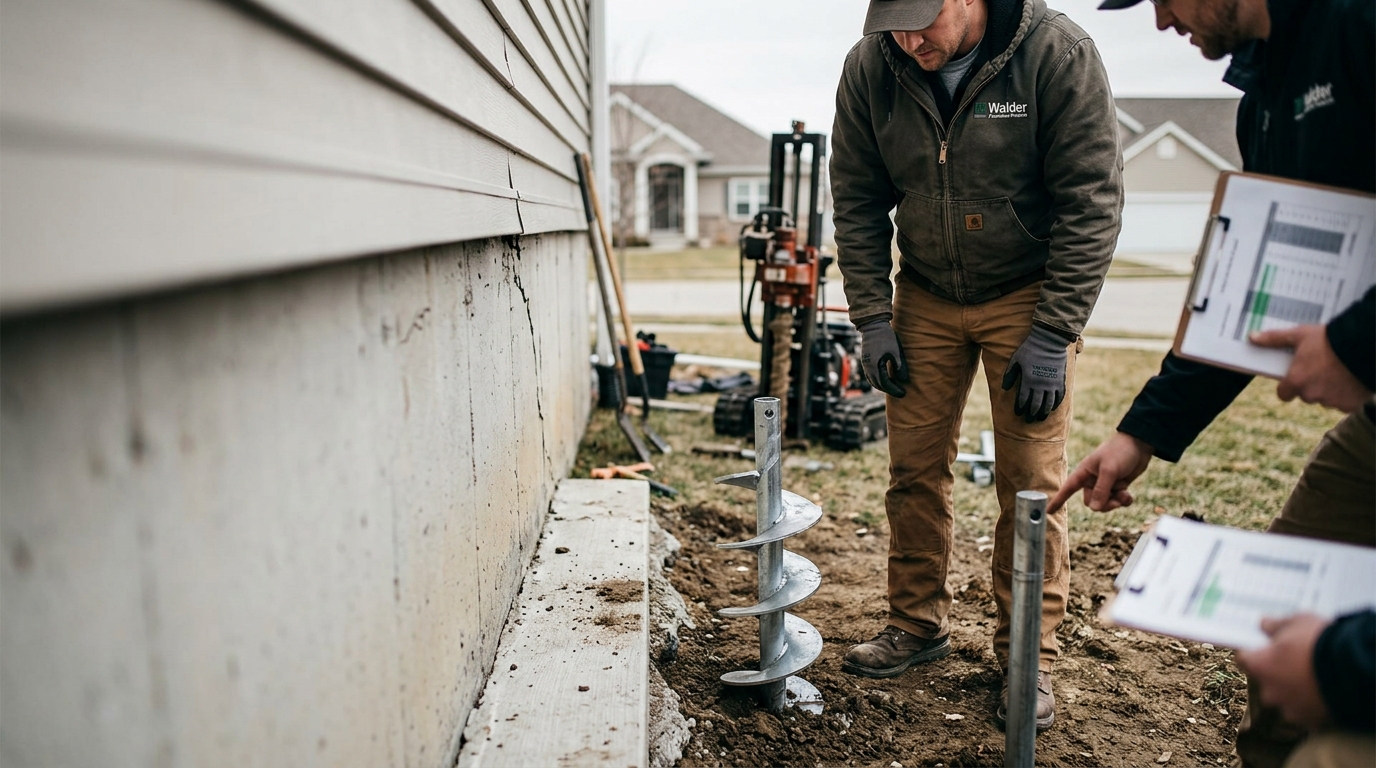
Helical Piles vs. Push Piers: Key Performance Criteria for Foundation Repair
Foundation instability affects millions of homes across the United States, with the National Association of Realtors noting that structural issues remain a primary concern for property buyers and sellers alike. When a home begins to settle, the choice between helical piles and push piers becomes critical for long-term stability. According to the International Association of Certified Home Inspectors, improper foundation repair can lead to secondary structural failures that cost homeowners significantly more than the initial stabilization work. Understanding the mechanical differences, load-bearing capacities, and installation requirements of each system is essential for contractors and homeowners seeking a durable solution.
Soil Analysis and Site Conditions
The most fundamental criterion for selecting between helical piles and push piers is the soil composition at the foundation site. Helical piles are essentially large screws that are mechanically torqued into the ground. This method allows them to bypass weak, unstable surface soils and anchor directly into dense, load-bearing strata. They are particularly effective in areas with high water tables or expansive clay soils that shift with moisture changes.
Push piers, also known as resistance piers, rely on the weight of the structure itself to drive steel pipes into the ground. This system requires a stable, dense soil layer at a shallower depth to provide the necessary resistance for installation. If the soil is too loose or rocky, push piers may fail to reach the required depth or may not achieve the necessary bearing capacity. For homes in regions with deep bedrock or difficult soil profiles, helical piles often provide a more reliable anchoring solution because they do not depend on the structure's weight for installation.
Load-Bearing Capacity and Engineering
Load-bearing capacity is the primary metric for evaluating foundation repair systems. Helical piles derive their strength from the helical plates that act as bearing surfaces. The torque applied during installation correlates directly with the load capacity, allowing engineers to verify the strength in real-time. This real-time verification is a significant advantage for heavy commercial structures or multi-story residential buildings where precise engineering data is required.
Push piers transfer the load of the structure down to stable soil or bedrock. Their capacity is determined by the depth reached and the friction between the pier and the surrounding soil. While push piers are highly effective for moderate settling issues, they may not offer the same level of predictable load capacity in highly variable soil conditions. Walder Foundation Products offers a comprehensive range of foundation repair systems designed to meet specific engineering requirements for both residential and commercial applications.
Installation Process and Accessibility
The installation process significantly impacts the timeline and feasibility of a foundation repair project. Helical piles can be installed with minimal excavation and do not require the heavy machinery needed for push piers. This makes them ideal for sites with limited access, such as homes with tight side yards or existing landscaping that must be preserved. The installation is also less invasive, reducing the risk of damage to nearby utilities or structures.
Push piers require heavy equipment to lift the structure and drive the piers into the ground. This process often involves significant excavation around the foundation perimeter. While effective, the installation can be more disruptive to the property. Additionally, push piers require a minimum amount of clearance around the foundation to operate the lifting equipment. For homes with extensive hardscaping or limited access, helical piles may be the only viable option without extensive demolition and restoration work.
Cost Implications and Value
Cost is a major factor in the decision-making process. Helical piles generally have a higher upfront cost per pier due to the complexity of the helical plates and the specialized installation equipment. However, the reduced excavation and faster installation time can offset these costs in certain scenarios. Push piers are often perceived as a more cost-effective solution for straightforward settling issues, but the total project cost can increase if significant excavation or restoration is required.
When evaluating cost, it is essential to consider the long-term value and durability of the system. Helical piles are corrosion-resistant and can last for decades with minimal maintenance. Push piers are also durable but may require more frequent monitoring in aggressive soil conditions. Investing in a high-quality system from a trusted distributor like Walder Foundation Products ensures that you receive materials designed to withstand the specific challenges of your region.
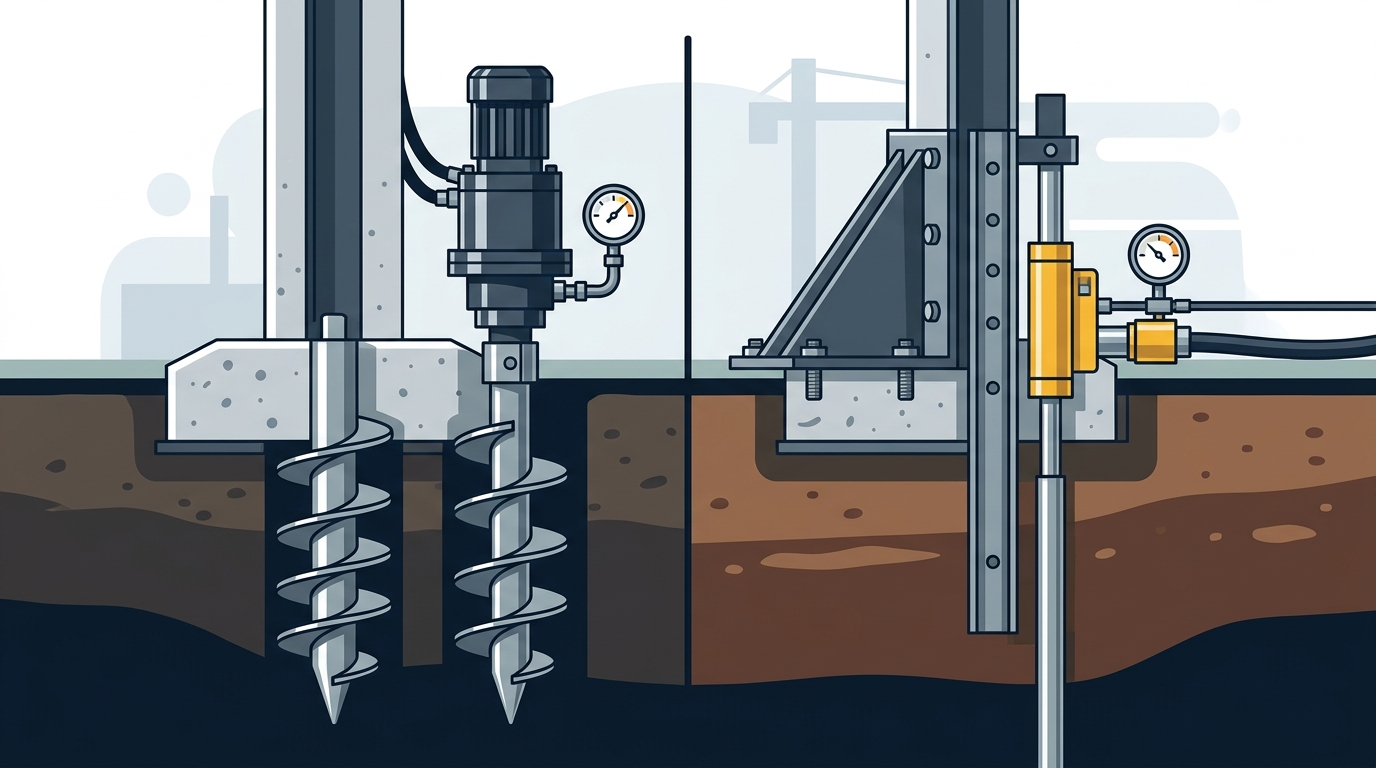
Comparative Analysis of Performance
To help contractors and homeowners make an informed decision, it is useful to compare the key performance criteria of helical piles and push piers side-by-side. The following table summarizes the primary differences based on engineering principles and field performance.
| Performance Criterion | Helical Piles | Push Piers |
|---|---|---|
| Installation Method | Mechanically torqued into soil | Driven by structure weight |
| Soil Dependency | Low (bypasses weak soil) | High (requires dense soil) |
| Load Verification | Real-time torque correlation | Depth and resistance measurement |
| Access Requirements | Minimal excavation | Heavy equipment clearance |
| Best Use Case | Heavy loads, limited access | Moderate settling, accessible sites |
Key Takeaways
- Soil Suitability: Helical piles are superior in weak or expansive soils, while push piers require dense soil layers for effective installation.
- Load Capacity: Helical piles offer real-time load verification through torque, providing precise engineering data for heavy structures.
- Accessibility: Helical piles require less excavation and heavy machinery, making them ideal for tight access sites.
- Installation Speed: Helical pile installation is generally faster due to the lack of need for structural lifting during the driving process.
- Cost Efficiency: While helical piles may have a higher unit cost, reduced labor and restoration expenses can make them cost-competitive.
- Product Quality: Using high-grade materials from Walder Foundation Products ensures long-term durability and performance.
- Professional Consultation: Always consult with a structural engineer to determine the best system for your specific foundation issues.
Frequently Asked Questions
What is the primary difference between helical piles and push piers?
Helical piles are screwed into the ground like a giant screw, while push piers are driven into the ground using the weight of the structure. This fundamental difference affects their suitability for different soil conditions and site access requirements.
Can helical piles be used in rocky soil?
Helical piles can be used in rocky soil, but installation may require specialized equipment to penetrate the rock. In some cases, pre-drilling may be necessary. Push piers may also struggle in rocky soil if they cannot reach the required depth.
How is the load capacity of helical piles determined?
The load capacity of helical piles is determined by the torque applied during installation. Engineers use established formulas to correlate torque with load-bearing capacity, providing a reliable measure of performance.
Are push piers suitable for heavy commercial buildings?
Push piers can be used for commercial buildings, but they are often limited by the weight of the structure and the soil conditions. Helical piles are frequently preferred for heavy commercial loads due to their higher and more predictable load capacity.
What is the lifespan of a helical pile foundation repair?
Helical piles are designed to last for decades, often outlasting the structure they support. Their corrosion-resistant coatings and deep anchoring make them a durable solution for long-term foundation stability.
Do I need a permit for helical pile installation?
Most jurisdictions require permits for foundation repair work. The specific requirements vary by location, so it is essential to check with local building authorities before starting any installation.
How do I choose the right foundation repair system?
Choosing the right system depends on soil analysis, load requirements, site access, and budget. Consulting with a structural engineer and a reputable supplier like Walder Foundation Products can help you make the best decision.
Contact Walder Foundation Products
Choosing the right foundation repair system is a critical decision that impacts the safety and value of your property. Whether you need helical piles for a challenging soil condition or push piers for a standard settling issue, having access to high-quality materials and expert guidance is essential. Walder Foundation Products provides a comprehensive selection of foundation repair supplies, including helical piles and push piers, to meet the needs of contractors and homeowners alike.
Contact our team today to discuss your project requirements and receive expert advice on the best products for your foundation repair needs. Visit our contact page to get started.