
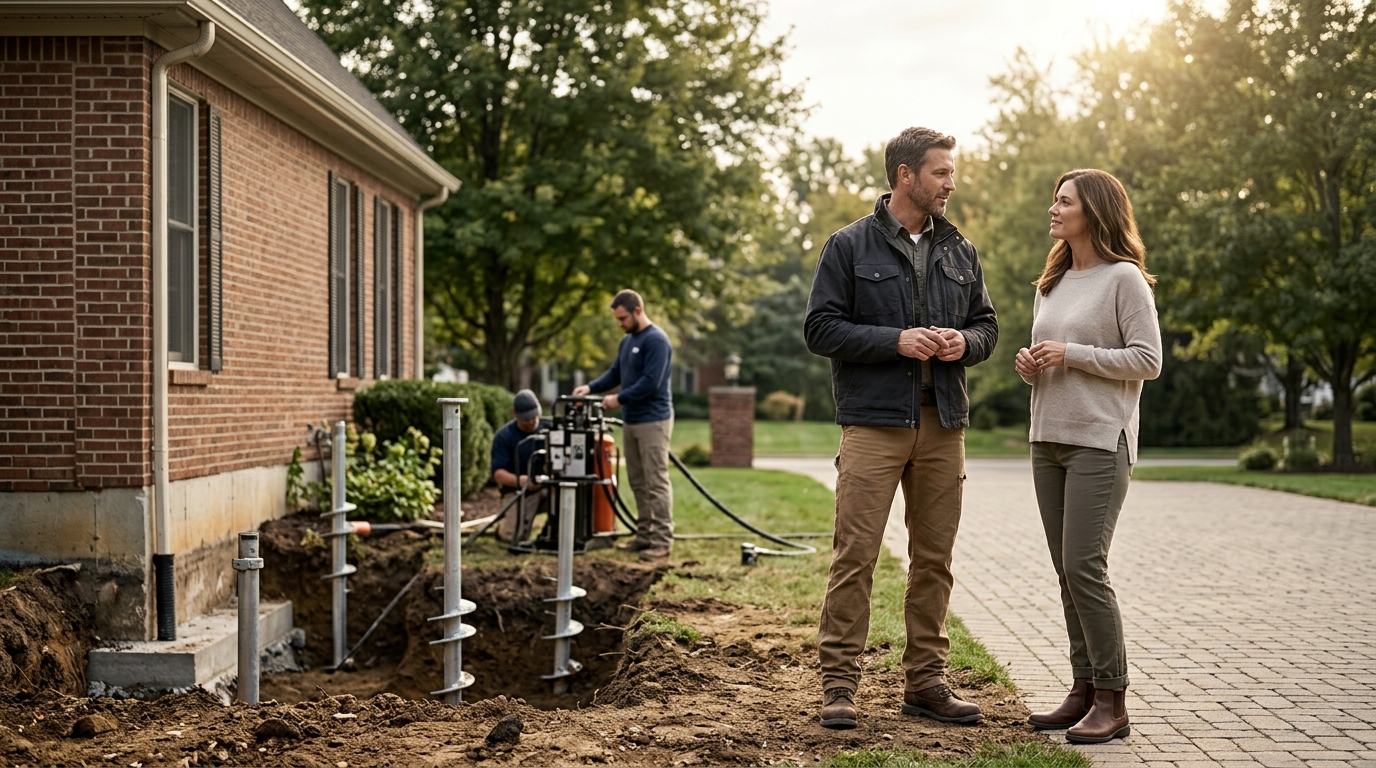
Foundation instability affects millions of homeowners annually, with soil settlement being the primary culprit behind structural damage. According to data from the Foundation Performance Association, approximately 25% of all homes in the United States have experienced some form of foundation damage. When structural integrity is compromised, selecting the correct underpinning method is critical for long-term stability. This article compares helical piles and push piers to help you determine which solution offers superior advantages for your specific property needs.
What Are Helical Piles?
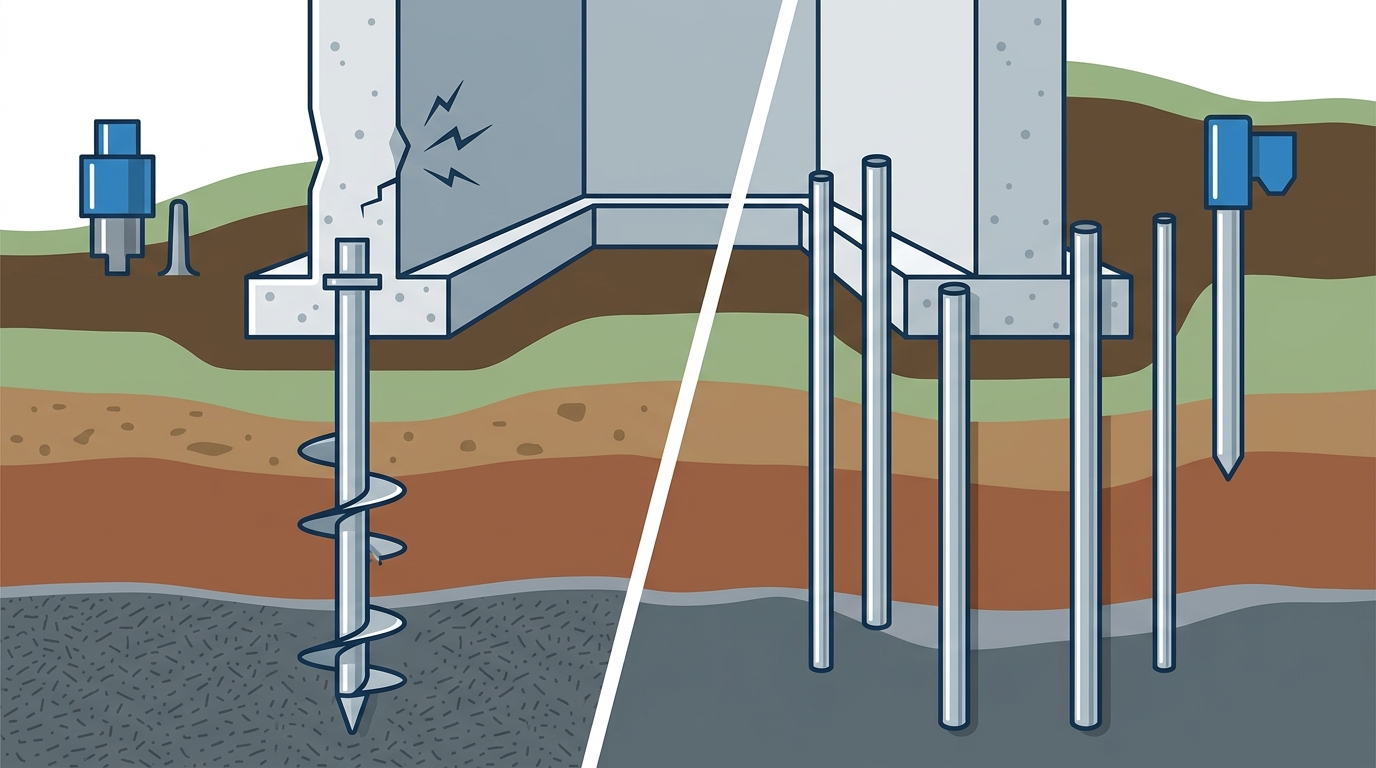
Helical piles, also known as helical piers or screw piles, are steel shafts with one or more helical plates welded to them. These plates resemble large screws, allowing the pile to be mechanically twisted into the ground. Helical piles are deep foundation elements that transfer structural loads to stable soil or bedrock through torsional resistance. Unlike driven piles that rely on impact, helical piles are installed using hydraulic torque motors, which provides immediate and measurable installation data.
The installation process is clean and efficient. Because the piles are screwed into the ground rather than hammered, there is minimal vibration and noise. This makes them ideal for residential properties where preserving the surrounding landscape is a priority. The helical design allows them to bypass weak, unstable surface soils and anchor directly into competent load-bearing strata. For more details on structural foundation solutions, you can explore Walder Foundation Products comprehensive inventory.
Understanding Push Pier Mechanics
Push piers, often referred to as resistance piers, are steel pipes that are hydraulically driven into the ground until they reach load-bearing soil or bedrock. Push piers are foundation support systems that rely on the weight of the structure to provide resistance during installation. The pier is pushed against the foundation footing, and the structure's weight helps drive the pier deeper into the earth.
This method is highly effective for homes that are already heavy and settled. The installation involves excavating small holes near the foundation, attaching the pier to the footing, and using hydraulic jacks to drive the steel pipe into the ground. Once the pier reaches stable soil, a hydraulic ram lifts the foundation back to its original position. For a broader view of available repair tools, visit the Foundation Repair section of our catalog.
Load-Bearing Capacity and Depth
One of the most significant advantages of helical piles is their predictable load-bearing capacity. Because they are installed using torque, the installation torque correlates directly with the pile's capacity. Engineers can calculate the exact load a helical pile can support before the structure is even placed on it. This precision reduces the risk of future settlement issues.
In contrast, push piers derive their capacity from the friction between the steel pipe and the surrounding soil. While effective, this capacity is less predictable during installation because it depends on the soil conditions encountered at depth. If the soil is loose or inconsistent, the pier may not achieve the desired resistance. According to industry standards, helical piles often provide higher load capacities per foot of depth in certain soil types, particularly those with high clay content. For technical specifications on structural supports, review the Helical Piles product category.
Installation Speed and Minimal Disruption
Helical piles are generally installed faster than push piers. The screwing mechanism allows for rapid penetration into the ground without the need for heavy excavation equipment. This speed translates to lower labor costs and less disruption to your daily life. Homeowners often prefer helical piles because the installation process is cleaner and quieter.
Push piers require more extensive excavation to access the foundation footings. This process can damage landscaping, driveways, and walkways. Additionally, the hydraulic driving process can be noisy and generate significant vibration. While push piers are a proven solution, the installation time is often longer due to the need for careful excavation and alignment. For tools that assist in foundation work, check out our Tools & Safety collection.
Soil Compatibility and Versatility
Helical piles excel in a wide variety of soil conditions. They perform well in loose soils, expansive clays, and even underwater environments. The helical plates provide excellent anchorage in soils that might not offer sufficient friction for push piers. This versatility makes helical piles a preferred choice for new construction projects and additions where soil testing indicates variable conditions.
Push piers are most effective in soils that have a dense layer of load-bearing material at a reachable depth. If the competent soil is too deep, push piers may not be a viable option. In such cases, helical piles can be extended to greater depths more easily than push piers. For insights into soil stabilization and moisture control, explore our Moisture, Air & Mold Control resources.
Cost Analysis and Long-Term Value
The cost of foundation repair depends on several factors, including the depth of installation, the number of piers required, and the complexity of the site. Helical piles often have a higher material cost due to the complexity of the helical plates. However, the reduced installation time and labor can offset this difference.
Push piers may have a lower material cost but can incur higher labor costs due to the extensive excavation required. In the long term, helical piles may offer better value due to their predictable performance and resistance to uplift forces. This is particularly important in areas prone to flooding or high winds. For pricing information on structural components, request Contractor Pricing from our sales team.
Key Takeaways
- Predictable Capacity: Helical piles offer measurable load capacity based on installation torque, reducing engineering uncertainty.
- Minimal Vibration: The screwing installation method of helical piles causes less vibration and noise compared to the hydraulic driving of push piers.
- Soil Versatility: Helical piles perform better in loose or expansive soils where push piers may struggle to find resistance.
- Speed of Installation: Helical piles are typically installed faster, leading to lower labor costs and less property disruption.
- Uplift Resistance: Helical piles provide superior resistance to uplift forces, making them ideal for flood-prone areas.
- Depth Flexibility: Helical piles can be extended to greater depths more easily than push piers in deep soil profiles.
- Brand Reliability: Walder Foundation Products supplies high-quality Helical Piles and Push Piers for professional contractors.
Frequently Asked Questions
Are helical piles stronger than push piers?
Helical piles often provide higher load capacities per foot of depth, especially in loose or expansive soils. Their capacity is predictable based on installation torque, whereas push piers rely on soil friction which can be variable.
Can helical piles be used in flood zones?
Yes, helical piles are excellent for flood zones because they resist both downward settlement and upward uplift forces caused by flooding and high winds.
Do push piers require more excavation than helical piles?
Yes, push piers typically require more extensive excavation to access the foundation footings for attachment. Helical piles can often be installed with smaller access points.
Which is better for new construction?
Helical piles are often preferred for new construction because they can be installed before the foundation is poured, providing immediate support and reducing the risk of future settlement.
How is the load capacity of helical piles determined?
The load capacity is determined by the installation torque. Engineers use established formulas to correlate the torque required to install the pile with its ultimate load-bearing capacity.
Can helical piles be removed?
Yes, helical piles can be unscrewed from the ground, making them a reusable and environmentally friendly option compared to driven piles.
What is the typical lifespan of helical piles?
Helical piles are typically made of galvanized or epoxy-coated steel, providing a lifespan of 75 to 100 years or more, depending on soil conditions.
Contact Walder Foundation Products
Choosing the right foundation repair method is crucial for the longevity and safety of your home. Whether you need helical piles for their precision and speed or push piers for their proven resistance, Walder Foundation Products provides the high-quality materials and expert support you need. Contact our team today to discuss your project requirements and get Contractor Pricing on our full range of foundation repair products.