
Selecting the Right Contractor Training Program for Foundation and Crawl Space Specialists
The foundation repair and crawl space encapsulation industry is experiencing unprecedented growth, driven by increasing awareness of structural integrity and indoor air quality. According to recent market analysis, the global foundation repair market is projected to expand significantly through 2026, creating a critical need for skilled labor. Industry reports indicate that contractors with specialized training in moisture control and structural stabilization command higher profit margins and enjoy greater client trust. For professionals looking to elevate their service offerings, choosing the correct educational pathway is not just an investment in knowledge, but a strategic business decision.
Understanding the Modern Foundation Repair Landscape
The role of a foundation and crawl space specialist has evolved far beyond simple concrete patching. Today, these professionals are tasked with complex environmental and structural challenges. Walder Foundation Products, a leading distributor in Ashland, Virginia, emphasizes that modern contractors must master both structural repair and environmental control. This dual focus is essential because water intrusion is the primary cause of foundation failure and mold growth in residential structures.
Contractors who lack comprehensive training often struggle with liability issues, improper material selection, and inefficient installation processes. The shift toward encapsulation and moisture management has created a niche where technical proficiency directly correlates with business success. Understanding the difference between a general handyman and a certified foundation specialist is crucial for clients seeking long-term structural solutions.
Types of Contractor Training Programs
When evaluating training options, it is vital to understand the different modalities available. Each type serves a specific stage of professional development and offers distinct advantages for career growth.
Manufacturer-Specific Certification
Many top-tier training programs are offered directly by equipment and material manufacturers. These programs focus on the proper installation and maintenance of specific products, such as dehumidifiers, vapor barriers, and structural piers. Brands like AprilAire provide detailed technical training to ensure their condensate pumps and air quality systems are installed correctly. This type of training is highly valuable because it often leads to authorized dealer status, granting access to exclusive pricing and technical support.
Industry Association Workshops
Organizations such as the Foundation Performance Association (FPA) offer standardized training that focuses on industry best practices and ethical standards. These workshops often cover diagnostic techniques, code compliance, and customer communication. According to the FPA, certified professionals are more likely to adhere to rigorous safety and quality standards, which reduces liability for both the contractor and the homeowner.
Hands-On Technical Workshops
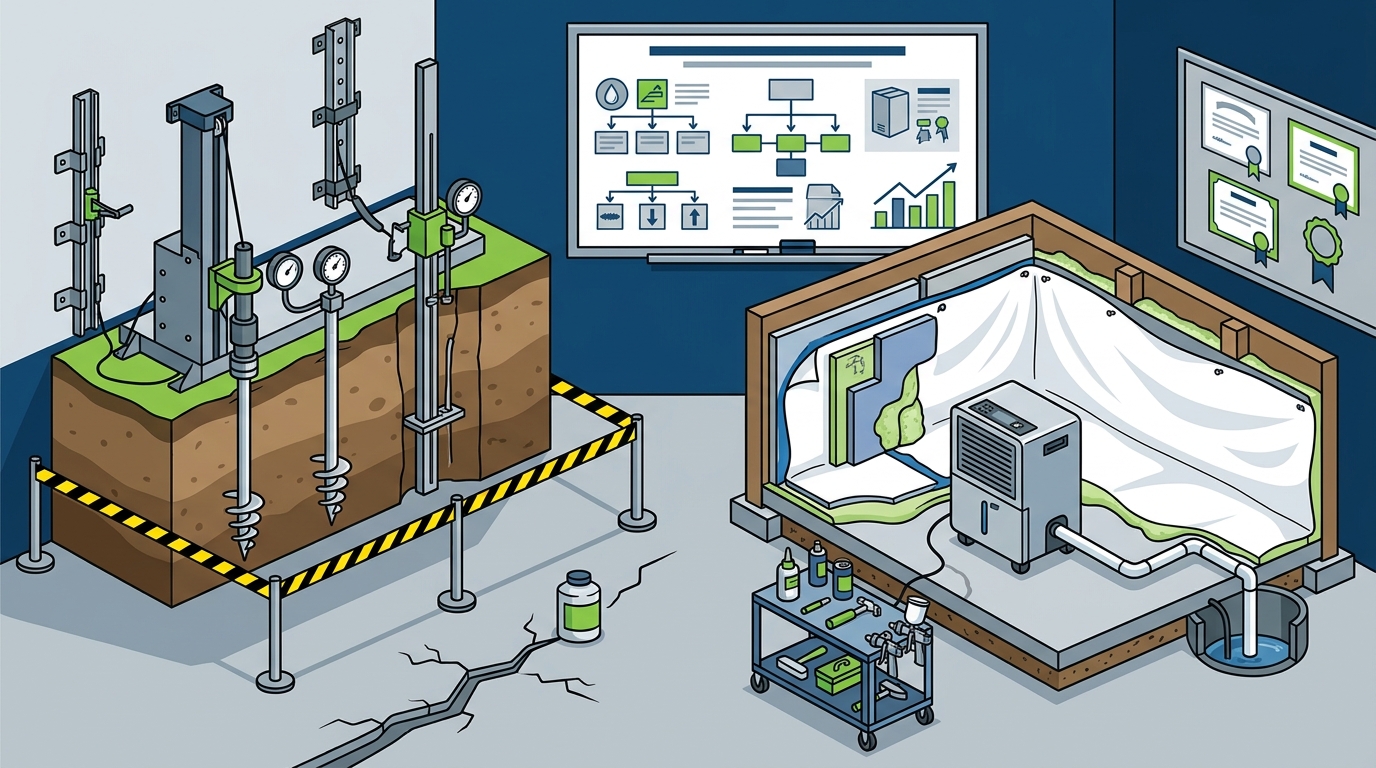
Practical, on-site training allows contractors to practice installation techniques in real-world scenarios. These programs often cover the physical aspects of crawl space encapsulation, including the use of specialized fastening guns, foam board insulation, and vapor barrier taping. Specialized tools like the WFP Pro Tape require specific application techniques to ensure a permanent seal, which is best learned through direct demonstration.
Essential Curriculum Components
A robust training program must cover several core technical areas to prepare contractors for the complexities of modern foundation work. These components form the backbone of professional competency in this field.
Moisture Control and Vapor Barrier Installation
Moisture control is the cornerstone of crawl space health. Proper encapsulation involves the installation of heavy-duty ground and wall vapor barriers to prevent soil moisture from evaporating into the home. Training must cover the selection of appropriate barrier thickness, typically 12 to 20 mils, and the correct taping methods to create an airtight envelope. Understanding air filtration is also critical, as dehumidifiers and air purifiers must be integrated into the encapsulated space to maintain optimal humidity levels.
Structural Repair and Stabilization
Contractors must understand the mechanics of foundation movement. This includes knowledge of helical piles, push piers, and wall brace systems. Structural repair techniques vary based on soil conditions and the type of foundation failure. Training should cover load calculations, installation depths, and the use of carbon fiber strips for basement wall reinforcement. Carbon fiber kits are increasingly popular for their non-invasive nature and high tensile strength, making them a key topic in modern repair curricula.
Insulation and Energy Efficiency
Insulating crawl spaces and basements is essential for energy efficiency and comfort. Rigid foam insulation, such as EPS or XPS boards, is commonly used due to its moisture resistance and high R-value per inch. Training must address proper fastening methods, such as using Terma-Foam pins, to secure insulation to foundation walls. These fasteners are designed to hold foam securely without compromising the vapor barrier integrity.
Vendor-Specific Certifications and Partnerships
Partnering with reputable vendors and obtaining their certifications can significantly enhance a contractor's credibility and operational efficiency. These partnerships often provide access to exclusive resources, technical support, and marketing materials.
Dehumidifier and Air Quality Systems
Installing and maintaining dehumidifiers requires specialized knowledge. Proper installation of units like the AprilAire series involves correct hanging, drainage, and electrical connections. Using risers and accessories ensures the unit operates efficiently and avoids condensate overflow. Training programs that cover these specific products help contractors avoid common installation errors that lead to system failure.
Waterproofing and Drainage Solutions
Effective waterproofing requires a comprehensive approach to water management. This includes the installation of interior drainage systems, sump pumps, and exterior waterproofing membranes. Drainage and dimple board products are essential for directing water away from the foundation. Training should cover the integration of these systems with sump pump setups to ensure reliable water removal during heavy rainfall events.
Structural Support Systems
Foundation repair often requires the installation of floor jack supports and helical piles. DynamicPost Jack Kit assemblies are designed for quick and secure installation of floor supports. Training must cover the proper use of these tools to ensure structural stability. Galvanized pipe and jack bases are critical components that must be selected based on load requirements and soil conditions.
Comparing Training Providers
Choosing the right training provider requires careful evaluation of curriculum, cost, and reputation. The following table compares key aspects of different training approaches.
| Training Type | Focus Area | Best For | Key Benefit |
|---|---|---|---|
| Manufacturer Certification | Specific product installation and maintenance | Contractors specializing in encapsulation and air quality | Access to exclusive pricing and technical support |
| Industry Association Workshop | Best practices, ethics, and code compliance | Established contractors seeking credibility | Standardized industry recognition and networking |
| Hands-On Technical Workshop | Practical installation skills and tool usage | New contractors or those expanding service lines | Immediate application of skills in real-world scenarios |
| Online Technical Courses | Theoretical knowledge and diagnostic techniques | Busy professionals seeking flexible learning | Convenience and self-paced learning |
When evaluating providers, consider the depth of technical content, the quality of instructor expertise, and the availability of ongoing support. Reputable distributors often offer training resources that align with their product lines, ensuring that contractors are equipped to install and maintain the materials they sell.
Key Takeaways for Industry Professionals
- Specialization Drives Profit: Contractors with training in both structural repair and moisture control can offer comprehensive solutions, increasing average job value.
- Vendor Partnerships Matter: Obtaining certifications from brands like AprilAire and Walder Foundation Products can lead to exclusive dealer benefits and technical support.
- Technical Precision is Critical: Proper installation of vapor barriers, insulation, and structural supports requires specific techniques that are best learned through hands-on training.
- Industry Standards Evolve: Staying updated on the latest codes and best practices through organizations like the FPA is essential for long-term success.
- Tool Proficiency Enhances Efficiency: Mastering the use of specialized tools, such as fastening guns and sump pump systems, reduces installation time and improves quality.
- Client Education is Key: Trained contractors can better explain the importance of encapsulation and repair to clients, building trust and justifying service costs.
- Continuous Learning is Required: The foundation repair industry is dynamic, with new materials and techniques emerging regularly. Ongoing education is necessary to remain competitive.
Frequently Asked Questions
What is the most important skill for a foundation repair contractor?
The most important skill is a comprehensive understanding of moisture control and structural stabilization. Contractors must be able to diagnose the root cause of foundation issues and implement effective solutions that address both the structural and environmental aspects of the problem.
How long does it take to complete a contractor training program?
The duration varies depending on the type of program. Manufacturer certifications may take a few days, while comprehensive industry workshops can span several weeks. Hands-on training programs often require a minimum of 40 to 80 hours of practical instruction.
Are manufacturer certifications worth the investment?
Yes, manufacturer certifications are highly valuable. They provide access to exclusive pricing, technical support, and marketing materials. They also demonstrate to clients that the contractor is trained and authorized to install specific high-quality products.
What tools are essential for crawl space encapsulation?
Essential tools include fastening guns for foam board and vapor barriers, specialized taping tools, dehumidifiers, air purifiers, and moisture meters. Tools like the WFP Pro Tape are critical for creating airtight seals in vapor barrier installations.
How can I find reputable training providers?
Look for training programs offered by established industry associations, reputable manufacturers, and experienced distributors. Contacting local distributors can also provide insights into recommended training resources and upcoming workshops.
What is the difference between helical piles and push piers?
Helical piles are screwed into the ground and are ideal for new construction or areas with stable soil. Push piers are driven into the ground using hydraulic pressure and are typically used for existing foundations with unstable soil. Both systems require specialized installation techniques and knowledge of load-bearing requirements.
Why is vapor barrier thickness important?
Vapor barrier thickness determines the durability and effectiveness of the encapsulation. Thicker barriers, such as 20 mil, are more resistant to punctures and tears, ensuring a longer-lasting seal. Proper selection of barrier thickness is crucial for long-term moisture control.
Next Steps for Your Business
Investing in the right contractor training program is a decisive step toward building a successful and sustainable foundation repair business. By focusing on technical proficiency, vendor partnerships, and industry standards, you can differentiate yourself in a competitive market. Contact the Walder Foundation Products team today to learn more about our training resources, product offerings, and how we can support your professional growth.