
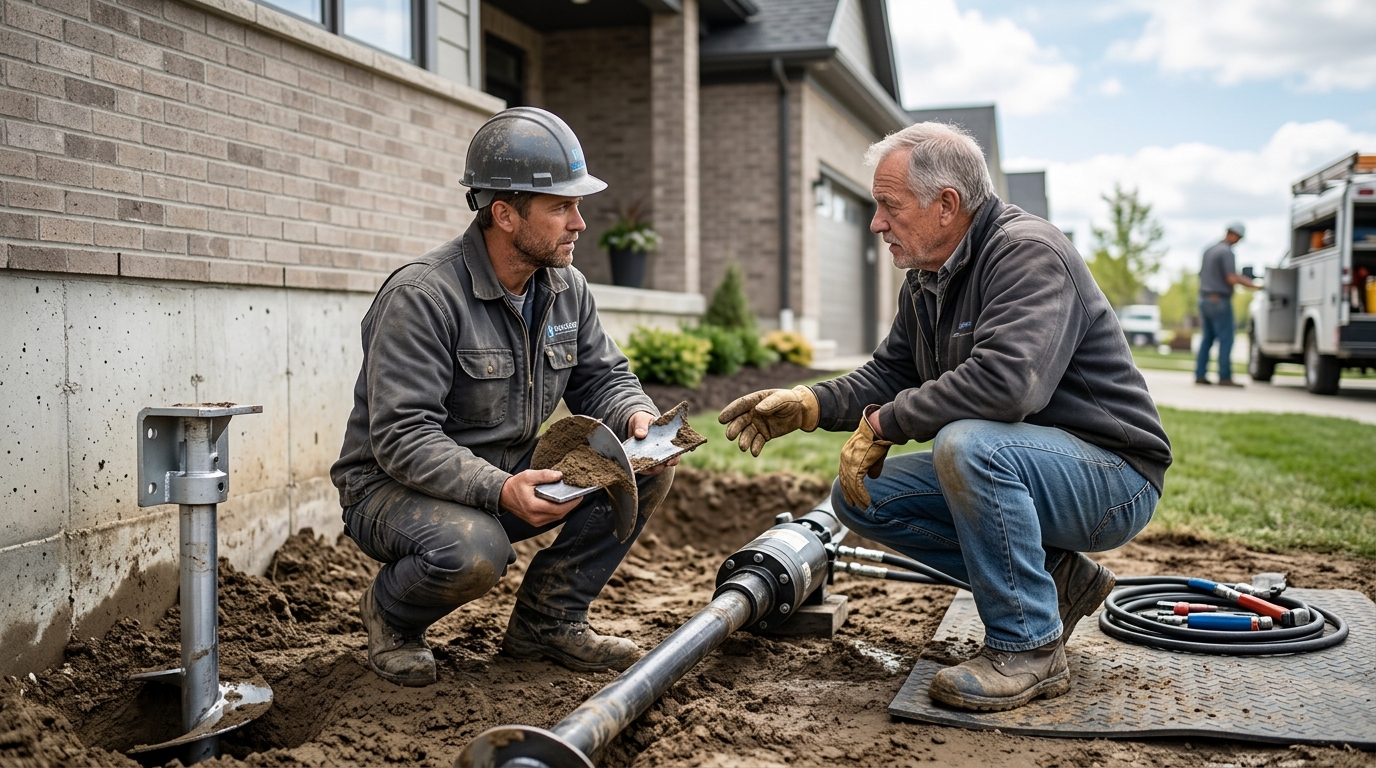
Foundation failure is a silent threat that can compromise the structural integrity of your home. According to the American Society of Civil Engineers, foundation issues are among the most common causes of structural damage in residential properties, often stemming from improper soil support. Choosing the wrong stabilization method is a critical error that can lead to costly repairs down the line. This guide analyzes the installation mistakes associated with helical piles and push piers to help you make an informed decision.
Understanding Foundation Support Systems
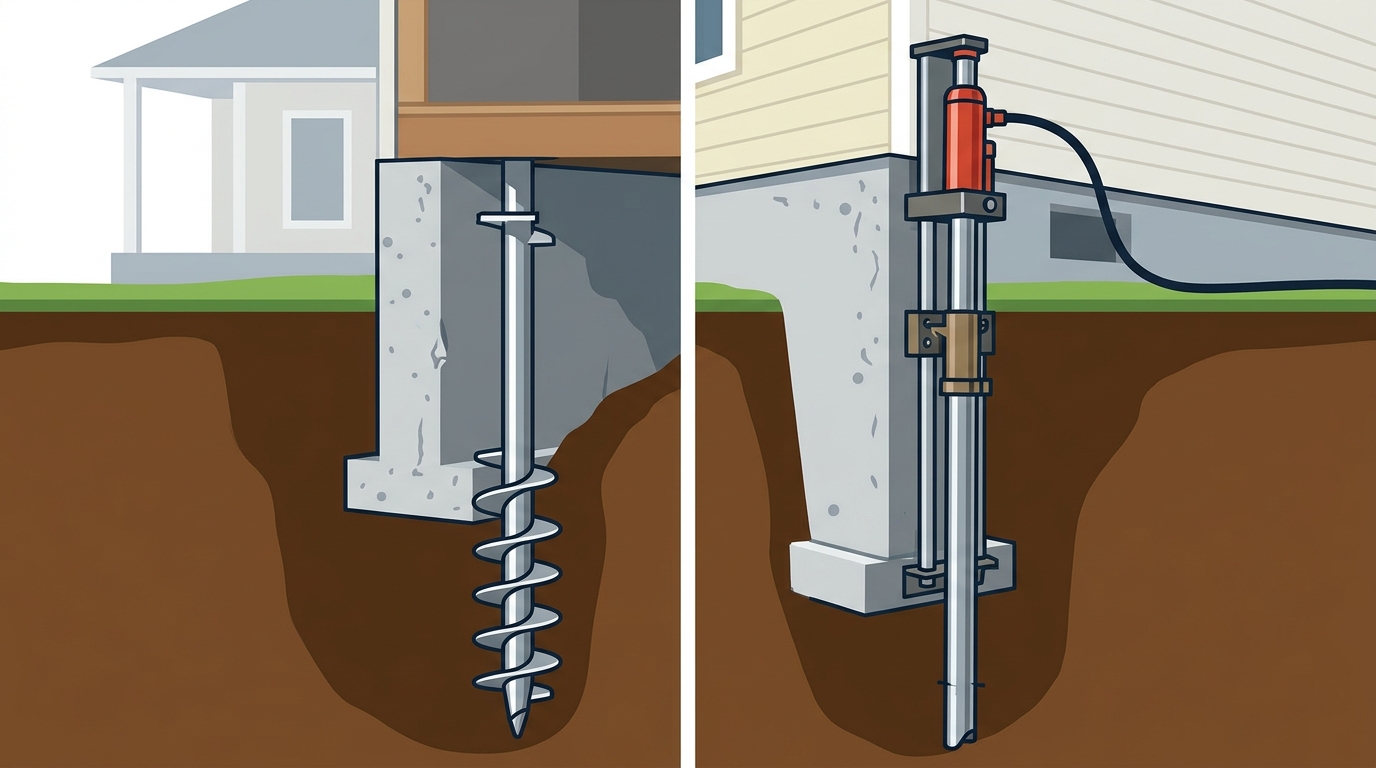
Before diving into mistakes, it is essential to define the core technologies. Helical piles are steel shafts with helical plates that are screwed into the ground like a giant screw, providing immediate load-bearing capacity. Push piers are steel pipes driven deep into the soil using hydraulic pressure until they reach stable load-bearing strata. Both systems aim to stabilize settling foundations, but their installation mechanics differ significantly.
Walder Foundation Products, a leading distributor of crawl space and foundation repair materials, emphasizes that the success of any repair depends on selecting the correct system for the specific soil and structural conditions. Misidentifying the soil type or the load requirements is the primary catalyst for installation failure.
Helical Pile Installation Errors
Helical piles are often praised for their minimal vibration and ability to be installed in tight spaces. However, several common mistakes occur during their deployment.
Ignoring Torque-Capacity Correlation
One of the most frequent errors is failing to correlate installation torque with the pile's load capacity. The torque applied during installation is the primary indicator of how much weight the pile can support. If installers do not monitor this metric, they may under-drive the pile, leaving it in unstable soil layers. This mistake is particularly dangerous in areas with variable soil composition.
Improper Alignment and Plumb
Helical piles must be installed plumb (vertically straight) to ensure they transfer loads correctly to the foundation. Deviations in alignment can create bending moments that the steel shaft is not designed to handle. This is especially critical when installing piles in confined crawl spaces where maneuverability is limited. Using specialized tools like the DynamicPost Jack Kit can help maintain proper alignment during the screwing process.
Neglecting Soil Pre-Drilling Needs
In dense clay or rocky soil, attempting to screw helical piles without pre-drilling can lead to equipment failure or pile deflection. Installers often underestimate the resistance of hard soils, leading to stripped plates or broken shafts. Proper site assessment is crucial to determine if pre-drilling is necessary.
Push Pier Installation Errors
Push piers rely on the weight of the structure to drive them into the ground. This method has its own set of unique pitfalls.
Failure to Reach Bearing Strata
The most critical mistake in push pier installation is stopping the driving process before reaching stable load-bearing soil. If the piers are stopped in loose fill or soft clay, they will not provide adequate support. Installers must use hydraulic rams to drive the piers until they reach refusal or a specified depth, ensuring they engage with competent soil layers.
Inadequate Bracket Attachment
The connection between the pier and the foundation is vital. If the brackets are not properly secured to the foundation footing, the load transfer will be ineffective. This often happens when installers fail to break through the existing concrete footing to establish a solid mechanical connection. Using high-quality Foundation Wall Repair components ensures a robust connection.
Over-Reliance on Structure Weight
Push piers require the weight of the structure to drive them into the ground. In cases where the structure is too light or the soil is too dense, the piers may not penetrate deeply enough. This mistake is common in newer homes or those with lightweight construction materials. In such cases, helical piles might be a more suitable alternative.
Soil Condition Mismatches
Choosing the wrong system for the soil type is a fundamental error. Helical piles perform exceptionally well in loose or unstable soils because they can be installed to greater depths without relying on the structure's weight. Push piers, however, require sufficient structure weight to drive them effectively.
According to geotechnical engineering standards, soil composition varies significantly across regions. In Virginia, where Walder Foundation Products is based, soil conditions can range from sandy loam to dense clay. Understanding these local conditions is essential for selecting the right foundation repair method. For more information on local soil challenges, visit the About Walder Foundation Products page.
Comparison of Installation Requirements
The table below summarizes the key differences in installation requirements for helical piles and push piers.
| Feature | Helical Piles | Push Piers |
|---|---|---|
| Installation Method | Screwed into ground | Hydraulically driven |
| Soil Dependency | Works in loose soil | Requires structure weight |
| Load Capacity Indicator | Torque measurement | Depth and refusal |
| Best For | Light structures, tight spaces | Heavy structures, stable access |
| Equipment Needed | Hydraulic torque motor | Hydraulic rams and brackets |
Key Takeaways
- Helical piles are installed by screwing steel shafts into the ground, providing immediate support.
- Push piers are driven into the soil using hydraulic pressure and the weight of the structure.
- Ignoring torque-capacity correlation is a major error in helical pile installation.
- Failing to reach bearing strata renders push piers ineffective.
- Soil conditions dictate the suitability of each system; dense clay may require pre-drilling for helical piles.
- Proper bracket attachment is critical for load transfer in push pier systems.
- Walder Foundation Products offers a comprehensive range of tools and materials for both systems.
Frequently Asked Questions
What is the main difference between helical piles and push piers?
Helical piles are screwed into the ground, while push piers are hydraulically driven. Helical piles do not rely on the structure's weight, making them suitable for lighter structures.
Can helical piles be installed in rocky soil?
Yes, but pre-drilling may be necessary to facilitate installation. Rocky soil can increase resistance, requiring specialized equipment.
How do I know if my foundation needs helical piles or push piers?
A professional assessment of your soil conditions and structure weight is required. Helical piles are often preferred for loose soils, while push piers work well for heavy structures.
What tools are needed for helical pile installation?
Installation requires a hydraulic torque motor, helical plates, and extension shafts. Proper alignment tools are also essential.
Are push piers suitable for all types of soil?
No, push piers require sufficient structure weight to drive them. They may not be effective in very dense or rocky soils without pre-drilling.
How long does helical pile installation take?
Installation time varies based on soil conditions and depth. Typically, it is faster than push pier installation due to the screwing mechanism.
What is the load capacity of helical piles?
Load capacity is determined by the torque applied during installation and the size of the helical plates. Professional engineers calculate this based on site-specific data.
Contact Our Experts
Choosing the right foundation repair system is critical for the long-term stability of your home. Avoid common installation mistakes by consulting with experts who understand the nuances of helical piles and push piers. Walder Foundation Products provides the tools and materials you need for a successful repair. Visit our product catalog to explore our range of foundation repair solutions. For personalized assistance, contact our team today to schedule a consultation.