
Helical Piles vs. Push Piers: Which Foundation Repair Method Is Right for Your Home?
Foundation instability is a silent threat that can compromise the structural integrity of your home. According to recent industry data, approximately 25% of all homes in the United States have some form of foundation damage, with soil conditions being the primary culprit. When soil shifts, sinks, or expands, it creates uneven pressure on your foundation, leading to cracks, sticking doors, and sloping floors. Addressing these issues requires a reliable underpinning system, and the two most common solutions are helical piles and push piers. Understanding the distinct advantages of each method is critical for homeowners and contractors alike to make an informed decision that ensures long-term stability. (About Walder Foundation Products)
What Are Helical Piles?
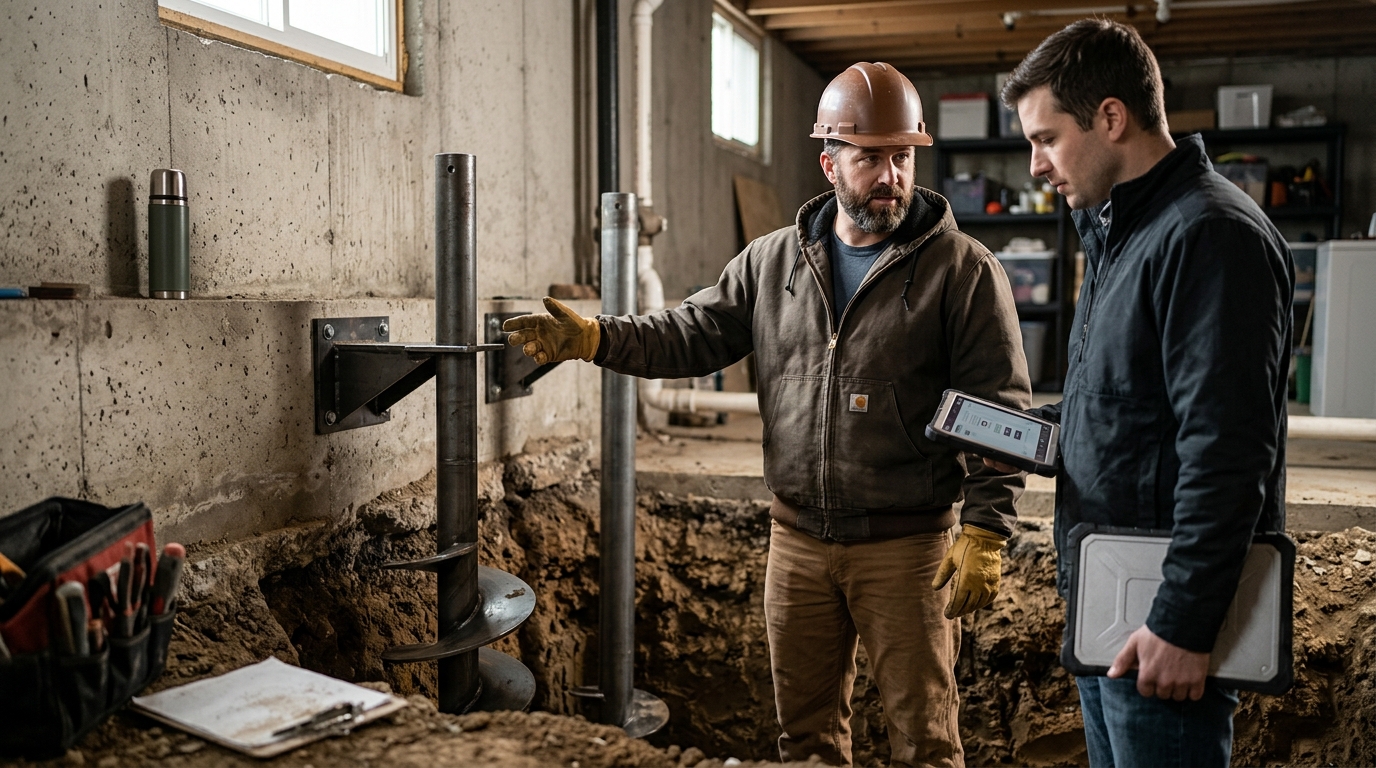
Helical piles, also known as helical piers or screw piles, are steel shafts with one or more helical plates (disks) welded to them. Helical piles are engineered support systems that are screwed into the ground like a giant screw until they reach stable soil or bedrock. They do not require concrete curing, which allows for immediate load-bearing capacity. These piles are particularly effective in areas with loose or unstable topsoil because they bypass weak layers to find competent bearing strata.
The design of helical piles allows them to be installed in a variety of soil conditions, including those with high water tables or expansive clay. Because they are installed by rotation, they generate minimal vibration, making them an excellent choice for residential properties where preserving the surrounding landscape is a priority. At Walder Foundation Products, we supply high-quality helical pile components, including lead sections and extensions, to ensure contractors have the tools needed for precise installation.
What Are Push Piers?
Push piers, also known as resistance piers, are steel pipes that are hydraulically driven into the ground until they reach load-bearing soil or bedrock. Push piers are deep foundation supports that rely on the weight of the structure itself to drive them into the earth. This method requires a certain amount of weight on the foundation to push the piers down, which can be a limitation in some scenarios.
Push piers are typically used for heavier structures, such as multi-story homes or commercial buildings, where the weight of the building can be utilized to drive the piers to the required depth. They are installed by lifting the structure slightly and then driving the piers into the ground. Foundation repair using push piers is a proven method for stabilizing settling foundations, but it requires careful planning to ensure the hydraulic equipment can effectively engage the soil.
Key Advantages of Helical Piles
While both systems are effective, helical piles offer several distinct advantages that make them a preferred choice in many situations.
1. Installation in Any Weather
One of the most significant advantages of helical piles is their ability to be installed in frozen or wet ground. Unlike push piers, which may struggle in frozen soil due to the resistance of the earth, helical piles can be screwed into frozen ground without issue. This makes them ideal for projects in colder climates or during unexpected weather delays. According to construction industry reports, helical piles can be installed year-round, reducing project timelines significantly.
2. Immediate Load Capacity
Helical piles provide immediate load-bearing capacity upon installation. There is no need to wait for concrete to cure, which can take days or weeks. This immediate strength allows contractors to begin the lifting and leveling process right away, speeding up the overall repair timeline. This is a critical factor for homeowners who need to resolve foundation issues quickly to prevent further damage.
3. Minimal Vibration and Noise
Because helical piles are screwed into the ground rather than hammered or driven, they generate minimal vibration and noise. This is particularly beneficial in residential neighborhoods where noise complaints or vibration damage to neighboring structures is a concern. The quiet installation process also reduces the risk of disturbing the surrounding landscape or existing utilities.
4. Predictable Load Capacity
The torque used to install helical piles provides a reliable indicator of their load capacity. Contractors can monitor the torque in real-time to ensure that each pile is reaching the required depth and bearing capacity. This predictability reduces the risk of unexpected failures and ensures that the foundation is properly supported. Data shows that torque-to-capacity correlations are highly accurate for helical piles, providing a level of confidence that is difficult to achieve with other methods.
Installation Process Comparison
Understanding the installation process for both systems helps clarify why helical piles might be the better choice for certain projects.
Helical Pile Installation
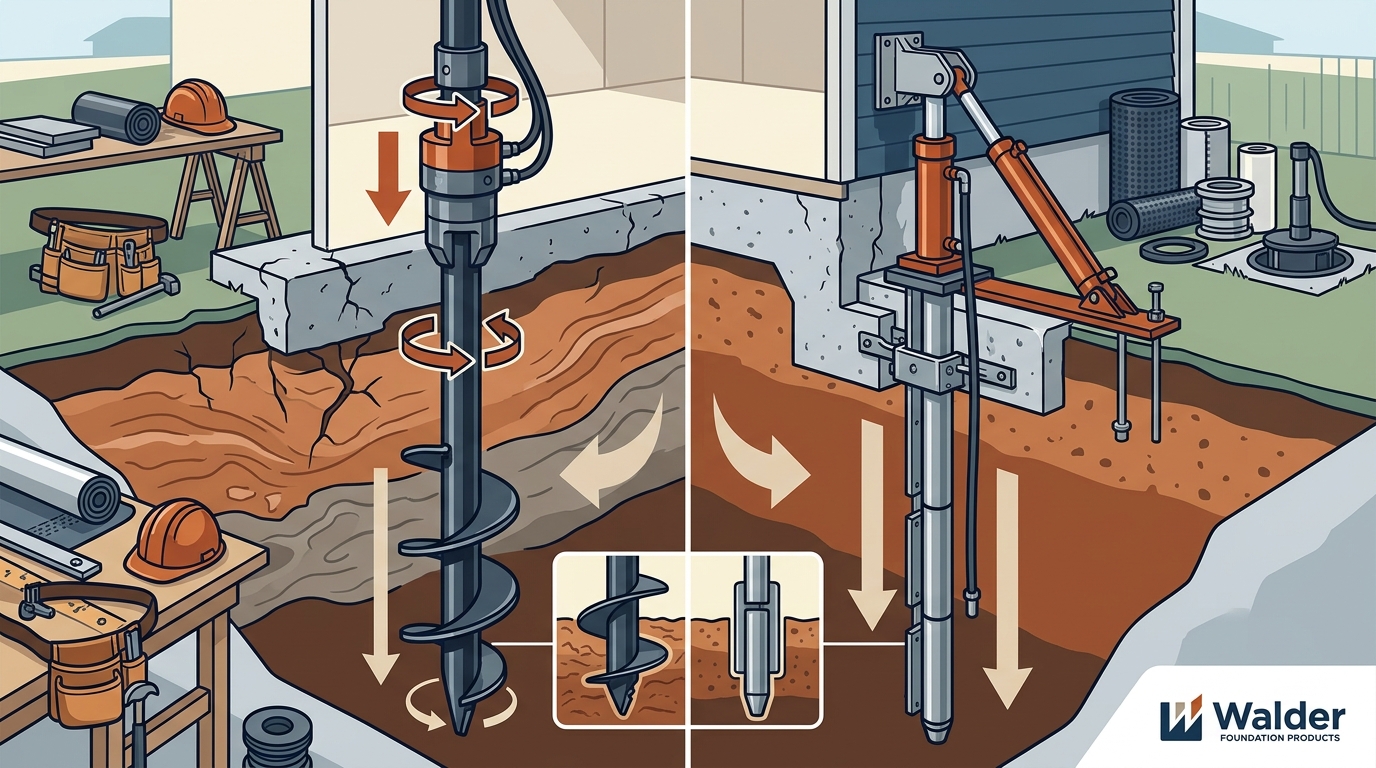
The installation of helical piles involves using a hydraulic motor to screw the piles into the ground. The process is clean and efficient, requiring no excavation of large holes. The piles are extended as needed until they reach the desired depth. Helical piles are available in various lengths and diameters, allowing for customization based on the specific needs of the project. The installation process is also reversible, meaning the piles can be removed if necessary, which is useful for temporary structures or future renovations.
Push Pier Installation
Push piers are installed by hydraulically driving them into the ground. This process requires the structure to be lifted slightly to allow the piers to be inserted. The piers are then driven until they reach load-bearing soil. The installation process for push piers is more invasive, often requiring larger access points around the foundation. Additionally, the effectiveness of push piers is dependent on the weight of the structure, which can be a limitation in some cases.
Cost and Durability Factors
When comparing helical piles and push piers, cost and durability are important considerations.
Cost Considerations
The cost of foundation repair depends on various factors, including the depth of the piles, the number of piles required, and the soil conditions. Generally, helical piles can be more cost-effective in situations where the soil is loose or unstable, as they require less excavation and installation time. However, in cases where the load-bearing soil is shallow, push piers may be more economical. It is essential to get a professional assessment to determine the most cost-effective solution for your specific situation.
Durability and Longevity
Both helical piles and push piers are designed to last for decades. Helical piles are typically made of galvanized or epoxy-coated steel, which provides excellent corrosion resistance. This durability ensures that the foundation remains stable over time, even in harsh environmental conditions. Push piers are also durable, but their longevity can be affected by the soil chemistry and the quality of the installation. Regular maintenance and inspection are recommended for both systems to ensure long-term performance.
When to Use Each System
Choosing between helical piles and push piers depends on the specific conditions of your property.
When to Choose Helical Piles
- Frozen or Wet Ground: If you are in a cold climate or dealing with high water tables, helical piles are the superior choice.
- Lightweight Structures: Helical piles are ideal for lighter structures where the weight of the building is not sufficient to drive push piers.
- Immediate Load Requirements: If you need immediate load-bearing capacity, helical piles provide this without the need for curing time.
- Minimal Vibration Needs: For residential projects where noise and vibration are concerns, helical piles offer a quieter installation.
When to Choose Push Piers
- Heavy Structures: Push piers are effective for heavier structures where the weight can be used to drive the piers.
- Shallow Load-Bearing Soil: If the load-bearing soil is relatively shallow, push piers may be a more economical option.
- Existing Foundation Access: Push piers require access to the foundation, which may be limited in some existing structures.
Key Takeaways
- Helical piles are screwed into the ground, providing immediate load capacity and minimal vibration.
- Push piers are hydraulically driven and rely on the weight of the structure for installation.
- Helical piles can be installed in frozen or wet ground, making them versatile for various climates.
- The torque used in helical pile installation provides a predictable measure of load capacity.
- Both systems offer long-term durability, but helical piles are often preferred for their ease of installation.
- Cost-effectiveness depends on soil conditions and the depth of the load-bearing strata.
- Professional assessment is crucial to determine the best foundation repair method for your home.
Frequently Asked Questions
Are helical piles stronger than push piers?
Helical piles and push piers have different strengths based on their installation method. Helical piles provide immediate load capacity and are effective in a wider range of soil conditions, including frozen ground. Push piers rely on the weight of the structure and are ideal for heavier buildings. The "strength" depends on the specific soil conditions and the load requirements of the structure.
Can helical piles be installed in rocky soil?
Helical piles can be installed in rocky soil, but it may require specialized equipment or pre-drilling. The helical plates are designed to cut through soil, but large rocks can impede installation. In such cases, contractors may need to adjust the installation strategy to ensure the piles reach the required depth.
How long do helical piles last?
Helical piles are designed to last for decades. They are typically made of galvanized or epoxy-coated steel, which provides excellent corrosion resistance. With proper installation, helical piles can provide long-term stability for your foundation.
Is helical pile installation noisy?
Helical pile installation is relatively quiet compared to other foundation repair methods. The hydraulic motor used to screw the piles into the ground generates less noise and vibration than the equipment used for push piers. This makes helical piles a good choice for residential neighborhoods.
Do I need a permit for helical pile installation?
Permit requirements vary by location. In many areas, foundation repair work requires a permit to ensure that the work meets local building codes. It is important to check with your local building department to determine the specific requirements for your project.
Can helical piles be used for new construction?
Yes, helical piles are commonly used in new construction projects. They provide a stable foundation for new buildings and can be installed quickly, reducing construction timelines. Their ability to be installed in various soil conditions makes them a versatile choice for new builds.
What is the average cost of helical pile foundation repair?
The cost of helical pile foundation repair varies based on the depth of the piles, the number of piles required, and the soil conditions. On average, homeowners can expect to pay between $1,500 and $3,000 per pier. It is essential to get multiple quotes from reputable contractors to determine the accurate cost for your specific project.
Get Your Foundation Assessment
Foundation issues can escalate quickly if left unaddressed. Whether you are considering helical piles or push piers, it is essential to work with experienced professionals who can assess your specific situation and recommend the best solution. At Walder Foundation Products, we provide the high-quality tools and materials needed for successful foundation repair. Contact us today to learn more about our helical pile products and schedule a consultation with a qualified contractor in your area.