
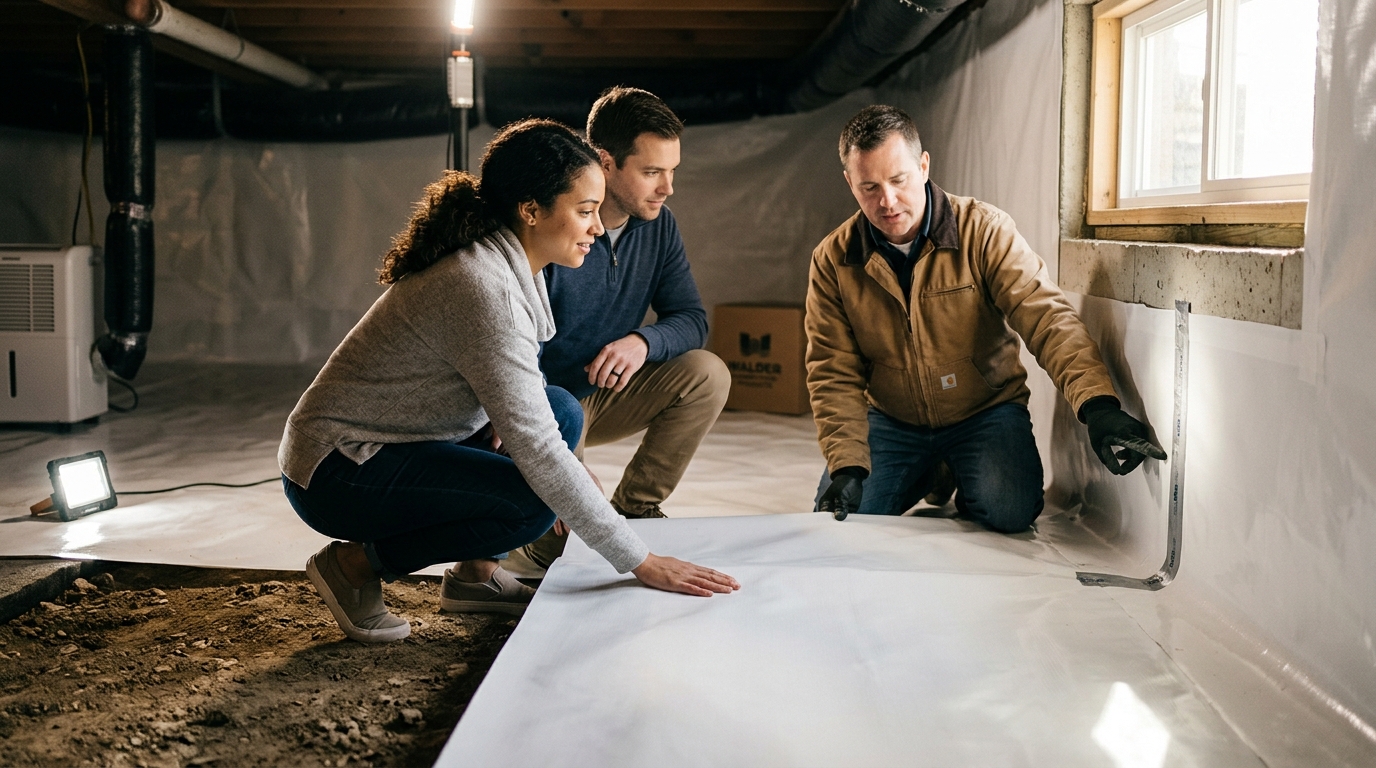
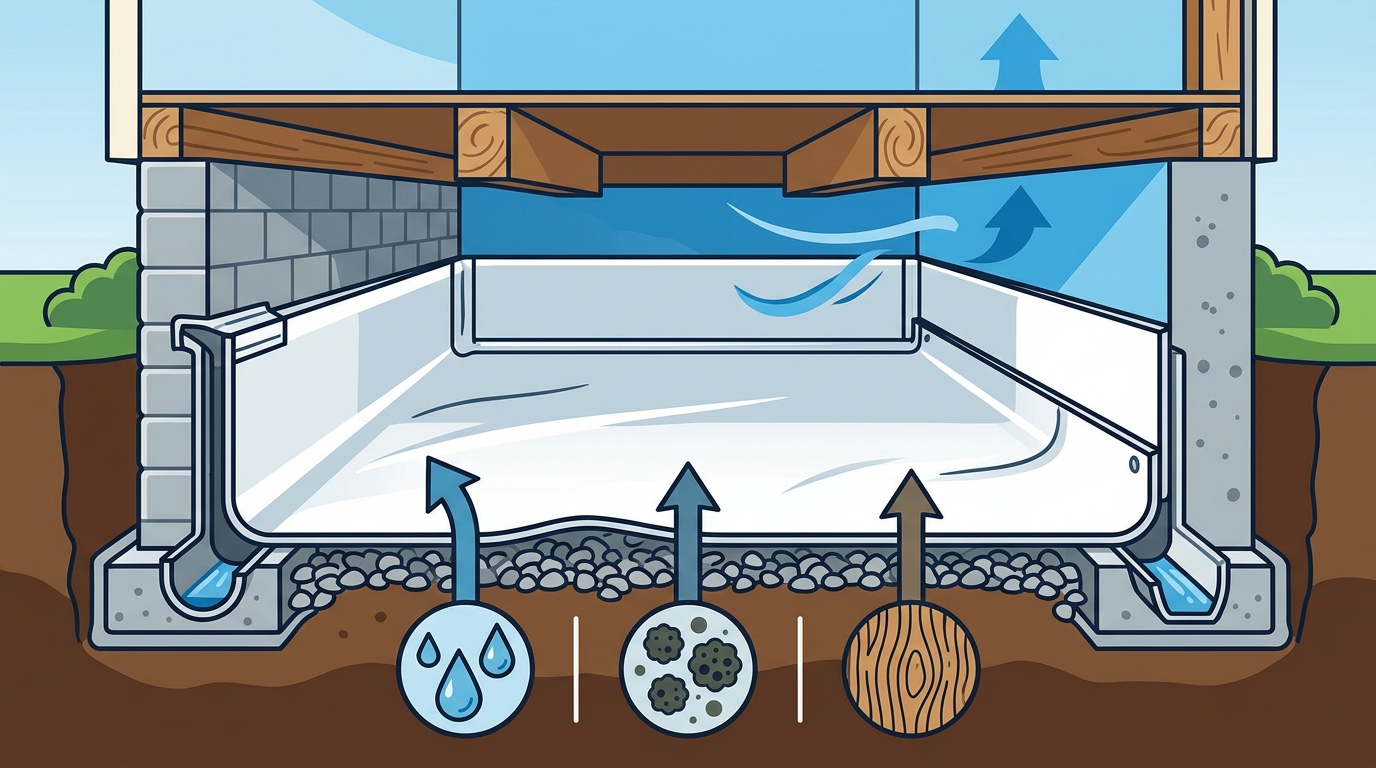
According to the Environmental Protection Agency, up to 50% of the air in a typical home comes from the crawl space below. This moisture intrusion is the primary driver of mold growth, structural rot, and compromised indoor air quality. Selecting the correct ground vapor barrier is not merely a construction detail; it is the foundational defense for your entire property's structural integrity. A high-performance barrier stops radon, soil gases, and humidity from migrating upward into your living spaces. (About Walder Foundation Products)
Understanding Thickness and Gauge Standards
The most immediate metric for evaluating a vapor barrier is its thickness. In the industry, this is often measured in mils. A standard 6-mil polyethylene sheet is the bare minimum for residential use, but it lacks the puncture resistance required for long-term durability. For a true encapsulation project, you should look for barriers that are 10 mils or thicker. Thicker materials resist tearing during installation and withstand the weight of debris or foot traffic better over time. (AprilAire 5822 Dehumidifier Hanging)
When comparing products, always verify the exact mil rating. Some manufacturers may use terms like "heavy duty" to describe thinner materials, which can be misleading. A 10-mil barrier provides a significant safety margin against root intrusion and sharp rocks. At Walder Foundation Products, we prioritize high-gauge materials to ensure that your investment lasts for decades rather than just a few seasons.
Material Composition and Durability
Vapor barrier is a specialized polyethylene sheet designed to block moisture vapor from passing through the ground into the crawl space. The quality of the resin used in manufacturing dictates the barrier's flexibility and strength. Low-quality barriers often become brittle in cold temperatures, leading to cracks during installation. High-quality barriers remain pliable, allowing for easier handling and tighter seams.
Another critical factor is the barrier's resistance to tearing. Look for materials that have been tested for puncture resistance. Reinforced barriers, which include mesh or fiberglass layers, offer superior strength but can be more difficult to seal if not handled correctly. For most residential applications, a high-density, non-reinforced 10-mil or 20-mil barrier offers the best balance of durability and ease of installation.
The Critical Role of Seam Welding
Even the thickest barrier will fail if the seams are not properly sealed. Moisture vapor will travel through the path of least resistance, which is often the overlap between two sheets of plastic. You must look for a vapor barrier that is compatible with high-quality seam tapes. The YCS Seam Weld Tape is an industry-standard solution for permanently securing ground vapor barriers.
Proper seam welding eliminates the need for mechanical fasteners, which can create holes and compromise the seal. When evaluating a product, check if the manufacturer provides specific tape recommendations. Using the wrong tape can lead to delamination, where the adhesive fails to bond with the plastic, allowing moisture to seep through. A professional-grade installation requires a tape that bonds chemically to the polyethylene surface.
UV Resistance and Longevity
If your crawl space will be exposed to sunlight during the encapsulation process, UV resistance is non-negotiable. Standard polyethylene degrades rapidly when exposed to ultraviolet rays, becoming brittle and tearing within weeks. UV-stabilized barriers contain additives that protect the plastic from sun damage, allowing for extended exposure without compromising integrity.
This feature is particularly important for contractors who may need to leave the barrier exposed for several days while waiting for other trades to complete their work. Without UV stabilization, the barrier may require replacement before the project is even finished. Always verify the UV rating on the product specifications to ensure it meets your project timeline.
Essential Installation Accessories
A quality vapor barrier is only as good as the accessories used to install it. You need reliable tapes, adhesives, and fasteners to create a continuous air and moisture seal. Walder Foundation Products offers a comprehensive range of installation supplies, including tapes and adhesives designed specifically for their vapor barriers.
Additionally, consider the need for wall vapor barriers. While ground barriers address moisture from the soil, wall barriers prevent humidity from entering through the foundation walls. Integrating both systems creates a complete encapsulation envelope. Look for products that are compatible with your primary barrier to ensure a unified defense system.
Vapor Barrier Comparison Matrix
| Feature | Standard 6-Mil Barrier | High-Performance 10-Mil Barrier | Reinforced Barrier |
|---|---|---|---|
| Puncture Resistance | Low | High | Very High |
| UV Stability | None | Available | Variable |
| Seam Compatibility | Standard Tape | Seam Weld Tape | Specialized Tape |
| Longevity | 1-3 Years | 20+ Years | 10-15 Years |
| Best Use Case | Temporary Cover | Permanent Encapsulation | High-Traffic Areas |
Key Takeaways
- Thickness Matters: Always choose 10-mil or thicker barriers for permanent installations to ensure puncture resistance.
- Seam Integrity: Use specialized seam weld tape to create a permanent, airtight bond between barrier sheets.
- UV Protection: Select UV-stabilized materials if the barrier will be exposed to sunlight during installation.
- Material Quality: High-density polyethylene remains flexible in cold temperatures, preventing cracks during handling.
- Complete System: Integrate ground barriers with wall liners and dehumidifiers for total moisture control.
- Professional Support: Consult with experts like Walder Foundation Products for contractor pricing and bulk supply needs.
Frequently Asked Questions
What is the difference between a vapor barrier and a moisture barrier?
A vapor barrier is a specific type of moisture barrier designed to block water vapor from passing through. While all vapor barriers are moisture barriers, not all moisture barriers are effective against vapor transmission. For crawl spaces, a high-density polyethylene vapor barrier is the industry standard.
How thick should a crawl space vapor barrier be?
For permanent encapsulation, a vapor barrier should be at least 10 mils thick. Thinner barriers, such as 6-mil, are prone to tearing and do not provide adequate protection against root intrusion or long-term wear.
Can I use regular plastic sheeting for my crawl space?
No. Regular plastic sheeting is too thin and lacks the necessary durability and UV resistance. It will tear easily and degrade quickly, failing to protect your home from moisture damage.
What is the best tape for sealing vapor barrier seams?
The best tape is a specialized seam weld tape designed for polyethylene. It creates a chemical bond that is stronger than the plastic itself, ensuring a permanent seal against moisture vapor.
Do I need a vapor barrier on the walls as well as the floor?
Yes. A complete encapsulation system includes both ground and wall vapor barriers. This creates a sealed envelope that prevents humidity from entering through the foundation walls and the soil.
How often should I replace my crawl space vapor barrier?
A high-quality 10-mil or 20-mil vapor barrier, when properly installed and maintained, can last for decades. Regular inspections for tears or gaps are recommended to ensure continued effectiveness.
What is crawl space encapsulation?
Crawl space encapsulation is the process of sealing the crawl space with a vapor barrier on the ground and walls, along with sealing vents and installing a dehumidifier to control moisture and improve air quality.
Secure Your Crawl Space Today
Protecting your home starts with the ground up. By choosing the right vapor barrier and installation accessories, you ensure a dry, healthy, and energy-efficient living environment. Visit Walder Foundation Products to explore our full range of high-performance vapor barriers, tapes, and dehumidifiers. Contact our team at Walder Foundation Products for contractor pricing and expert guidance on your next project.