
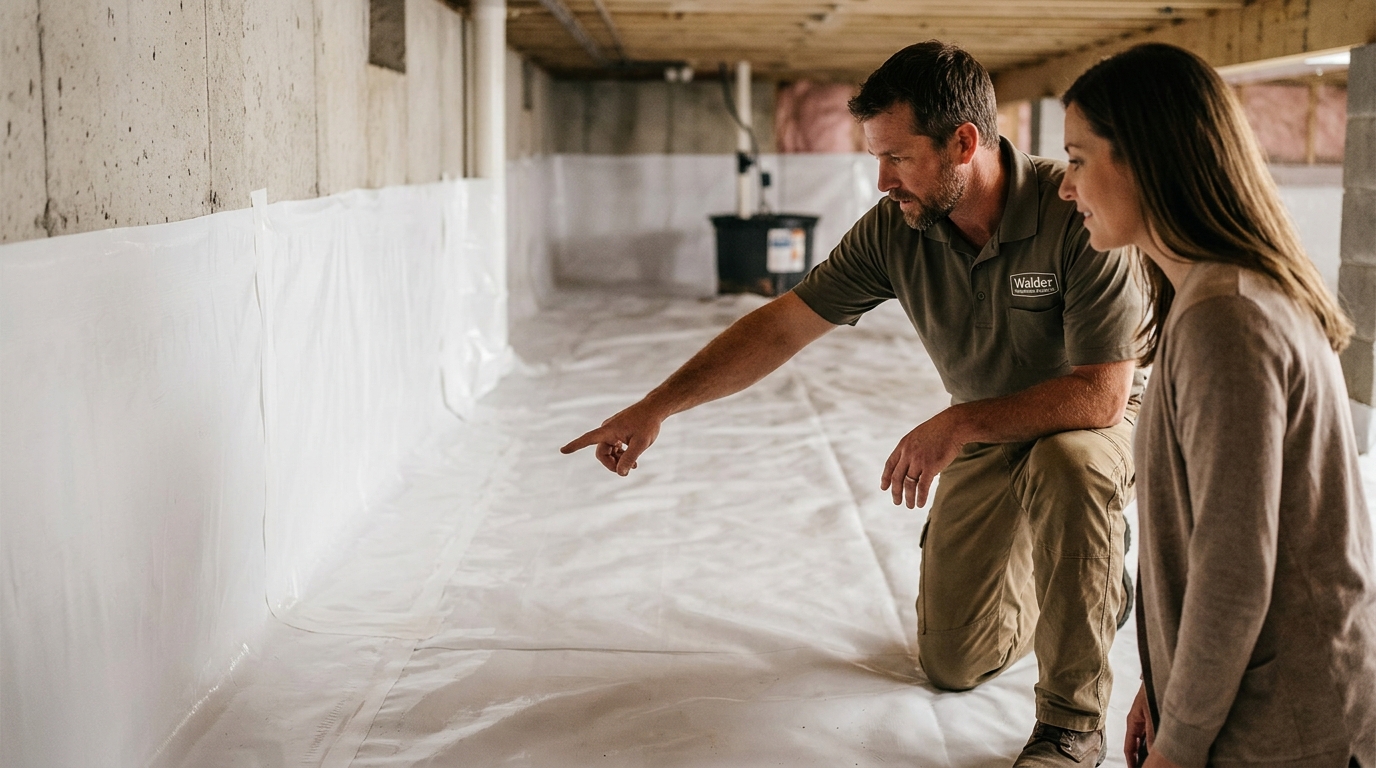
Moisture intrusion is the silent destroyer of residential structures, responsible for an estimated 60% of all crawl space issues according to the National Association of Home Builders. When selecting a vapor barrier, the primary metric is not just thickness, but the material's resistance to water vapor transmission and its structural integrity under load. A high-quality barrier acts as the first line of defense against ground moisture, preventing mold growth and structural rot in your home's foundation.
Understanding Thickness and Material Grade
The most visible specification of a vapor barrier is its thickness, typically measured in mils. A standard polyethylene sheet is often 6 mils thick, but this is rarely sufficient for long-term crawl space encapsulation. Industry standards for high-performance encapsulation now dictate a minimum of 10 to 12 mils. Thicker materials resist punctures from debris, rocks, and foot traffic during maintenance.
Vapor barrier is a continuous sheet of impermeable material installed over the ground to prevent moisture vapor from entering the crawl space. However, thickness alone does not guarantee quality. The material must also be virgin polyethylene, not recycled. Recycled materials often contain micro-fractures and inconsistent densities that allow vapor to pass through over time. When evaluating products, look for specifications that explicitly state "virgin polyethylene" to ensure maximum durability and longevity.
At Walder Foundation Products, we prioritize heavy-duty solutions like our ground vapor barriers that exceed standard construction codes. These products are engineered to withstand the harsh environment of a crawl space, where humidity levels can fluctuate dramatically between seasons.
The Importance of Permeability Rates
Permeability refers to the rate at which water vapor passes through a material. This is measured in perms. A lower perm rating indicates a better barrier. For a true vapor barrier, the material must have a perm rating of less than 0.9 perms. Materials with higher ratings are technically classified as vapor retarders, not barriers.
According to the U.S. Department of Energy, controlling vapor transmission is critical for maintaining indoor air quality and preventing structural decay. A high-quality vapor barrier will have a perm rating of essentially zero, effectively blocking moisture from the soil from entering your home's ecosystem. This is particularly important in regions with high water tables or heavy rainfall.
When you choose a product from our vapor barrier collection, you are selecting materials that have been rigorously tested to ensure they meet or exceed these strict permeability standards. This ensures that your investment protects your home against the most persistent form of moisture damage.
Seam Integrity and Adhesion Technology
Even the thickest, most impermeable sheet will fail if the seams are not properly sealed. The seams are the weakest points in any vapor barrier installation. High-quality barriers require specialized tapes that are chemically compatible with the polyethylene material. Standard duct tape or generic construction tape will dry out, lose adhesion, and peel within months.
Look for barriers that are designed to work with high-performance seam tapes, such as the YCS Seam Weld Tape available at Walder Foundation Products. This tape features an aggressive adhesive that creates a permanent bond, effectively welding the seams together. This eliminates the need for mechanical fasteners that can puncture the barrier and create new pathways for moisture.
The integrity of the seam is just as important as the material itself. A gap of even a few inches can allow significant amounts of moisture to enter the crawl space. Therefore, the installation process must prioritize seamless coverage and robust adhesion at every joint. Our tapes and adhesives section provides the necessary tools to ensure a watertight seal.
UV and Structural Resistance
Crawl spaces are not always dark, quiet places. They are often accessed for maintenance, storage, or inspection. A quality vapor barrier must have high puncture resistance to withstand foot traffic and the weight of stored items. Some barriers include a scrim or mesh reinforcement to add tensile strength without adding significant weight.
Additionally, if your crawl space has any exposure to sunlight, UV resistance is critical. Standard polyethylene degrades rapidly when exposed to UV rays, becoming brittle and cracking. High-quality barriers often include UV inhibitors to extend their lifespan in exposed areas. This is particularly relevant for crawl space doors and vent areas where sunlight may penetrate.
At Walder Foundation Products, we offer structural and foundation products that complement your vapor barrier system. This includes floor supports and wall repair kits that ensure the structural integrity of your home works in tandem with your moisture control strategy.
Installation Methods and Best Practices
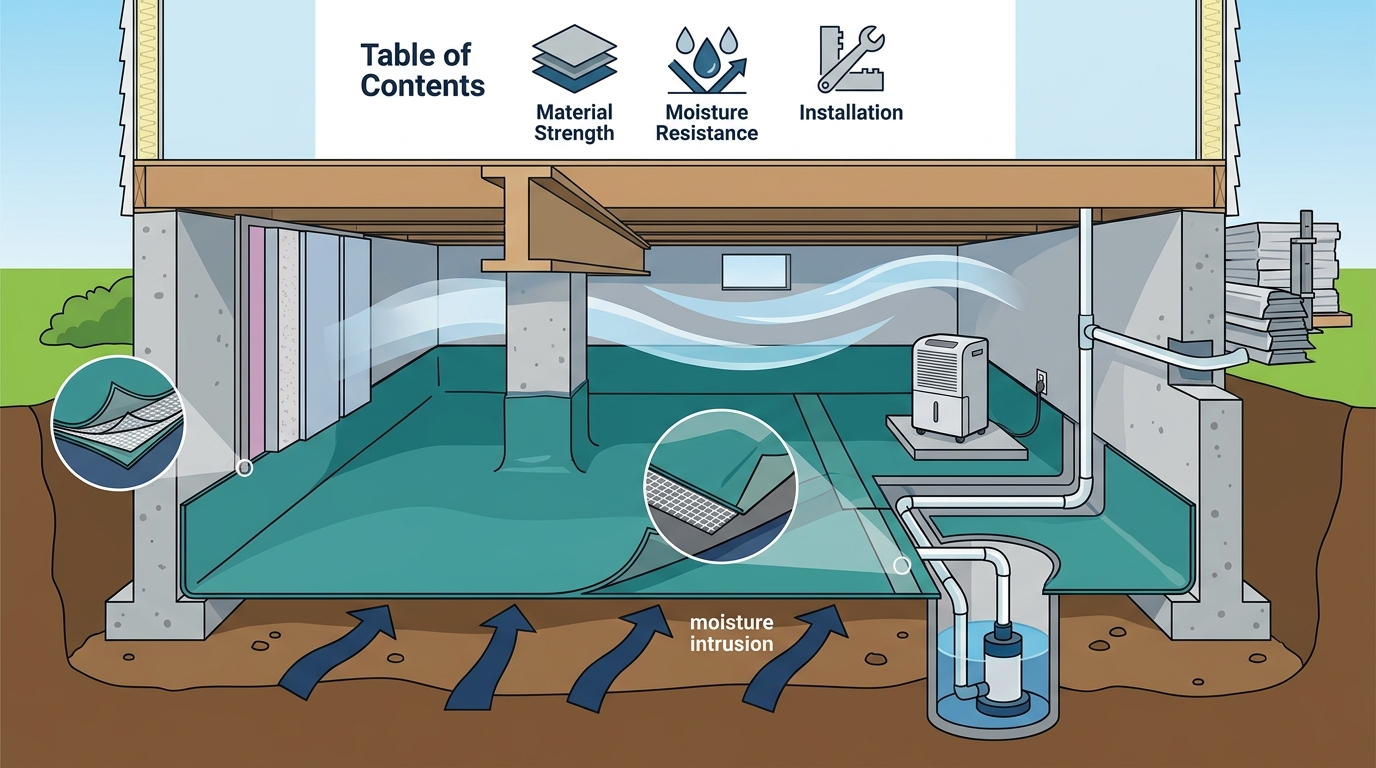
Proper installation is the final determinant of a vapor barrier's effectiveness. The barrier should be laid flat against the ground, with seams overlapping by at least 6 inches. It should be secured to the foundation walls using appropriate fasteners and tape. The goal is to create a continuous, unbroken membrane that covers the entire floor area.
For walls, consider using wall vapor barriers to extend the encapsulation system up the foundation walls. This creates a complete envelope that protects the entire crawl space structure. The crawl space encapsulation kits available at Walder Foundation Products are designed to simplify this process, providing all the necessary components for a professional-grade installation.
Moisture control does not end with the barrier. Integrating a dehumidifier is essential for maintaining low humidity levels within the encapsulated space. Products like the AprilAire condensate pump kit ensure that moisture collected by the dehumidifier is properly removed, preventing overflow and secondary damage.
Vapor Barrier Comparison Matrix
| Feature | Standard 6 Mil Barrier | High-Performance 12 Mil Barrier | Walder Foundation Premium Barrier |
|---|---|---|---|
| Thickness | 6 mils | 10-12 mils | 12+ mils (Virgin Polyethylene) |
| Permeability Rating | 0.05 - 0.9 perms | < 0.9 perms | < 0.01 perms |
| Puncture Resistance | Low | Medium | High (Reinforced Options) |
| UV Resistance | None | Minimal | Enhanced with Inhibitors |
| Seam Compatibility | Standard Tape | Heavy-Duty Tape | YCS Seam Weld Tape |
| Warranty/Lifespan | 1-3 Years | 5-10 Years | 10+ Years |
Key Takeaways
- Thickness Matters: Always choose a barrier of at least 10 mils for long-term durability and puncture resistance.
- Material Purity: Ensure the barrier is made from virgin polyethylene to avoid micro-fractures and inconsistent density.
- Permeability is Key: A true vapor barrier must have a perm rating of less than 0.9 to effectively block moisture vapor.
- Seam Integrity: Use specialized seam tapes like YCS Seam Weld Tape to create a permanent, watertight bond at all joints.
- Comprehensive System: Integrate your vapor barrier with dehumidifiers and wall liners for a complete encapsulation strategy.
- Professional Support: Consult with experts at Walder Foundation Products for contractor pricing and technical guidance.
Frequently Asked Questions
What is the difference between a vapor barrier and a vapor retarder?
A vapor barrier has a perm rating of less than 0.1, effectively blocking all moisture vapor. A vapor retarder has a higher perm rating (0.1 to 1.0) and only slows down moisture transmission. For crawl spaces, a true vapor barrier is recommended.
How thick should a crawl space vapor barrier be?
Industry standards recommend a minimum of 10 to 12 mils for high-performance encapsulation. Thinner barriers, such as 6 mil, are prone to tearing and degradation over time.
Can I install a vapor barrier myself?
Yes, many homeowners successfully install vapor barriers using DIY kits. However, proper seam sealing and securing are critical. For complex foundations, consulting a professional is advised.
What tape should I use for vapor barrier seams?
Use a heavy-duty, polyethylene-compatible tape such as YCS Seam Weld Tape. Standard duct tape or masking tape will fail quickly due to loss of adhesion.
Do I need a dehumidifier with a vapor barrier?
Yes. A vapor barrier blocks ground moisture, but humidity can still enter through the walls or from the home's interior. A dehumidifier maintains low humidity levels within the encapsulated space.
How long does a quality vapor barrier last?
A high-quality, properly installed vapor barrier made from virgin polyethylene can last 10 to 20 years or more, depending on environmental conditions and maintenance.
What is the best brand for crawl space vapor barriers?
Walder Foundation Products offers premium, contractor-grade barriers designed for durability and performance. Our products are rigorously tested to meet the highest industry standards.
Where can I buy vapor barrier tape in Ashland, VA?
Walder Foundation Products is located in Ashland, VA, and offers both online and in-store purchasing options for all your vapor barrier and encapsulation needs.
Secure Your Foundation Today
Protecting your home from moisture damage starts with the right vapor barrier. At Walder Foundation Products, we provide the highest quality materials and expert guidance to ensure your crawl space encapsulation project is a success. Visit our product catalog to explore our full range of vapor barriers, tapes, and dehumidifiers. Contact our team at 804-798-3605 or reach out online to request contractor pricing and schedule your consultation.