
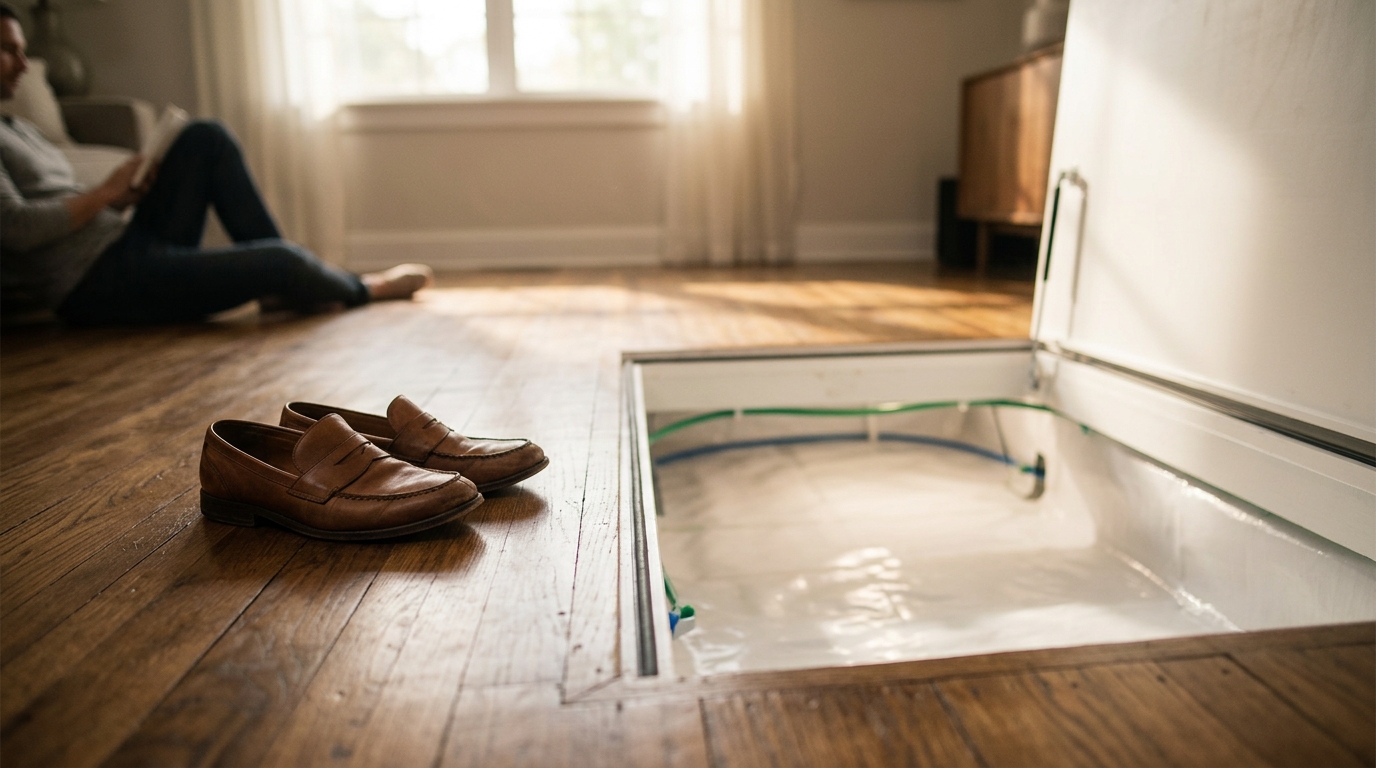
Moisture is the silent destroyer of residential foundations. According to the U.S. Department of Energy, uncontrolled humidity in crawl spaces can lead to structural decay, mold proliferation, and significant energy inefficiency. When moisture levels exceed 60 percent relative humidity, the environment becomes a breeding ground for wood-destroying organisms and allergens that compromise indoor air quality. This guide details the mechanical and chemical processes of moisture intrusion and provides the exact product ecosystem required to seal your home from below.
What Is Crawl Space Moisture?
Moisture in a crawl space is not merely wet dirt. It is a complex interaction of hydrostatic pressure, soil vapor emission, and condensation. Soil vapor emission is the process where water molecules in the ground evaporate and rise through the porous concrete or soil of the crawl space floor. This vapor enters the home through the "stack effect," where warm air rises and pulls moist air from the crawl space into the living areas above.
Without intervention, this continuous moisture load saturates wooden floor joists, rusts metal fasteners, and creates an ideal habitat for termites and carpenter ants. The solution requires a multi-layered approach involving vapor retarders, mechanical dehumidification, and structural waterproofing.
The Mechanics of Moisture Intrusion
Understanding how moisture moves is critical to stopping it. Water does not just sit in the ground; it migrates. Hydrostatic pressure occurs when the water table rises, pushing water against foundation walls and floors. This pressure forces water through microscopic cracks in concrete, leading to active leaks.
Additionally, temperature differentials play a major role. When warm, humid air from the home's interior or the outside environment contacts the cool surfaces of foundation walls or pipes, condensation forms. This is similar to water droplets forming on a cold glass of ice water. To combat this, you must address both the source (the ground) and the symptom (the air).
Vapor Barrier Systems and Installation
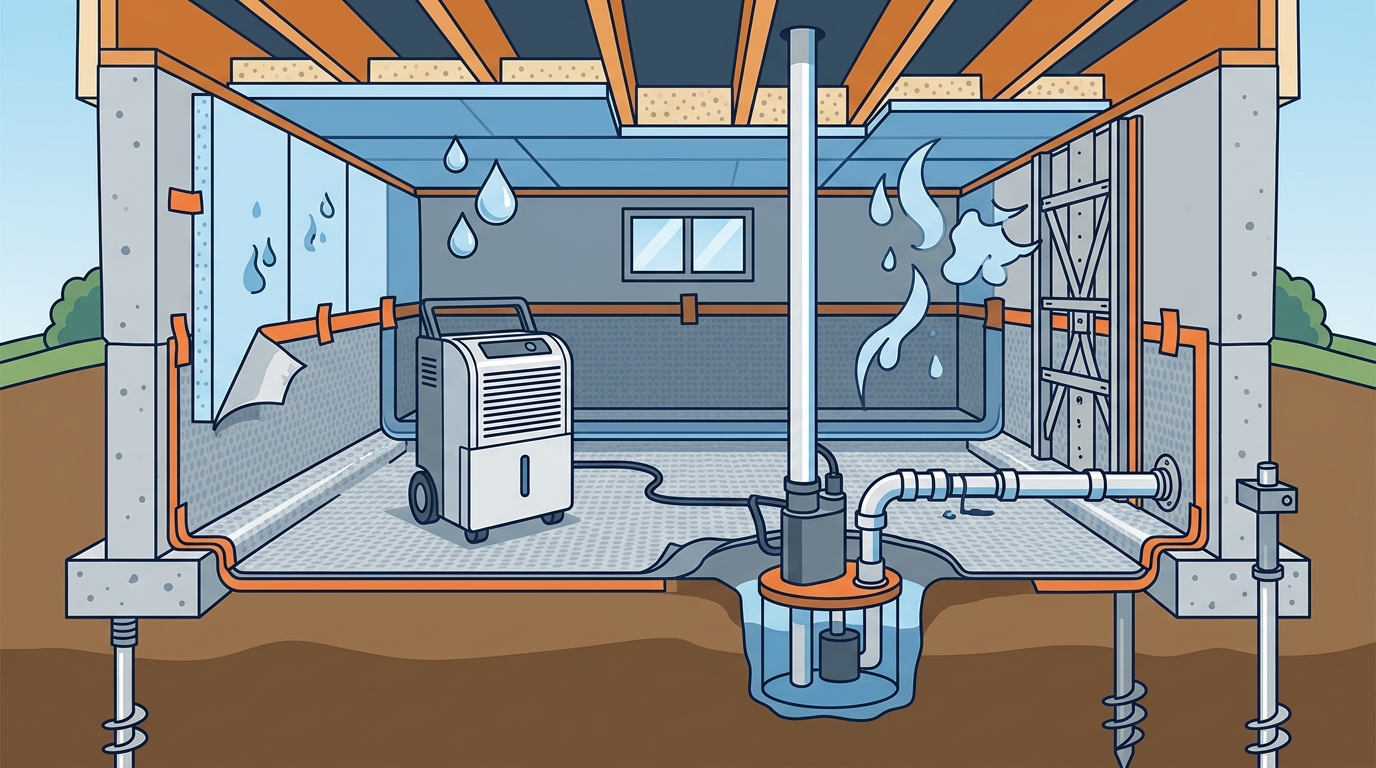
The first line of defense is a high-performance vapor barrier. This is a thick, durable polyethylene sheeting installed over the entire crawl space floor and up the foundation walls. Crawl space encapsulation is the industry term for this comprehensive sealing process. By creating an airtight envelope, you prevent soil vapor from entering the space.
Material Selection and Durability
Not all plastic sheeting is created equal. Standard construction-grade polyethylene is too thin and prone to tearing. You must use heavy-duty, reinforced vapor barriers, such as those found in our WFP Crawl Space Encapsulation product line. These materials are designed to resist punctures from debris and maintain integrity over decades of exposure to soil gases.
Sealing the Envelope
The effectiveness of a vapor barrier depends entirely on its seams and edges. Gaps allow moisture to bypass the barrier. Use heavy-duty tapes, such as WFP Pro Tape 9 Mil, to seal all seams with a minimum overlap of six inches. Additionally, secure the barrier to the foundation walls using Christmas Tree Fasteners or similar mechanical anchors. These fasteners provide a secure hold that prevents the barrier from detaching over time due to thermal expansion and contraction.
Dehumidification and Airflow Dynamics
Even with a perfect vapor barrier, residual moisture from plumbing leaks, HVAC condensation, or minor hydrostatic seepage will remain. This is where mechanical dehumidification becomes essential. A crawl space dehumidifier removes this excess moisture from the air, maintaining relative humidity levels between 30 and 50 percent.
Choosing the Right Dehumidifier
Standard home dehumidifiers are not designed for the harsh environment of a crawl space. They lack the corrosion-resistant coatings and robust condensate pumps needed for continuous operation. Brands like AprilAire and ZenAir offer units specifically engineered for this purpose. These units feature stainless steel coils and heavy-duty compressors that withstand high humidity and temperature fluctuations.
Condensate Management
Dehumidifiers produce water. You must have a reliable method to remove this water. The AprilAire 4856 Low Profile Condensate Pump Kit is a critical component for installations where gravity drainage is not possible. This pump automatically lifts and discharges condensate into a nearby drain line, preventing overflow and ensuring the system operates continuously without manual intervention.
Foundation Waterproofing and Drainage
While encapsulation handles air and vapor, structural waterproofing handles liquid water. If water is actively entering your crawl space through foundation walls or floors, you must address the structural integrity of the foundation.
Basement Wall Repair
Cracked or bowing foundation walls can allow water intrusion and structural failure. Carbon fiber kits are a modern solution for stabilizing vertical cracks. These high-strength carbon fiber strips are epoxy-bonded to the wall, providing immense tensile strength that prevents further bowing or cracking. For more severe structural issues, Helical Piles or Push Piers may be required to underpin and stabilize the foundation.
Drainage Solutions
Proper drainage directs water away from the foundation. Install Drainage & Dimple Board systems along the interior perimeter of the foundation. These boards create a channel for water to flow down to a sump pump system. The Sump Pump Systems & Accessories then eject this water safely away from the home's footprint, preventing hydrostatic pressure buildup.
Product Comparison for Moisture Control
Selecting the right products requires understanding their specific roles in the moisture control ecosystem. The table below outlines the primary categories of products available for comprehensive crawl space management.
| Product Category | Primary Function | Key Brands/Products | Application Area |
|---|---|---|---|
| Vapor Barriers | Prevent soil vapor emission | WFP Ground Vapor Barriers | Crawl Space Floor |
| Dehumidifiers | Remove airborne humidity | AprilAire, ZenAir | Crawl Space Air |
| Condensate Pumps | Discharge dehumidifier water | AprilAire 4856 Kit | Dehumidifier Output |
| Wall Repair | Stabilize bowing/cracked walls | Carbon Fiber Kits, Helical Piles | Foundation Walls |
| Insulation | Thermal regulation and R-value | Terma-Foam, Fiberglass Batt | Foundation Walls |
Key Takeaways
- Moisture Source: Soil vapor emission is the primary driver of crawl space humidity, contributing to up to 50 percent of indoor air moisture issues.
- Encapsulation: Sealing the crawl space floor and walls with heavy-duty vapor barriers is the most effective prevention method.
- Fastening: Use Christmas Tree Fasteners for secure vapor barrier attachment to foundation walls.
- Dehumidification: Mechanical dehumidifiers are required even in encapsulated spaces to manage residual moisture and plumbing leaks.
- Structural Integrity: Carbon Fiber Kits provide a non-invasive solution for stabilizing bowing foundation walls.
- Drainage: Proper interior drainage systems prevent hydrostatic pressure from compromising the foundation.
- Professional Grade: Use contractor-grade products like WFP Pro Tape to ensure long-term system integrity.
Frequently Asked Questions
How often should I change my crawl space dehumidifier filter?
It is recommended to check your dehumidifier filter monthly and clean or replace it every three to six months. Washable MERV 8 filters can be rinsed and reused, but they must be completely dry before reinstalling to prevent mold growth within the unit.
Can I install a vapor barrier myself?
Yes, DIY enthusiasts can install vapor barriers, but it requires precision. The barrier must be sealed tightly at all seams and edges. Using WFP Pro Tape and proper fasteners is critical. For complex layouts or severe moisture issues, professional installation is often recommended.
What is the difference between a sump pump and a condensate pump?
A sump pump removes groundwater that accumulates in a sump pit, protecting the foundation from hydrostatic pressure. A condensate pump removes water produced by dehumidifiers or HVAC systems. The AprilAire 4856 is designed specifically for the lower volume and continuous duty of dehumidifier output.
How do I know if my foundation walls are bowing?
Signs of bowing include horizontal cracks in the foundation, walls that appear to lean inward, and difficulty opening basement doors. If you suspect bowing, Carbon Fiber Kits can provide immediate stabilization while you consult a structural engineer.
Why is my crawl space still humid after encapsulation?
Encapsulation stops vapor from the ground, but it does not remove existing moisture or moisture from plumbing leaks. A dehumidifier is required to maintain low humidity levels. Additionally, ensure all seams in the vapor barrier are properly taped with WFP Pro Tape to prevent air leakage.
What is the best insulation for a crawl space?
Foam Board Insulation is generally preferred for crawl spaces because it resists moisture absorption and provides a high R-value per inch. It should be installed on the foundation walls, not the floor, to keep the thermal envelope within the conditioned space.
How do I prevent pests in my encapsulated crawl space?
Sealing the crawl space eliminates the entry points for pests. Use Vent Covers and Crawl Space Doors that are tightly sealed. Additionally, maintain a dry environment, as pests are attracted to moisture.
Secure Your Foundation Today
Moisture control is not a one-time fix; it is an ongoing system that protects your home's value and your family's health. Walder Foundation Products provides the comprehensive range of tools, materials, and expertise needed to build a durable, dry crawl space. Whether you need heavy-duty vapor barriers, professional-grade dehumidifiers, or structural repair components, we have the solutions you need.
Visit our product catalog to explore our full inventory of crawl space and foundation repair products. For personalized advice or contractor pricing, contact our sales team today. Protect your home from the ground up with Walder Foundation Products.