
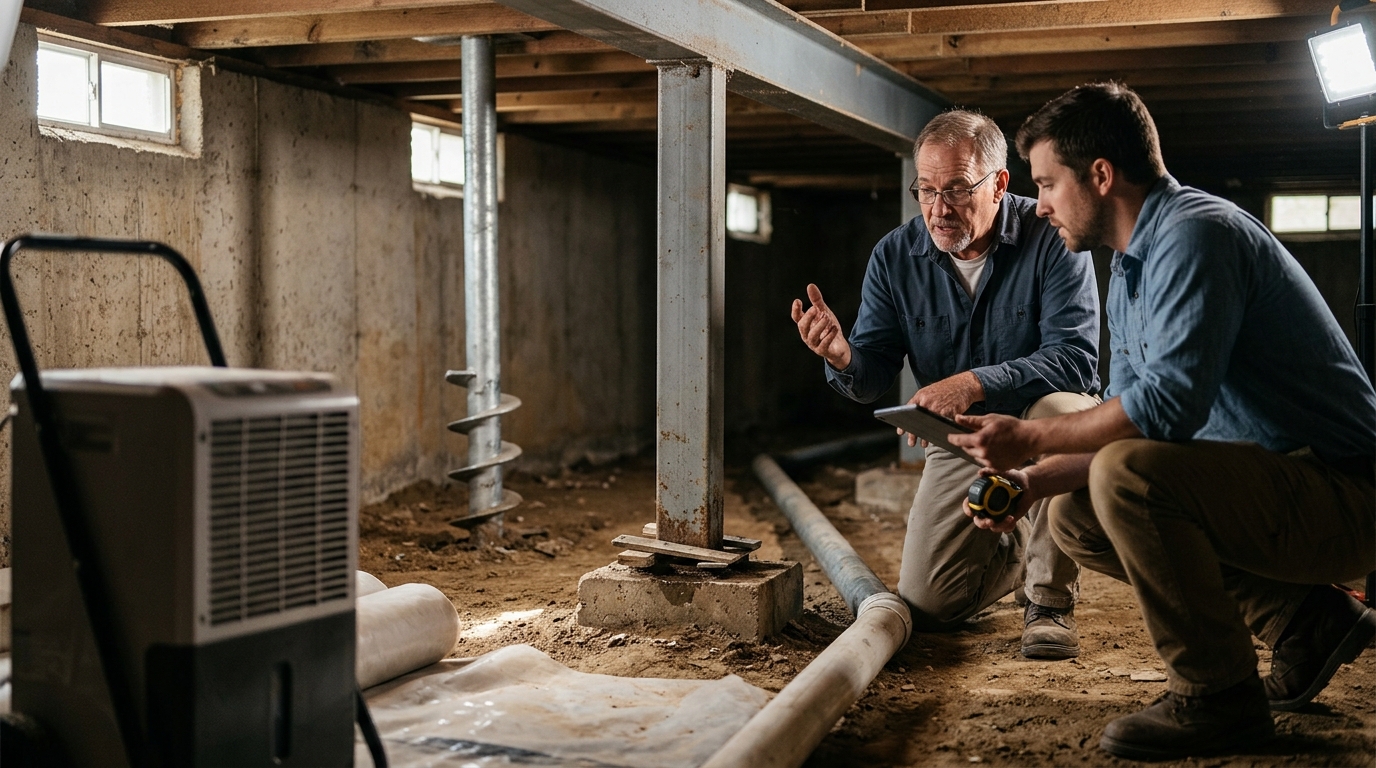
Structural integrity and indoor air quality are deeply interconnected. According to the U.S. Environmental Protection Agency, crawl spaces can account for up to 50% of the moisture in a home's air EPA data. When contractors fail to address the root causes of moisture and structural instability, they create a cascade of failures that compromise the entire building envelope. This article outlines the most frequent errors in foundation and crawl space repair, providing the technical clarity needed to ensure long-term performance.
Ignoring Vapor Barrier Integrity
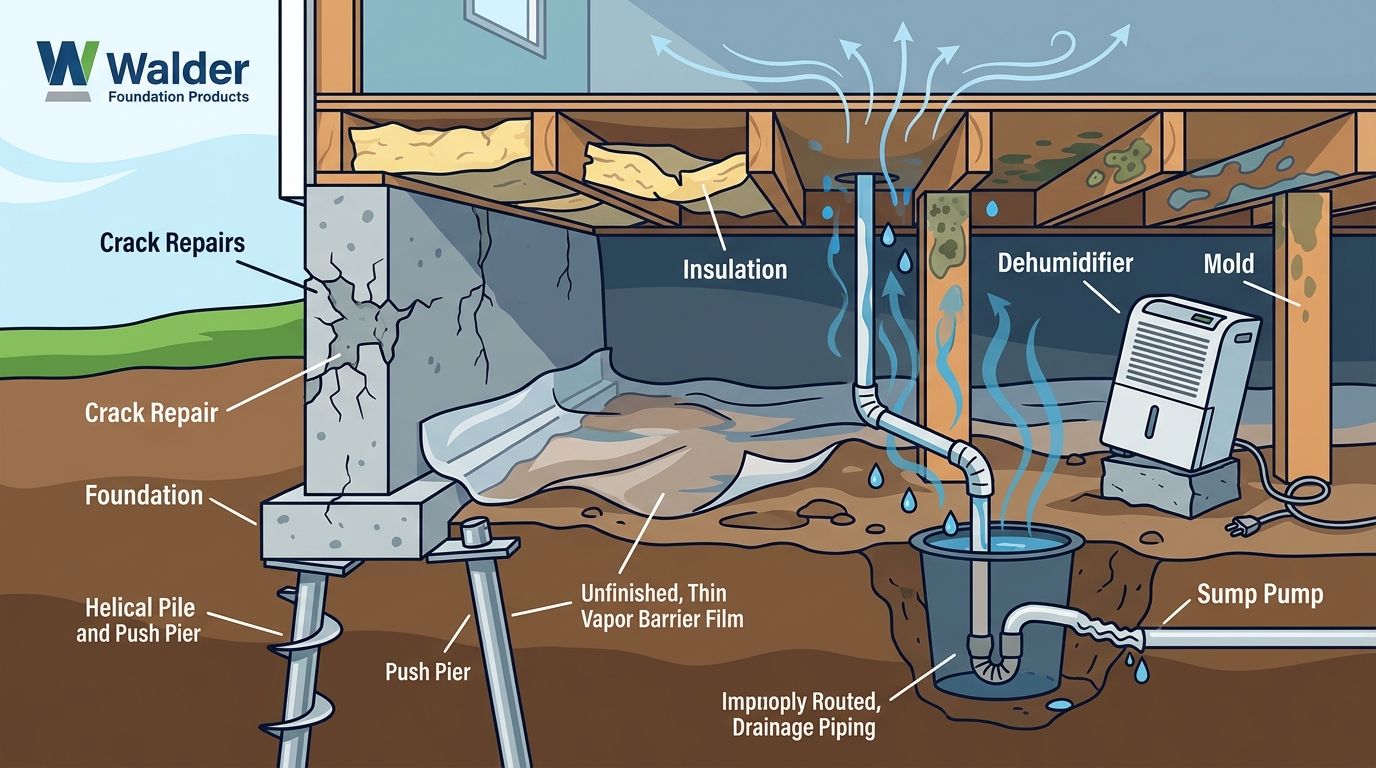
A vapor barrier is a critical component of any modern crawl space encapsulation system. It acts as a physical barrier that prevents ground moisture from evaporating into the crawl space and subsequently into the living areas of the home. Without a properly installed vapor barrier, the soil beneath the home becomes a continuous source of humidity.
One of the most common contractor mistakes is using vapor barriers that are too thin or lack sufficient puncture resistance. A 6-mil barrier is often insufficient for long-term durability, especially in areas with rocky soil or heavy foot traffic during installation. Contractors must select heavy-duty, reinforced liners that can withstand the rigors of the job site.
Furthermore, the seams of the vapor barrier must be sealed meticulously. Any gap or tear in the barrier allows moisture to bypass the system entirely. Using high-quality, compatible tapes is essential for maintaining the integrity of the seal. Walder Foundation Products offers specialized tapes designed to ensure a permanent, airtight seal between barrier sheets.
Improper Insulation and Air Sealing
Insulation plays a vital role in regulating temperature and preventing condensation on cold surfaces. However, many contractors make the mistake of installing insulation in ways that trap moisture against the foundation walls. This can lead to mold growth and wood rot over time.
Fiberglass batts are particularly problematic in crawl spaces because they absorb moisture easily and lose their R-value when wet. Instead, rigid foam board insulation is often recommended because it provides both thermal resistance and moisture resistance. Walder Foundation Products supplies high-performance foam board insulation that is designed to withstand the harsh environment of a crawl space.
Another critical error is failing to air seal the transition between the crawl space and the living area. The crawl space acts as a buffer zone, and if air leaks through the rim joists, it can cause significant energy loss and comfort issues. Proper air sealing is just as important as insulation in creating an efficient building envelope.
Neglecting Foundation Support Systems
Foundation settlement is a common issue that requires professional intervention. Contractors often underestimate the complexity of underpinning and pier installation. Using the wrong type of pier for the specific soil conditions can lead to continued settling and structural damage.
Helical piles are an excellent solution for new construction and light loads, while push piers are often necessary for heavier structures and deeper load-bearing strata. Walder Foundation Products provides a comprehensive range of foundation repair products, including helical piles and push piers, to address various structural needs.
Another mistake is failing to properly brace basement walls. Carbon fiber straps are a modern solution for stabilizing bowing walls, but they must be installed with precise tension and anchoring to be effective. Improper installation can render the system useless and fail to prevent further wall movement.
Mismanaging Ventilation and Airflow
Traditional building codes often required crawl spaces to be vented to the outside air. However, modern best practices have shifted towards encapsulation and controlled ventilation. Contractors who continue to rely on traditional venting strategies may inadvertently introduce humid outdoor air into the crawl space, leading to condensation and mold.
When encapsulating a crawl space, it is essential to install a dehumidifier to maintain optimal humidity levels. AprilAire dehumidifiers are widely regarded as industry leaders for their durability and efficiency in controlling moisture in enclosed spaces.
Additionally, vent covers and doors should be installed to prevent pests and debris from entering the crawl space. Walder Foundation Products offers a variety of vent covers and doors designed to enhance security and appearance while maintaining necessary airflow control.
Overlooking Drainage and Water Management
Water management is the first line of defense against foundation damage. Contractors often fail to install adequate drainage systems, such as French drains or sump pumps, which are essential for directing water away from the foundation.
A sump pump system is critical in areas with high water tables. Without a reliable sump pump, water can accumulate in the crawl space, leading to flooding and structural instability. Sump pump systems and accessories from reputable manufacturers ensure that water is effectively removed from the crawl space.
Proper grading around the home's perimeter is also essential. If the ground slopes towards the foundation, water will pool against the walls, increasing hydrostatic pressure and the risk of leaks. Contractors must ensure that the final grade directs water away from the structure.
Choosing the Wrong Materials
The longevity of a foundation and crawl space repair project depends heavily on the quality of the materials used. Contractors who cut corners by using low-grade materials may face costly callbacks and reputational damage.
For example, using non-corrosion-resistant fasteners in a humid environment can lead to premature failure of the installation. Similarly, using inferior adhesives can cause vapor barriers to delaminate over time. Walder Foundation Products is committed to providing only the highest quality materials that meet industry standards for durability and performance.
Another consideration is the compatibility of materials. Mixing different types of insulation, vapor barriers, and sealants without ensuring compatibility can lead to chemical reactions that degrade the materials. Always consult technical documents and manufacturer guidelines to ensure material compatibility.
Key Takeaways
- Vapor Barrier Thickness: Use heavy-duty, reinforced vapor barriers (at least 10-12 mil) to prevent punctures and ensure long-term moisture control.
- Insulation Type: Rigid foam board insulation is preferred over fiberglass batts in crawl spaces due to its moisture resistance and durability.
- Foundation Piers: Match the pier type (helical or push) to the specific soil conditions and load requirements of the structure.
- Dehumidification: Encapsulated crawl spaces require a dedicated dehumidifier, such as an AprilAire unit, to maintain optimal humidity levels.
- Drainage Systems: Install sump pumps and French drains to manage groundwater and prevent hydrostatic pressure buildup.
- Air Sealing: Seal all gaps and penetrations in the rim joist to prevent air leakage and energy loss.
- Material Quality: Use corrosion-resistant fasteners and compatible adhesives to ensure the longevity of the installation.
Frequently Asked Questions
What is the most common mistake in crawl space encapsulation?
The most common mistake is failing to properly seal the vapor barrier seams and edges, which allows moisture to bypass the barrier and compromise the entire system.
Why is rigid foam insulation better than fiberglass in crawl spaces?
Rigid foam insulation does not absorb moisture and retains its R-value when wet, whereas fiberglass batts can trap moisture and lose their insulating properties.
How do I know if I need helical piles or push piers?
Helical piles are typically used for lighter loads and new construction, while push piers are used for heavier structures and deeper load-bearing strata. A structural engineer can determine the best option for your specific needs.
Is a dehumidifier necessary in an encapsulated crawl space?
Yes, a dehumidifier is essential to maintain optimal humidity levels and prevent condensation and mold growth in an encapsulated crawl space.
What is the role of a sump pump in foundation repair?
A sump pump removes accumulated water from the crawl space, preventing flooding and reducing hydrostatic pressure against the foundation walls.
How often should I inspect my foundation and crawl space?
It is recommended to inspect your foundation and crawl space at least once a year, or after significant weather events, to identify and address any potential issues early.
What materials are best for basement wall repair?
Carbon fiber straps are a popular and effective material for stabilizing bowing basement walls, but the best choice depends on the severity of the bowing and the specific structural requirements.
Secure Your Home's Foundation Today
Avoiding these common contractor mistakes requires expertise, quality materials, and a commitment to best practices. Walder Foundation Products is your trusted partner for all foundation and crawl space repair needs. Contact our team today to learn more about our comprehensive product line and how we can help you achieve lasting results.