
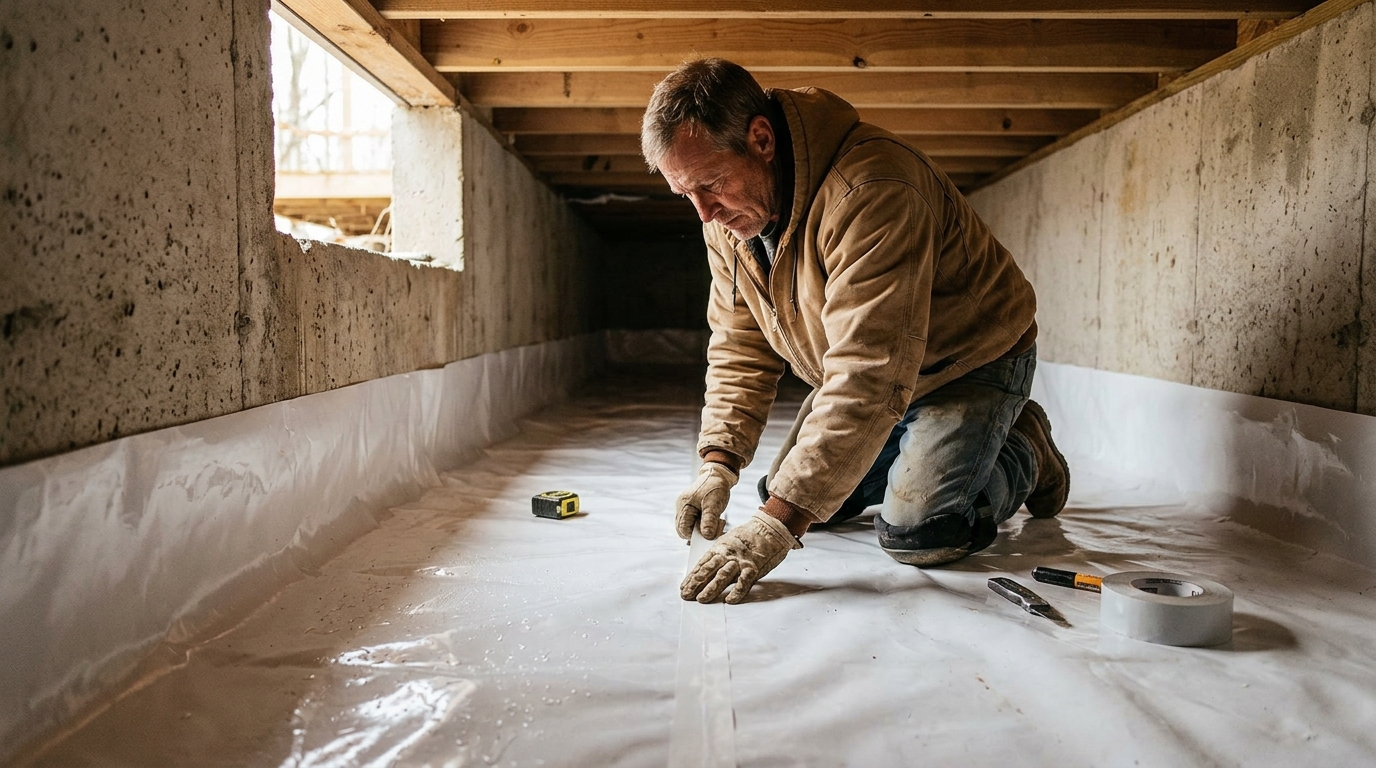
Improper vapor barrier installation is the leading cause of crawl space failure, with data showing that up to 50% of crawl spaces suffer from chronic moisture issues due to simple installation errors. When a vapor barrier fails, it does not just compromise the insulation; it creates a breeding ground for mold, wood rot, and structural decay. For contractors and homeowners in Virginia and beyond, understanding the precise mechanics of vapor barrier deployment is critical to protecting the home's foundation. This guide details the most frequent technical errors and the exact prevention strategies used by professionals at Walder Foundation Products.
Choosing the Right Vapor Barrier Thickness
One of the most common mistakes is selecting a vapor barrier that is too thin for the specific application. Many DIYers opt for standard 6-mil polyethylene sheeting because it is cheaper and more readily available at big-box stores. However, 6-mil material is highly susceptible to tearing during installation and may not provide sufficient vapor retardancy in high-humidity environments. Energy Star guidelines recommend using thicker, more durable materials for encapsulation projects to ensure long-term performance.
Professional contractors typically use 10-mil or 15-mil reinforced vapor barriers. These materials offer superior puncture resistance and lower vapor transmission rates. When selecting your material, look for products specifically designed for crawl space encapsulation rather than general construction use. At Walder Foundation Products, we stock high-density options that are engineered to withstand the harsh conditions of a crawl space environment.
Why Thickness Matters
Thicker barriers provide a more robust seal against ground moisture. They are less likely to sag or tear when pulled taut across joists. Additionally, thicker materials often have better UV resistance if the crawl space has any light exposure through vents or access doors.
Sealing Critical Junctions and Seams
Even the best vapor barrier will fail if the seams are not properly sealed. A common error is overlapping seams without using a specialized tape. Standard duct tape or packing tape will degrade quickly in the humid, dark environment of a crawl space, losing its adhesive properties within months. This leads to gaps where moisture can penetrate.
To prevent this, always use a heavy-duty, polyethylene-specific tape. WFP Pro Tape is an exclusive product designed to bond securely to polyethylene surfaces. It maintains its adhesive strength even in high-humidity conditions. When applying tape, ensure the surface is clean and dry. Overlap seams by at least 6 inches to create a wide bonding area. This creates a continuous vapor retarder that directs moisture back into the ground rather than allowing it to evaporate into the crawl space.
The Importance of a Continuous Barrier
The goal is to create a monolithic layer. Any gap, no matter how small, can allow significant moisture vapor to pass through. This is why taping every seam is non-negotiable. Additionally, use Christmas tree fasteners to secure the barrier to the foundation walls and piers, ensuring the material stays in place and does not sag.
Proper Wall Termination and Fastening
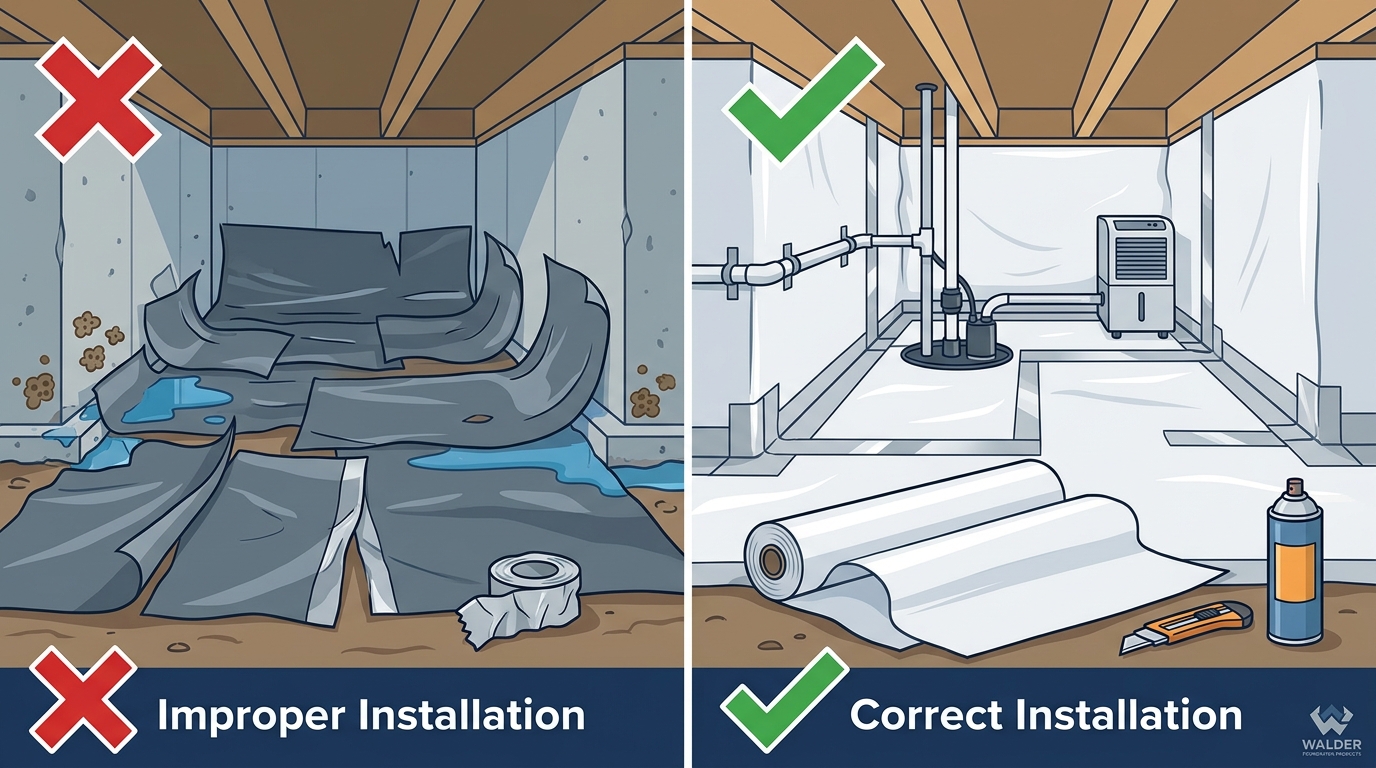
Another frequent mistake is failing to terminate the vapor barrier correctly at the foundation walls. The barrier should be extended up the walls to within a few inches of the top plate. This prevents moisture from wicking up the foundation and entering the living space above. If the barrier is left hanging loosely or terminated too low, it creates a channel for water to travel.
Use appropriate fasteners to secure the barrier to the concrete or block walls. Proseal Liner clips are designed specifically for this purpose. They provide a secure hold without damaging the barrier material. Ensure that the fasteners are spaced closely enough to prevent sagging. The barrier should be taut but not stretched to the point of tearing.
Dealing with Irregular Surfaces
Foundation walls are rarely perfectly smooth. Use foam board insulation or specialized wall liners to create a smooth surface for the vapor barrier to adhere to. This not only improves the aesthetic but also ensures a better seal. Terma-Foam pins can be used to secure foam board insulation to the walls, providing a stable base for the vapor barrier.
Integrating Dehumidification Systems
Encapsulating the crawl space does not eliminate all moisture. Ground moisture will still evaporate and be trapped inside the encapsulated space. Without proper ventilation or dehumidification, this trapped moisture can lead to condensation on the barrier itself. This is why integrating a dehumidifier is a critical step in the prevention strategy.
Install a high-capacity dehumidifier specifically designed for crawl spaces. AprilAire dehumidifiers are a popular choice among professionals due to their reliability and efficiency. These units maintain a consistent humidity level, preventing condensation and mold growth. Ensure the dehumidifier is properly drained or has a condensate pump to remove the collected water.
Choosing the Right Dehumidifier
Calculate the square footage of your crawl space to determine the appropriate dehumidifier capacity. A unit that is too small will struggle to maintain the desired humidity level, while one that is too large may short-cycle. ZenAir dehumidifiers offer advanced features such as humidistat control and automatic defrost, making them suitable for various climates.
Vapor Barrier Material Comparison
| Material Type | Thickness | Durability | Vapor Retardancy | Best Use Case |
|---|---|---|---|---|
| Standard Polyethylene | 6 mil | Low | Moderate | Temporary construction use |
| Reinforced Polyethylene | 10-15 mil | High | High | Permanent crawl space encapsulation |
| Aluminum Foil | Varies | Medium | Very High | High-temperature environments |
| Non-Woven Fabric | Varies | Very High | High | Areas with heavy foot traffic |
Key Takeaways
- Use 10-mil or thicker barriers: Standard 6-mil polyethylene is prone to tearing and offers insufficient vapor retardancy for long-term encapsulation.
- Seal all seams with specialized tape: Use heavy-duty polyethylene tape like WFP Pro Tape to ensure a continuous vapor barrier.
- Terminate barriers at the walls: Extend the barrier up the foundation walls and secure it with appropriate clips to prevent moisture wicking.
- Integrate a dehumidifier: Encapsulation traps moisture; a crawl space dehumidifier is essential to manage humidity levels and prevent condensation.
- Secure with proper fasteners: Use Christmas tree fasteners or Proseal Liner clips to hold the barrier taut against piers and walls.
- Inspect regularly: Check the barrier and dehumidifier annually for tears, gaps, or malfunctioning components.
- Consult professionals: For complex foundation issues, consider consulting with Walder Foundation Products for expert guidance and high-quality materials.
Frequently Asked Questions
What is the best thickness for a crawl space vapor barrier?
For permanent crawl space encapsulation, a vapor barrier with a thickness of 10 mil to 15 mil is recommended. Thicker materials offer greater durability and resistance to punctures, ensuring a longer-lasting seal against ground moisture.
Can I use regular duct tape to seal vapor barrier seams?
No, regular duct tape is not suitable for crawl space applications. The adhesive degrades quickly in humid environments, leading to seam failure. Always use a heavy-duty, polyethylene-specific tape designed for this purpose.
Do I need a dehumidifier if I encapsulate my crawl space?
Yes, encapsulation traps moisture that evaporates from the ground. Without a dehumidifier, this moisture can lead to condensation and mold growth. A crawl space dehumidifier is essential to maintain a dry environment.
How do I secure the vapor barrier to the foundation walls?
Use specialized fasteners such as Christmas tree fasteners or Proseal Liner clips. These provide a secure hold without damaging the barrier material. Ensure the barrier is extended up the wall to within a few inches of the top plate.
What is the difference between a vapor barrier and a vapor retarder?
A vapor barrier is a material that prevents the passage of water vapor, while a vapor retarder slows down the rate of vapor transmission. In crawl space encapsulation, a high-performance vapor barrier is typically used to create a complete seal.
How often should I inspect my crawl space vapor barrier?
It is recommended to inspect the vapor barrier at least once a year. Look for tears, gaps, or signs of moisture accumulation. Regular maintenance ensures the barrier continues to perform effectively.
What are the signs of a failing vapor barrier?
Signs include visible tears or gaps in the material, condensation on the barrier, musty odors, and increased humidity levels in the crawl space. If you notice these signs, address the issues promptly to prevent further damage.
Contact Walder Foundation Products
Proper vapor barrier installation is critical for protecting your home from moisture damage. At Walder Foundation Products, we provide the high-quality materials and expert guidance you need to complete your crawl space encapsulation project successfully. Contact us today to learn more about our products and services.