
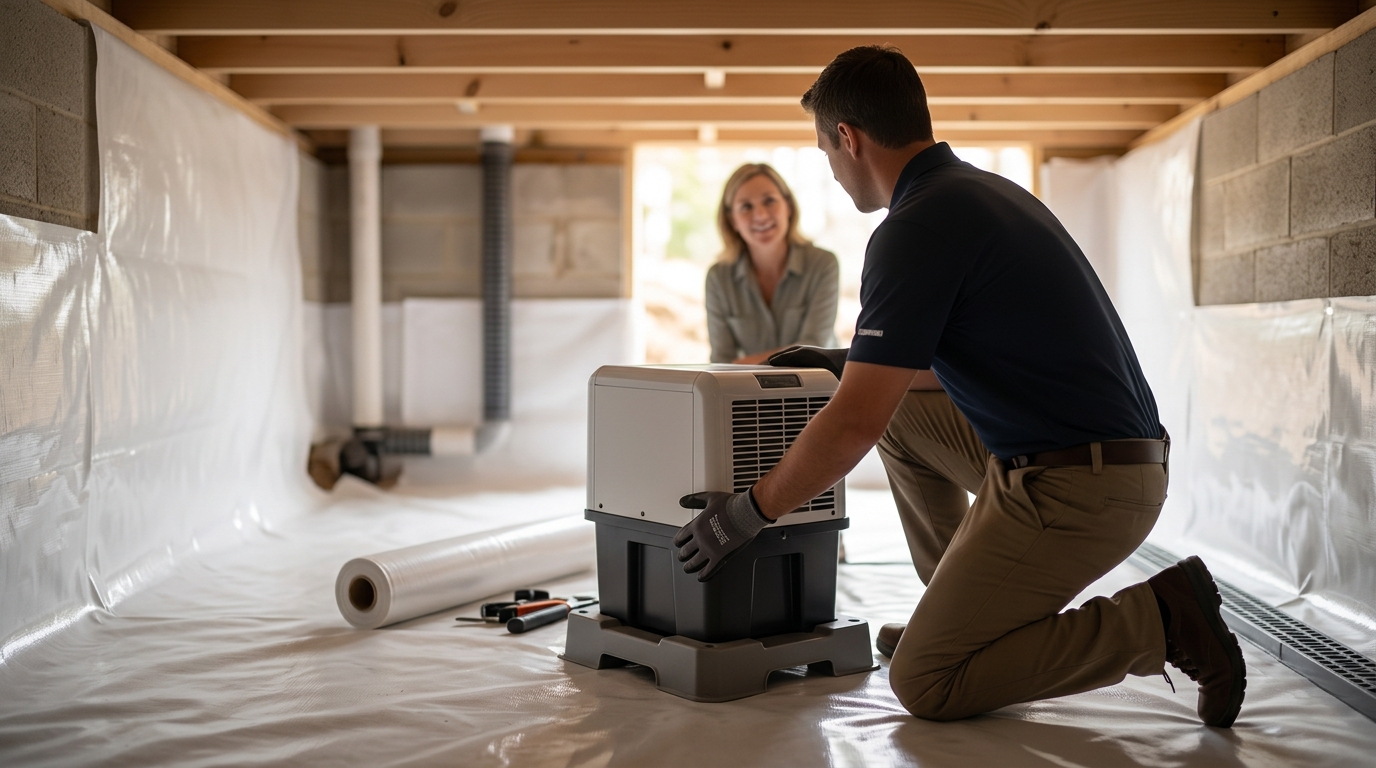
Crawl Space Dehumidifier Pricing and ROI for Foundation Protection
Moisture intrusion in crawl spaces is a silent destroyer of structural integrity. According to the Environmental Protection Agency, homes with high humidity levels in their crawl spaces are significantly more prone to mold growth and wood rot. This guide analyzes the financial investment required for professional dehumidification systems and the tangible return on investment through foundation preservation.
Why Dehumidification Matters for Foundations
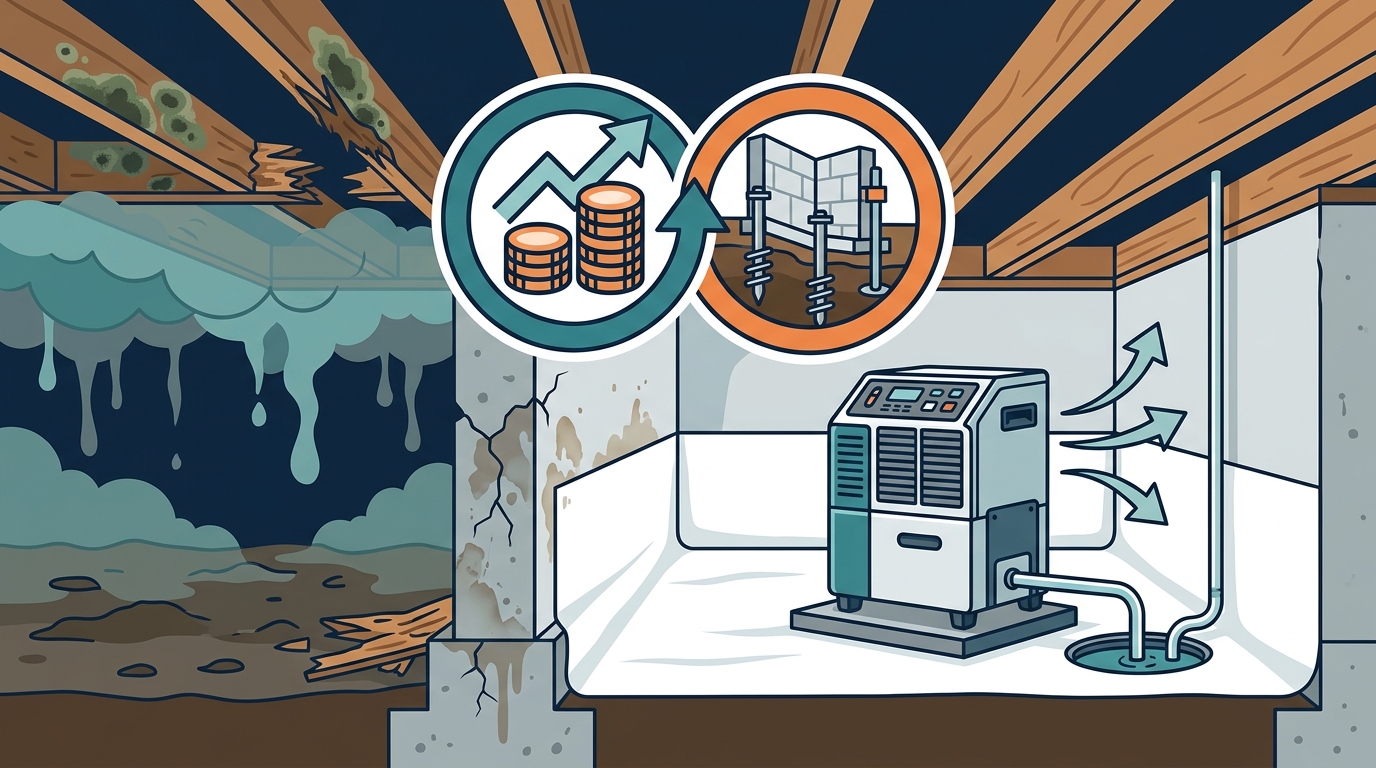
A crawl space is not merely an empty void beneath your home. It is a critical component of the building envelope. When humidity levels exceed 60 percent, the air becomes saturated with water vapor. This vapor condenses on cooler surfaces, such as wooden joists and metal foundation walls. Over time, this constant exposure leads to structural decay.
Dehumidification is the process of removing excess moisture from the air to maintain a balanced environment. By controlling the relative humidity, you prevent the conditions that allow mold spores to germinate. This is not just about air quality. It is about protecting the physical assets of your property.
Foundation protection begins with moisture management. Wet soil expands and contracts, putting pressure on foundation walls. This can lead to cracking and shifting. A dry crawl space stabilizes the surrounding soil and reduces hydrostatic pressure. This proactive measure is far less expensive than emergency foundation repair.
Dehumidifier Pricing Tiers and Specifications
Investing in a crawl space dehumidifier requires understanding the different tiers of equipment available. Prices vary based on capacity, energy efficiency, and brand reputation. At Walder Foundation Products, we stock a range of options to fit various budgets and square footage requirements.
Entry-Level Units
Entry-level dehumidifiers are suitable for smaller crawl spaces with moderate moisture issues. These units typically range from $300 to $600. They offer basic humidity control but may lack the durability required for harsh, damp environments. Look for units with basic condensate pumps and standard filters.
Mid-Range Professional Units
Mid-range units are designed for larger spaces and higher humidity loads. Pricing for these systems generally falls between $800 and $1,500. These models often feature commercial-grade compressors, stainless steel coils, and advanced drainage options. They are built to run continuously without overheating.
High-Performance Commercial Systems
3000For severe moisture problems or large commercial crawl spaces, high-performance systems are necessary. These units can cost between $2,000 and $4,000 or more. They offer the highest extraction rates, often removing 100 pints or more of water per day. These systems are engineered for longevity and efficiency in extreme conditions.
Calculating the ROI of Moisture Control
The return on investment for a dehumidifier is realized through avoided costs and extended asset life. Consider the cost of repairing water-damaged insulation. Fiberglass insulation loses its R-value when wet. Replacing it is a significant expense. A dehumidifier prevents this damage, preserving the thermal efficiency of your home.
Wood rot is another major cost driver. Structural joists and subflooring can cost thousands to replace. By keeping the crawl space dry, you extend the lifespan of these wooden components. This is a direct financial benefit that compounds over time.
Health costs are also a factor. Mold exposure can lead to respiratory issues and allergic reactions. Mitigating mold growth reduces potential health liabilities for homeowners. This is an intangible but valuable return on investment.
Energy efficiency is a key component of ROI. A dry crawl space allows HVAC systems to operate more efficiently. According to energy studies, homes with conditioned crawl spaces often see reduced heating and cooling costs. This is because the thermal envelope of the home is more stable.
Comparing Dehumidifier Brands
Choosing the right brand is critical for long-term satisfaction. Different manufacturers offer unique features and reliability profiles. Below is a comparison of popular dehumidifier brands available through our network.
| Brand | Key Feature | Best For | Price Range |
|---|---|---|---|
| Aprilaire | Low Profile Design | Low Clearance Spaces | $800 - $1,200 |
| ZenAir | High Efficiency | Large Crawl Spaces | $1,000 - $1,800 |
| Santa Fe | Commercial Durability | Severe Moisture | $1,200 - $2,500 |
| WFP | Custom Solutions | Contractor Projects | Variable |
Aprilaire units are known for their low-profile design, making them ideal for crawl spaces with limited vertical clearance. ZenAir systems offer high efficiency, reducing energy consumption while maintaining optimal humidity levels. Santa Fe dehumidifiers are built for commercial durability, handling the most demanding environments. Walder Foundation Products provides custom solutions for contractors who need specific configurations.
Key Takeaways
- Moisture levels above 60 percent accelerate foundation decay and mold growth.
- Entry-level dehumidifiers cost between $300 and $600 for small spaces.
- Mid-range professional units range from $800 to $1,500 for larger areas.
- High-performance systems can exceed $2,000 for severe moisture control.
- Preventing wood rot saves thousands in structural repair costs.
- Dry crawl spaces improve HVAC efficiency and reduce energy bills.
- Brand selection should match the specific humidity load and space constraints.
Frequently Asked Questions
How much does a crawl space dehumidifier cost?
Pricing varies by capacity and brand. Entry-level units start around $300, while professional systems can cost over $2,000. The right choice depends on your square footage and moisture severity.
Does a dehumidifier protect the foundation?
Yes, by reducing humidity, it prevents wood rot and mold that weaken structural components. It also stabilizes soil moisture, reducing pressure on foundation walls.
What is the best dehumidifier for crawl spaces?
The best unit depends on your needs. Aprilaire offers low-profile options, while Santa Fe provides commercial-grade durability. Walder Foundation Products can help you select the right fit.
How often should I replace dehumidifier filters?
Filters should be checked monthly and replaced every 3 to 6 months depending on usage. Washable filters can be cleaned and reused, extending their lifespan.
Can I install a dehumidifier myself?
While DIY installation is possible, professional installation ensures proper sizing and drainage. Incorrect installation can lead to water damage and inefficiency.
What is the ROI of a crawl space dehumidifier?
ROI is realized through avoided repair costs, extended insulation life, and improved energy efficiency. The initial investment is typically recovered within a few years.
Do I need a condensate pump?
A condensate pump is necessary if gravity drainage is not possible. It allows water to be pumped to a nearby drain, preventing overflow and moisture issues.
Get Your Foundation Protected
Protecting your home starts with controlling the environment beneath it. Walder Foundation Products offers a comprehensive range of dehumidifiers and related supplies. Visit our product catalog to find the right solution for your needs. Contact our team at Walder Foundation Products for expert guidance and contractor pricing.