
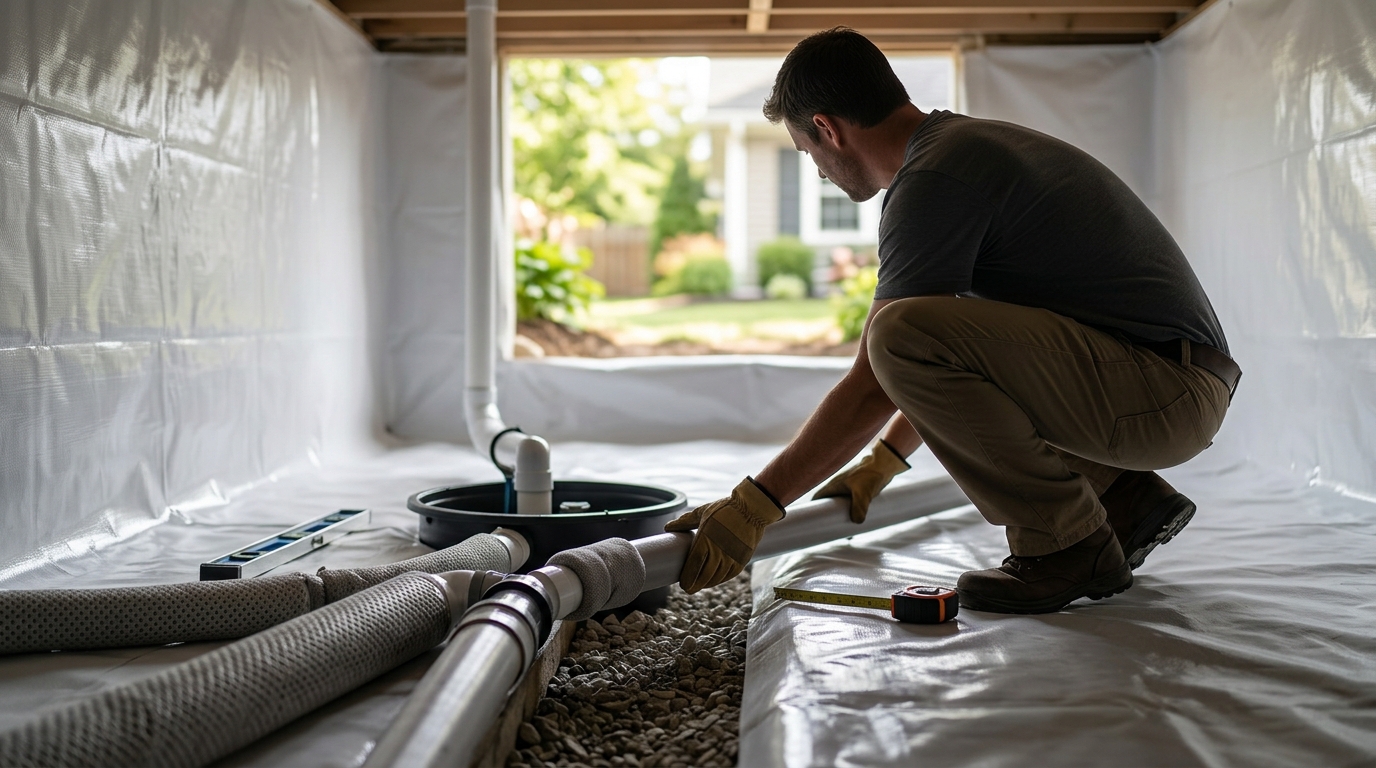
Crawl space moisture management is not merely about stopping water; it is about actively managing hydrostatic pressure and vapor transmission to protect your home's structural integrity. According to the U.S. Environmental Protection Agency, indoor mold growth is a significant contributor to poor indoor air quality, often originating from damp crawl spaces. When selecting drainage products, homeowners and contractors must evaluate material durability, hydraulic capacity, and compatibility with existing foundation systems. This guide details the critical factors for choosing the right drainage solutions to ensure long-term dryness and structural safety.
Understanding Hydrostatic Pressure
Before selecting any product, you must understand the enemy: hydrostatic pressure. This is the pressure exerted by groundwater against the foundation walls and floor. When soil becomes saturated, it pushes against your foundation with significant force. If this pressure is not relieved, it can lead to cracking, bowing, and eventual water intrusion.
Effective drainage products work by intercepting this water before it builds up pressure. The goal is to create a path of least resistance for water to flow away from the foundation. Choosing products that can handle high-volume water flow is essential in regions with heavy rainfall or high water tables. For more information on foundation repair, explore our product catalog to see how our solutions address these structural challenges.
Drainage Material Comparison
The choice of drainage material is the most critical decision in your crawl space project. Different materials offer varying levels of durability, flow capacity, and ease of installation. Below is a comparison of the most common drainage products used in crawl spaces.
| Product Type | Material | Best Use Case | Pros | Cons |
|---|---|---|---|---|
| Drainage Mat | Polyethylene Dimple Board | Perimeter walls and floors | High flow capacity, protects vapor barrier | Requires careful installation |
| French Drain Pipe | Corrugated PVC or HDPE | Under-slab or perimeter collection | Durable, high volume transport | Can clog if not filtered properly |
| Sump Pump | Plastic/Metal Basin | Water removal from collection points | Active water removal, essential for low spots | Requires power source and maintenance |
| Vapor Barrier | Reinforced Polyethylene | Ground and wall coverage | Prevents vapor transmission, mold growth | Must be sealed perfectly to work |
Dimple Board Advantages
Drainage mats, often referred to as dimple board, are essential for modern crawl space encapsulation. They create an air gap between the soil and the foundation wall, allowing water to flow freely down to the drainage system. This product also serves as a protective layer for the vapor barrier, preventing punctures from sharp rocks or debris. When selecting a dimple board, look for high crush strength to ensure it does not collapse under the weight of the soil.
Pipe Selection
For underground drainage, perforated pipe is the standard. Corrugated PVC pipes are lightweight and resistant to corrosion, making them ideal for long-term use in damp environments. However, they must be wrapped in a geotextile sock to prevent soil and silt from entering and clogging the perforations. Check our drainage supplies for high-quality, durable options that meet industry standards.
Sump Pump Systems
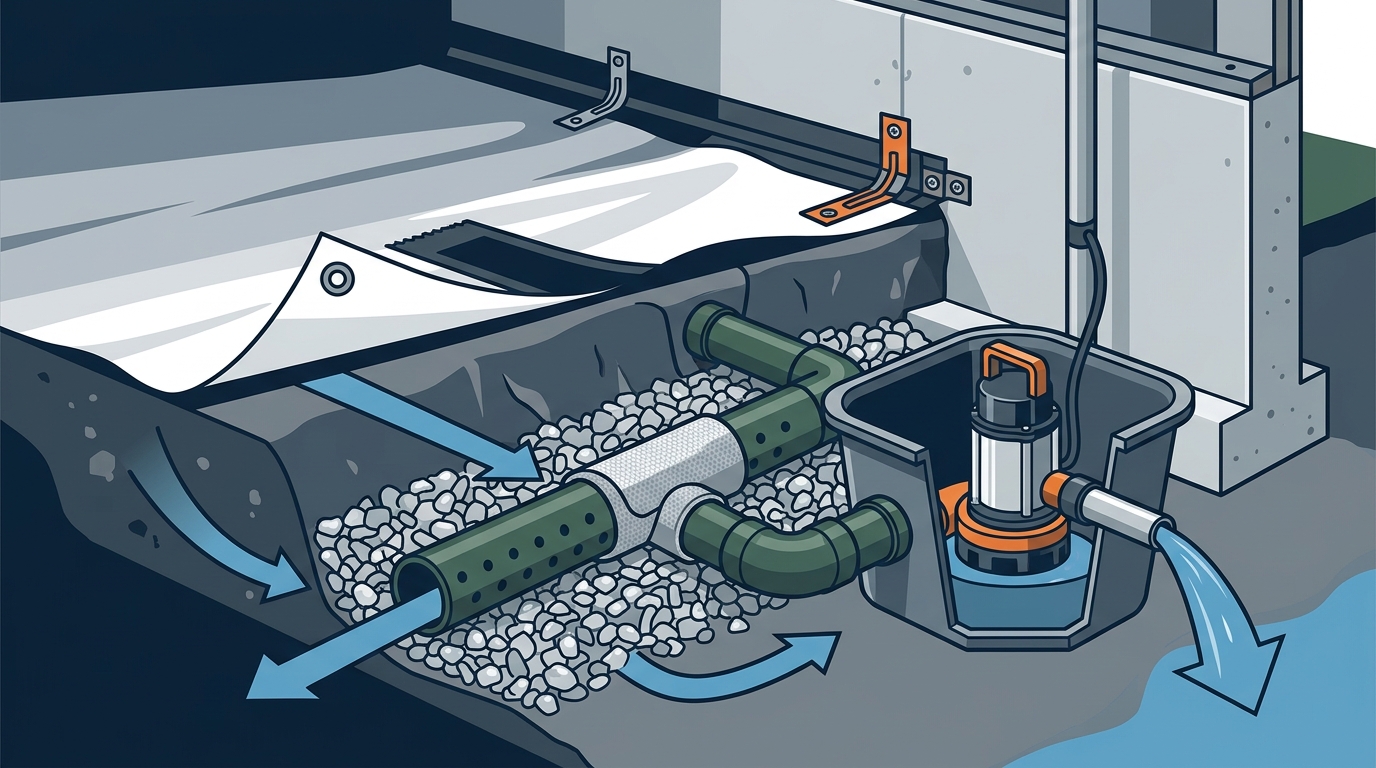
In many crawl spaces, gravity alone is not enough to move water out of the space. A sump pump system is required to actively pump water out of a collection basin and away from the foundation. When selecting a sump pump, consider the following factors:
- Flow Rate: Measured in gallons per hour (GPH), the pump must be powerful enough to handle the expected water volume.
- Head Height: The vertical distance the water must be lifted. Ensure the pump can overcome this height.
- Power Source: Battery backup systems are crucial for preventing flooding during power outages.
For reliable sump pump solutions, explore our sump pump systems which include both primary and backup options to ensure your crawl space remains dry under any condition.
Perimeter Drainage Installation
Proper installation of perimeter drainage is vital for the system's effectiveness. The drainage pipe should be installed at the lowest point of the crawl space, typically along the perimeter footing. The pipe must have a consistent slope, usually 1/8 inch per foot, to ensure water flows toward the sump pit or daylight outlet.
It is also important to use clean, washed gravel around the pipe to facilitate water entry and prevent soil compaction. View our drainage accessories for the necessary fittings, couplings, and gravel options to complete your installation.
Vapor Barrier Integration
Drainage products must work in tandem with vapor barriers to provide complete moisture control. The vapor barrier should be installed over the drainage mat, creating a sealed environment that prevents moisture from evaporating into the crawl space air. This integration is critical for preventing mold growth and improving indoor air quality.
When selecting a vapor barrier, choose a thick, reinforced polyethylene material that is resistant to tears and punctures. Shop our vapor barriers for high-performance options that provide a long-lasting seal against moisture.
Key Takeaways
- Hydrostatic Pressure: Drainage products must relieve pressure from groundwater to prevent foundation damage.
- Material Choice: Dimple board and perforated pipe are essential for directing water flow effectively.
- Sump Pumps: Active water removal is often necessary in low-lying crawl spaces.
- Installation Slope: Pipes must be sloped correctly to ensure gravity-fed drainage.
- Vapor Barriers: Integrated vapor barriers prevent moisture evaporation and mold growth.
- Filtering: Geotextile socks prevent clogging in drainage pipes.
- Professional Support: Consult with experts for complex foundation issues.
Frequently Asked Questions
What is the best material for crawl space drainage?
Drainage mats (dimple board) combined with perforated PVC pipe are generally considered the best combination for effective water management and vapor control.
How do I prevent silt from clogging my drainage pipes?
Wrap your perforated pipes in a geotextile sock to filter out soil and silt while allowing water to enter the pipe.
Is a sump pump necessary for every crawl space?
If the crawl space has a low spot or high water table, a sump pump is necessary to actively remove water that gravity cannot drain.
What thickness vapor barrier should I use?
Use a reinforced vapor barrier, typically 10 to 20 mils thick, to ensure durability and effective moisture resistance.
How often should I inspect my crawl space drainage?
Inspect your drainage system annually, especially after heavy rains, to ensure pipes are clear and the sump pump is functioning.
Can I install drainage products myself?
While DIY installation is possible, complex foundation issues may require professional assessment to ensure proper water diversion.
What is the role of a sump pump battery backup?
A battery backup ensures your sump pump continues to operate during power outages, preventing flooding when it is most needed.
Contact Us
Ready to protect your home with professional-grade drainage solutions? Visit Walder Foundation Products to explore our comprehensive range of crawl space and foundation repair products. Our team is ready to assist you with expert advice and high-quality materials.