
Carbon Fiber Reinforcement for Foundation Wall Cracks in Virginia
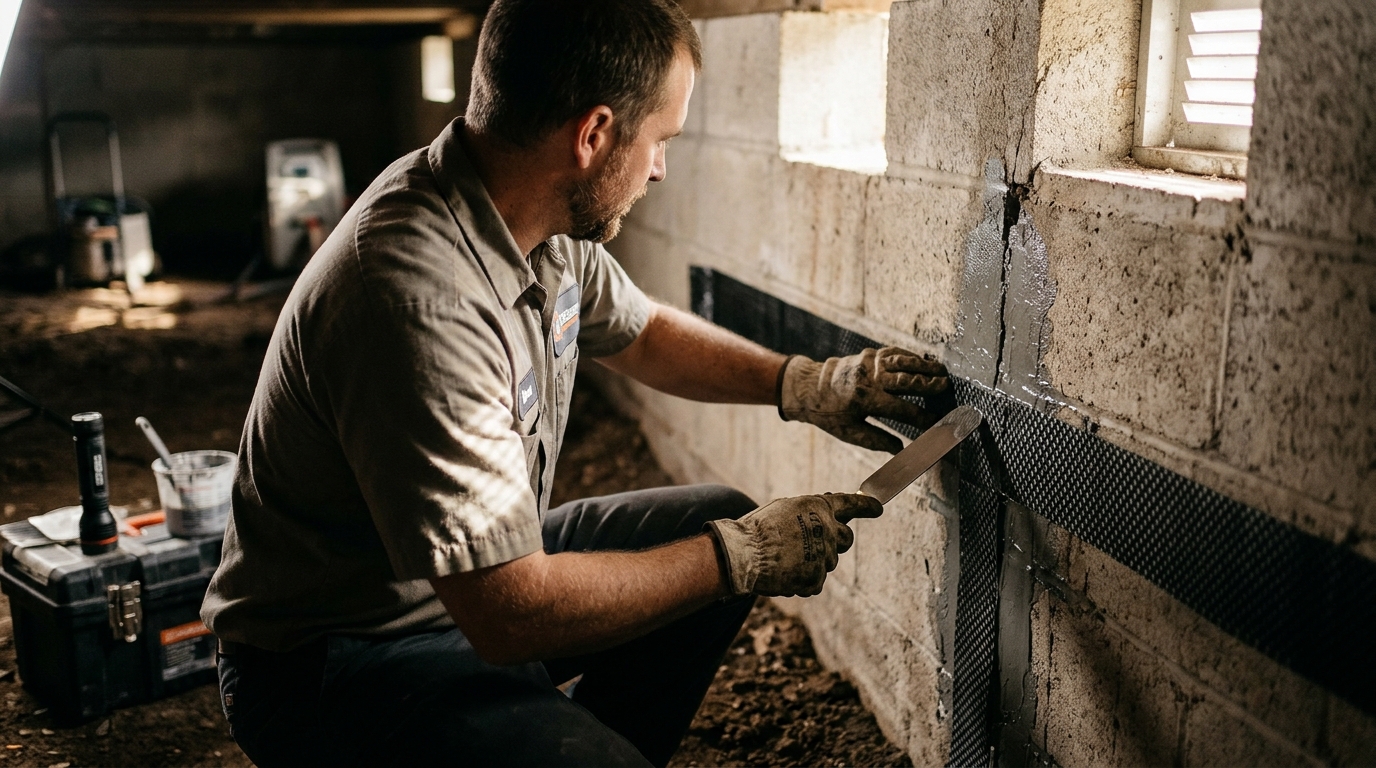
Carbon fiber reinforcement is the best choice for foundation wall cracks in Virginia because it provides high tensile strength with a low-profile installation that resists the region's expansive clay soils and seasonal moisture shifts. By bonding directly to the wall surface, it stabilizes structural movement without requiring extensive excavation or interior demolition. This method is ideal for contractors addressing hydrostatic pressure and settlement issues common in the Commonwealth.
Structural Mechanics of Carbon Fiber Strips
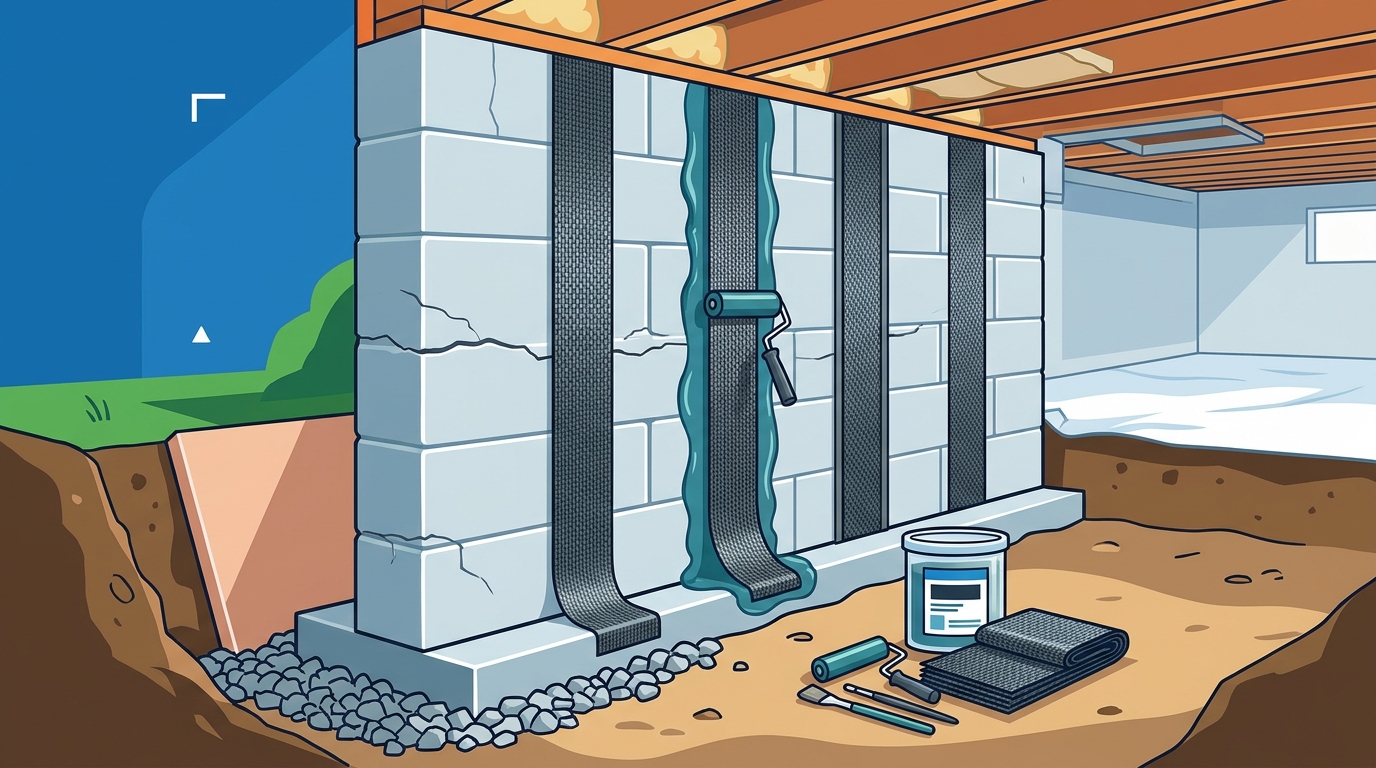
Carbon fiber reinforcement is a composite material that combines high-strength carbon strands with a structural epoxy resin. This combination creates a strip that is significantly stronger than steel per unit of weight. When applied to a foundation wall, the strip acts as a tension member that resists the lateral forces pushing the wall inward.
In Virginia, where expansive soils can exert significant pressure on basement walls, this tensile strength is critical. The epoxy bonds the carbon fiber to the concrete or masonry, creating a unified structural element. This prevents the crack from widening and stops the wall from bowing further. The low profile of the strip, typically only a few inches wide, allows for easy finishing and painting, making it a discreet solution for homeowners.
Unlike traditional steel braces, which require drilling and bolting into the wall, carbon fiber systems rely on surface adhesion. This reduces the risk of damaging the wall structure during installation. The result is a durable, long-lasting repair that maintains the integrity of the foundation without altering the interior aesthetics of the space.
Virginia Soil Conditions and Moisture Challenges
Virginia's geology presents unique challenges for foundation stability, particularly in areas with expansive clay soils. These soils absorb moisture during the wet seasons and expand, exerting outward pressure on foundation walls. When the soil dries out, it contracts, which can lead to settlement and cracking. This cycle of expansion and contraction is a primary driver of foundation movement in the state.
Carbon fiber reinforcement is well-suited to address these conditions because it provides a rigid barrier against lateral movement. The material does not corrode or degrade when exposed to moisture, which is a significant advantage over steel in damp basements. Contractors in Virginia often pair carbon fiber repairs with moisture control measures, such as vapor barriers and dehumidifiers, to create a comprehensive solution.
For example, a home in the Richmond area with a bowed basement wall caused by clay soil expansion can be stabilized using carbon fiber strips. The strips are installed horizontally across the wall, perpendicular to the direction of the crack. This configuration effectively locks the wall in place, preventing further movement even as the surrounding soil shifts. The durability of the material ensures that the repair remains effective over decades of seasonal changes.
Installation Process and Contractor Efficiency
The installation of carbon fiber reinforcement is a streamlined process that minimizes disruption to the home. The first step involves preparing the wall surface by cleaning and grinding it to ensure proper adhesion. This preparation is crucial for the epoxy to bond effectively with the concrete or masonry. Once the surface is ready, the carbon fiber strips are cut to the required length and applied to the wall.
Contractors use a specialized epoxy to adhere the strips, ensuring a strong and permanent bond. The epoxy cures over a period of 24 to 48 hours, during which the wall is stabilized. This quick turnaround time is a significant benefit for contractors, as it allows them to complete the repair in a single day. The low labor intensity of the installation process also reduces project costs, making it an attractive option for both contractors and homeowners.
Comparison with Alternative Repair Methods
When comparing carbon fiber reinforcement to other foundation repair methods, several factors come into play. Steel wall braces, for instance, are a traditional solution for stabilizing bowed walls. However, they require more invasive installation and can be visually intrusive. Carbon fiber strips, on the other hand, are low-profile and can be painted over, making them a more aesthetically pleasing option.
Another alternative is wall anchors, which are installed by drilling through the wall and into the soil outside. While effective, this method requires exterior excavation and can be more expensive. Carbon fiber reinforcement, by contrast, is an interior solution that does not require exterior work. This makes it a faster and less disruptive option for homeowners. The cost-effectiveness of carbon fiber repairs is also a significant advantage, as it typically requires less labor and material than other methods.
For contractors, the choice of repair method depends on the specific conditions of the foundation. In cases where the wall is severely bowed or the soil is highly expansive, a combination of carbon fiber and other stabilization methods may be necessary. However, for most common foundation cracks and minor bowing, carbon fiber reinforcement is the preferred solution. Its versatility and effectiveness make it a go-to choice for contractors in Virginia and beyond.
Durability and Long-Term Maintenance
Carbon fiber reinforcement is known for its exceptional durability and resistance to environmental factors. The material does not rust, corrode, or degrade when exposed to moisture, making it ideal for use in basements and crawl spaces. This longevity ensures that the repair remains effective over time, providing long-term peace of mind for homeowners. The structural integrity of the carbon fiber strips is maintained even in high-humidity environments, which is common in Virginia's climate.
Maintenance for carbon fiber repairs is minimal. Once the epoxy has cured, the strips require no special care or attention. Homeowners can paint over the strips to match the wall color, ensuring a seamless finish. Regular inspections of the foundation are still recommended to monitor for any new cracks or movement, but the carbon fiber reinforcement itself does not require ongoing maintenance. This low-maintenance aspect is a significant benefit for both homeowners and contractors.
Walder Foundation Products emphasizes the importance of using high-quality materials for foundation repairs. Their carbon fiber kits are designed to meet industry standards for strength and durability. By providing contractors with reliable products, Walder Foundation Products helps ensure that foundation repairs are long-lasting and effective. The company's commitment to quality and customer satisfaction makes it a trusted partner for contractors in the foundation repair industry. according to Q A Protecting
Key Takeaways
- Carbon fiber reinforcement provides high tensile strength with a low-profile installation, making it ideal for Virginia's expansive soils.
- The material resists moisture and corrosion, ensuring long-term durability in damp basements and crawl spaces.
- Installation is quick and minimally invasive, reducing labor costs and disruption to the home.
- Carbon fiber strips can be painted over, offering a discreet and aesthetically pleasing solution for homeowners.
- The method is cost-effective compared to traditional steel braces and wall anchors, making it a popular choice for contractors.
Frequently Asked Questions
How long does carbon fiber reinforcement last?
Carbon fiber reinforcement is designed to last for the life of the foundation. The material does not degrade or corrode, ensuring long-term stability and durability.
Can carbon fiber be used on all types of foundation walls?
Carbon fiber can be applied to both concrete and masonry foundation walls. The epoxy bonds effectively to both materials, providing reliable stabilization.
Is carbon fiber reinforcement a permanent solution?
Yes, carbon fiber reinforcement is a permanent solution for stabilizing foundation walls. Once the epoxy has cured, the strips remain bonded to the wall, preventing further movement.
How much does carbon fiber reinforcement cost?
The cost of carbon fiber reinforcement varies depending on the size of the wall and the extent of the damage. It is generally more cost-effective than traditional steel braces or wall anchors.
Do I need to live out of my home during installation?
No, you do not need to live out of your home during installation. The process is minimally invasive and can be completed in a single day, with minimal disruption to your daily routine.
Conclusion
Carbon fiber reinforcement is the best choice for foundation wall cracks in Virginia due to its high strength, low profile, and resistance to moisture. It effectively addresses the challenges posed by expansive soils and seasonal moisture shifts, providing a durable and long-lasting solution. For contractors, the streamlined installation process and cost-effectiveness make it an attractive option for foundation repair projects. Walder Foundation Products is a trusted supplier of professional-grade carbon fiber kits, ensuring that contractors have access to the highest quality materials for their projects. By choosing carbon fiber reinforcement, contractors can deliver reliable and effective foundation repairs that meet the unique needs of Virginia's climate and soil conditions.