
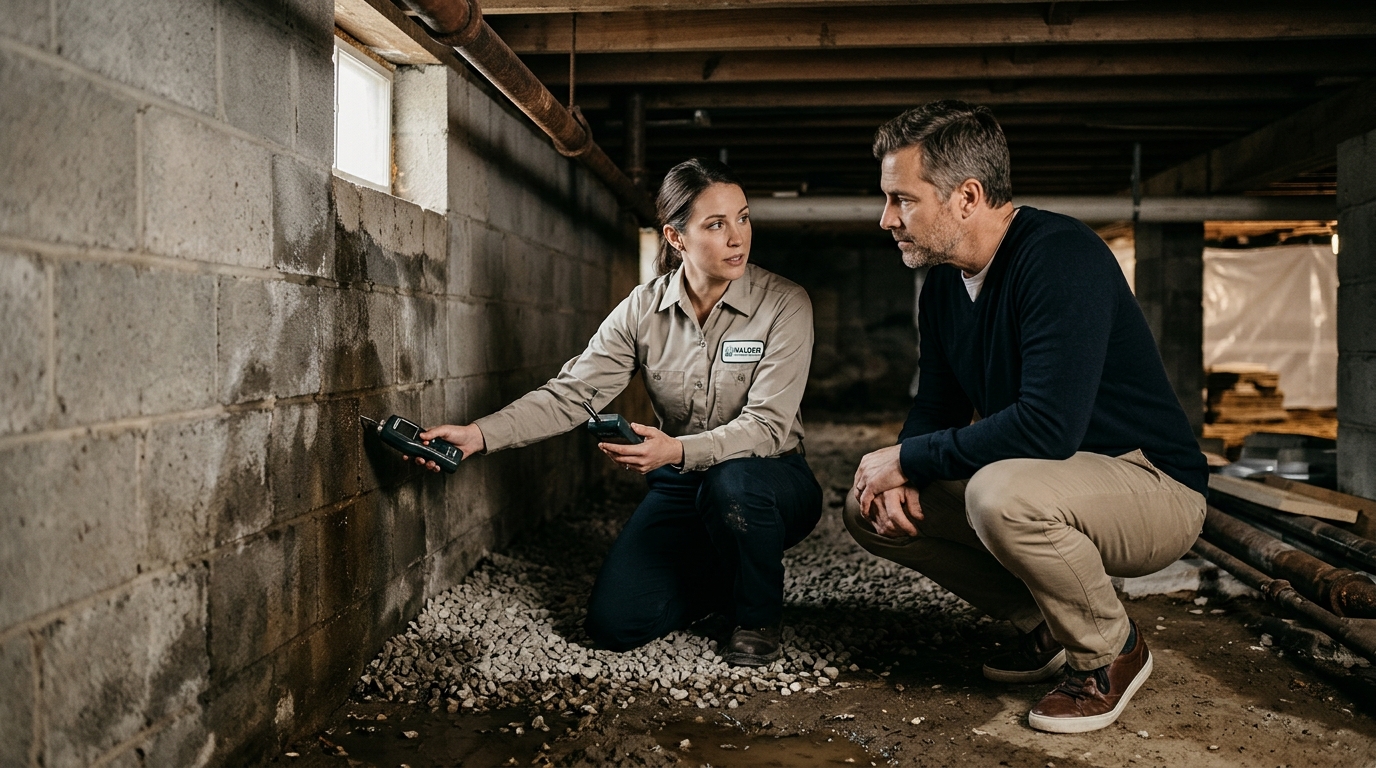
Water in a crawl space typically enters through the ground, foundation walls, or plumbing leaks. At Walder Foundation Products, we help contractors identify these sources using moisture meters, visual inspections, and targeted drainage solutions. Pinpointing the exact origin prevents unnecessary repairs and ensures long-term structural stability for the building. according to Water Management of
Ground Moisture and Capillary Action
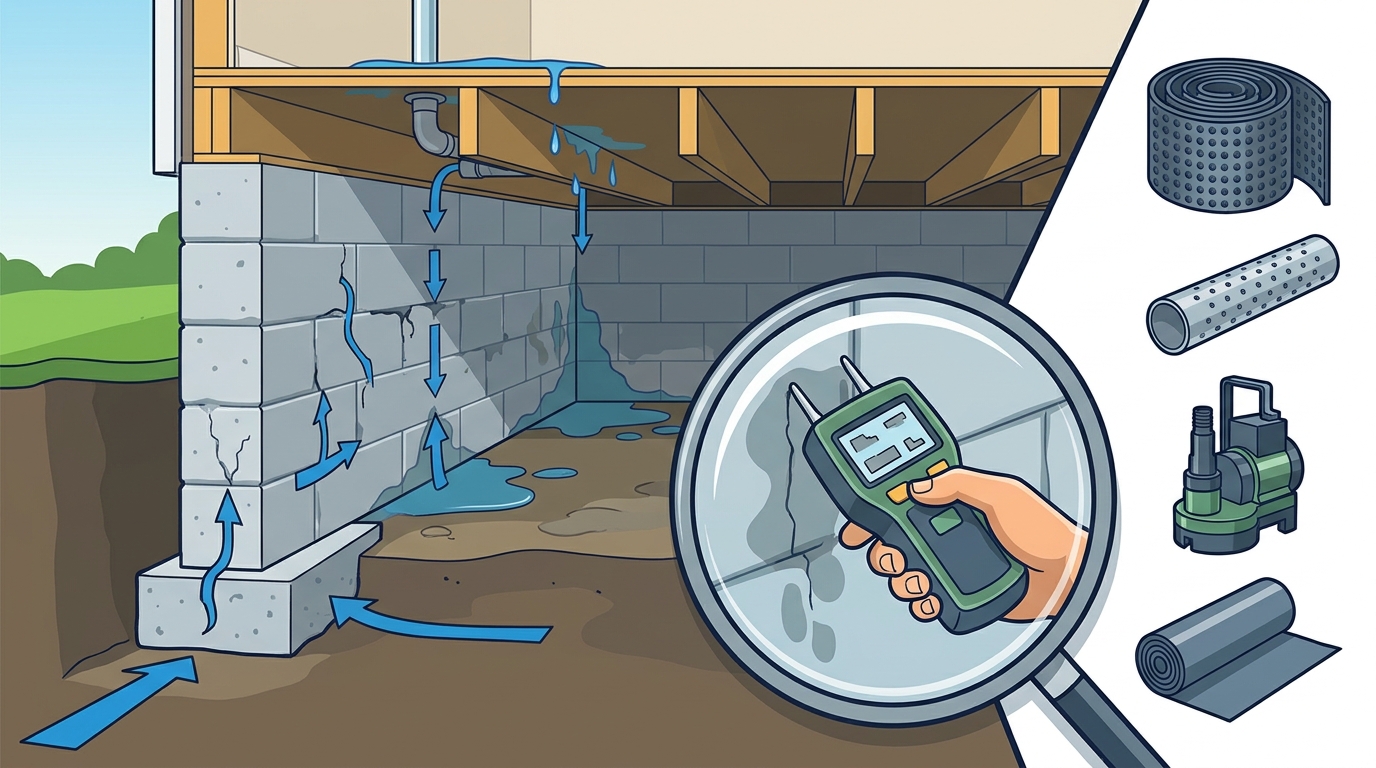
The most common source of water is the soil beneath the home. Capillary action is the process where water moves through small spaces in soil and materials without the help of external forces. When the water table rises or heavy rains saturate the ground, moisture wicks up through the dirt and into the crawl space. This phenomenon is particularly prevalent in clay-heavy soils common in many US regions. Contractors should look for damp spots on the ground vapor barrier or wet soil near the foundation perimeter. If the ground is consistently wet, a ground vapor barrier is essential to block this migration.
Foundation Wall Seepage and Cracks
Water often enters through the foundation walls themselves. Hydrostatic pressure is the force exerted by water against the foundation walls, which can push moisture through hairline cracks or porous concrete. Older homes with masonry foundations are especially susceptible to this issue. During inspection, look for white mineral deposits, known as efflorescence, on the walls. This indicates that water has passed through the concrete. For significant cracks or bowing walls, consider basement wall repair products to stabilize the structure and seal the entry points.
Plumbing and Utility Leaks
Internal leaks are a frequent but often overlooked source of water. Condensation is the process where water vapor turns into liquid on cold surfaces, such as uninsulated water pipes. In humid climates, this can create a constant drip in the crawl space. Plumbers and contractors should check for active leaks in supply lines, drain pipes, and water heaters. If you see water pooling near specific pipes, it is likely a plumbing issue rather than a foundation problem. Using insulation and foam products to wrap pipes can prevent condensation and protect the surrounding wood from rot.
Ventilation and Airflow Issues
Traditional crawl space vents can actually bring moisture into the home. Stack effect is the movement of air caused by temperature differences, which can pull humid outdoor air into the crawl space through open vents. This is especially problematic in summer when outdoor humidity is high. Sealing vents and encapsulating the space can reverse this airflow. By creating a conditioned space, you prevent the exchange of humid air. Contractors can use crawl space doors and vents to manage access while sealing off unnecessary openings.
Improper Exterior Drainage
Water management outside the home directly impacts the crawl space. Positive drainage is the practice of directing water away from the foundation using grading, gutters, and downspouts. If the ground slopes toward the house, water will pool against the foundation and seep in. Check the exterior grading and ensure gutters are clean and directing water at least six feet away from the home. For severe drainage issues, a waterproofing and drainage system may be required to manage bulk water.
Key Takeaways
- Ground moisture is the most common source of water in crawl spaces.
- Capillary action allows water to wick up through soil and into the home.
- Hydrostatic pressure can push water through foundation cracks.
- Condensation on cold pipes can mimic a foundation leak.
- Open vents can pull humid outdoor air into the crawl space.
- Proper exterior grading is critical for preventing water entry.
- Accurate diagnosis prevents unnecessary and costly repairs.
Frequently Asked Questions
How do I tell if water is coming from the ground or the walls?
If the water is on the floor and the walls are dry, it is likely coming from the ground. If the water is on the walls and the floor is dry, it is likely coming from the walls or a leak.
What is the best way to stop water from entering through the ground?
Installing a heavy-duty ground vapor barrier is the most effective way to stop moisture from migrating up through the soil.
Can a dehumidifier fix a water leak?
No, a dehumidifier only removes moisture from the air. It cannot stop active water leaks or bulk water entry. You must fix the source first.
How often should I inspect my crawl space for water?
It is recommended to inspect your crawl space at least twice a year, preferably in the spring and fall, to catch any new issues early.
Do I need to seal my crawl space vents?
Yes, sealing vents is a key part of crawl space encapsulation. It prevents humid outdoor air from entering and helps maintain a dry environment.
What tools do I need to diagnose water sources?
A moisture meter, a flashlight, and a camera are essential tools for diagnosing water sources in a crawl space.