
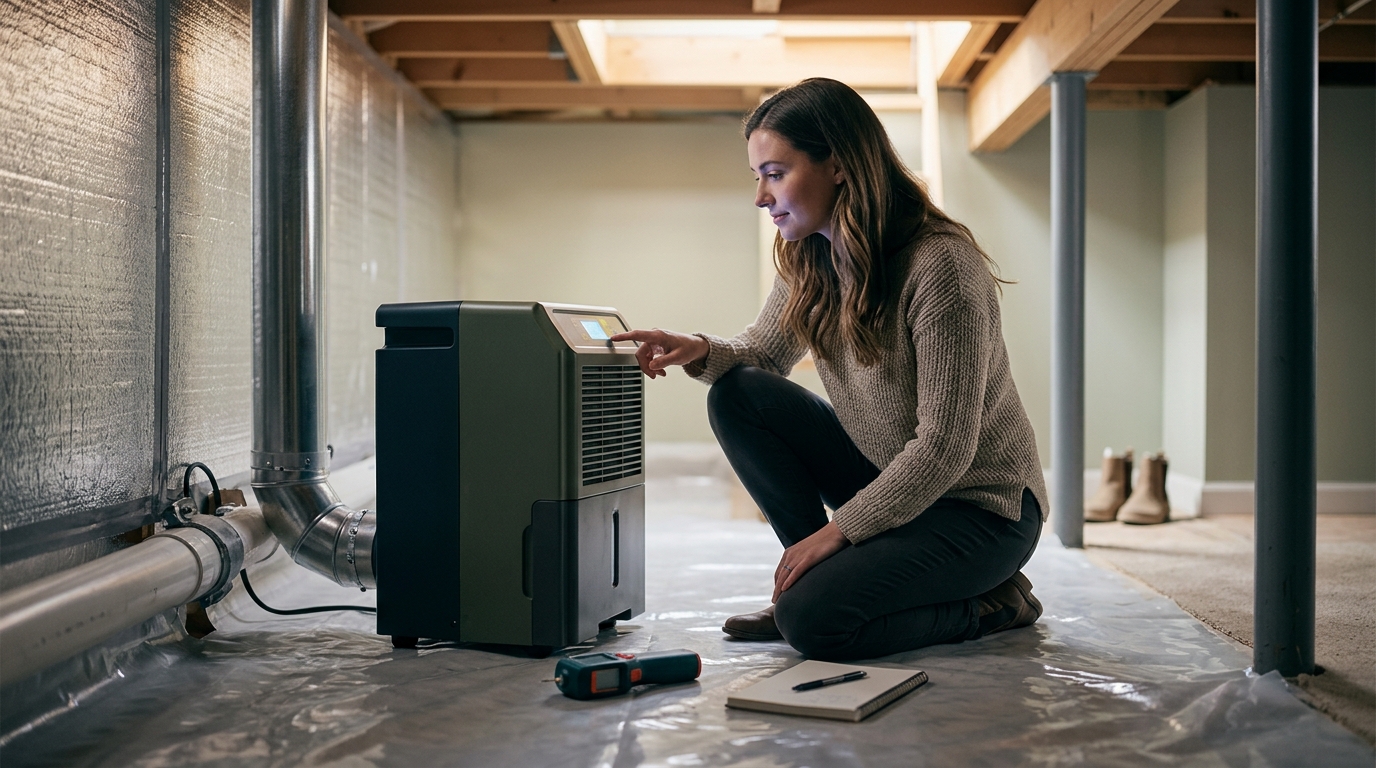
How to Determine the Right Size Dehumidifier for Your Crawl Space
Moisture accumulation in sub-slab environments is a primary driver of structural decay and indoor air quality issues in residential properties. According to the Environmental Protection Agency, homes with damp crawl spaces can have air that is 50% to 70% more humid than the air above it. This excess moisture creates an ideal environment for mold proliferation, wood rot, and pest infestations. Selecting the correct dehumidifier capacity is not merely a matter of preference; it is a critical engineering decision that dictates the longevity of your home's foundation and the health of your living environment. This guide provides the precise methodology for calculating the necessary dehumidifier size based on your specific environmental conditions.
Step 1: Calculate Total Square Footage
The foundational metric for any dehumidifier selection is the physical volume of the space. While many homeowners mistakenly rely solely on linear feet, the total square footage provides a more accurate baseline for moisture load. To determine this, measure the length and width of your crawl space and multiply them together. For irregularly shaped spaces, divide the area into rectangular sections, calculate the area of each, and sum the results.
It is important to note that the height of the crawl space also influences the air volume, but standard dehumidifier ratings are primarily based on ground surface area. If your crawl space is exceptionally deep or has significant obstructions like ductwork or plumbing stacks, you may need to increase the capacity slightly to ensure adequate air circulation. Accurate measurement prevents the common error of under-sizing equipment, which leads to continuous operation and premature failure.
Step 2: Assess Moisture Severity
Not all crawl spaces are created equal. The severity of the moisture problem directly impacts the required dehumidifier power. You can categorize your crawl space into one of three moisture levels:
- Low Moisture: The ground is covered with a high-quality vapor barrier, such as a ground vapor barrier, and there is no standing water or significant condensation on surfaces. This is typical in encapsulated crawl spaces.
- Moderate Moisture: There is visible condensation on pipes, ducts, or the vapor barrier. The air feels damp, and there may be occasional puddles after heavy rain. This is common in older, unencapsulated spaces.
- High Moisture: There is standing water, frequent flooding, or severe mold growth. In these cases, a standard dehumidifier is insufficient. You must first address drainage issues, install a sump pump system, and then consider a high-capacity commercial-grade unit.
Understanding your moisture level ensures you do not waste money on an under-powered unit or overspend on a unit that is too large for the actual load. A dehumidifier rated for a low-moisture space will struggle in a high-moisture environment, leading to constant running and high energy bills.
Step 3: Select the Correct Capacity
Dehumidifier capacity is measured in pints of water removed per day (pint/day). The industry standard for a typical residential crawl space is 50 to 70 pints per day. However, this is a general guideline that must be adjusted based on your specific calculations.
For a standard crawl space with a vapor barrier and moderate moisture, a 50-pint unit is often sufficient. If the space is larger than 1,500 square feet or has higher humidity levels, you should move to a 70-pint or 90-pint unit. For very large or severely damp spaces, consider units rated at 100 pints or more. It is always better to slightly over-size the unit than to under-size it, as a larger unit will cycle on and off more efficiently, maintaining consistent humidity levels without running continuously.
When selecting a unit, look for models with built-in humidistats that allow you to set a precise humidity target, typically between 45% and 55%. This ensures the unit stops running once the desired dryness is achieved, saving energy and reducing wear on the compressor.
Step 4: Installation and Placement Factors
Proper installation is just as critical as correct sizing. The dehumidifier must be placed in a central location within the crawl space to ensure even air distribution. Avoid placing it in corners or behind obstructions, as this creates dead zones where moisture can still accumulate. Elevate the unit on a stable platform or dehumidifier risers to protect it from potential water intrusion and to improve airflow underneath.
Ensure that the unit is connected to a proper drainage system. Most crawl space dehumidifiers come with a condensate pump option, such as the AprilAire 4856 Low Profile Condensate Pump Kit, which allows you to pump water out of the crawl space rather than relying on gravity drainage. This is essential for spaces where the floor is below the level of the nearest drain.
Additionally, consider the electrical requirements of the unit. Most crawl space dehumidifiers require a dedicated 120-volt circuit. If your crawl space does not have accessible power, you may need to hire an electrician to run a new line. Proper electrical setup prevents tripping breakers and ensures safe operation.
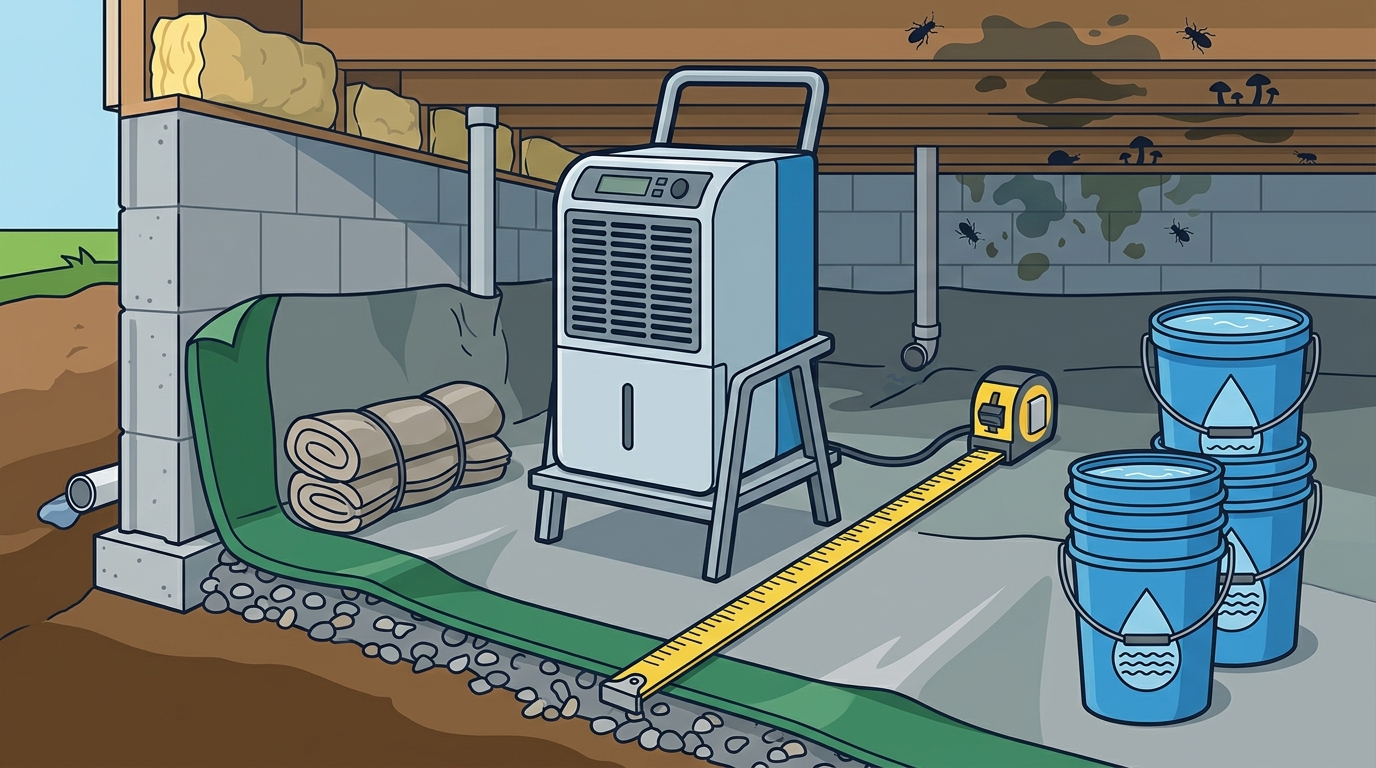
Product Comparison: AprilAire vs. Santa Fe
When it comes to crawl space dehumidification, two brands dominate the market: AprilAire and Santa Fe. Both offer high-quality, durable units designed specifically for the harsh environment of a crawl space. Below is a comparison to help you choose the right fit for your needs.
| Feature | AprilAire Dehumidifiers | Santa Fe Dehumidifiers |
|---|---|---|
| Capacity Range | 50 to 160 pints/day | 50 to 100 pints/day |
| Drainage Options | Integrated condensate pump available | Gravity drain or optional pump |
| Filter Quality | Washable MERV 8 filters | Washable MERV 8 filters |
| Humidity Control | Precise humidistat with auto-defrost | Precise humidistat with auto-defrost |
| Warranty | 5-year limited warranty | 5-year limited warranty |
AprilAire units are often preferred for their robust build quality and advanced features, such as the washable MERV 8 filter that helps maintain air quality. Santa Fe units are known for their reliability and ease of installation, making them a popular choice for contractors. Both brands offer excellent performance, and the final choice often comes down to personal preference and specific feature requirements.
Key Takeaways
- Measure Accurately: Calculate the total square footage of your crawl space to establish a baseline for capacity.
- Assess Moisture: Determine if your space has low, moderate, or high moisture levels to adjust capacity accordingly.
- Choose Capacity: Select a dehumidifier rated between 50 and 100 pints/day for most residential applications.
- Install Properly: Place the unit centrally, elevate it, and ensure proper drainage and electrical connections.
- Compare Brands: Evaluate AprilAire and Santa Fe units based on specific features like pump integration and filter quality.
- Maintain Regularly: Clean filters and check drainage lines regularly to ensure optimal performance.
- Consult Experts: If unsure, contact a professional for a site assessment to ensure the right equipment is selected.
Frequently Asked Questions
How do I know if my dehumidifier is the right size?
If your dehumidifier runs continuously without reaching the set humidity level, it is likely too small. Conversely, if it cycles on and off too frequently, it may be too large. The ideal unit maintains the target humidity level with efficient cycling.
Can I use a standard basement dehumidifier in a crawl space?
While it is possible, it is not recommended. Crawl space dehumidifiers are designed to operate in higher temperatures and humidity levels than standard basement units. They also often include features like auto-defrost and condensate pumps that are essential for sub-slab environments.
How often should I clean the dehumidifier filter?
You should check the filter monthly and clean it as needed. A clogged filter reduces airflow and efficiency, forcing the unit to work harder. Most units come with washable filters that can be rinsed with water and allowed to dry completely before reinstallation.
What is the ideal humidity level for a crawl space?
The ideal relative humidity for a crawl space is between 45% and 55%. Maintaining this range prevents mold growth, wood rot, and pest infestations while ensuring the air quality in the home above remains healthy.
Do I need a condensate pump for my dehumidifier?
If your crawl space floor is below the level of the nearest drain, you will need a condensate pump to remove the water. Without a pump, water will accumulate in the unit's reservoir, causing it to shut off and potentially overflow. The AprilAire 4856 Low Profile Condensate Pump Kit is a popular choice for this purpose.
How long does a crawl space dehumidifier last?
With proper maintenance, a quality crawl space dehumidifier can last between 10 and 15 years. Regular cleaning of filters and coils, along with prompt repair of any issues, can extend the lifespan of the unit significantly.
What is the difference between a 50-pint and a 70-pint dehumidifier?
A 70-pint dehumidifier removes more moisture per day than a 50-pint unit. This makes it suitable for larger spaces or those with higher moisture levels. In a moderately damp space, a 70-pint unit will reach the target humidity faster and cycle more efficiently than a 50-pint unit.
Contact Walder Foundation Products
Choosing the right dehumidifier is a critical step in protecting your home from moisture damage. At Walder Foundation Products, we offer a comprehensive range of dehumidifiers, accessories, and installation supplies to meet your specific needs. Our team of experts is ready to assist you in selecting the perfect equipment for your crawl space. Visit our product catalog to explore our full selection or contact us directly for personalized advice. We are committed to helping you create a dry, healthy, and durable foundation for your home.