
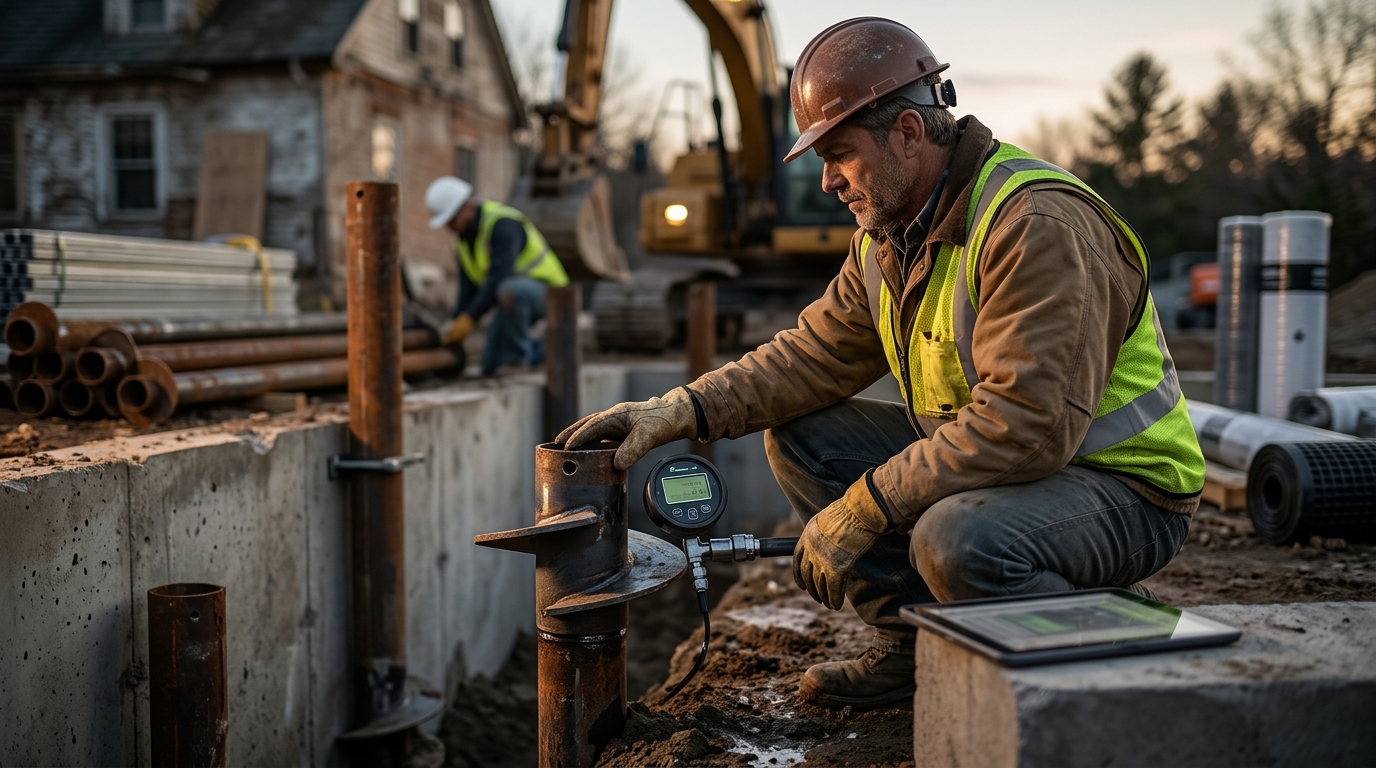
Verifying that helical piles can handle your foundation's weight requirements involves calculating the total structural load, determining the required capacity per pile, and confirming that the selected pile geometry and soil conditions provide sufficient static and ultimate resistance. This process ensures the deep foundation system safely transfers building weight to stable soil layers without excessive settlement. Walder Foundation Products supplies the professional-grade components necessary for these critical structural calculations and installations.
Understanding Static and Ultimate Load Capacity
Load capacity verification begins with distinguishing between static and ultimate resistance. Static load capacity is the maximum weight a pile can support under normal operating conditions, while ultimate load capacity is the point at which the pile fails structurally or the soil yields completely. Engineers typically apply a safety factor, often between 2 and 3, to the ultimate capacity to determine the allowable working load. This margin accounts for variations in soil composition and long-term settlement. For a contractor, understanding these definitions is critical before selecting a specific lead section or extension length.
Calculating Total Structural Load
Before selecting a pile, you must determine the total weight of the structure being supported. This includes dead loads, such as the weight of the building materials, and live loads, such as furniture, occupants, and snow. A professional structural engineer will usually provide a load calculation based on the building's footprint and soil bearing capacity. If you are underpinning a specific wall, you calculate the tributary area to determine how much weight that specific wall carries. Accurate load calculation prevents the selection of piles that are either under-sized or unnecessarily expensive.
Matching Pile Geometry to Soil Conditions
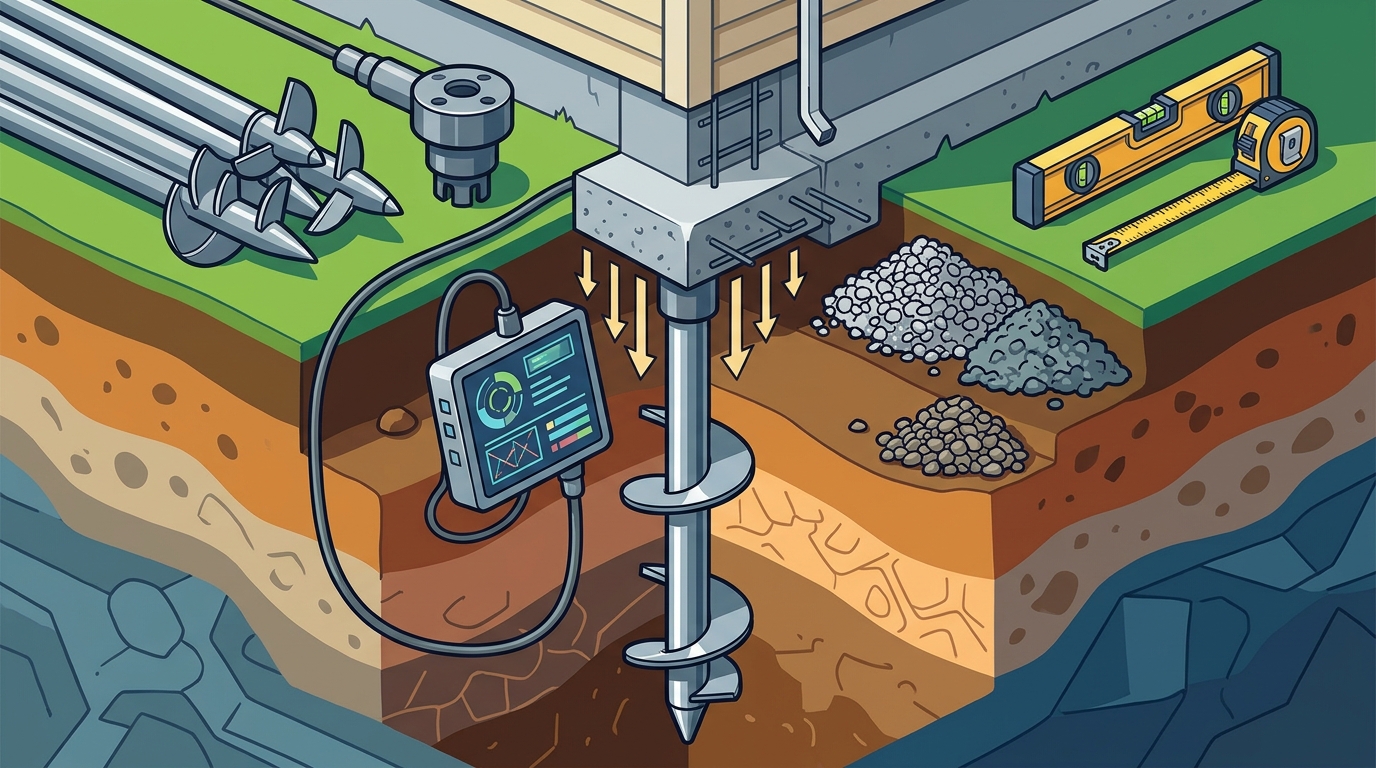
The physical design of the helical pile directly impacts its resistance. A helical pile is a deep foundation element that is screwed into the ground, using its helical plates to generate friction and bearing resistance. The diameter of the shaft and the size of the helical plates determine how much soil is engaged. In dense clay or stiff soils, larger plates provide higher resistance. In loose sand, friction along the shaft becomes more significant. Walder Foundation Products offers various lead sections and extensions, including round and square shafts, allowing contractors to match the pile geometry to the specific soil profile identified during site investigation.
The Role of Brackets and Caps in Load Transfer
Once the pile is installed, the load must be transferred from the structure to the pile. This connection is made using brackets and caps. A bracket is a structural component that connects the helical pile to the foundation or structure, ensuring the load is transferred efficiently. The ICC-rated brackets available from Walder Foundation Products are designed to handle specific load vectors, including vertical compression and lateral forces. Selecting the correct bracket is as important as selecting the pile itself, as a weak connection can compromise the entire system's integrity regardless of the pile's capacity.
Verification Through Testing and Monitoring
While calculations are essential, physical verification provides the highest level of confidence. Load testing involves applying a known weight to the installed pile to measure its deflection. This test confirms that the actual soil conditions match the assumptions used in the design. Additionally, long-term monitoring of the foundation's movement can verify that the piles are performing as expected. For critical structures, such as commercial buildings or historic homes, load testing is often required by local building codes. This step ensures that the theoretical capacity aligns with the real-world performance of the deep foundation system.
Key Takeaways
- Always apply a safety factor to ultimate load capacity to determine the allowable working load.
- Calculate both dead and live loads to determine the total weight the foundation must support.
- Match the helical pile's shaft diameter and plate size to the specific soil type and depth.
- Use ICC-rated brackets and caps to ensure safe and efficient load transfer from the structure to the pile.
- Consider load testing and long-term monitoring for critical structures to verify real-world performance.
- Consult with a structural engineer to validate your load calculations and pile selection.
Frequently Asked Questions
What is the typical safety factor for helical piles?
The typical safety factor for helical piles ranges from 2 to 3, depending on local building codes and the specific application. This factor is applied to the ultimate load capacity to determine the allowable working load.
How do I determine the required number of helical piles?
You determine the required number of piles by dividing the total structural load by the allowable working load per pile. This calculation ensures that each pile carries a safe portion of the total weight.
Do helical piles require load testing?
Load testing is not always required for residential applications, but it is often mandated for commercial or critical structures. Testing provides physical verification that the piles are performing as designed.
What is the difference between a lead section and an extension?
A lead section is the first piece of the helical pile driven into the ground, featuring the initial helical plates. An extension is a subsequent piece that connects to the lead section to increase the pile's depth and reach stable soil.
How do brackets affect load capacity?
Brackets transfer the load from the structure to the helical pile. The bracket's design and material strength must match or exceed the pile's capacity to ensure the entire system functions safely.