
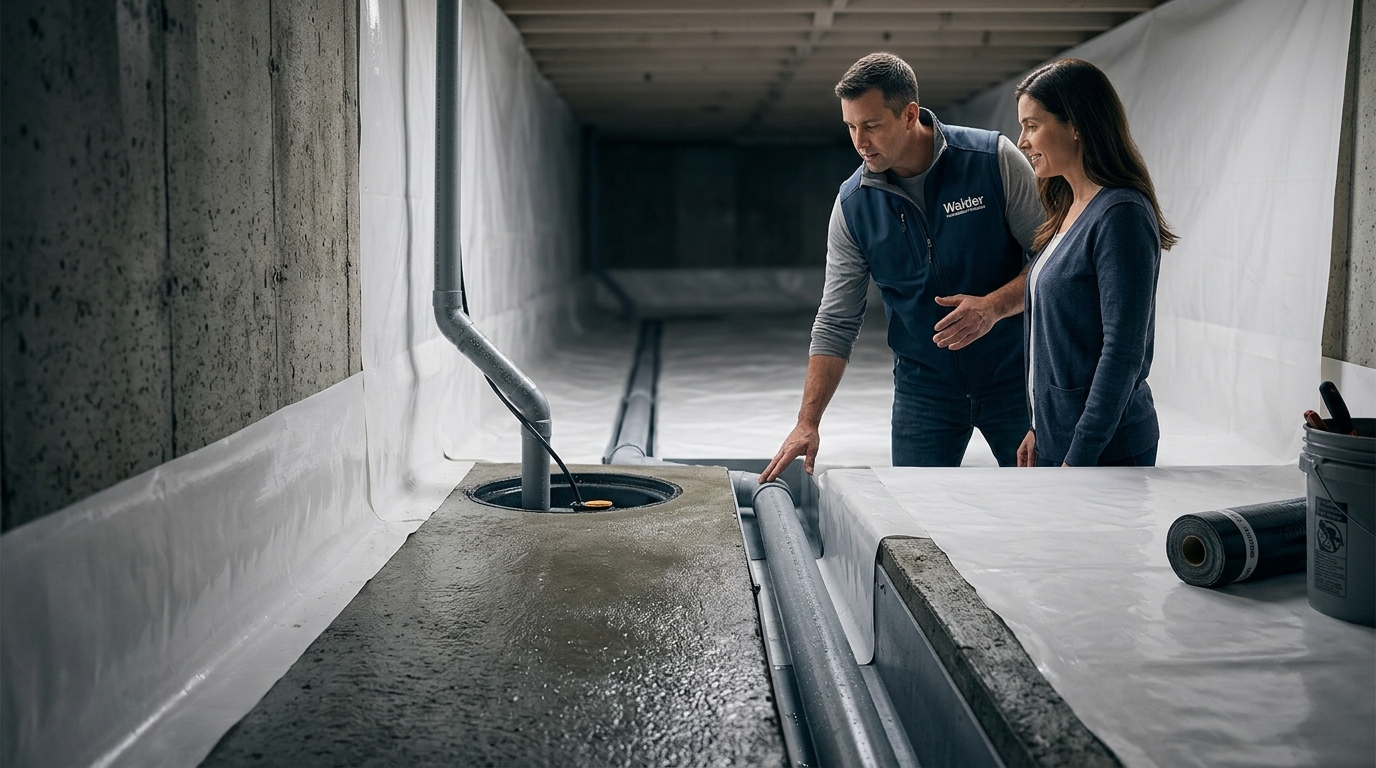
Crawl space moisture management is a critical component of structural integrity, with industry data indicating that over 50% of homes in the United States have a crawl space that requires moisture control to prevent structural decay and mold growth. Effective drainage is not merely about moving water away from the foundation; it is about creating a controlled environment that protects the home's most vulnerable structural elements. When selecting drainage products, homeowners and contractors must evaluate hydraulic capacity, material durability, and compatibility with existing foundation systems. This guide outlines the essential factors for choosing the right drainage solutions to ensure long-term performance and protect your investment.
Understanding Your Drainage Needs
Before selecting specific products, it is vital to diagnose the specific hydrological challenges of your crawl space. Hydrostatic pressure is the force exerted by groundwater against the foundation walls and floor. When this pressure exceeds the drainage system's capacity, water infiltrates the space, leading to rot, mold, and structural compromise.
Assess the slope of your yard and the water table level in your region. According to the U.S. Environmental Protection Agency, proper grading and drainage are the first lines of defense against crawl space moisture. If your yard slopes toward the foundation, surface water is likely the primary culprit. If the water table is high, subsurface drainage becomes critical. Walder Foundation Products offers a range of drainage and dimple board solutions designed to address these specific hydrological conditions.
Material Selection and Durability
The longevity of your drainage system depends heavily on the materials used. Crawl spaces are harsh environments characterized by high humidity, potential chemical exposure from soil, and physical stress from soil settlement.
PVC vs. Corrugated Pipe
PVC pipe is rigid, smooth-walled, and highly resistant to chemical corrosion. It is ideal for main drainage lines where structural integrity and flow capacity are paramount. In contrast, corrugated drainage pipe is flexible and easier to install in tight or irregular spaces. However, it may be more susceptible to crushing if not properly bedded.
Dimple Board and Drainage Mats
Dimple board is a specialized drainage product that creates an air gap between the foundation wall and the soil. This gap allows water to flow freely to the perimeter drain while protecting the waterproofing membrane. It also facilitates vapor diffusion, reducing humidity levels. When selecting dimple board, consider the crush strength and the height of the dimples, which determine the volume of water it can handle.
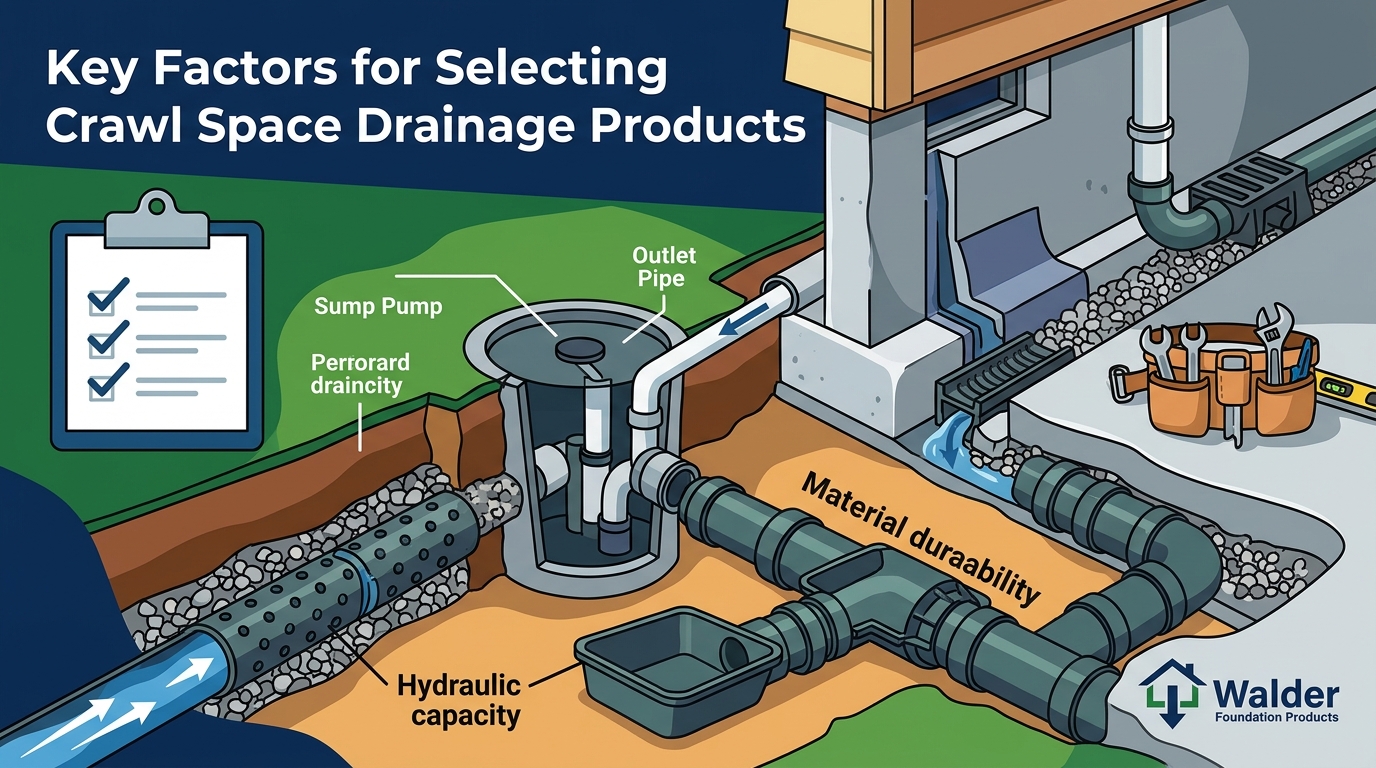
Perimeter Drainage Systems
Perimeter drainage, often referred to as a French drain, is installed around the exterior or interior footing of the foundation. Its primary function is to intercept groundwater before it enters the crawl space.
Exterior Drainage
Exterior drainage is the most effective method for preventing water entry. It involves excavating around the foundation, applying waterproofing membranes, and installing perforated pipe surrounded by gravel. This system relieves hydrostatic pressure directly. However, it is invasive and costly, typically requiring professional installation during new construction or major renovation.
Interior Drainage Channels
For existing homes, interior drainage channels are a practical alternative. These channels are installed along the interior perimeter of the footing, connected to a sump pump. They capture water that seeps through the floor-wall joint and direct it to the pump. Charlotte Pipe and other manufacturers offer durable PVC fittings and couplings essential for connecting these interior systems.
Interior Drainage and Sump Pumps
Interior drainage systems rely on sump pumps to actively remove water from the crawl space. The choice of sump pump is critical, as it must operate reliably in a confined, potentially power-outage-prone environment.
Pump Types
Submersible pumps are installed inside the sump pit and are generally quieter and more efficient than pedestal pumps. They are submerged in water, which helps cool the motor during operation. Pedestal pumps have the motor mounted above the pit, making them easier to service but noisier and less aesthetically pleasing in a finished crawl space.
Backup Systems
Given that power outages often coincide with heavy storms, a backup sump pump system is essential. Battery-backed or water-powered backup pumps ensure continuous operation during emergencies. Walder Foundation Products stocks sump pump systems and accessories that include reliable backup options to safeguard your home against flooding.
Sump Pump Specifications
When selecting a sump pump, consider the following technical specifications:
- HP Rating: Higher horsepower pumps can move more water but may be overkill for small crawl spaces. A 1/3 HP pump is often sufficient for residential use.
- Flow Rate: Measured in gallons per hour (GPH), this indicates how quickly the pump can remove water. Ensure the GPH matches the expected water volume.
- Switch Type: Vertical float switches are less prone to jamming than tethered switches. Check switches are also available for redundant operation.
- Discharge Size: Standard discharge sizes are 1-inch or 1.5-inch. Ensure compatibility with your PVC pipe fittings and couplings to prevent flow restrictions.
Product Comparison Matrix
The following table compares common drainage products available at Walder Foundation Products to assist in your selection process.
| Product Type | Primary Function | Best Use Case | Key Benefit |
|---|---|---|---|
| Dimple Board | Water channeling and vapor diffusion | Exterior foundation walls | Protects waterproofing membrane |
| PVC Pipe | Water conveyance | Main drainage lines | High structural integrity |
| Sump Pump Systems | Active water removal | Interior drainage pits | Prevents flooding during high water |
| Corrugated Pipe | Flexible water conveyance | Tight or irregular spaces | Easy installation |
Key Takeaways
- Proper drainage reduces hydrostatic pressure and prevents structural decay in over 50% of U.S. homes with crawl spaces.
- PVC pipe offers superior durability and flow capacity compared to corrugated alternatives for main lines.
- Dimple board provides dual benefits of water drainage and vapor diffusion for foundation walls.
- Interior drainage systems are a practical solution for existing homes with high water tables.
- Backup sump pump systems are essential for flood prevention during power outages.
- Matching pump flow rate (GPH) to expected water volume is critical for system efficiency.
- Walder Foundation Products in Ashland, VA, provides comprehensive drainage solutions for contractors and DIYers.
Frequently Asked Questions
What is the best material for crawl space drainage pipe?
PVC pipe is generally considered the best material for main drainage lines due to its rigidity, smooth interior for optimal flow, and resistance to chemical corrosion from soil. For flexible applications, corrugated pipe is suitable but requires careful bedding to prevent crushing.
How do I choose the right sump pump for my crawl space?
Select a sump pump based on the horsepower required for your water volume, the type of switch (vertical float is preferred for reliability), and the need for a backup system. Submersible pumps are quieter and more efficient for enclosed crawl spaces.
What is dimple board and why is it used?
Dimple board is a dimpled plastic sheet installed against foundation walls. It creates an air gap that channels water to the perimeter drain and allows vapor to diffuse, reducing humidity and protecting the waterproofing membrane from damage.
Can I install interior drainage in an existing home?
Yes, interior drainage channels can be installed along the interior footing of existing foundations. This system captures water and directs it to a sump pump, providing an effective solution for homes with high water tables or poor exterior drainage.
Why is a backup sump pump necessary?
A backup sump pump ensures that water is removed from the crawl space during power outages, which often occur during heavy storms. Battery-backed or water-powered backup pumps provide critical redundancy to prevent flooding.
What role does grading play in crawl space drainage?
Proper grading directs surface water away from the foundation, reducing the volume of water that enters the drainage system. According to the EPA, grading is a fundamental step in preventing crawl space moisture issues.
Get Started with Walder Foundation Products
Selecting the right drainage products is essential for protecting your home's structural integrity and indoor air quality. Walder Foundation Products, located in Ashland, Virginia, offers a comprehensive range of drainage solutions, including PVC pipe fittings, sump pump systems, and dimple board. Whether you are a contractor or a DIY enthusiast, our expert team is ready to assist you in choosing the best products for your specific needs. Visit our contact page or call us at 804-798-3605 to discuss your project requirements.