
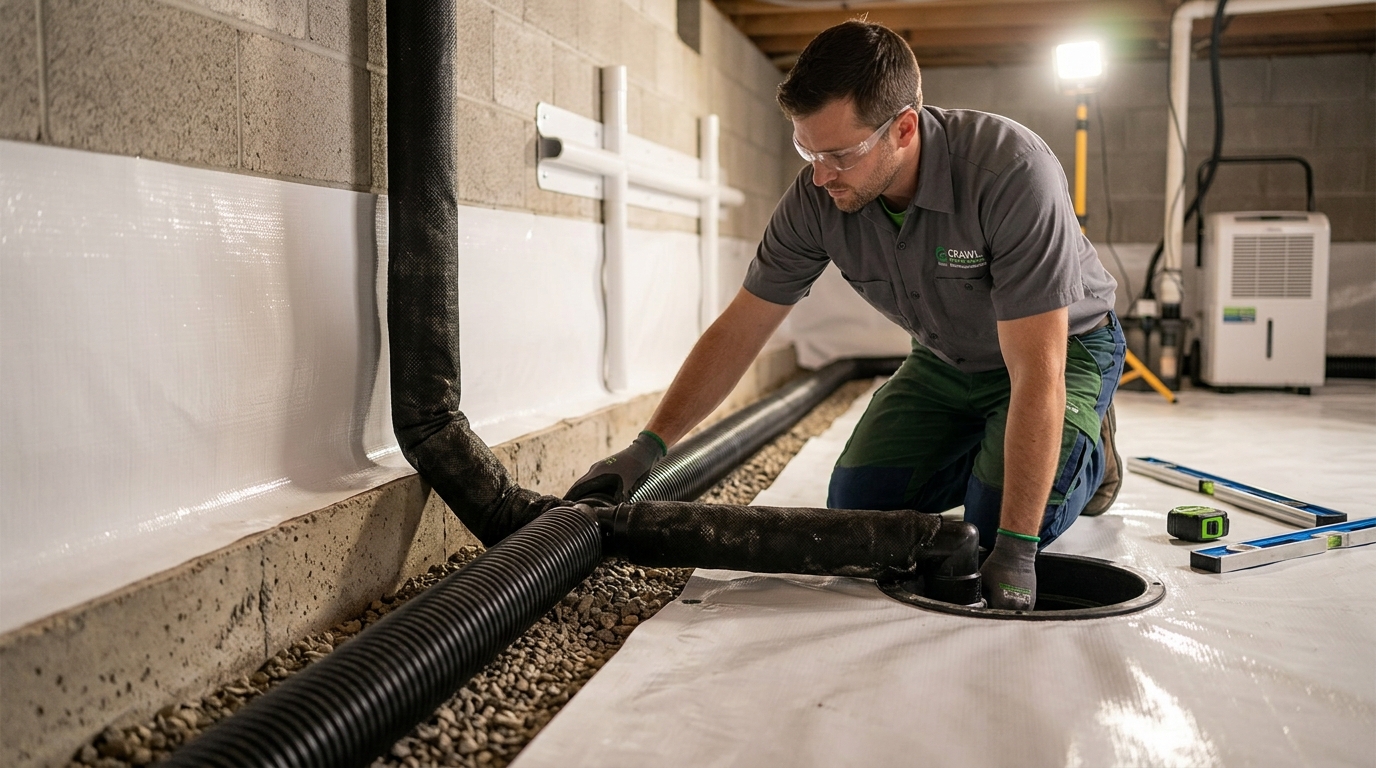
Water intrusion is the primary enemy of structural integrity in residential foundations. According to the U.S. Environmental Protection Agency, approximately 98 percent of crawl spaces in the United States have moisture problems that require remediation. This statistic highlights why selecting the correct drainage products is not merely a maintenance task but a critical component of home preservation. When water accumulates in the subfloor area, it creates a breeding ground for mold, compromises insulation efficiency, and accelerates the decay of structural wood members. Choosing the right system requires a deep understanding of hydrostatic pressure, soil composition, and the specific architectural constraints of your home.
Understanding Hydrostatic Pressure and Soil Types
Before purchasing any hardware, you must evaluate the environmental forces acting against your foundation. Hydrostatic pressure is the force exerted by standing water in the soil against the foundation walls and floor. When the water table rises, this pressure increases, forcing water through cracks and pores in the concrete. Hydrostatic pressure is the lateral force exerted by water in the soil against a retaining structure. Ignoring this force leads to failed drainage systems that cannot handle the volume of water during heavy rainfall events.
Soil type plays a decisive role in drainage product selection. Clay soils retain water and expand when wet, creating immense pressure on basement walls. Sandy soils drain quickly but may lack the structural stability to support heavy drainage pipes without proper bedding. If you live in an area with high clay content, you need a more robust perimeter drainage system capable of handling slower water movement. Conversely, sandy soils may require less aggressive drainage but better filtration to prevent soil erosion into the pipes.
Assessing the slope of your property is also essential. Water should always flow away from the foundation. If your grading directs water toward the house, no amount of internal drainage will fully solve the problem. You must address exterior grading first. However, for interior solutions, the choice of pipe diameter and slope gradient becomes critical. A standard 4-inch perforated pipe is common, but larger diameters may be necessary for high-volume water tables. The goal is to create a path of least resistance for water to reach the discharge point.
Comparing Drainage Materials and Perimeter Systems
The core of any effective crawl space drainage system is the material used to channel water away from the foundation. Traditional French drains use perforated PVC or corrugated plastic pipes wrapped in filter fabric. These systems rely on gravity to move water to a sump pit. The filter fabric is crucial because it prevents soil and debris from clogging the perforations. Without proper filtration, the system will fail within a few years, requiring costly excavation to repair.
Modern drainage solutions include dimple board systems. These rigid plastic sheets create a continuous air gap between the foundation wall and the soil. This gap allows water to flow freely down to the drainage pipe at the base of the wall. Dimple board also serves as a vapor barrier, protecting the foundation from moisture absorption. This dual function makes it a superior choice for damp crawl spaces where both liquid water and vapor intrusion are concerns. You can explore our full range of waterproofing and drainage products to find the right fit for your project.
Another option is the use of drainage mats or geocomposites. These are thin, flexible materials that provide a channel for water flow. They are often used in conjunction with vapor barriers to create a comprehensive moisture management system. The choice between rigid dimple board and flexible mats depends on the accessibility of the crawl space and the specific pressure conditions. Rigid boards offer better protection against physical damage during backfill, while mats are easier to install in tight or irregular spaces.
| Drainage Product Type | Primary Function | Best Use Case | Pros | Cons |
|---|---|---|---|---|
| Perforated PVC Pipe | Channeling water to sump pit | Traditional French drain installations | Cost-effective, widely available | Requires separate filter fabric |
| Dimple Board | Water channeling and vapor barrier | New construction or major retrofits | Dual function, high durability | Higher material cost |
| Drainage Mats | Moisture wicking and air gap | Irregular crawl space geometries | Flexible, easy to install | Less structural protection |
| Geocomposite Drains | High-flow water removal | High water table areas | High capacity, lightweight | Specialized installation required |
Selecting the Right Sump Pump System
Once water is collected by the drainage pipes, it must be discharged from the crawl space. This is the role of the sump pump. Not all sump pumps are created equal. The choice between a pedestal pump and a submersible pump depends on the depth of the sump pit and the volume of water expected. Pedestal pumps have their motor mounted above the pit, making them easier to service but noisier during operation. Submersible pumps are sealed and placed inside the pit, offering quieter operation and greater durability for heavy-duty use.
For crawl spaces, space constraints are often a significant factor. Many crawl spaces have limited vertical clearance. In these cases, a low-profile sump pump or a condensate pump might be necessary. A condensate pump is typically used to remove water from dehumidifiers or air conditioning units, but it can also serve as a secondary drainage solution in tight spaces. We stock AprilAire low-profile condensate pump kits designed specifically for these challenging environments.
Power reliability is another critical consideration. Power outages are common during storms, which are often the times when drainage systems are needed most. A battery backup system is essential for any serious drainage setup. Some advanced systems include a water-powered backup pump that uses municipal water pressure to operate during power failures. While this option requires a water source, it provides an extra layer of protection against flooding. Always consult with a professional to determine the appropriate pump horsepower and lift capacity for your specific crawl space depth.
Integrating Moisture Control and Dehumidification
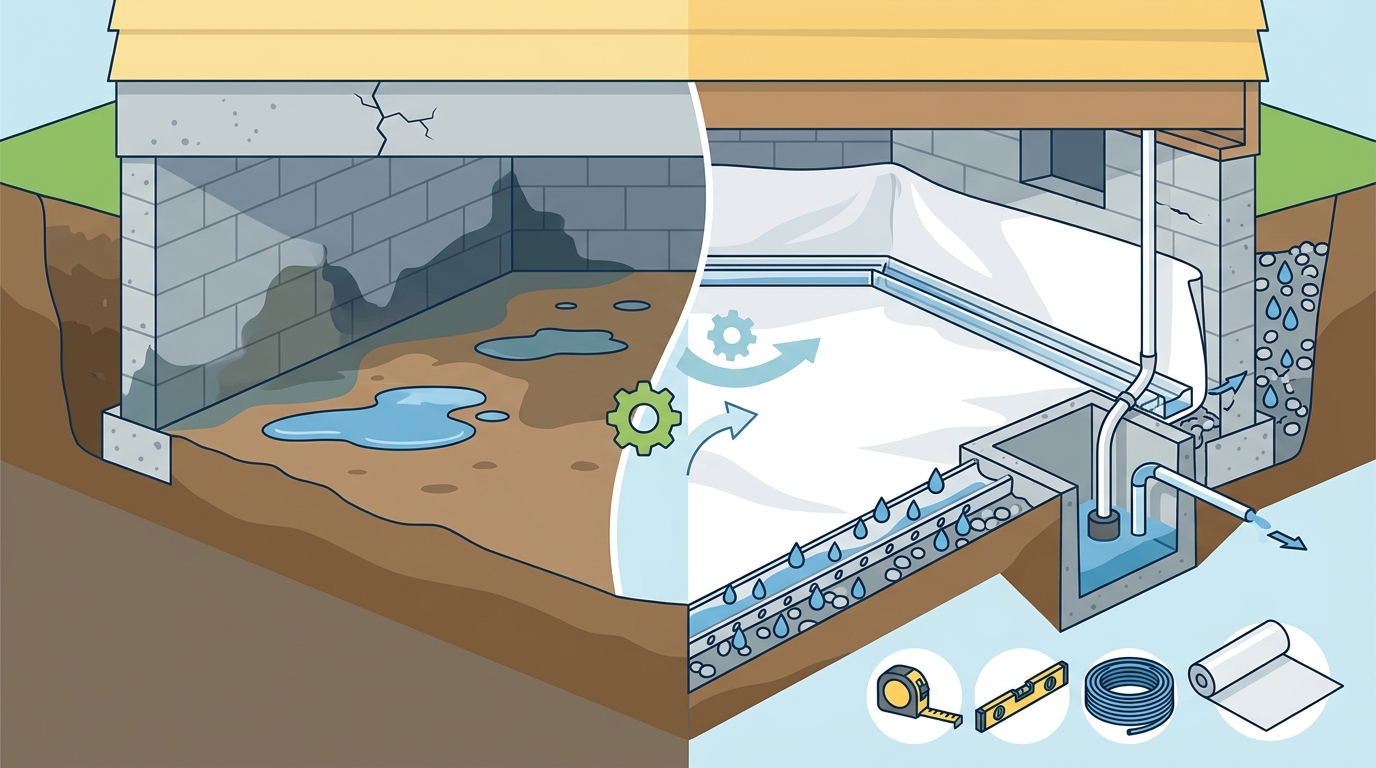
Drainage products handle liquid water, but they do not address vapor intrusion. Even with a perfect drainage system, humidity levels in the crawl space can remain high due to evaporation from the soil. This moisture can lead to mold growth on wooden beams and insulation degradation. Therefore, drainage must be integrated with a comprehensive moisture control strategy. This often involves encapsulating the crawl space with a heavy-duty vapor barrier on the floor and walls.
Dehumidification is the next step in this integration. A properly sized dehumidifier will maintain relative humidity levels between 30 and 50 percent, preventing condensation and mold growth. The choice of dehumidifier depends on the square footage of the crawl space and the expected moisture load. Large crawl spaces may require commercial-grade units with high pint removal capacities. We offer a variety of AprilAire dehumidifiers and accessories to match different system requirements.
Proper air circulation is also vital. Stagnant air promotes mold growth. Ensuring that the dehumidifier can effectively circulate air throughout the entire crawl space is key. This may require the use of fans or ducting to direct airflow to remote corners. The combination of drainage, encapsulation, and dehumidification creates a dry, healthy environment that protects the structural integrity of your home. For more insights on maintaining air quality, visit our blog dedicated to moisture control.
Critical Installation and Maintenance Factors
Even the best drainage products will fail if installed incorrectly. Proper slope is non-negotiable. Drainage pipes must have a consistent downward slope toward the sump pit. A common rule of thumb is a slope of one-quarter inch per foot. If the slope is too steep, water may flow too quickly, leaving solids behind. If it is too shallow, water may not flow at all. Use a level to ensure accuracy during installation.
Filtering the water before it enters the sump pit is another critical step. A sump pit filter or a fine-mesh screen prevents debris from entering the pump mechanism. This simple component can extend the life of your pump significantly. Regular maintenance is also required. Inspect the sump pit quarterly to remove any accumulated sediment. Test the pump by pouring water into the pit to ensure it activates and discharges correctly. These small efforts prevent catastrophic failures.
When selecting materials, consider the durability of the components. PVC pipes can become brittle over time, especially in cold climates. Corrugated plastic is more flexible but may crush under heavy soil pressure. Choose materials rated for the specific load conditions of your installation. Additionally, ensure that all connections are sealed tightly to prevent groundwater from entering the system through loose joints. A well-installed system should require minimal intervention for years. For detailed guides on installation techniques, check our video resources.
Key Takeaways
- Hydrostatic Pressure Management: Always assess soil type and water table levels before selecting drainage products to ensure the system can handle the lateral pressure.
- Material Selection: Dimple board offers dual benefits of drainage and vapor protection, while perforated pipes remain a cost-effective standard for perimeter drainage.
- Sump Pump Choice: Submersible pumps are generally more durable for heavy use, but low-profile condensate pumps are essential for tight crawl space clearances.
- Backup Power: Install a battery backup or water-powered backup system to ensure drainage continues during power outages associated with storms.
- Vapor Control: Drainage alone is insufficient; integrate encapsulation and dehumidification to control humidity and prevent mold growth.
- Maintenance: Regular inspection of the sump pit and pump activation tests are critical for long-term system reliability.
- Professional Consultation: Complex drainage issues often require professional assessment to determine the correct pipe diameter and pump capacity.
Frequently Asked Questions
What is the best material for crawl space drainage pipes?
Perforated PVC pipe is the most common choice due to its durability and resistance to corrosion. However, corrugated plastic pipes are also used for their flexibility in tight spaces. The key is to ensure the pipe is wrapped in filter fabric to prevent clogging.
How do I choose the right size sump pump for my crawl space?
The size of the sump pump depends on the volume of water entering the pit and the vertical lift required. For most residential crawl spaces, a 1/3 horsepower pump is sufficient. However, high water tables may require a 1/2 horsepower or greater pump. Consult a professional for precise calculations.
Can I use a condensate pump for crawl space drainage?
Yes, condensate pumps can be used in crawl spaces with limited vertical clearance. They are designed to move small volumes of water vertically. However, they may not handle the high volume of groundwater that a standard sump pump can manage.
What is the purpose of dimple board in crawl space drainage?
Dimple board creates a continuous air gap between the foundation wall and the soil. This gap allows water to flow down to the drainage pipe while also acting as a vapor barrier to protect the foundation from moisture absorption.
How often should I maintain my crawl space drainage system?
You should inspect your sump pit and pump quarterly. Remove any debris from the pit and test the pump by pouring water into it. Annual professional maintenance is also recommended to ensure all components are functioning correctly.
Is a vapor barrier necessary if I have a drainage system?
Yes, a drainage system removes liquid water but does not stop vapor intrusion. A vapor barrier on the floor and walls is essential to prevent moisture from evaporating into the crawl space air, which can lead to mold and humidity issues.
What should I do if my sump pump fails during a storm?
If your sump pump fails, you should have a battery backup or water-powered backup system in place. These systems activate automatically when the primary pump fails or during power outages, preventing flooding.
Secure Your Home's Foundation Today
Protecting your home from water damage requires careful selection of drainage products and professional installation. Walder Foundation Products offers a comprehensive range of high-quality drainage, waterproofing, and moisture control solutions designed for contractors and DIY enthusiasts. Our products are rigorously tested to ensure durability and performance in the most demanding conditions. Visit our product catalog to explore our full inventory. Contact our sales team at 804-798-3605 to discuss your specific project needs and receive expert guidance on the best products for your crawl space.