
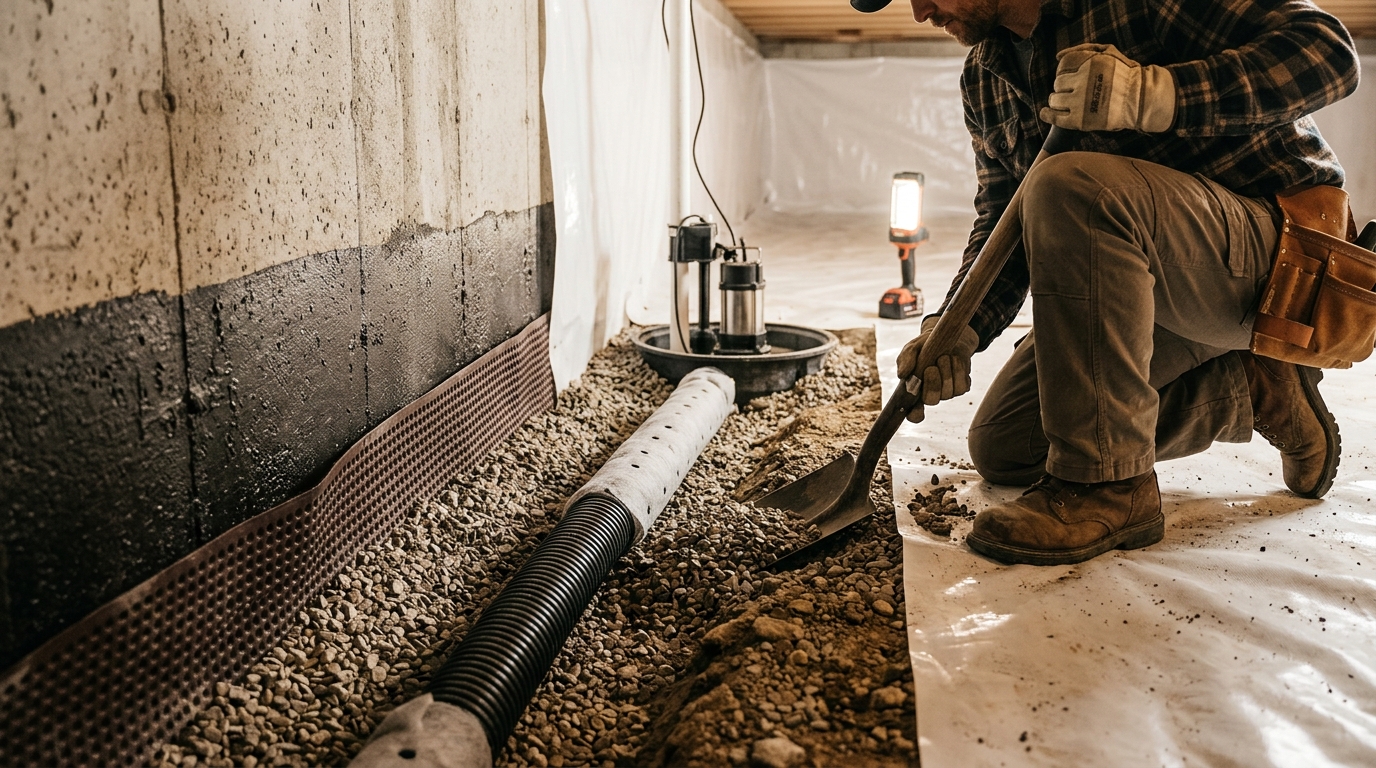
Water intrusion in crawl spaces is a pervasive issue that compromises structural integrity and indoor air quality. According to the EPA, damp crawl spaces are primary contributors to mold growth and musty odors that permeate living areas. Effective drainage is not merely about removing standing water but managing hydrostatic pressure and vapor transmission. Selecting the right products requires a deep understanding of soil conditions, foundation types, and moisture load calculations. This guide outlines the critical factors contractors and homeowners must evaluate to ensure long-term dryness and structural safety.
Understanding Hydrostatic Pressure
Before selecting specific products, it is essential to diagnose the source of moisture. Hydrostatic pressure occurs when water-saturated soil exerts force against foundation walls and floors. If this pressure is not relieved, water will find the path of least resistance, leading to leaks and structural damage. USGS data indicates that groundwater levels fluctuate significantly with seasonal rainfall, directly impacting the load on foundation systems.
Effective drainage begins with intercepting this water before it accumulates. Products must be chosen based on the specific hydrostatic load of the site. In areas with high water tables, perimeter drainage systems are non-negotiable. These systems collect water at the base of the foundation and direct it away from the structure. Ignoring this factor often results in premature system failure and costly repairs.
Drainage System Types and Applications
Not all drainage products are created equal. The choice of system depends on the foundation type, accessibility, and the severity of the water issue. Below are the primary categories of drainage products available for crawl spaces.
Perimeter Drainage and Dimple Board
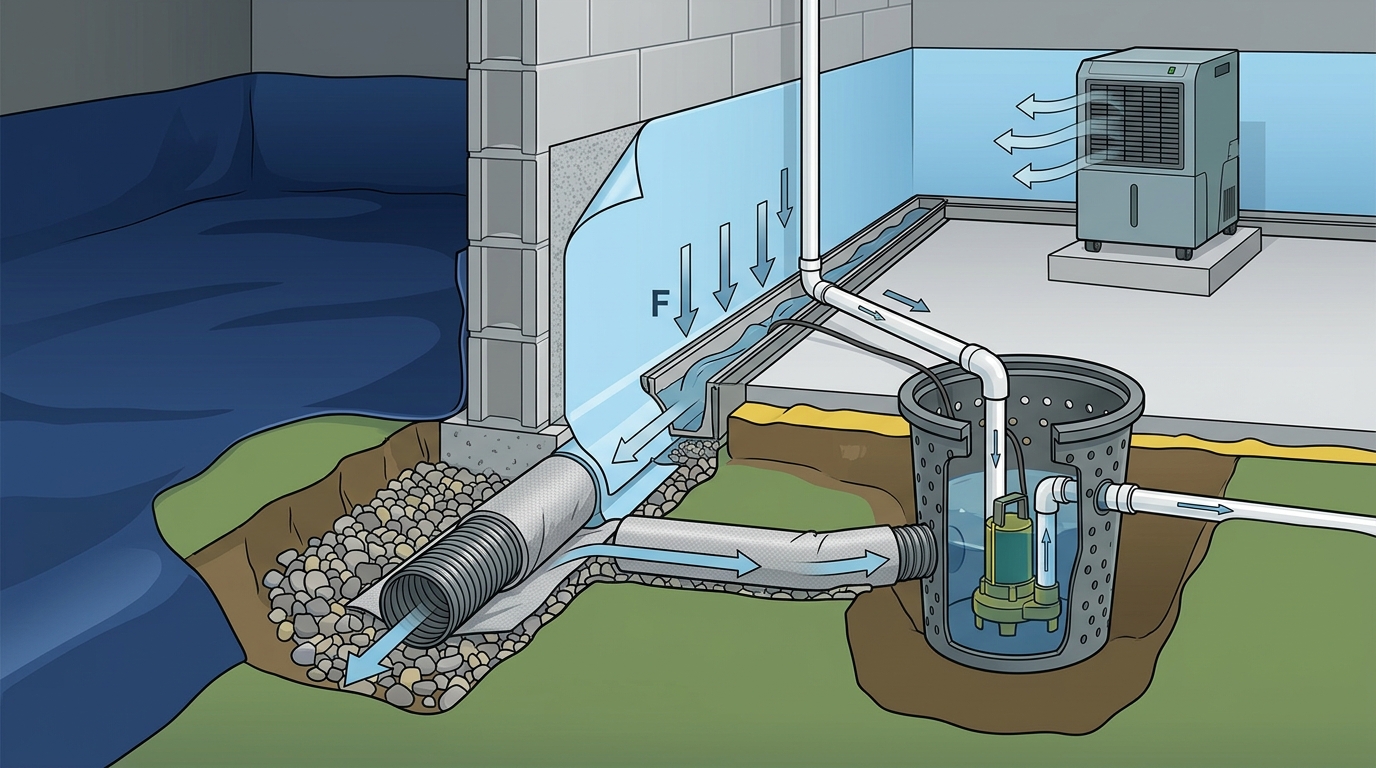
Perimeter drainage involves installing pipes along the foundation footing to collect groundwater. ASHRAE guidelines suggest that managing bulk water is the first step in any moisture control strategy. Dimple board is a critical companion to this system. It creates a gap between the foundation wall and the soil, allowing water to flow freely down to the drainage pipe. This product also serves as a protective layer against soil abrasion.
Sump Pump Systems
When gravity drainage is not possible, sump pumps become the primary solution. A sump pit collects water from the perimeter drain and pumps it away from the foundation. Consumer Reports notes that reliable sump pump operation is vital for preventing basement and crawl space flooding during heavy storms. Choosing a pump with a battery backup is essential for areas prone to power outages during severe weather events.
Interior Drainage Channels
For existing homes with finished crawl spaces or limited exterior access, interior drainage channels offer a viable alternative. These channels are installed along the interior perimeter of the foundation floor. They collect water that seeps through the floor-wall joint and direct it to a sump pit. This method is less invasive than exterior excavation but requires careful integration with the vapor barrier system.
Material Selection and Durability
The longevity of a drainage system depends heavily on the materials used. Crawl spaces are harsh environments characterized by high humidity, potential chemical exposure from soil, and physical stress from soil movement.
PVC and Corrugated Pipe
Drainage pipes must be durable and resistant to crushing. Corrugated drainage pipe is commonly used for its flexibility and ease of installation. However, it must be rated for the specific soil load. PVC pipe offers superior rigidity and smooth interior walls, which improve flow capacity. Industry standards recommend using Schedule 40 PVC for main lines and corrugated pipe for lateral connections to balance cost and performance.
Geocomposite Drains
Geocomposite drains combine a drainage core with filter fabric. This design prevents soil particles from clogging the drainage channels. In soils with high clay content, clogging is a major risk. Using a geocomposite drain ensures long-term functionality without the need for frequent maintenance. The filter fabric must be permeable enough to allow water entry but fine enough to block sediment.
Integration with Crawl Space Encapsulation
Modern crawl space management relies on encapsulation. This process involves sealing the crawl space with a vapor barrier to control humidity and prevent mold growth. Department of Energy reports that encapsulated crawl spaces can improve energy efficiency by up to 20 percent by reducing air leakage. Drainage products must be compatible with this system to ensure that bulk water is removed before it can compromise the vapor barrier.
When installing a vapor barrier, it is crucial to route drainage pipes and sump pump discharge lines through the barrier correctly. Seals around these penetrations must be airtight to maintain the integrity of the encapsulation. Products like Walder Foundation Products offer specialized tapes and adhesives designed to create permanent, watertight seals around pipe penetrations. This integration ensures that the crawl space remains dry and conditioned.
Sizing and Capacity Requirements
Proper sizing of drainage components is critical for system effectiveness. Undersized pipes or pumps will fail to handle peak water loads, leading to overflow and potential damage. The capacity of the drainage system must be calculated based on the drainage area, soil permeability, and local rainfall intensity.
For sump pumps, the flow rate is measured in gallons per hour (GPH). A pump with a higher GPH rating can move water more quickly, reducing the risk of overflow during heavy rain. Home improvement experts advise selecting a pump with a capacity at least 50 percent greater than the calculated maximum inflow rate. This margin of safety ensures reliable performance during extreme weather events.
Additionally, the diameter of the drainage pipe must be sufficient to handle the volume of water. A minimum of 4-inch diameter pipe is typically recommended for perimeter drainage. Larger diameters may be necessary for high-volume applications. Proper slope and gradient are also essential to ensure gravity-fed flow. Pipes must be installed with a consistent downward slope toward the sump pit or discharge point.
Key Takeaways
- Hydrostatic Pressure Management: Interception of groundwater is the first line of defense against foundation damage and moisture intrusion.
- System Compatibility: Drainage products must be integrated seamlessly with vapor barriers and encapsulation systems for optimal performance.
- Material Durability: Use crush-resistant pipes and clog-resistant geocomposite drains to ensure long-term functionality in harsh environments.
- Sizing Accuracy: Calculate flow rates and select pumps with sufficient capacity to handle peak water loads during heavy rainfall.
- Professional Installation: Proper slope, sealing, and integration are critical. Consult with Walder Foundation Products experts for product selection and installation guidance.
Frequently Asked Questions
What is the best material for crawl space drainage pipes?
PVC pipe is generally preferred for its durability and smooth interior walls, which improve flow capacity. Corrugated pipe is also used for its flexibility but must be rated for the specific soil load.
How do I prevent clogging in my crawl space drainage system?
Using geocomposite drains with filter fabric helps prevent soil particles from clogging the drainage channels. Regular inspection and maintenance are also recommended.
Is a sump pump necessary for every crawl space?
A sump pump is necessary if gravity drainage is not possible. In areas with high water tables or poor soil permeability, a sump pump is essential to remove accumulated water.
How does crawl space encapsulation work with drainage?
Encapsulation seals the crawl space with a vapor barrier to control humidity. Drainage products remove bulk water, while the vapor barrier prevents moisture from entering the air. The two systems work together to maintain a dry environment.
What size sump pump do I need for my crawl space?
The size depends on the drainage area and rainfall intensity. A pump with a flow rate at least 50 percent greater than the calculated maximum inflow rate is recommended to ensure reliable performance.
Can I install drainage products myself?
While DIY installation is possible, proper sizing and integration are critical. Consulting with professionals or using resources from Walder Foundation Products can help ensure a successful installation.
What is the role of dimple board in drainage?
Dimple board creates a gap between the foundation wall and the soil, allowing water to flow freely to the drainage pipe. It also protects the foundation from soil abrasion.
Secure Your Crawl Space Today
Protecting your home from water damage requires careful selection of drainage products and proper installation. Walder Foundation Products offers a comprehensive range of drainage solutions, including dimple board, sump pumps, and vapor barriers. Visit our product catalog to find the right solutions for your project. Contact our team at 804-798-3605 for expert advice and contractor pricing.