
How to Determine the Right Size Dehumidifier for Your Crawl Space
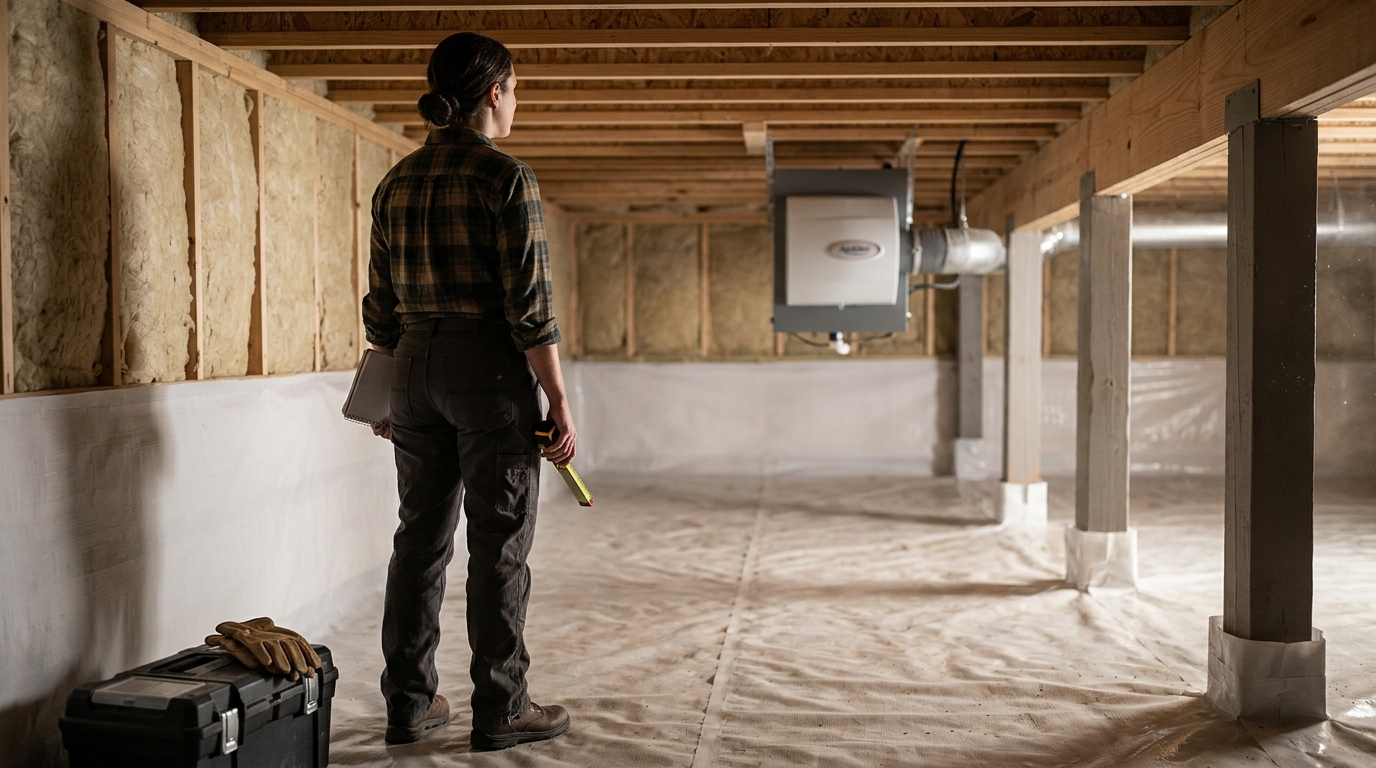
Moisture accumulation in sub-floor environments is a silent destroyer of structural integrity. According to the Environmental Protection Agency, homes with high humidity levels in their crawl spaces are significantly more likely to experience mold growth and wood rot. Selecting the correct dehumidifier capacity is not merely a matter of preference; it is a critical engineering decision that dictates the longevity of your home's foundation and the quality of the air in your living spaces. An undersized unit will run continuously without achieving equilibrium, while an oversized unit will short-cycle, failing to properly dehumidify the air. (AprilAire 5822 Dehumidifier Hanging)
Step 1: Calculate Square Footage and Volume
The primary metric for determining dehumidifier size is the square footage of the crawl space. Manufacturers typically rate their units in pints of water removed per day (pints/day). The standard baseline for a moderately damp crawl space is approximately one pint of moisture removal for every 100 to 150 square feet of floor area. However, this baseline shifts dramatically based on the severity of the moisture issue.
To begin your calculation, measure the length and width of the crawl space floor. Multiply these two numbers to get the total square footage. For example, a crawl space that is 20 feet by 50 feet equals 1,000 square feet. If you apply the standard 150 square feet per pint rule, you would theoretically need a unit capable of removing roughly 6 to 7 pints per day. However, this is a minimum for dry conditions. Most crawl spaces require significantly more capacity.
It is also crucial to consider the volume of the air space, not just the floor area. A crawl space with high ceilings or significant vertical voids contains more air volume, which requires more energy to dehumidify. While most residential units are rated by floor coverage, professional contractors often recommend upsizing by 20 to 30 percent to account for air volume and air exchange rates through vents and foundation gaps.
Step 2: Assess Moisture Severity and Encapsulation Status
The condition of your crawl space directly influences the required capacity. A crawl space with a bare dirt floor releases vast amounts of moisture into the air through evaporation. This is known as ground vapor emission. If your crawl space has not been encapsulated, the dehumidifier must work against a constant source of moisture, requiring a much larger unit than one that manages air humidity alone.
Crawl Space Encapsulation is the process of sealing the crawl space with a vapor barrier on the floor and walls. This stops ground moisture from entering the space. If you have encapsulated your crawl space, the dehumidifier's role shifts from fighting ground evaporation to managing air humidity and any minor leaks. In this scenario, a smaller, more efficient unit may suffice.
For unencapsulated spaces, or spaces with significant water intrusion, you must look at the severity of the dampness. If you see standing water, heavy condensation on pipes, or visible mold growth, you are dealing with a high-moisture environment. In these cases, industry standards often suggest a capacity of 50 to 70 pints per day for spaces under 1,500 square feet. For larger, unencapsulated areas, you may need commercial-grade units capable of removing 90 to 150 pints per day.
Step 3: Compare Dehumidifier Technologies
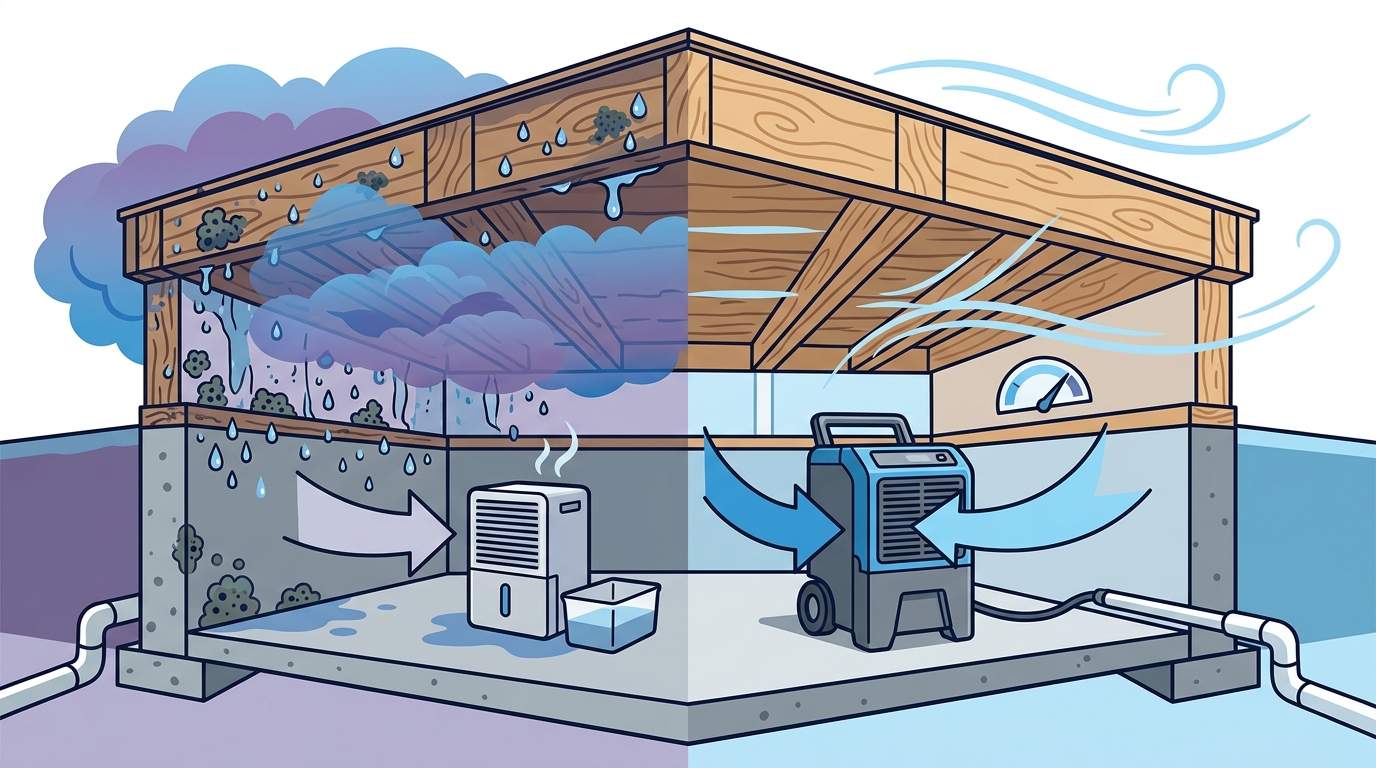
Not all dehumidifiers perform equally in cold or humid environments. The two primary technologies used in crawl spaces are compressor-based (refrigerant) dehumidifiers and desiccant dehumidifiers. Understanding the difference is vital for selecting the right tool for your specific climate and crawl space conditions.
Compressor-Based Dehumidifiers
Compressor dehumidifiers work similarly to air conditioners. They pull air over cold coils, causing moisture to condense and drip into a collection tank or drain line. These units are highly energy-efficient in warm environments. However, they lose efficiency as temperatures drop. Below 65 degrees Fahrenheit, the coils can freeze, causing the unit to shut down or operate poorly. If your crawl space is unheated and experiences cold winters, a standard compressor unit may struggle.
Desiccant Dehumidifiers
Desiccant dehumidifiers use a moisture-absorbing material, such as silica gel, to pull water from the air. They are exceptionally effective in cold temperatures because they do not rely on cooling coils that can freeze. They are often the preferred choice for unheated crawl spaces in colder climates. While they may consume slightly more energy than compressor units in warm weather, their ability to operate in freezing conditions makes them indispensable for many homeowners.
When comparing options, look for units with built-in humidistats that allow you to set a specific target humidity level, typically between 45 and 55 percent. This ensures the unit turns off once the desired dryness is achieved, preventing over-dehumidification and saving energy.
Step 4: Installation and Drainage Logistics
Once you have determined the correct capacity, the next step is ensuring the unit can be installed and maintained effectively. Crawl spaces are often tight, dark, and difficult to access. You must consider the physical dimensions of the dehumidifier and its placement.
Drainage is the most critical logistical factor. Relying on a manual collection tank is impractical for most crawl space applications because it requires frequent, difficult access to empty. Instead, opt for a dehumidifier with a continuous drain port. This allows you to connect a standard PVC or vinyl drain line that routes moisture out of the crawl space and away from the foundation. This setup enables the unit to run continuously without human intervention.
Additionally, consider the power source. Crawl spaces may not have readily available outlets. You may need to install a dedicated circuit or use a heavy-duty extension cord rated for the unit's amperage. Always consult with a licensed electrician if you are unsure about the electrical requirements of your chosen unit.
Recommended Product Categories
Walder Foundation Products offers a curated selection of dehumidifiers and accessories designed for these exact challenges. We carry top-tier brands like AprilAire and Santa Fe, which are known for their durability and performance in harsh environments.
| Dehumidifier Type | Best For | Capacity Range | Key Feature |
|---|---|---|---|
| Compressor (Refrigerant) | Warm, encapsulated crawl spaces | 30 - 70 pints/day | High energy efficiency in heat |
| Desiccant | Cold, unheated crawl spaces | 40 - 100 pints/day | Operates in freezing temps |
| Commercial Grade | Large, unencapsulated spaces | 90 - 150+ pints/day | Heavy-duty construction |
Key Takeaways
- Calculate by Square Footage: Start with a baseline of 1 pint per 100-150 square feet, then adjust for severity.
- Account for Encapsulation: Unencapsulated spaces require significantly larger units due to ground vapor emission.
- Choose Technology Wisely: Use desiccant units for cold climates and compressor units for warm, encapsulated spaces.
- Install Continuous Drainage: Avoid manual tanks by installing a direct drain line to the exterior or sump pump.
- Target Humidity Levels: Aim for a relative humidity between 45 and 55 percent to prevent mold and rot.
- Verify Electrical Needs: Ensure your crawl space has adequate power access for the unit's amperage requirements.
- Consider Air Volume: High ceilings or large voids may require upsizing the unit by 20 to 30 percent.
Frequently Asked Questions
How many pints of water do I need for a 1,000 square foot crawl space?
For a 1,000 square foot crawl space, you typically need a dehumidifier with a capacity of 50 to 70 pints per day if it is unencapsulated. If the space is fully encapsulated with a vapor barrier, a 30 to 50 pint unit may be sufficient.
Can I use a standard basement dehumidifier in my crawl space?
While you can use a standard basement dehumidifier, it may not be ideal. Crawl spaces often have lower ceilings and tighter access points. Additionally, standard units may not perform well in the colder temperatures found in unheated crawl spaces. Look for units specifically designed for crawl space applications.
What is the difference between a compressor and a desiccant dehumidifier?
A compressor dehumidifier uses refrigerant to cool coils and condense moisture, making it efficient in warm weather. A desiccant dehumidifier uses a moisture-absorbing material to pull water from the air, making it effective in cold temperatures where compressor coils might freeze.
Do I need a dehumidifier if I have a vapor barrier?
Yes. A vapor barrier stops ground moisture from evaporating into the air, but it does not stop humidity from entering through vents, cracks, or air exchange. A dehumidifier is still necessary to maintain the correct relative humidity level within the sealed environment.
How often should I empty the dehumidifier tank?
If you do not install a continuous drain line, you should check the tank daily during humid months. Relying on a manual tank is impractical for most crawl spaces because it requires frequent access to a difficult-to-reach area. A continuous drain line is highly recommended.
What is the ideal humidity level for a crawl space?
The ideal relative humidity for a crawl space is between 45 and 55 percent. Keeping the humidity below 60 percent is critical to preventing mold growth and wood rot.
How do I know if my dehumidifier is the right size?
If your dehumidifier runs continuously but the humidity level does not drop, it is likely undersized. If it turns on and off frequently without reaching the target humidity, it may be oversized. Monitor the humidity levels with a hygrometer for the first few weeks of operation to assess performance.
Ready to Secure Your Home's Foundation?
Selecting the right dehumidifier is the first step toward a dry, healthy home. Walder Foundation Products provides the expert guidance and high-quality equipment you need to complete your crawl space encapsulation and moisture control project with confidence. Our team of specialists is ready to help you choose the perfect AprilAire or Santa Fe dehumidifier for your specific needs.
Contact our sales team today to discuss your project requirements or browse our full catalog of dehumidifiers and accessories. Visit our About Us page to learn more about our commitment to quality and service.