
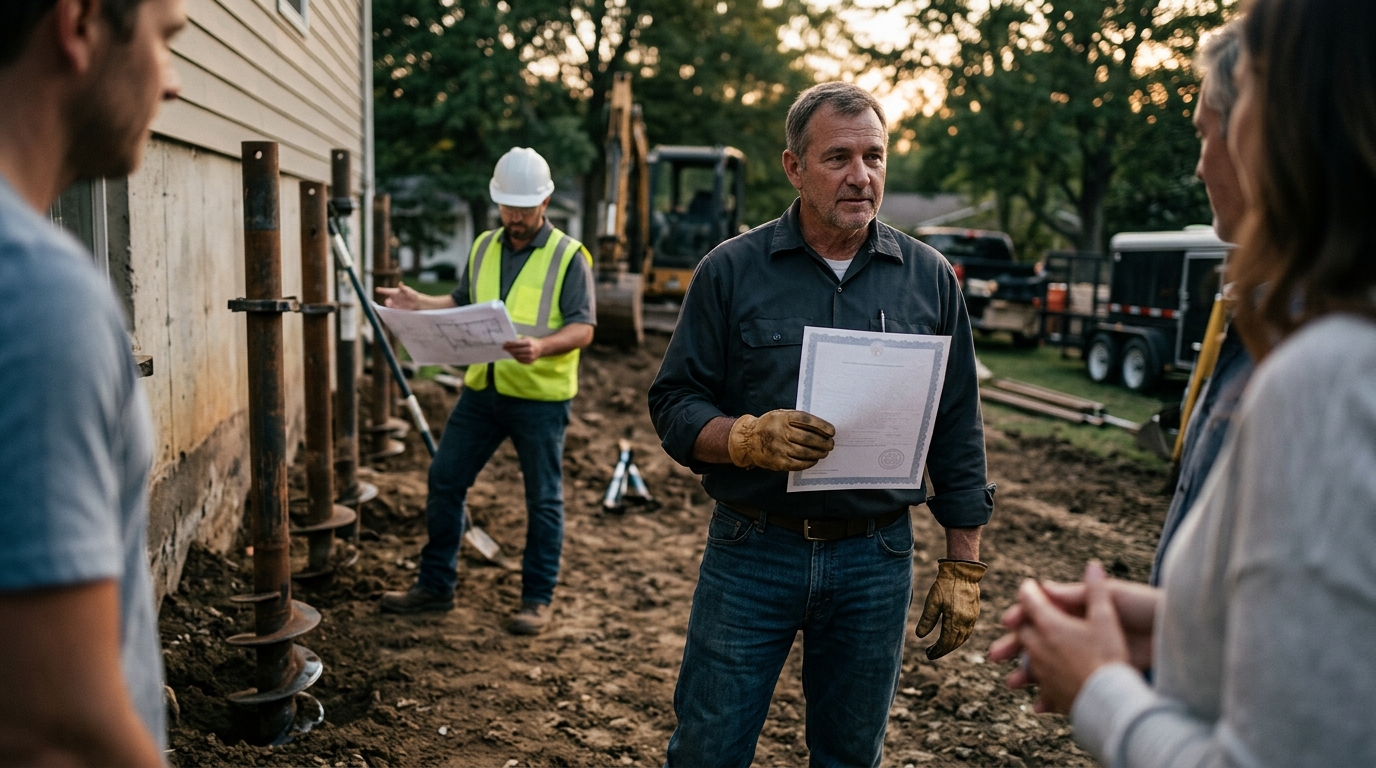
Essential Certifications and Credentials for Foundation Repair Contractors
Homeowners facing structural issues often struggle to distinguish between legitimate engineering solutions and superficial fixes. According to the International Association of Certified Home Inspectors, approximately 75% of all homes have some form of water damage in the basement or crawl space, which frequently correlates with foundation instability. This statistic highlights the critical need for professional intervention backed by verified credentials. Without proper certification, repairs may fail to address the root cause, leading to costly recurring damage. This guide outlines the specific qualifications, technical knowledge, and industry standards that define a top-tier foundation repair specialist. (Walder Foundation Products)
Understanding Structural Integrity and Repair Needs
Foundation repair is not a one-size-fits-all solution. It requires a deep understanding of soil mechanics, load distribution, and material science. Structural integrity is the ability of a building to withstand its own weight and external forces without failure. When this integrity is compromised, symptoms such as cracking drywall, sticking doors, and uneven floors become apparent.
Contractors must be able to diagnose whether the issue stems from expansive clay soils, poor drainage, or inadequate initial construction. This diagnosis often involves evaluating the crawl space environment, which is a primary vector for moisture-related foundation damage. Proper diagnosis ensures that the repair method, whether it involves helical piles, push piers, or wall braces, is technically sound.
Key Industry Certifications to Look For
When hiring a foundation repair specialist, certifications serve as proof of technical competence and adherence to industry best practices. Several organizations provide rigorous training and certification programs that validate a contractor's expertise.
Foundation Repair Specialists Association (FRSA)
Membership in the Foundation Repair Specialists Association indicates a commitment to ethical business practices and technical excellence. FRSA members must adhere to a strict code of conduct and stay updated on the latest repair technologies. This organization promotes the use of standardized repair methods that ensure long-term stability.
International Code Council (ICC) Certification
Many reputable contractors hold ICC certifications, which demonstrate knowledge of building codes and safety standards. Building codes are the minimum standards for construction safety established by regulatory authorities. Compliance with these codes is essential for ensuring that repairs meet legal requirements and do not compromise the structural safety of the home.
Manufacturer-Specific Certifications
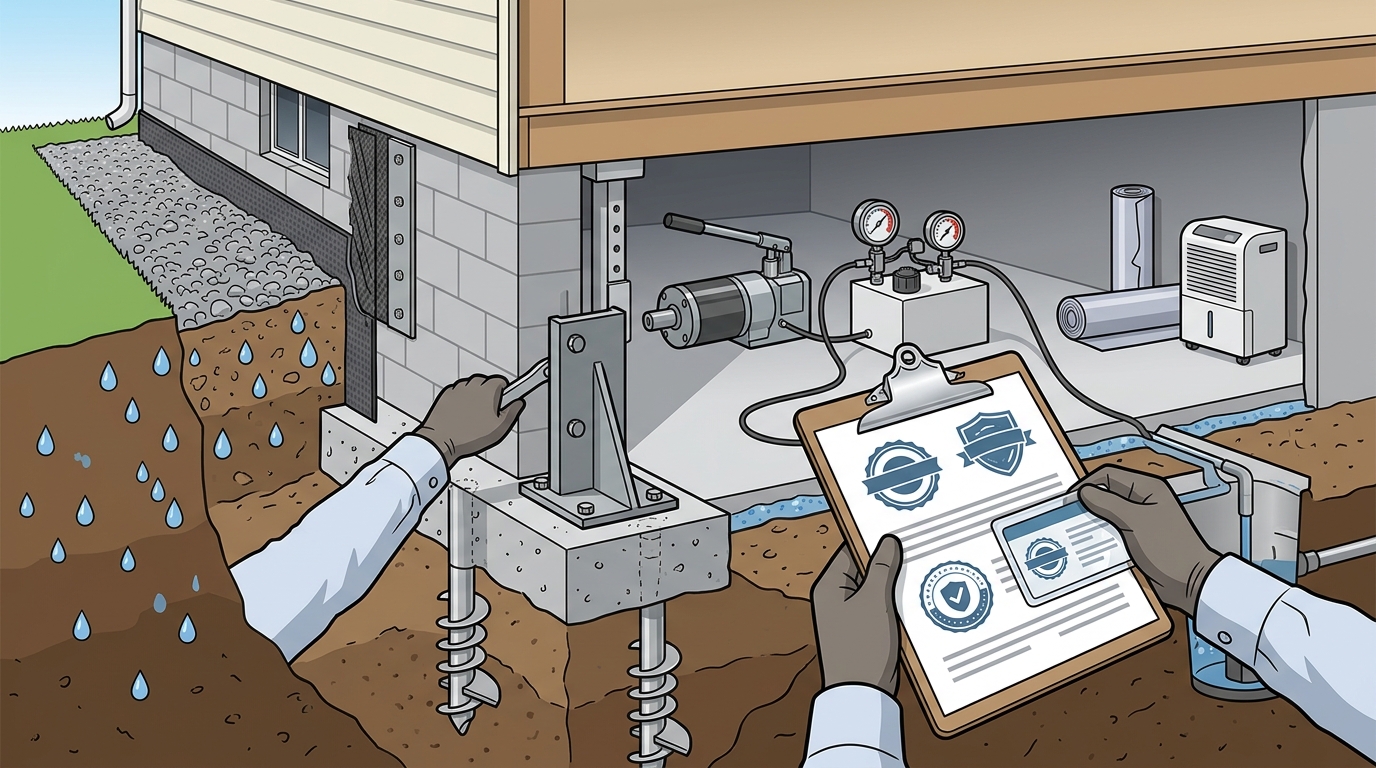
Specialized repair systems, such as those used for basement wall repair or floor support, often require manufacturer-specific training. For example, contractors installing carbon fiber kits or helical piles must be certified by the equipment manufacturer to ensure proper installation. This certification guarantees that the installer has mastered the specific techniques required for that product line.
Technical Expertise and Engineering Standards
Beyond certifications, technical expertise is paramount. Foundation repair involves complex engineering principles that go beyond general contracting skills. Contractors must understand load-bearing calculations, soil bearing capacity, and the interaction between the foundation and the surrounding earth.
Soil Mechanics and Drainage
A thorough understanding of soil mechanics is critical. Expansive soils can shift significantly with changes in moisture content, exerting pressure on foundation walls. Contractors must be able to assess drainage patterns and recommend solutions that mitigate water accumulation. This often involves the installation of perimeter drainage systems or the use of dimple board to direct water away from the foundation.
Structural Analysis
Professional contractors often work in conjunction with licensed structural engineers. They must be able to interpret engineering reports and translate technical specifications into practical repair plans. This collaboration ensures that the repair strategy addresses both the symptoms and the underlying causes of the foundation movement.
The Role of Crawl Space Encapsulation in Foundation Health
Crawl space encapsulation is a critical component of modern foundation maintenance. It involves sealing the crawl space with a vapor barrier to prevent moisture intrusion. This process helps to stabilize the soil around the foundation and prevent rot in wooden structural components.
According to the Building Science Corporation, controlling moisture in the crawl space can reduce humidity levels by up to 50%, significantly extending the life of the home's structural elements. Walder Foundation Products offers a comprehensive range of encapsulation materials, including high-density vapor barriers and specialized tapes, to ensure a durable seal.
Moisture Control and Air Quality
Proper encapsulation also improves indoor air quality by preventing mold spores and allergens from entering the living space. Dehumidifiers play a crucial role in this process, maintaining optimal humidity levels even in high-moisture environments. Products like the AprilAire dehumidifiers are industry standards for effective moisture management.
Insulation and Energy Efficiency
Encapsulation allows for the effective installation of insulation in the crawl space walls, rather than between the floor joists. This method improves energy efficiency and protects the plumbing from freezing. Foam board insulation, such as Terma-Foam, provides high R-value per inch and resists moisture absorption, making it ideal for this application.
Verifying Contractor Credentials and Insurance
Before hiring a contractor, it is essential to verify their credentials and insurance coverage. This due diligence protects homeowners from liability and ensures that the work is performed by qualified professionals.
Licensing and Insurance
Contractors must hold valid state licensing and carry both general liability and workers' compensation insurance. General liability insurance protects the homeowner from property damage caused during the repair process. Workers' compensation covers medical expenses if a worker is injured on the job, preventing the homeowner from being held liable.
Warranty and Guarantees
Reputable contractors offer transferable warranties on their workmanship and materials. These warranties provide long-term peace of mind and protect the homeowner's investment. Look for contractors who stand behind their work with clear, written guarantees that outline the scope of coverage.
References and Reviews
Check online reviews and ask for references from past clients. A contractor with a strong track record of successful projects and satisfied customers is more likely to deliver high-quality results. Pay attention to feedback regarding communication, professionalism, and the durability of the repairs.
Key Takeaways
- Verify FRSA Membership: Look for contractors who are members of the Foundation Repair Specialists Association for ethical and technical standards.
- Check ICC Certification: Ensure the contractor understands and adheres to International Code Council building codes.
- Manufacturer Training: Confirm that the contractor is certified by the manufacturers of the repair systems they use, such as helical piles or carbon fiber.
- Understand Soil Mechanics: A qualified contractor must demonstrate expertise in soil behavior and drainage solutions to prevent future foundation movement.
- Encapsulation Benefits: Crawl space encapsulation with products from Walder Foundation Products can reduce humidity by 50% and protect structural integrity.
- Insurance Requirements: Always require proof of general liability and workers' compensation insurance before work begins.
- Warranty Coverage: Seek out contractors who offer transferable warranties on both labor and materials for long-term protection.
Frequently Asked Questions
What is the most important certification for a foundation repair contractor?
While there is no single mandatory federal certification, membership in the Foundation Repair Specialists Association (FRSA) and ICC certification are widely recognized indicators of technical competence and adherence to industry standards.
Why is crawl space encapsulation important for foundation repair?
Encapsulation controls moisture levels, which prevents soil expansion and contraction that can destabilize the foundation. It also protects wooden structural components from rot and mold, preserving the home's structural integrity.
Do I need a structural engineer for foundation repair?
For significant foundation issues, a licensed structural engineer should assess the damage and provide a repair plan. Contractors often work from these engineering specifications to ensure the repair is structurally sound.
What types of insurance should a foundation repair contractor carry?
They must carry general liability insurance to cover property damage and workers' compensation insurance to cover employee injuries. This protects the homeowner from financial liability during the project.
How can I verify a contractor's warranty?
Ask for a written warranty document that specifies the duration, coverage scope, and transferability of the warranty. Reputable contractors will provide this documentation before signing a contract.
What is the difference between helical piles and push piers?
Helical piles are screwed into the ground like a giant screw and are ideal for new construction or light loads. Push piers are driven into the ground under the weight of the structure and are typically used for underpinning existing foundations.
How does moisture affect foundation stability?
Moisture causes soil to expand or contract, exerting uneven pressure on foundation walls and slabs. This movement can lead to cracking, settling, and structural failure over time.
Contact Walder Foundation Products
For contractors and homeowners seeking high-quality foundation repair materials and expert guidance, Walder Foundation Products is your trusted partner. Located in Ashland, Virginia, we provide a comprehensive range of products including vapor barriers, dehumidifiers, and structural repair components. Visit our product catalog to explore our inventory or learn more about our company history. Contact our sales team today to discuss your project needs and ensure you have the right tools for the job.