
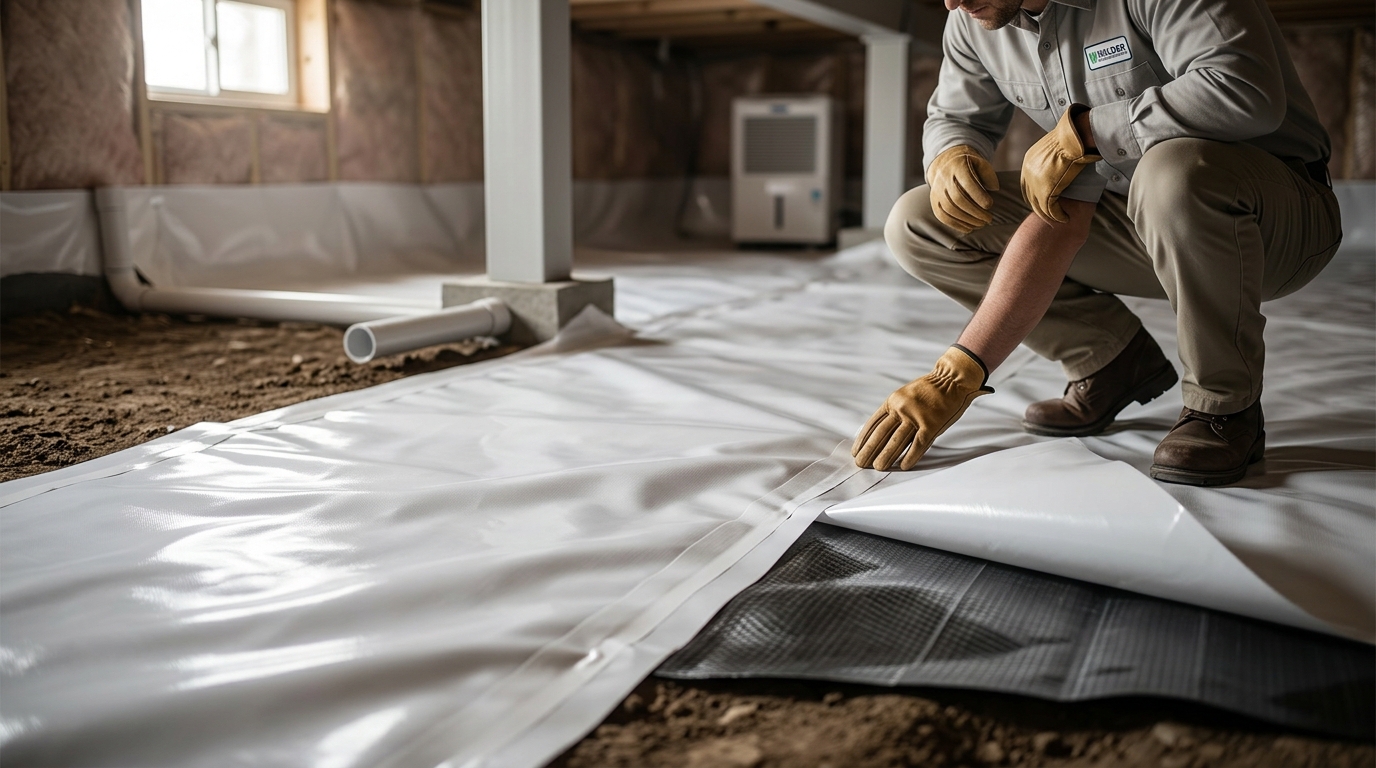
Moisture intrusion is the silent destroyer of residential foundations. According to the Environmental Protection Agency, damp basements and crawl spaces are responsible for significant structural degradation and indoor air quality issues in millions of homes annually. When moisture rises from the soil, it creates a hostile environment for both the home's structural integrity and the health of its occupants. Choosing the right vapor barrier is not merely a construction detail; it is a critical defense mechanism. This guide compares the most common vapor barrier materials to help you determine which option offers the best durability and effectiveness for your specific project.
Types of Vapor Barriers
Understanding the material composition of vapor barriers is the first step in making an informed decision. The market primarily offers two distinct categories: polyethylene sheeting and specialized encapsulation membranes. Each serves a unique purpose depending on whether you are addressing ground vapor or wall moisture.
Polyethylene Sheeting
Polyethylene sheeting is the industry standard for ground vapor barriers. It is a thin, flexible plastic film that is laid directly over the dirt floor of a crawl space. This material is widely used because it is cost-effective and provides a reliable first line of defense against soil moisture. Polyethylene is a synthetic polymer known for its chemical resistance and moisture impermeability. It comes in various thicknesses, typically ranging from 6 mil to 20 mil, with thicker options offering greater puncture resistance.
Reinforced Encapsulation Membranes
For high-performance projects, reinforced encapsulation membranes are the superior choice. These materials are often laminated with fiberglass or other reinforcing layers to prevent tearing and stretching. Encapsulation membranes are specialized barrier systems designed to create a complete air and moisture seal around the entire crawl space. Unlike standard poly, these membranes are often white, which helps reflect light and makes the crawl space more visible for inspections. They are also typically rated for both ground and wall applications.
Wall Vapor Barriers
While ground barriers address moisture rising from the earth, wall vapor barriers tackle humidity condensing on foundation walls. These are often installed as part of a comprehensive encapsulation kit. Wall vapor barriers are impermeable liners applied to foundation walls to prevent moisture migration into the living space. They are essential in humid climates where the temperature differential between the cool foundation and warm air causes condensation.
Durability Analysis
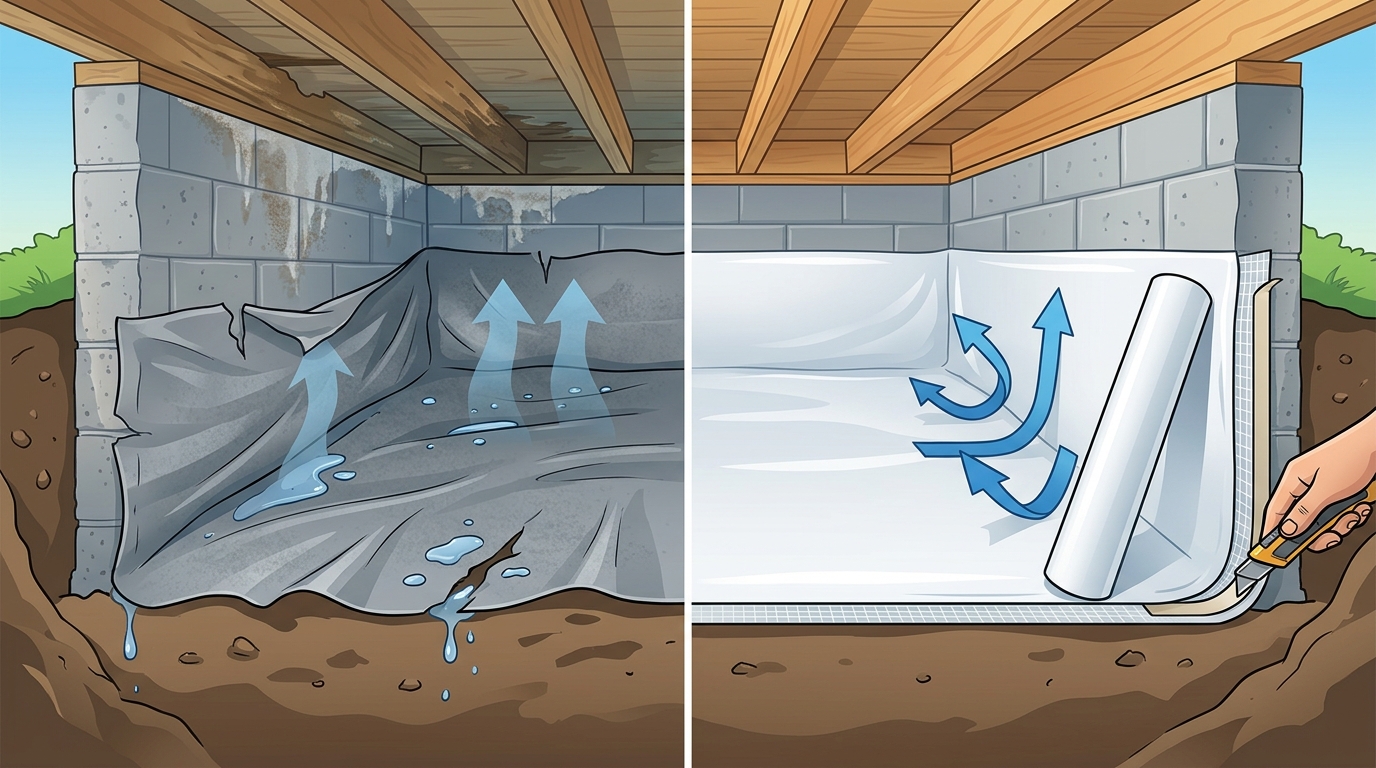
Durability is measured by a material's ability to withstand physical stress, UV exposure, and long-term moisture saturation. The choice between a standard 6 mil barrier and a heavy-duty encapsulation membrane can determine the lifespan of your crawl space system.
Puncture Resistance
Standard 6 mil polyethylene is susceptible to punctures from sharp rocks, roots, or even the weight of debris. Over time, these small tears can compromise the barrier's integrity. In contrast, reinforced membranes and thicker 10 mil to 20 mil barriers, such as those found in Walder Foundation Products crawl space kits, are engineered to resist tearing. The reinforcement layers distribute stress across the material, preventing localized failures.
UV Stability
If your crawl space has a vented design or if the barrier is exposed to sunlight during installation, UV stability is crucial. Standard polyethylene degrades rapidly when exposed to UV rays, becoming brittle and cracking within weeks. Reinforced encapsulation membranes often include UV inhibitors, allowing them to withstand temporary exposure without losing their protective qualities. This is a critical factor for contractors who may leave materials on site for extended periods.
Long-Term Performance
Long-term performance depends on the material's resistance to chemical breakdown from soil gases and moisture. High-quality barriers, such as the ProSeal Liner ground vapor barriers, are tested to ensure they do not off-gas or degrade when in constant contact with damp soil. Inferior materials may develop micro-fractures over time, allowing moisture vapor to pass through despite appearing intact.
Effectiveness and Permeability
Effectiveness is quantified by the material's permeability rating, which measures how much water vapor can pass through it. Lower permeability ratings indicate better performance.
Permeability Ratings Explained
The EPA and building codes generally require vapor barriers to have a permeability rating of less than 1 perm. Permeability is a measure of the rate at which water vapor passes through a material, with lower values indicating better moisture resistance. Standard 6 mil polyethylene typically has a permeability of 0.06 perms, which is highly effective. However, reinforced membranes often achieve even lower ratings, sometimes approaching 0.01 perms, providing an almost absolute barrier against vapor transmission.
Air Sealing Capabilities
Moisture control is not just about liquid water; it is also about air movement. Air carries moisture. A vapor barrier that is not properly sealed acts as a conduit for humid air to enter the crawl space. Reinforced membranes are designed to be taped and sealed at all seams, creating a continuous air barrier. This is why high-quality tapes and adhesives are just as important as the barrier material itself. Without proper sealing, even the most durable material will fail to control humidity.
Condensation Control
Effective vapor barriers prevent condensation on cold surfaces. In a vented crawl space, humid air from outside enters and condenses on cool foundation walls and pipes. By encapsulating the space with a wall vapor barrier, you eliminate this condensation source. This is particularly important in regions with high humidity, where the difference between indoor and outdoor dew points is significant.
Installation Comparison
The ease of installation and the required labor significantly impact the overall cost and effectiveness of a vapor barrier system.
Seaming and Taping
Standard polyethylene requires careful overlapping and taping of seams. If the tape fails or the overlap is insufficient, moisture will bypass the barrier. Reinforced membranes often come with integrated seam tapes or are designed to work with specific adhesives that bond chemically to the material, creating a stronger seal than mechanical fasteners alone.
Fastening Methods
Securing the barrier to the ground and walls is critical. Standard poly is often fastened with galvanized vapor barrier stakes or staples. Reinforced membranes may require more robust fastening systems due to their weight and tension. Proper fastening prevents the barrier from shifting or tearing during and after installation.
Compatibility with Other Systems
A vapor barrier is only one part of a comprehensive moisture control strategy. It must work in harmony with dehumidifiers, sump pumps, and insulation. For example, if you are installing AprilAire dehumidifiers, the vapor barrier must be sealed to direct any residual moisture into the dehumidifier's collection system rather than allowing it to evaporate back into the space.
Product Recommendations
Selecting the right product depends on your budget, climate, and project scope. Below is a comparison of common options available at Walder Foundation Products.
| Product Type | Durability | Effectiveness | Best Use Case | Price Range |
|---|---|---|---|---|
| 6 Mil Polyethylene | Low | Good | Temporary fixes, low-budget projects | $ |
| 10-20 Mil Reinforced | High | Excellent | Permanent encapsulation, high humidity | $$ |
| Wall Vapor Liners | Medium | High | Foundation wall moisture control | $$ |
| Complete Encapsulation Kits | Very High | Superior | Full crawl space remediation | $$$ |
Key Takeaways
- Thickness Matters: Thicker barriers (10 mil+) offer significantly better puncture resistance than standard 6 mil poly.
- Reinforcement is Key: Fiberglass-reinforced membranes prevent tearing and stretching, ensuring long-term durability.
- Sealing is Critical: Even the best barrier fails if seams are not properly taped with high-quality adhesives.
- Permeability Standards: Look for barriers with a permeability rating of less than 1 perm for compliance and effectiveness.
- Comprehensive Approach: Vapor barriers work best when paired with dehumidifiers and proper drainage solutions.
- UV Resistance: Reinforced membranes often include UV inhibitors, making them suitable for temporary exposure during installation.
- Professional Installation: For optimal results, consider contractor pricing and professional installation services available through Walder Foundation Products.
Frequently Asked Questions
What is the difference between a vapor barrier and a moisture barrier?
While often used interchangeably, a vapor barrier specifically blocks water vapor transmission, whereas a moisture barrier may refer to protection against liquid water. In crawl spaces, vapor barriers are essential for controlling humidity.
How thick should a crawl space vapor barrier be?
For permanent installations, a minimum of 10 mil is recommended. Thicker barriers, such as 20 mil, offer superior durability and resistance to punctures from debris and roots.
Can I use a standard plastic sheet from a hardware store?
Standard plastic sheets are often too thin and lack the necessary permeability ratings. They may tear easily and degrade quickly, leading to costly repairs. Use products specifically designed for crawl space encapsulation.
Do I need a vapor barrier on the walls as well as the floor?
Yes, in high-humidity climates, encapsulating both the floor and walls is crucial. This creates a complete seal that prevents moisture from entering from any direction. Wall vapor barriers are specifically designed for this purpose.
How do I seal the seams of a vapor barrier?
Use high-quality, compatible tape designed for the specific material of your vapor barrier. Overlap seams by at least 6 inches and ensure the tape adheres firmly to prevent air and moisture leakage.
What is the lifespan of a crawl space vapor barrier?
A high-quality reinforced vapor barrier can last 20 years or more if installed correctly. Standard 6 mil polyethylene may only last a few years before tearing or degrading.
Do I need a dehumidifier if I have a vapor barrier?
Yes, a vapor barrier controls moisture from the ground, but it does not eliminate humidity from the air. A dehumidifier is necessary to maintain optimal humidity levels within the encapsulated space.
Where can I buy high-quality vapor barriers?
Walder Foundation Products offers a comprehensive range of ground vapor barriers, wall liners, and encapsulation kits designed for durability and effectiveness.
Secure Your Foundation Today
Choosing the right vapor barrier is a critical investment in the longevity and health of your home. By understanding the differences in durability, effectiveness, and installation requirements, you can make an informed decision that protects your foundation for years to come. Whether you are a contractor or a DIY enthusiast, Walder Foundation Products provides the high-quality materials and expert guidance you need to complete your project with confidence. Visit our product catalog today to explore our full range of vapor barriers, encapsulation kits, and moisture control solutions. Contact our team at 804-798-3605 for personalized assistance and contractor pricing.