
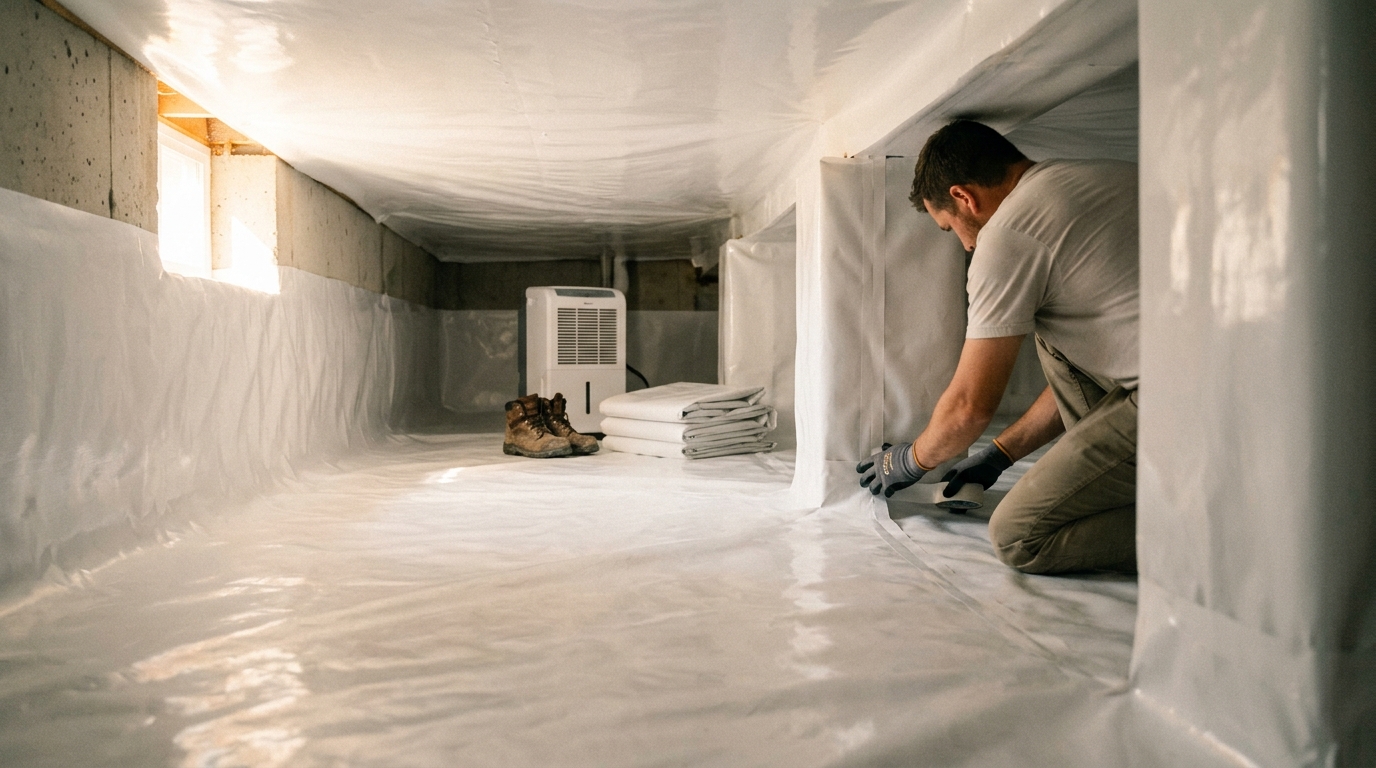
Best Crawl Space Moisture Barrier Materials: A Contractor's 2026 Guide
Moisture intrusion remains the single most destructive force in residential foundation health. According to the Environmental Protection Agency, water vapor is responsible for more structural damage in homes than fire, lightning, and tornadoes combined. This statistic highlights why selecting the correct moisture barrier is not merely a building code checkbox but a critical investment in property longevity. For contractors and homeowners in the Mid-Atlantic region, understanding the specific tensile strength, vapor permeance, and installation requirements of different barrier materials is essential for preventing mold growth and maintaining indoor air quality. (About Walder Foundation Products)
Material Specifications and Vapor Permeance
The primary function of a crawl space moisture barrier is to act as a vapor retarder. A vapor retarder is a material that significantly reduces the rate of moisture vapor transmission through it. In the context of crawl space encapsulation, the goal is to isolate the earth from the conditioned or semi-conditioned space above. The most common material used for this purpose is high-density polyethylene (HDPE). HDPE is chosen for its chemical inertness, flexibility, and impermeability to liquid water and water vapor. (All Products Page 1)
When evaluating materials, you must look at the perm rating. A material with a perm rating of 0.00 is considered a vapor barrier, while materials with higher ratings are vapor retarders. For crawl spaces, a Class I vapor retarder is the industry standard. This means the material must have a perm rating of less than 0.01. Most professional-grade barriers used by contractors in Ashland, Virginia, and surrounding areas meet this strict classification. Using a material with a higher perm rating can lead to gradual moisture migration, which defeats the purpose of encapsulation. (AprilAire 5822 Dehumidifier Hanging)
Another critical specification is the material's resistance to UV radiation. While crawl spaces are typically dark, the barrier is often exposed during installation. If the material is left exposed for more than 90 days, it can degrade, become brittle, and tear easily. High-quality barriers include UV stabilizers to prevent this degradation. This is particularly important for contractors who may need to stage materials on-site before the full encapsulation process is complete. (AprilAire 5879 Dehumidifier Risers)
Polyethylene Thickness and Durability
The thickness of the polyethylene sheeting is a major factor in its performance and longevity. Thickness is measured in mils, where one mil equals one-thousandth of an inch. The most common thicknesses found in the market are 6 mil, 10 mil, and 20 mil. Each thickness serves a specific purpose and offers different levels of protection.
6 mil polyethylene is the baseline standard for many building codes. It is lightweight, cost-effective, and suitable for short-term use or temporary moisture control. However, it is highly susceptible to punctures from sharp rocks, debris, or even the weight of insulation materials. For a permanent crawl space encapsulation project, 6 mil is generally considered insufficient. It lacks the structural integrity to withstand the rigors of a job site or the long-term pressure of soil settlement.
10 mil polyethylene is the preferred choice for most professional contractors. It offers a significant upgrade in puncture resistance and durability compared to 6 mil. This thickness provides enough strength to be walked on during installation without tearing, allowing for easier handling of insulation and vapor barriers. It also holds up better against the thermal expansion and contraction cycles that occur in crawl spaces. The Walder Foundation Products catalog features a range of 10 mil barriers designed specifically for this balance of durability and ease of use.
20 mil polyethylene represents the premium tier of moisture barriers. It is extremely thick and virtually indestructible under normal installation conditions. This material is ideal for rough terrain, areas with sharp rocks, or high-traffic crawl spaces. It provides the highest level of protection against punctures and tears. However, it is also heavier and more difficult to handle, requiring more labor time for installation. The cost per square foot is significantly higher, so it is typically reserved for high-end projects or specific problem areas.
Reinforcement Types and Puncture Resistance
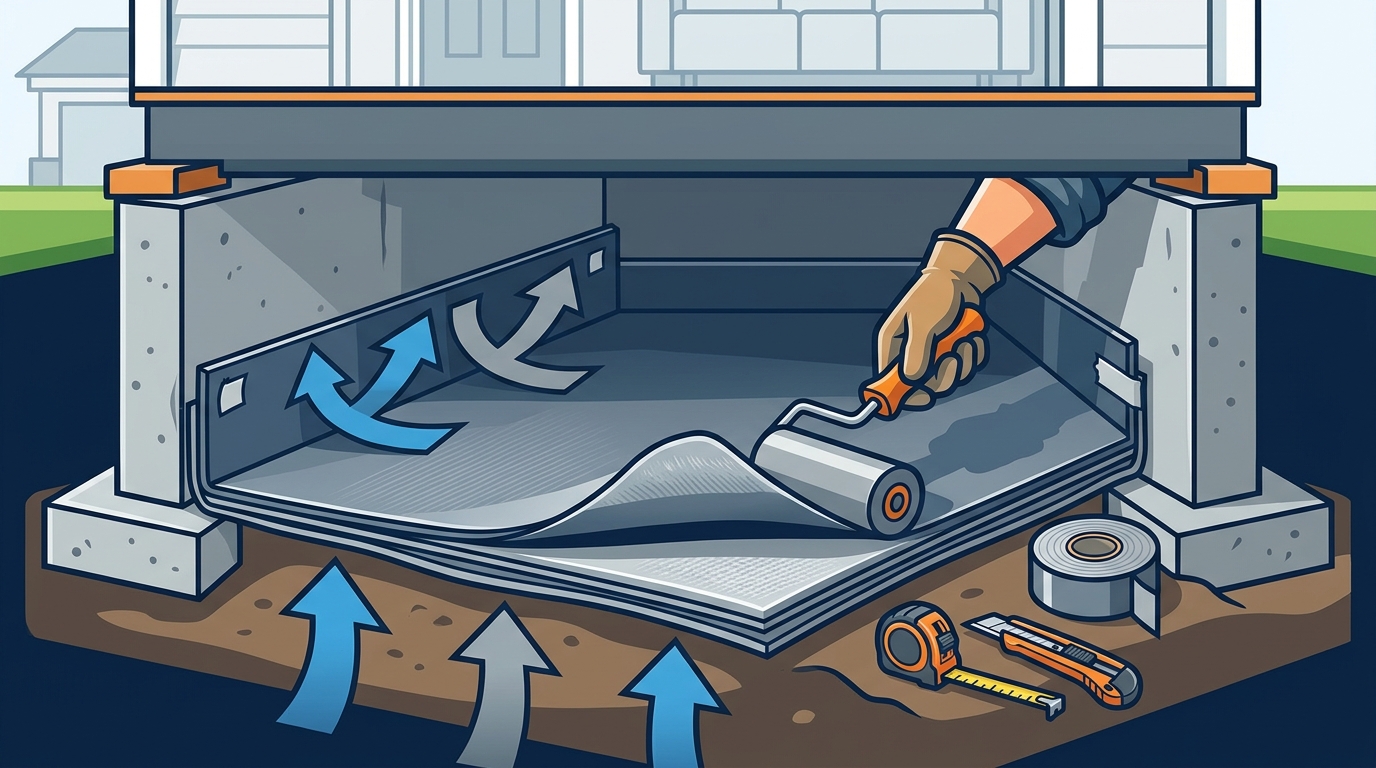
Reinforcement is the internal structure of the moisture barrier that provides tensile strength. Without reinforcement, even thick polyethylene can stretch and tear under pressure. There are two main types of reinforcement: scrim and non-scrim. Scrim reinforcement involves embedding a grid of fiberglass or polyester threads within the polyethylene layers. This grid prevents the material from stretching and tearing, even if it is punctured.
Scrim-reinforced barriers are the gold standard for crawl space encapsulation. They maintain their shape and integrity even when subjected to heavy loads or sharp objects. The scrim also helps to reduce the