
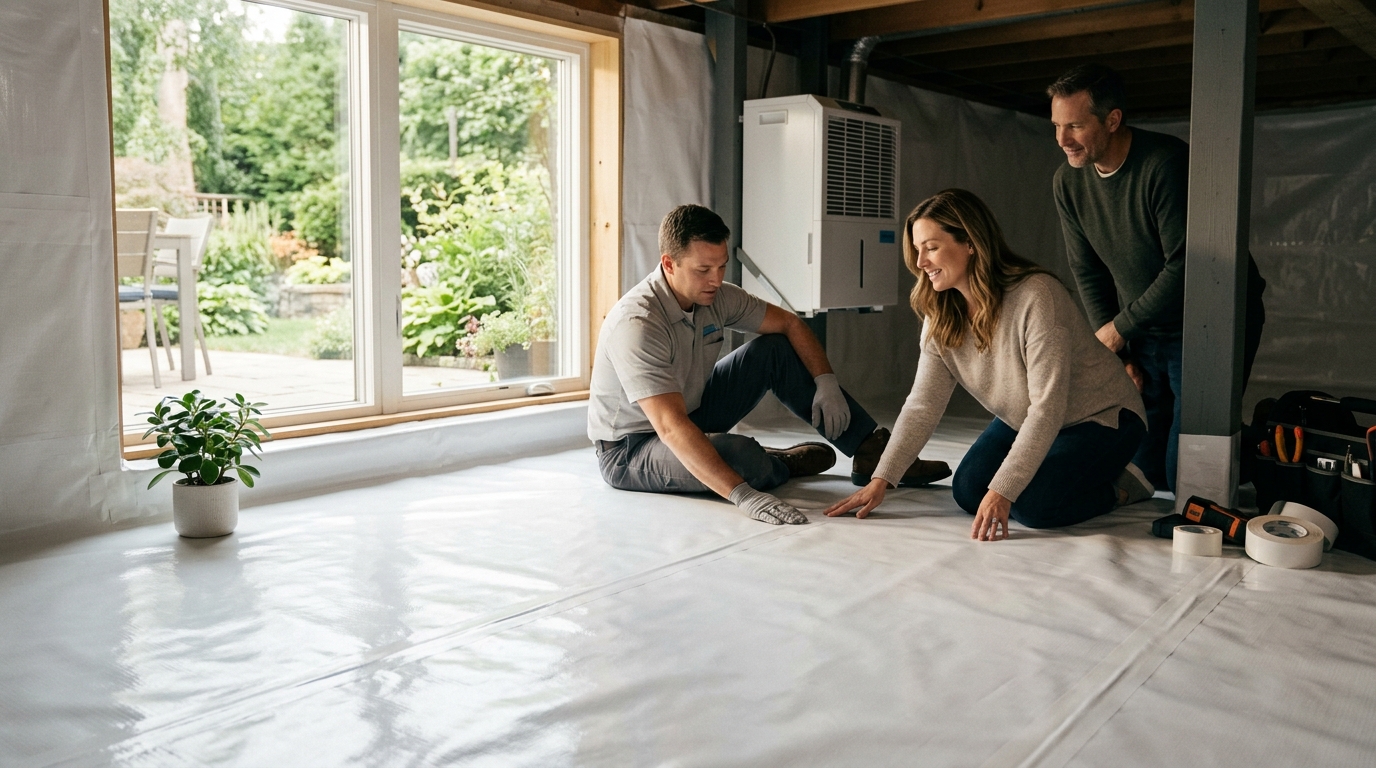
Crawl space encapsulation is no longer a luxury but a structural necessity for modern homes. According to the Environmental Protection Agency, up to 50% of the air in your home originates from the crawl space below. This means that the materials you choose to seal that space directly impact your indoor air quality, energy efficiency, and foundation integrity. Selecting the wrong vapor barrier can lead to mold growth, wood rot, and costly structural repairs. This guide compares the most common vapor barrier options to help you make an informed decision.
Types of Vapor Barriers
Understanding the material composition of vapor barriers is the first step in evaluating their performance. The market primarily offers two distinct categories: polyethylene sheeting and foil-faced insulation. Each serves a specific purpose in the crawl space ecosystem.
Polyethylene Sheeting
Polyethylene sheeting is the industry standard for ground vapor barriers. Polyethylene is a synthetic plastic polymer known for its high tensile strength and moisture resistance. It is typically measured in mils, with 6-mil being the minimum standard for residential use and 10-mil or 15-mil recommended for high-performance encapsulation. This material is flexible, easy to install, and highly effective at blocking ground moisture.
Foil-Faced Insulation
Foil-faced insulation combines a vapor barrier with thermal insulation. Foil-faced insulation is a composite material that provides both a moisture barrier and an R-value rating to reduce heat transfer. The reflective foil surface radiates heat back into the living space, improving energy efficiency. This option is ideal for homeowners looking to address both moisture and temperature control simultaneously.
Wall Vapor Barriers
While ground barriers are common, wall vapor barriers are equally critical. These materials are designed to line the foundation walls, preventing moisture from wicking up through the concrete or masonry. Using a dedicated wall liner ensures a complete encapsulation seal.
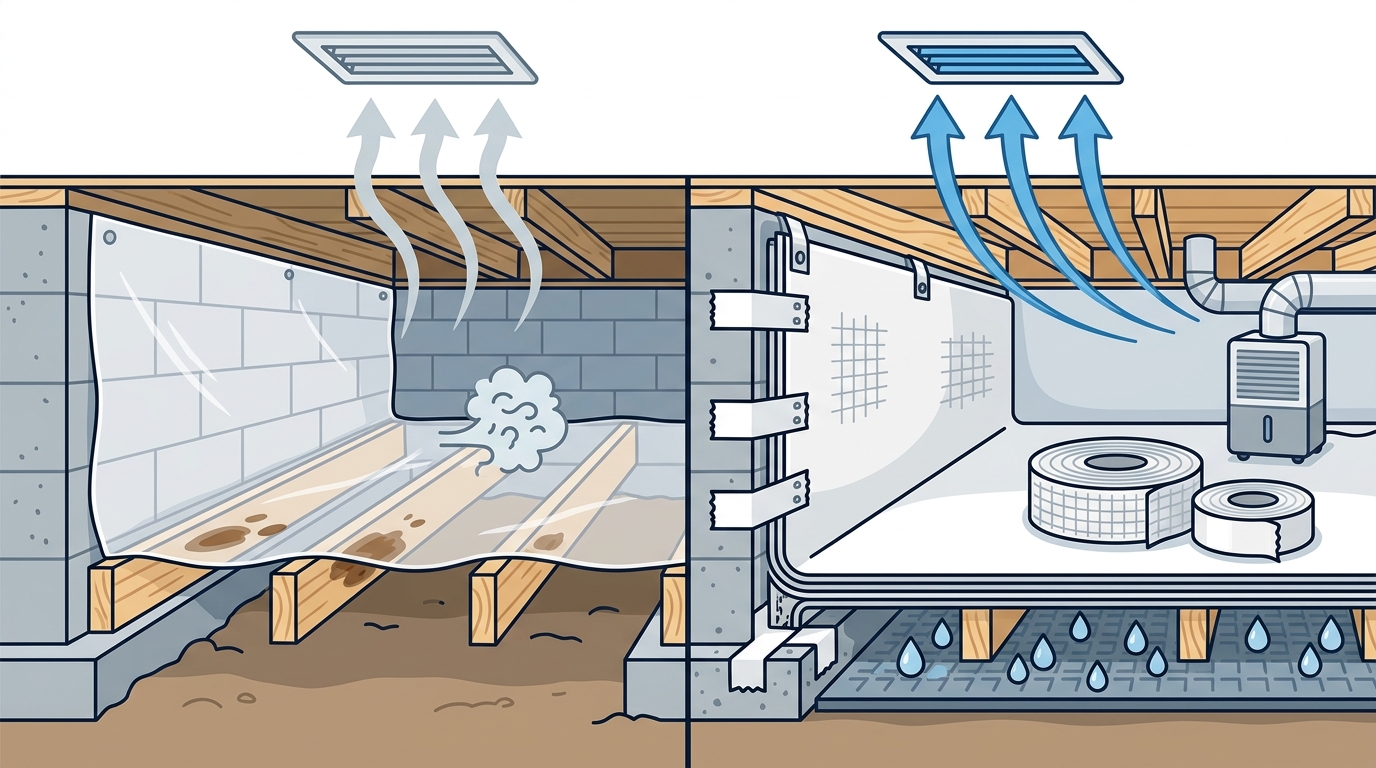
Durability Analysis
Durability determines how long a vapor barrier will last before it needs replacement. Factors such as UV resistance, puncture resistance, and chemical stability play a significant role in the lifespan of the material.
Puncture Resistance
Crawl spaces are often rough environments with sharp rocks, debris, and uneven soil. Thicker polyethylene sheets, such as 15-mil or 20-mil options, offer superior puncture resistance compared to thinner 6-mil variants. A durable barrier must withstand the weight of the soil and any foot traffic during maintenance without tearing.
UV Resistance
If your crawl space has vents that allow sunlight to penetrate, UV resistance becomes a critical factor. Standard polyethylene can degrade and become brittle when exposed to direct sunlight over time. High-quality barriers, such as those found in our product catalog, are often treated to resist UV degradation, ensuring longevity even in partially exposed areas.
Chemical Stability
Crawl spaces can harbor mold, mildew, and other biological agents. A durable vapor barrier must be chemically inert, meaning it will not break down or react with these substances. Polyethylene is naturally resistant to most chemicals, making it a stable choice for long-term moisture control.
Effectiveness Metrics
Effectiveness is measured by the barrier's ability to block moisture vapor transmission and improve indoor air quality. The lower the permeance rating, the more effective the barrier.
Moisture Vapor Transmission
The permeance rating indicates how much water vapor can pass through the material per hour. A high-quality vapor barrier should have a permeance rating of less than 0.01 perms. This near-zero transmission rate ensures that ground moisture cannot escape into the crawl space air.
Air Sealing Capability
Beyond moisture, vapor barriers also act as air barriers. Sealing the crawl space prevents humid outdoor air from entering and condensing on cooler surfaces. This air sealing capability is crucial for preventing mold growth and maintaining a consistent indoor temperature.
Thermal Performance
For foil-faced insulation, thermal performance is a key effectiveness metric. The reflective surface can reduce heat loss by up to 97%, according to the Department of Energy. This makes foil-faced barriers particularly effective in colder climates where heat loss is a significant concern.
Installation Methods
The effectiveness of a vapor barrier is heavily dependent on proper installation. Gaps, tears, or poor sealing can compromise the entire system.
Ground Barrier Installation
Ground vapor barriers should be laid directly on the soil, overlapping seams by at least 6 inches. The edges should be taped using a high-quality adhesive, such as the WFP Pro Tape, to create an airtight seal. The barrier should be extended up the foundation walls and secured with staples or fasteners.
Wall Barrier Installation
Wall vapor barriers are typically installed from the bottom up, overlapping the ground barrier. This ensures that any condensation on the walls drips onto the ground barrier rather than into the crawl space. Proper sealing at the corners and edges is essential for a complete seal.
Sealing Vents and Openings
Once the vapor barriers are installed, all crawl space vents must be sealed. Open vents allow humid air to enter, defeating the purpose of encapsulation. Installing vent covers or solid vent blocks can help maintain the seal while allowing for necessary airflow during maintenance.
Cost-Benefit Analysis
Choosing the right vapor barrier involves balancing upfront costs with long-term benefits. Thicker, more durable materials may cost more initially but offer better protection and longevity.
| Barrier Type | Durability | Effectiveness | Cost Range | Best Use Case |
|---|---|---|---|---|
| 6-Mil Polyethylene | Low | Moderate | $0.50 - $1.00 per sq ft | Temporary or low-budget projects |
| 10-Mil Polyethylene | High | High | $1.50 - $2.50 per sq ft | Standard residential encapsulation |
| 15-Mil Polyethylene | Very High | Very High | $2.50 - $4.00 per sq ft | High-moisture or rough terrain |
| Foil-Faced Insulation | High | Very High | $3.00 - $5.00 per sq ft | Energy efficiency and moisture control |
Key Takeaways
- Material Matters: Polyethylene is the standard for ground barriers, while foil-faced insulation adds thermal benefits.
- Thickness Counts: 10-mil or 15-mil barriers offer significantly better durability than 6-mil options.
- Sealing is Critical: Proper taping and sealing of seams and edges are essential for effectiveness.
- UV Resistance: Choose UV-treated barriers if your crawl space is exposed to sunlight.
- Comprehensive Encapsulation: Combine ground and wall barriers for complete moisture control.
- Professional Installation: Consider professional installation to ensure a perfect seal and maximize longevity.
- Long-Term Savings: High-quality barriers reduce energy bills and prevent costly structural repairs.
Frequently Asked Questions
What is the best thickness for a crawl space vapor barrier?
The best thickness depends on the condition of your crawl space. For most residential applications, 10-mil or 15-mil polyethylene is recommended due to its superior durability and puncture resistance.
Can I install a vapor barrier myself?
Yes, DIY installation is possible, but it requires careful attention to detail. Proper sealing of seams and edges is crucial to prevent moisture from bypassing the barrier.
How long does a vapor barrier last?
A high-quality vapor barrier can last 20 to 30 years or more if installed correctly. Thicker materials and UV-resistant treatments can extend this lifespan significantly.
Do I need a vapor barrier on the walls as well as the floor?
Yes, a complete encapsulation system includes both ground and wall vapor barriers. This ensures that moisture cannot enter from any direction.
What is the difference between a vapor barrier and a moisture barrier?
While the terms are often used interchangeably, a vapor barrier is specifically designed to block water vapor transmission, whereas a moisture barrier may only address liquid water. For crawl spaces, a true vapor barrier is essential.
How do I choose between polyethylene and foil-faced insulation?
Choose polyethylene if your primary concern is moisture control. Choose foil-faced insulation if you also want to improve energy efficiency and reduce heat loss.
Is contractor pricing available for bulk purchases?
Yes, Walder Foundation Products offers competitive contractor pricing for bulk purchases. Contact our sales team for more information on contractor pricing.
Get Started Today
Protect your home from moisture damage and improve your indoor air quality with a high-quality vapor barrier. Visit Walder Foundation Products to explore our comprehensive range of crawl space encapsulation materials, including durable polyethylene sheets, foil-faced insulation, and essential installation tools. Contact us today to discuss your project needs and receive expert guidance.