
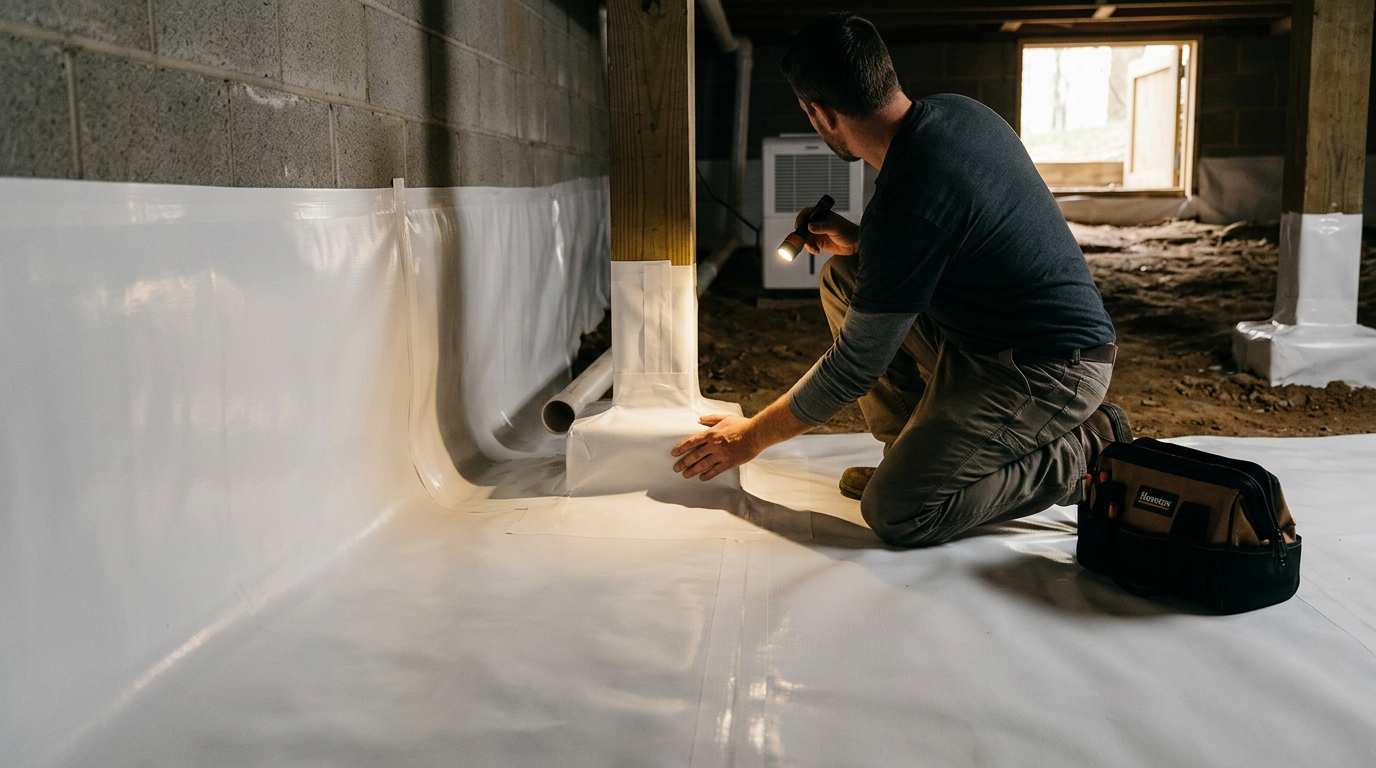
Moisture intrusion is the silent destroyer of residential foundations, with the Environmental Protection Agency estimating that indoor air pollution levels are often two to five times higher than outdoor levels due to poor crawl space management. A high-performance vapor barrier is the primary defense against this humidity, preventing mold growth, wood rot, and structural compromise. Choosing the wrong liner can lead to costly repairs and compromised indoor air quality for your entire home. This guide details the critical specifications you must evaluate before purchasing materials for your encapsulation project.
Understanding Thickness and Gauge Ratings
The most immediate indicator of a vapor barrier's longevity is its thickness. In the construction industry, vapor barriers are typically measured in mils, where one mil equals one-thousandth of an inch. Standard building codes often require a minimum of 6 mils, but this is merely a baseline for temporary protection. For a permanent encapsulation system, you should look for barriers that are 10 mils or thicker. Thicker materials resist punctures from sharp rocks, debris, and the natural settling of the ground over time.
When evaluating products, be wary of "6 mil" barriers that are actually closer to 4 or 5 mils due to manufacturing variances. High-quality manufacturers provide certified thickness ratings. A barrier that is too thin will tear during installation or fail prematurely under the weight of soil and moisture pressure. At Walder Foundation Products, we recommend selecting the thickest barrier your budget allows, as the upfront cost is negligible compared to the expense of replacing a failed liner. Visit our Crawl Space Encapsulation category to view our range of heavy-duty options.
Material Composition and Durability
Vapor barrier is a specialized polyethylene sheeting designed to block water vapor transmission. Not all polyethylene is created equal. The most durable barriers are made from high-density polyethylene (HDPE) or cross-laminated polyethylene. These materials offer superior tensile strength and puncture resistance compared to standard low-density polyethylene (LDPE). LDPE barriers are often cheaper but are prone to tearing and can become brittle in cold temperatures.
Another critical factor is the barrier's resistance to UV radiation. If your crawl space has vents that are being sealed, the barrier may be exposed to sunlight during the installation process. UV-resistant liners will not degrade or become brittle when exposed to sunlight for short periods. Additionally, look for barriers that are antimicrobial or mold-resistant. While the barrier itself blocks moisture, any organic contaminants on the surface can still support mold growth if the material is not treated. Proseal Liner offers robust options that prioritize long-term structural integrity. Explore our Ground Vapor Barriers to find materials suited for your specific soil conditions.
The Critical Role of Sealing Systems
A vapor barrier is only as effective as its seams and edges. Moisture will always find the path of least resistance, which means any gap in the liner will allow humid air to penetrate. Therefore, the quality of the sealing tape and adhesive is just as important as the barrier itself. You must use a heavy-duty, aggressive adhesive tape specifically designed for polyethylene. Standard duct tape or masking tape will fail within months, peeling away from the plastic and leaving gaps.
Look for tapes that are rated for damp surfaces. Crawl spaces are rarely completely dry, even after encapsulation begins. A tape that requires a perfectly dry surface to adhere will fail in this environment. Walder Foundation Products carries exclusive WFP Pro Tape, which features an aggressive adhesive that bonds securely to damp polyethylene surfaces. This ensures a permanent seal that will not degrade over time. Proper sealing also involves overlapping seams by at least six inches and securing them with the appropriate tape. For wall applications, ensure you have the correct Wall Vapor Barriers and compatible tapes to create a continuous moisture shield.
Installation Methods and Fastening
The method of fastening the vapor barrier to the ground and walls determines its stability. Standard staples are often insufficient because they can pull out of the soil or tear through the plastic as it expands and contracts with temperature changes. Instead, look for barriers that are designed to work with specialized fastening systems. These include galvanized stakes with gasket caps or heavy-duty staple guns designed for thick polyethylene.
For wall installations, the barrier should be secured to the foundation walls using appropriate adhesives or mechanical fasteners that do not compromise the seal. The goal is to create a continuous membrane that extends from the floor up the walls and meets the sill plate. This creates a sealed envelope that protects the structural wood components of your home. Using the right tools, such as Fastening Guns, ensures a professional-grade installation that stands up to the test of time. Proper installation also requires careful cutting around piers, pipes, and other obstructions to maintain the integrity of the barrier.
Product Comparison and Selection
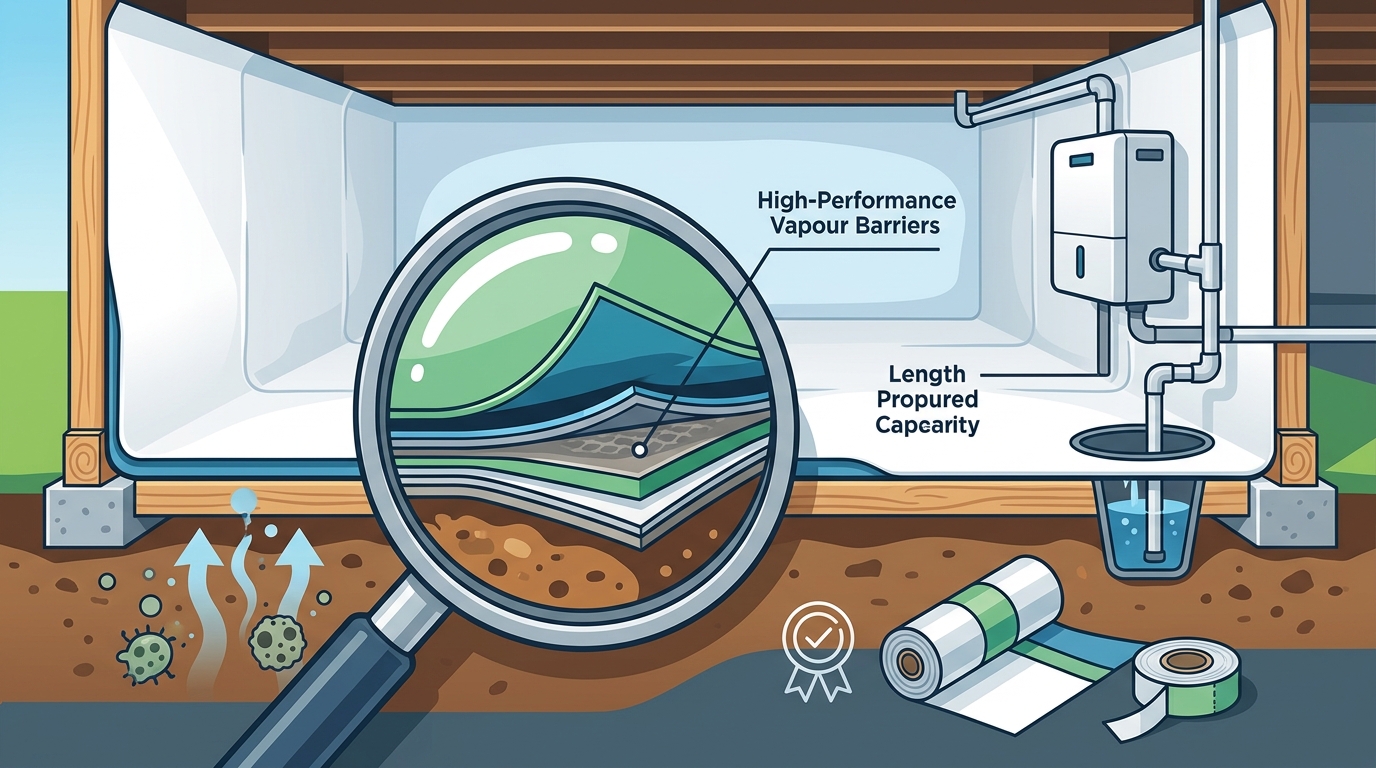
Selecting the right vapor barrier involves balancing cost, durability, and specific project requirements. The table below compares common types of vapor barriers available to contractors and DIY enthusiasts.
| Barrier Type | Thickness | Durability | Best Use Case | Price Range |
|---|---|---|---|---|
| Standard 6 Mil Poly | 6 mils | Low | Temporary protection or low-moisture areas | $ |
| Reinforced 10 Mil Poly | 10 mils | High | Permanent crawl space encapsulation | $$ |
| UV Resistant Liner | 6-10 mils | Medium | Vents exposed to sunlight during install | $$ |
| Antimicrobial Barrier | 10+ mils | Very High | High-humidity zones prone to mold | $$$ |
Key Takeaways
- Always choose a vapor barrier that is at least 10 mils thick for permanent installations to ensure puncture resistance.
- Prioritize high-density polyethylene (HDPE) or cross-laminated materials for superior tensile strength compared to standard LDPE.
- Use heavy-duty, aggressive adhesive tape rated for damp surfaces to seal seams, as standard tapes will fail quickly.
- Ensure the barrier is UV-resistant if it will be exposed to sunlight during the installation process.
- Invest in specialized fastening stakes and gasket caps to prevent the liner from tearing or pulling away from the soil.
- Walder Foundation Products offers exclusive WFP Pro Tape and certified thick liners for professional-grade results.
- Proper sealing of the barrier to the foundation walls is critical for creating a complete moisture envelope.
Frequently Asked Questions
What is the minimum thickness for a crawl space vapor barrier?
While building codes may allow 6 mils, industry best practices recommend 10 mils or thicker for a permanent encapsulation system to prevent tearing and degradation.
Can I use regular duct tape to seal my vapor barrier seams?
No, regular duct tape will lose its adhesive properties and peel off in the humid environment of a crawl space. You must use a heavy-duty polyethylene-specific tape.
What is the difference between a vapor barrier and a moisture barrier?
A vapor barrier is specifically designed to block water vapor transmission, whereas a moisture barrier may only resist liquid water. For crawl spaces, a certified vapor barrier is required.
How often should a crawl space vapor barrier be replaced?
A high-quality, properly installed vapor barrier should last for decades. However, if it becomes torn or detached, it should be repaired or replaced immediately to prevent moisture intrusion.
Do I need a vapor barrier on the walls as well as the floor?
Yes, for a complete encapsulation, the vapor barrier should extend from the floor up the foundation walls to the sill plate to create a sealed envelope.
What is WFP Pro Tape?
WFP Pro Tape is an exclusive heavy-duty tape from Walder Foundation Products designed to bond aggressively to damp polyethylene surfaces for a permanent seal.
How do I secure the vapor barrier to the ground?
Use galvanized stakes with gasket caps or a heavy-duty staple gun designed for thick polyethylene to secure the liner without tearing it.
Is UV resistance important for a crawl space liner?
Yes, if your crawl space vents are being sealed, the liner may be exposed to sunlight during installation. UV-resistant liners prevent premature degradation.
Secure Your Foundation Today
Protecting your home from moisture damage starts with selecting the right materials. Walder Foundation Products provides the highest quality vapor barriers, sealing tapes, and installation tools to ensure your crawl space encapsulation project is a success. Visit our All Products page to browse our complete inventory or contact our team for contractor pricing and expert advice. Do not compromise on the integrity of your home's foundation. Contact us today to get started.