
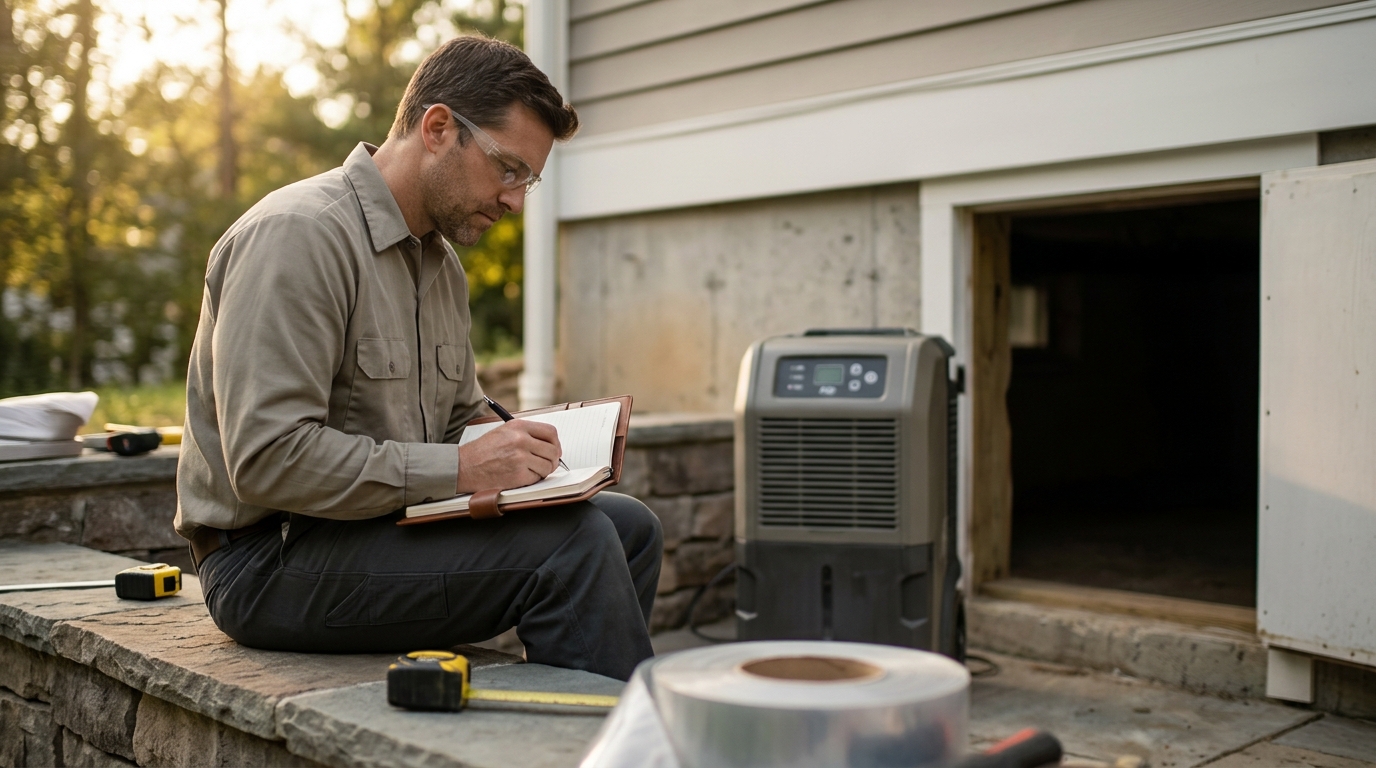
How to Determine the Right Size Dehumidifier for Your Crawl Space
Moisture accumulation in sub-floor voids is a silent destroyer of residential structures. According to the Environmental Protection Agency, homes in humid climates can lose up to 400 gallons of water to the ground annually through vapor migration. This massive influx of moisture creates an environment ripe for structural decay and biological growth. Selecting the correct dehumidifier capacity is not a matter of guesswork. It requires a precise calculation of your space's volume, current humidity levels, and the severity of the moisture intrusion. Getting this calculation wrong leads to wasted energy, inadequate drying, and premature equipment failure.
Step 1: Calculate Your Crawl Space Volume
The foundation of any accurate dehumidifier selection is the physical dimensions of the space. You must determine the cubic footage to understand the air volume that needs conditioning. Start by measuring the length and width of your crawl space in feet. Multiply these two numbers to get the square footage. Next, measure the height from the ground to the floor joists at the lowest point. Multiply the square footage by the height to get the total cubic feet.
For example, a crawl space that is 30 feet long, 20 feet wide, and 4 feet high contains 2,400 cubic feet of air. This number is critical because dehumidifier efficiency drops significantly in larger, unconditioned volumes. A unit rated for a small basement may struggle in a large, open crawl space. Always measure multiple points if your floor is uneven to get an average height. This ensures you are not underestimating the air mass that requires drying.
Step 2: Assess Moisture Severity and Vapor Load
Not all crawl spaces have the same moisture load. The severity of the dampness dictates the intensity of the dehumidification required. You must categorize your space into one of three moisture levels: Light, Moderate, or Heavy. This assessment is based on visible signs and environmental factors.
Light Moisture: This category applies to spaces that are merely damp or have occasional condensation on pipes. There is no standing water and no visible mold growth. These spaces typically require less aggressive drying.
Moderate Moisture: This level is characterized by frequent condensation, damp insulation, and a musty odor. You might see slight staining on the floor or walls. This is the most common scenario for homes in humid regions.
Heavy Moisture: This is a critical state. Indicators include standing water, heavy pooling after rain, extensive mold growth, or rotting wood. Heavy moisture often indicates a failure in the vapor barrier or drainage system. In these cases, you must address the water intrusion source before or while installing a high-capacity unit.
Step 3: Determine Required Pints Per Day
Dehumidifier capacity is measured in pints of water removed per 24 hours. The industry standard for sizing is based on the square footage and the moisture severity. A general rule of thumb is to remove one pint of moisture for every 100 square feet of crawl space for moderate conditions. However, this baseline shifts dramatically based on your assessment.
For a Light Moisture space, you typically need a unit that removes 30 to 50 pints per day. This is sufficient for maintaining dryness in a well-ventilated or encapsulated area. For a Moderate Moisture space, the requirement jumps to 50 to 70 pints per day. This capacity ensures the unit can keep up with the daily vapor load without running continuously.
In Heavy Moisture scenarios, you need a commercial-grade unit capable of removing 70 to 90+ pints per day. These units are built with robust compressors and larger condensate pumps to handle the volume. It is always better to slightly oversize your unit than to undersize it. An undersized unit will run 24/7, leading to high energy bills and early burnout. A slightly oversized unit will cycle on and off, maintaining humidity levels more efficiently.
Step 4: Select the Right Equipment Type
Once you have your capacity number, you must choose the correct form factor. Standard residential dehumidifiers are often too large or fragile for crawl space environments. You need a unit designed for sub-grade or confined spaces.
Condensate Pump Compatibility: The Aprilaire 4856 Low Profile Condensate Pump Kit is an essential accessory for many installations. It allows the dehumidifier to pump water out of the crawl space automatically, eliminating the need for manual bucket emptying. This is crucial for unattended operation.
Filter Maintenance: Air quality is just as important as moisture control. The Aprilaire 5695 Washable MERV 8 Dehumidifier Filter helps trap dust and particulates. Keeping the filter clean ensures the unit breathes efficiently. For larger units like the E80 or E100 models, the Aprilaire 5881 Washable MERV 8 Dehumidifier Filter is the correct replacement. Regular cleaning of these filters prevents airflow restriction.
Installation Hardware: Proper mounting is vital. The Aprilaire 5822 Dehumidifier Hanging Kit provides a secure suspension method for ceiling joists. This keeps the unit off the damp ground and protects it from physical damage. For uneven floors, the Aprilaire 5879 Dehumidifier Risers 4 Pack can elevate the unit to ensure proper airflow underneath.
Step 5: Installation and Integration
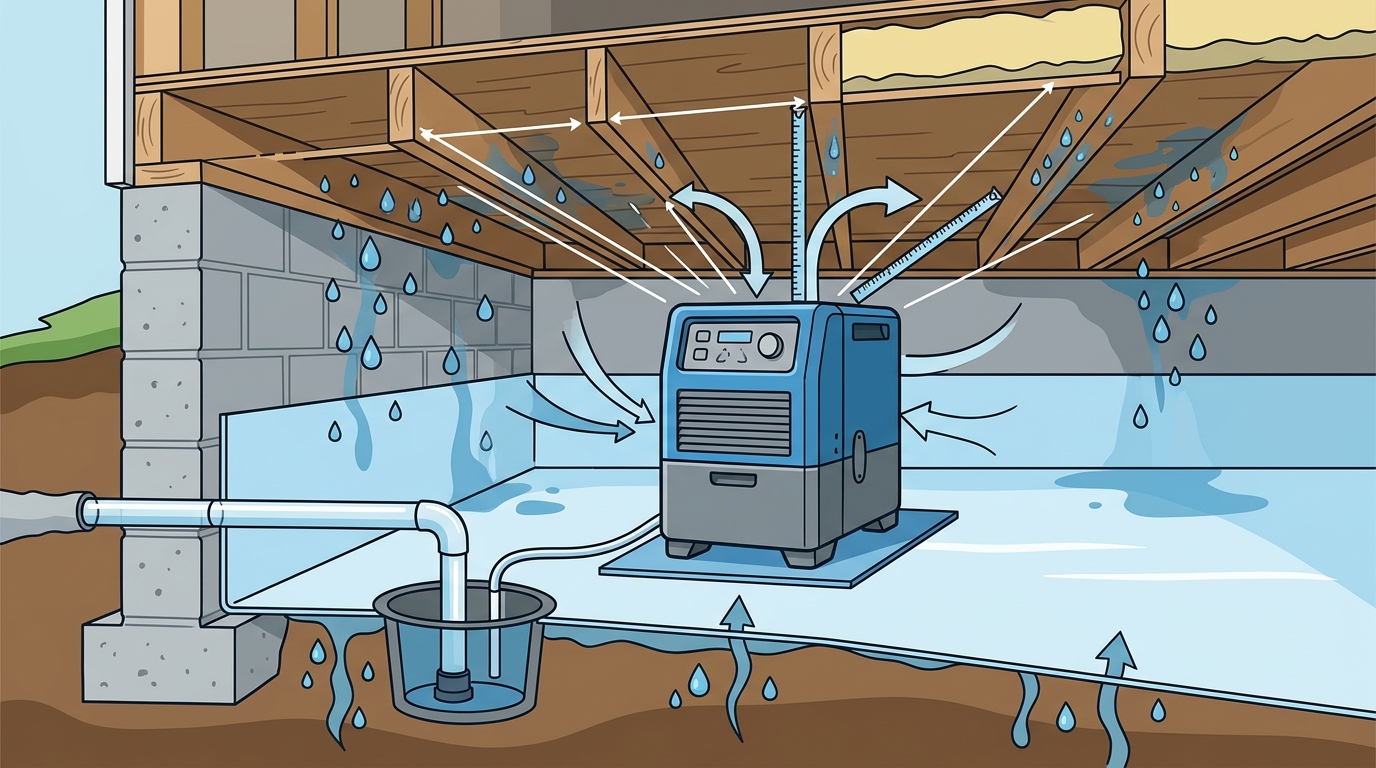
Installation requires careful planning. First, ensure your crawl space is properly encapsulated. A high-quality ground vapor barrier is the first line of defense. Without encapsulation, the dehumidifier will fight a losing battle against constant moisture migration from the soil. The ProSeal 6" Galvanized Vapor Barrier Stakes are excellent for securing these barriers tightly to the ground.
Place the dehumidifier in the center of the space or near the main access point. Ensure there is at least 12 inches of clearance around the unit for airflow. Connect the condensate pump to a discharge line that leads outside or to a sump pit. Finally, set the humidistat to a target level between 45% and 55%. This range is optimal for preventing mold growth while conserving energy.
Dehumidifier Sizing Comparison
| Moisture Level | Space Size (Sq Ft) | Required Capacity (Pints/Day) | Recommended Action |
|---|---|---|---|
| Light | Up to 1,500 | 30-50 | Standard Residential Unit |
| Moderate | 1,500 - 2,500 | 50-70 | High-Efficiency Sub-Grade Unit |
| Heavy | 2,500+ | 70-90+ | Commercial Grade Dehumidifier |
Key Takeaways
- Volume Matters: Always calculate cubic footage, not just square footage, to understand the air mass.
- Severity Dictates Capacity: Heavy moisture requires 70+ pints per day, while light moisture may only need 30.
- Oversize Slightly: It is safer to buy a unit with 10-15% more capacity than calculated.
- Encapsulation is Key: A dehumidifier cannot work effectively without a sealed crawl space encapsulation system.
- Accessory Integration: Use condensate pumps and hanging kits for reliable, long-term operation.
- Maintenance: Clean MERV 8 filters regularly to maintain airflow and efficiency.
- Target Humidity: Aim for 45-55% relative humidity to prevent mold and rot.
Frequently Asked Questions
How do I know if my dehumidifier is too small?
If the unit runs continuously without reaching the set humidity level, it is likely too small for the space. You will also notice persistent dampness and musty odors despite the equipment running.
Can I use a standard basement dehumidifier in a crawl space?
Standard units are often too bulky and fragile. Crawl space specific units are designed to be low-profile and durable. They also handle lower temperatures better, which is common in sub-grade environments.
What is the best humidity level for a crawl space?
The ideal relative humidity is between 45% and 55%. Levels above 60% encourage mold growth, while levels below 40% may dry out wooden structural components excessively.
Do I need a condensate pump?
Yes, if you do not have a floor drain. Manual emptying is impractical for high-capacity units. A condensate pump ensures automatic water removal.
How often should I clean the dehumidifier filter?
Check the filter monthly during peak humidity seasons. Wash it with water and let it dry completely before reinstalling.
What is the difference between a 50-pint and a 70-pint dehumidifier?
The 70-pint unit removes 20 more pints of water daily. This is significant in heavy moisture scenarios where the vapor load is high. It also typically has a larger compressor and higher airflow rating.
Is crawl space encapsulation necessary with a dehumidifier?
Absolutely. Without a vapor barrier, the dehumidifier will constantly fight moisture rising from the soil. Encapsulation stops the source, allowing the dehumidifier to maintain the air quality.
Ready to Secure Your Home?
Proper moisture control protects your home's structural integrity and your family's health. Walder Foundation Products offers the comprehensive range of dehumidifiers, vapor barriers, and installation accessories you need. Visit our product catalog to find the exact specifications for your project. Contact our team today to discuss your specific crawl space needs and get expert guidance.