
1. Review Geotechnical Soil Reports
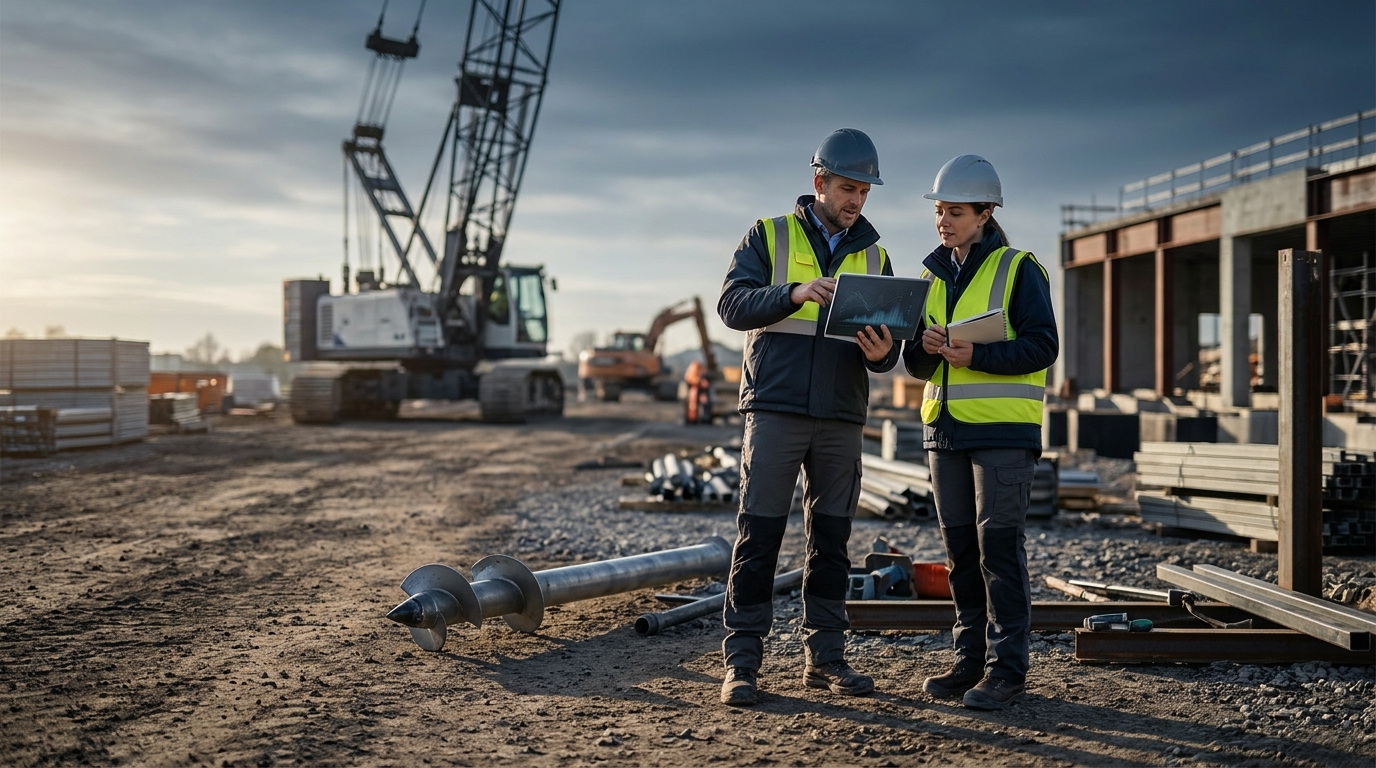
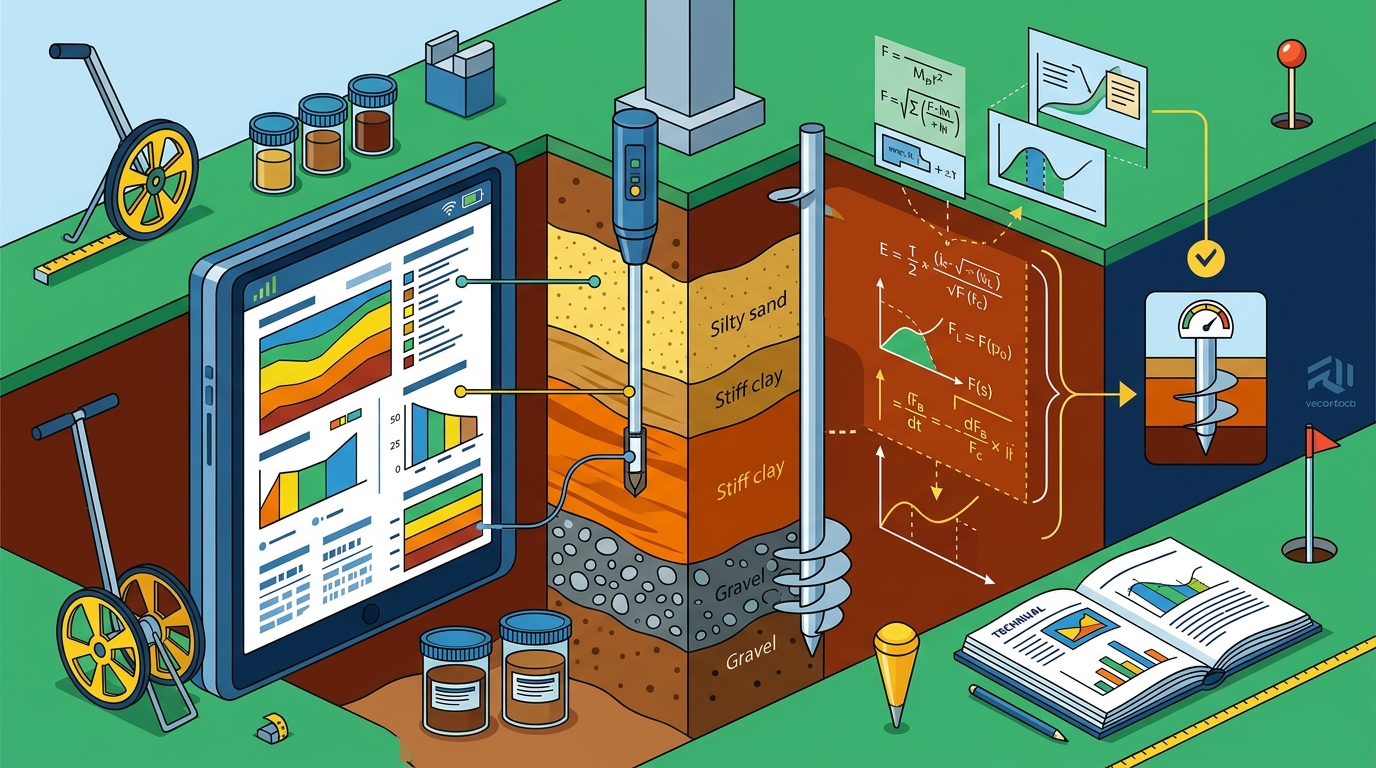
Soil composition dictates the friction and bearing capacity available to the pile. A detailed geotechnical report provides data on soil layers, moisture content, and shear strength. This information allows engineers to calculate the theoretical capacity of the helical pile based on the specific site conditions. For additional details, review the Walder Foundation Products.
2. Calculate Static Load Capacity
Static analysis predicts the maximum load a pile can carry under steady conditions. Engineers use the soil parameters from the geotechnical report to determine the shaft friction and tip bearing capacity. This calculation ensures the pile design meets the required safety factors for the structure.
3. Perform Torque Correlation Testing
There is a direct relationship between the torque required to install a pile and its ultimate load capacity. By recording the installation torque, contractors can estimate the static capacity using established correlation factors. This method provides a real-time check during installation without the need for extensive pre-testing.
4. Conduct Static Load Testing
5. Execute Dynamic Load Testing
6. Monitor Installation Depth and Resistance
Reaching the target depth with consistent resistance confirms the pile is in stable soil. If the pile continues to rotate with little resistance, it may not be engaging the bearing layer. Monitoring the installation process ensures the pile achieves the necessary embedment for full capacity.
7. Validate with Engineering Sign-Off
A licensed professional engineer must review all data and certify the design. The engineer evaluates the soil reports, torque data, and test results to ensure compliance with local building codes. This final sign-off is essential for permitting and insurance purposes.
Choosing the Right Verification Method
Select the verification method based on project scale, budget, and local code requirements. For small residential projects, torque correlation and static calculations may suffice. For commercial or high-risk structures, static load testing is often mandatory. Always consult with a structural engineer to determine the appropriate level of testing for your specific application.
Frequently Asked Questions
What is the typical safety factor for helical piles?
Most building codes require a safety factor of 2.0 to 3.0 for helical piles. This means the ultimate capacity should be at least twice the design load to account for uncertainties in soil behavior and loading conditions.
Can torque correlation replace load testing?
Torque correlation is a reliable estimation method but may not replace load testing in many jurisdictions. Local building codes often require physical load testing for certain types of structures or when the soil conditions are highly variable.
How does soil moisture affect helical pile capacity?
High soil moisture can reduce friction capacity in cohesive soils. Engineers must account for seasonal moisture variations when calculating the long-term capacity of the pile to ensure it remains stable throughout the year.
What is the role of the pile tip in load capacity?
The pile tip provides end-bearing capacity, which is a significant portion of the total load resistance. Ensuring the tip is driven into a competent bearing layer is crucial for achieving the calculated capacity.
Do I need a geotechnical report for every project?
While not always legally required for small projects, a geotechnical report is highly recommended for accurate capacity calculations. It provides the necessary data to design the pile system correctly and avoid over-engineering or under-designing.
Conclusion
Verifying helical pile load capacity is essential for safe and effective foundation repair. By combining soil analysis, engineering calculations, and field testing, contractors can ensure their projects meet all structural requirements. Explore our helical pile products to find the right solution for your next project.