
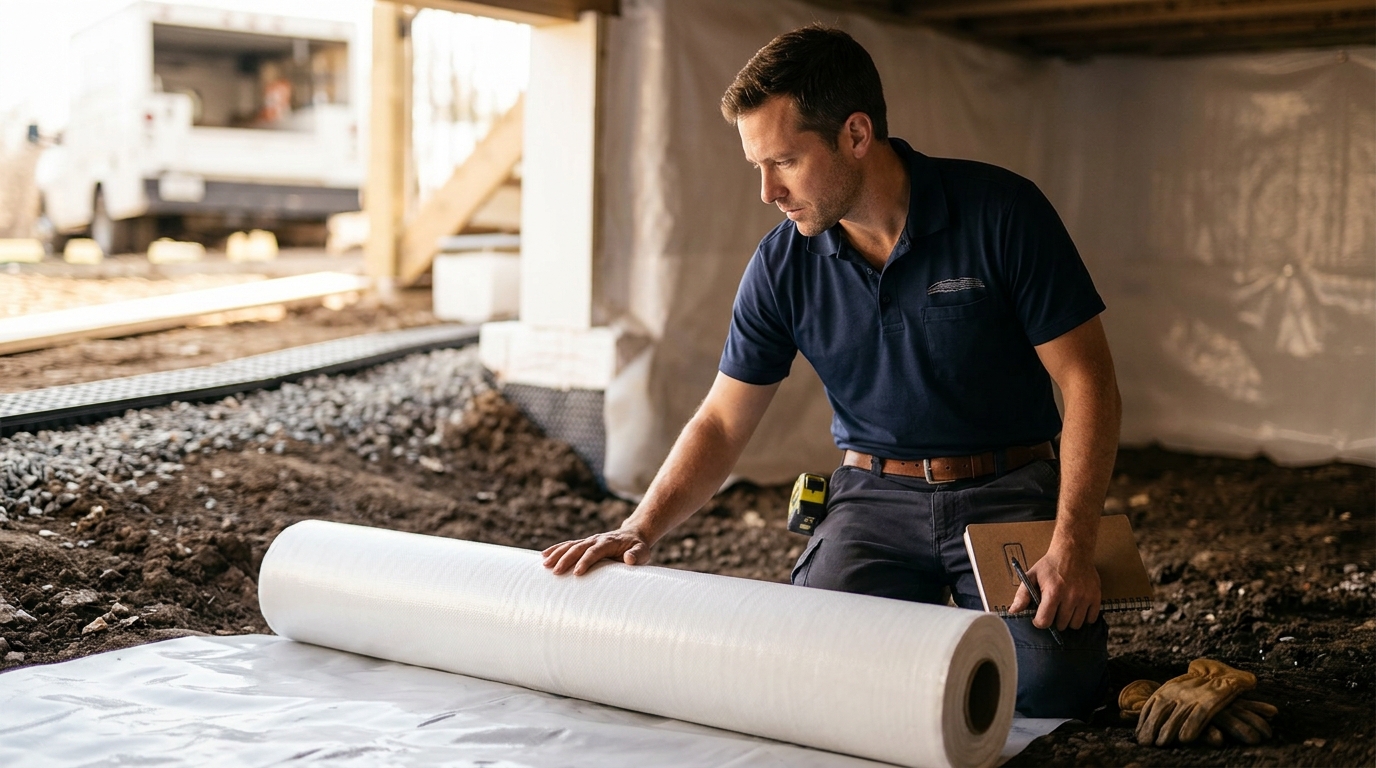
Understanding perm ratings is essential for selecting the right moisture barrier for crawl space encapsulation and foundation repair projects. A vapor barrier is a material designed to restrict the movement of water vapor through a building envelope. The perm rating, measured in perms, indicates how much water vapor passes through a specific thickness of material per unit area under standard conditions. Lower perm ratings indicate higher resistance to vapor transmission, which is critical for maintaining dry, healthy crawl spaces and basements.
1. 0.1 Perm: The Gold Standard for Encapsulation
0.1 perm materials offer the highest resistance to water vapor transmission available in the market. This rating is the industry standard for professional crawl space encapsulation. It effectively blocks moisture from the soil from entering the conditioned space. Contractors should specify 0.1 perm polyethylene sheeting for all sealed crawl space projects to ensure long-term humidity control.
2. 0.5 Perm: High-Performance Moisture Control
0.5 perm barriers provide strong moisture resistance suitable for most residential applications. While slightly more permeable than 0.1 perm materials, 0.5 perm barriers are often used in situations where slight vapor transmission is acceptable or required by local building codes. They offer a balance between cost and performance for standard basement and crawl space liners.
3. 1.0 Perm: Moderate Vapor Retarders
1.0 perm materials act as moderate vapor retarders rather than complete barriers. These materials are typically used in wall assemblies or above-grade applications where some vapor movement is necessary to prevent moisture trapping. In crawl spaces, 1.0 perm materials may be used for wall liners but are generally insufficient for ground coverage in high-moisture environments.
4. 5.0 Perm: Vapor Retarders for Specific Uses
5.0 perm materials are classified as vapor retarders, not vapor barriers. They allow a significant amount of water vapor to pass through. These materials are often used in insulation systems or as secondary layers in complex building envelopes. They are not recommended for primary ground coverage in crawl space encapsulation projects.
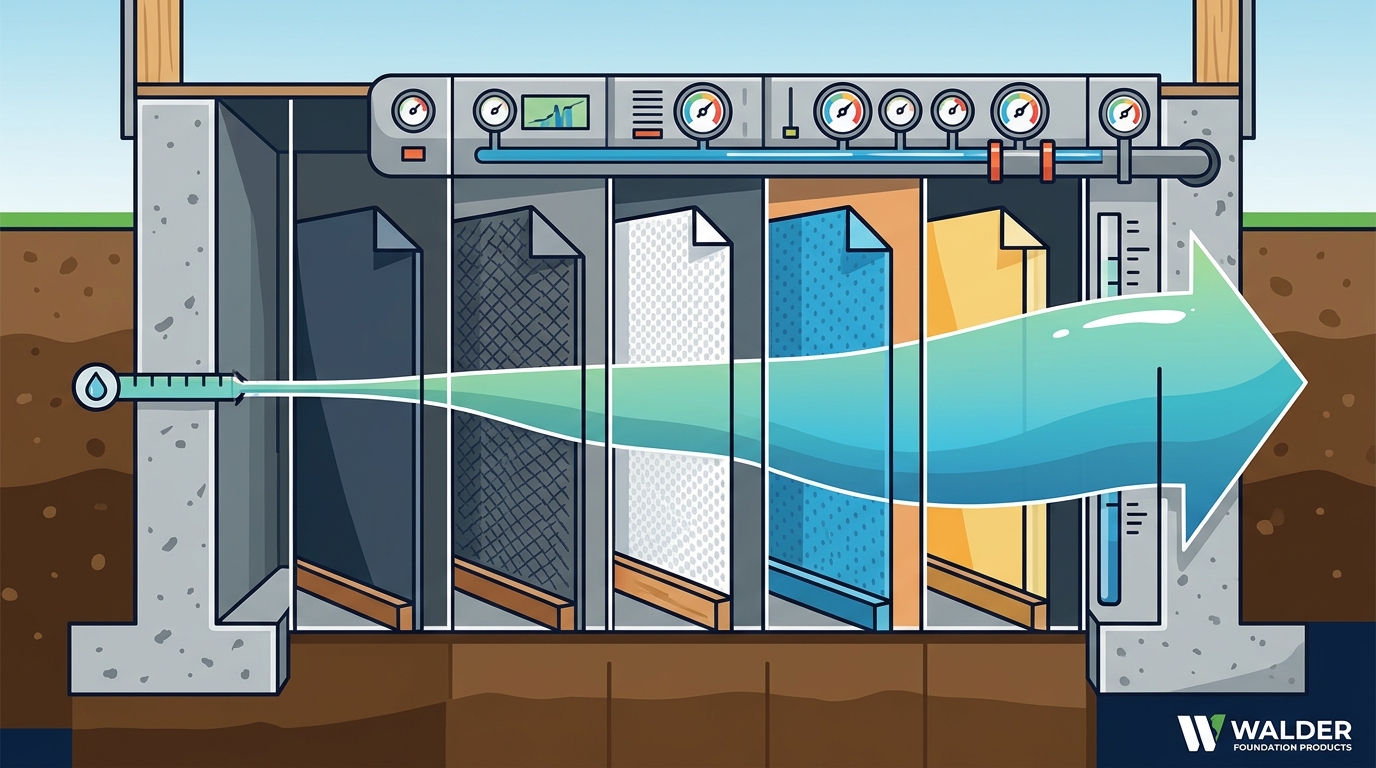
5. 10.0 Perm: Permeable Insulation Materials
10.0 perm materials are considered permeable and do not function as effective vapor barriers. Many standard insulation products, such as certain types of fiberglass batts, fall into this category. While they may provide some resistance, they cannot stop the significant moisture flow from the ground. Contractors must pair these with a dedicated low-perm barrier for effective moisture control.
6. 15.0 Perm: Highly Permeable Materials
15.0 perm materials offer minimal resistance to water vapor transmission. These are typically open-cell foams or porous materials that allow free movement of air and vapor. They are unsuitable for any application requiring moisture control. Using these as a primary barrier will result in continued humidity issues and potential mold growth in the crawl space.
7. 30.0 Perm: Non-Barrier Materials
30.0 perm materials are essentially non-barriers and allow unrestricted vapor flow. This rating applies to materials like bare soil, gravel, or certain types of concrete without a sealant. Understanding this baseline helps contractors recognize why a dedicated vapor barrier is necessary. Without a low-perm material, the crawl space remains connected to the moisture-rich soil below.
Choosing the Right Perm Rating
When selecting a vapor barrier, always prioritize the lowest perm rating that meets your project requirements and local building codes. For crawl space encapsulation, 0.1 perm is the recommended standard. For wall applications, consult with a structural engineer or local code official to determine if a higher perm rating is appropriate. Browse our selection of ground vapor barriers to find the right material for your next project.
Frequently Asked Questions
What is a perm rating?
A perm rating is a measure of water vapor transmission through a material. One perm equals one grain of water vapor passing through one square foot of material in one day at a one-pound vapor pressure differential. Lower numbers indicate higher resistance to vapor movement.
What perm rating is best for crawl spaces?
The best perm rating for crawl space encapsulation is 0.1 perm. This rating provides the highest level of moisture resistance, effectively sealing the crawl space from ground moisture and preventing humidity-related issues like mold and wood rot.
Can I use a higher perm rating for walls?
Yes, higher perm ratings may be appropriate for wall applications depending on the climate zone and building design. In some cases, a vapor retarder with a higher perm rating is preferred to allow moisture to dry outward. Always check local building codes and consult with a professional for wall-specific applications.
How do I test the perm rating of a material?
Perm ratings are typically determined through standardized laboratory tests, such as ASTM E96. Contractors should rely on manufacturer-provided data sheets that list the perm rating. It is not practical to test perm ratings on-site, so always verify the specifications before purchasing materials.
Does thickness affect the perm rating?
Yes, thickness can affect the overall resistance to vapor transmission. A thicker material generally provides more resistance, but the perm rating is normalized to a specific thickness. When comparing materials, ensure you are comparing perm ratings for the same thickness or calculate the total resistance based on the material's thickness and perm value.
Where can I find 0.1 perm vapor barriers?
You can find 0.1 perm vapor barriers from specialized suppliers like Walder Foundation Products. We offer a wide range of high-quality vapor barriers and encapsulation materials designed for professional contractors and DIY enthusiasts. Learn more: Contact Us.