
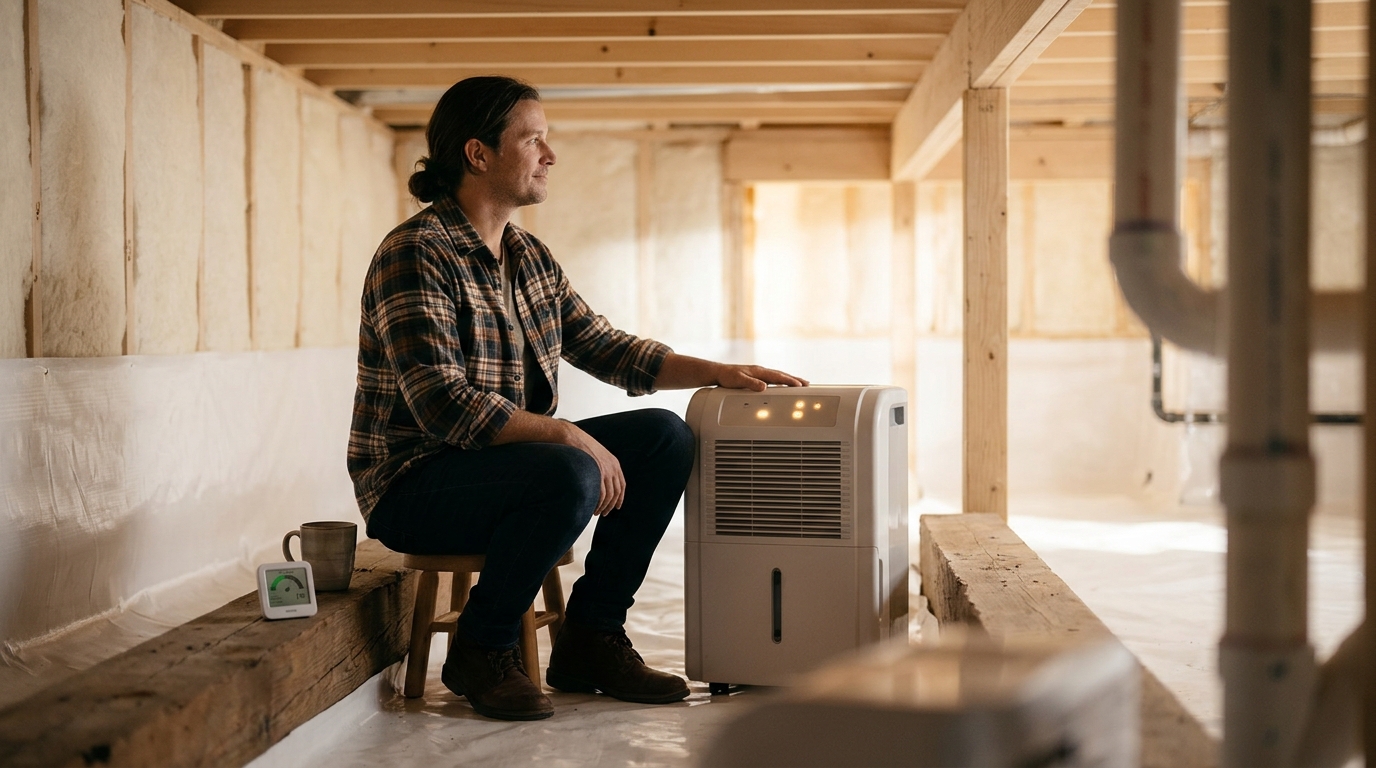
Contractors and homeowners should maintain crawl space relative humidity between 40% and 50% year-round. This specific range prevents the growth of mold and mildew while protecting structural wood components from moisture damage. Consistent humidity control is the most effective method for stabilizing the environment beneath your home. Walder Foundation Products provides the professional-grade equipment necessary to achieve and maintain these critical moisture levels.
The Science of the 40-50% Range
Relative humidity is the ratio of water vapor in the air to the maximum amount the air can hold at a given temperature. In below-grade spaces, moisture is the primary driver of structural decay and biological growth. Industry standards generally recommend keeping relative humidity below 60% to inhibit mold spore germination. However, for optimal long-term preservation of wood and insulation, a tighter band of 40% to 50% is the professional standard. For additional details, review the About Walder Foundation Products page.
When humidity exceeds 60%, the risk of condensation on cool surfaces increases significantly. This condensation creates a persistent wet environment that accelerates the breakdown of subflooring and joists. By targeting the lower end of the safe spectrum, you create a buffer against seasonal spikes in moisture. This proactive approach ensures that the crawl space remains dry even when outdoor conditions fluctuate.
Walder Foundation Products supplies crawl space dehumidifiers designed to operate efficiently within this specific range. These units are engineered to handle the high latent loads typical of enclosed crawl spaces, ensuring that the air remains consistently dry without excessive energy consumption.
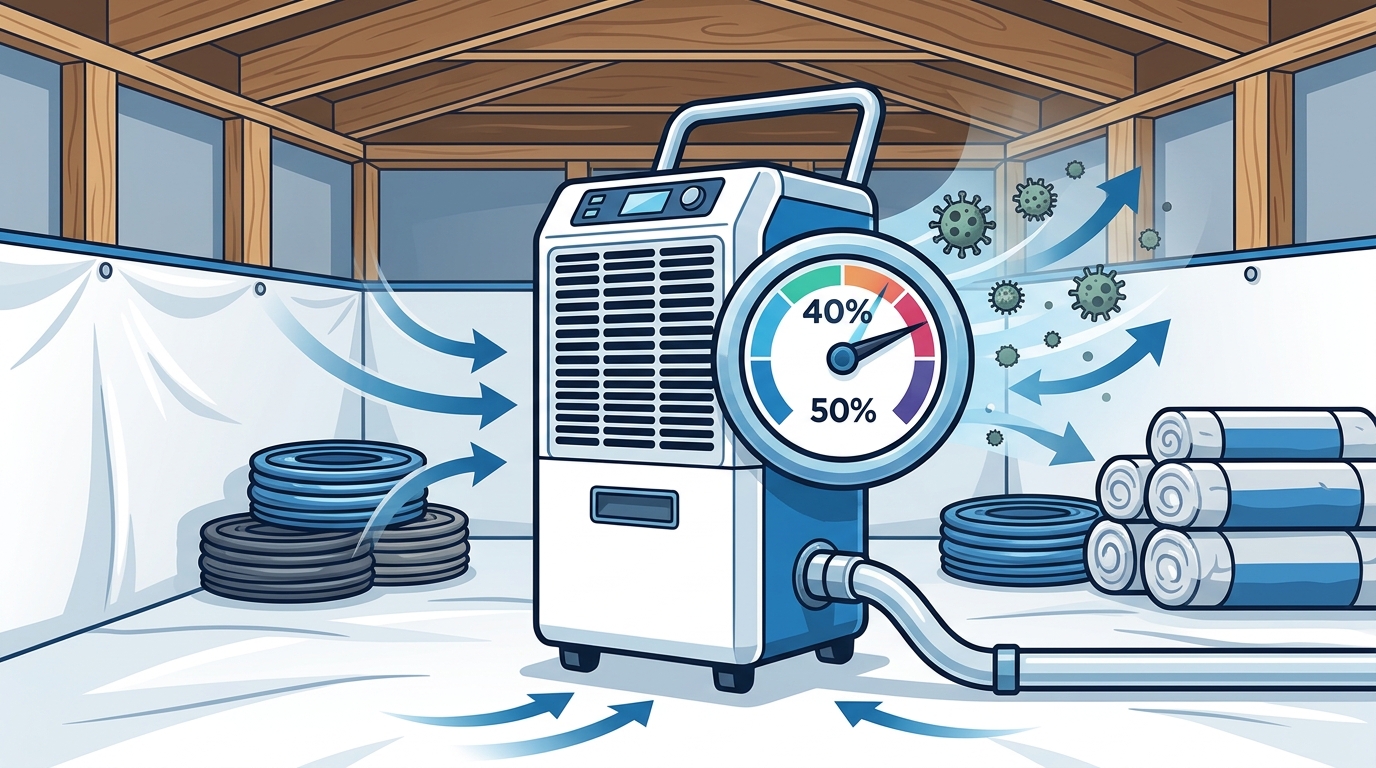
Seasonal Variations and Consistency
Many homeowners make the mistake of adjusting their dehumidifier settings seasonally. In winter, outdoor air is naturally drier, leading some to believe that indoor humidity will drop automatically. In reality, crawl spaces often remain damp in winter due to ground vapor and poor ventilation. Maintaining a constant 45% target year-round simplifies monitoring and prevents the Learn more: Contact Us.