
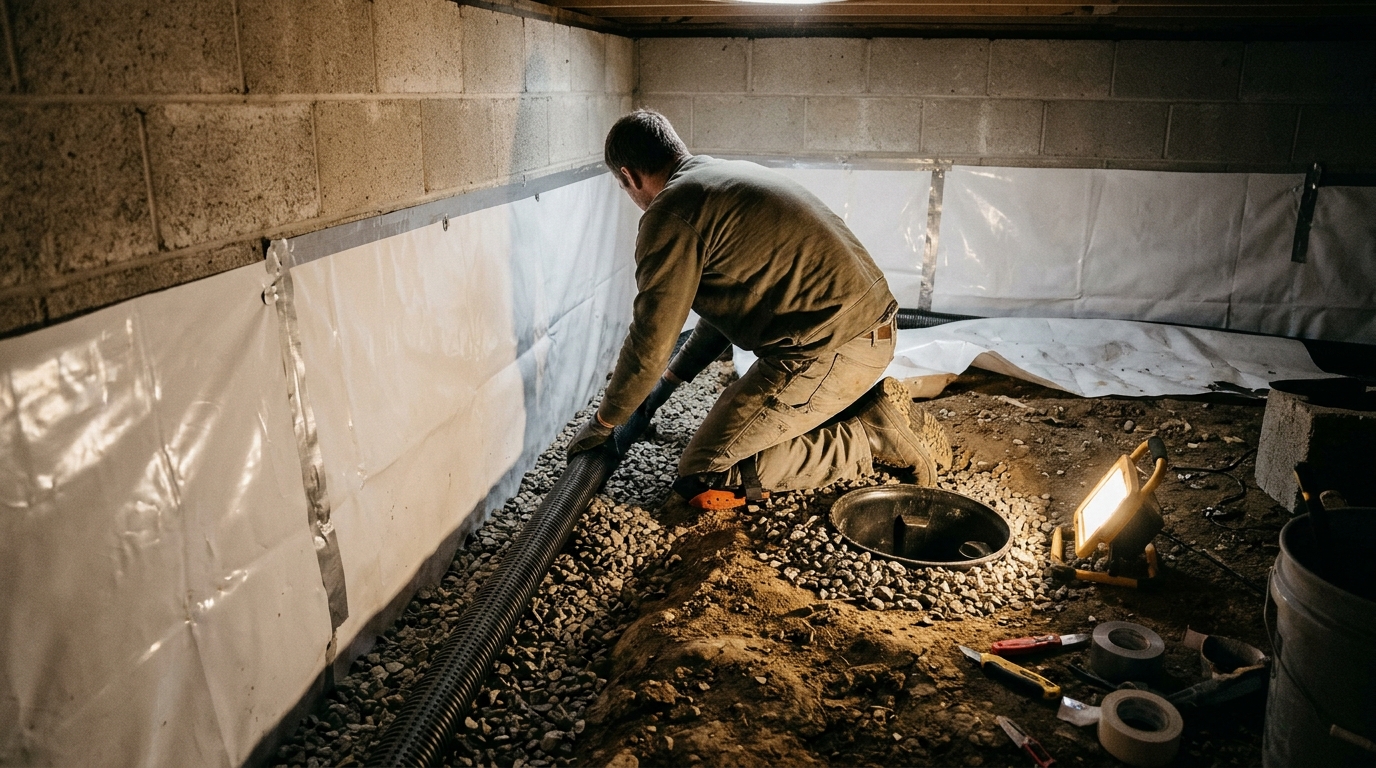
Installing a moisture barrier is a critical step in crawl space encapsulation, but it only works effectively when paired with proper drainage. Without a way to move water away from the foundation, trapped moisture can still cause mold, rot, and structural damage. Walder Foundation Products supplies the professional-grade drainage components needed to create a fully sealed, dry, and healthy crawl space environment for contractors and DIYers alike.
1. Perimeter Interior Drain Tile
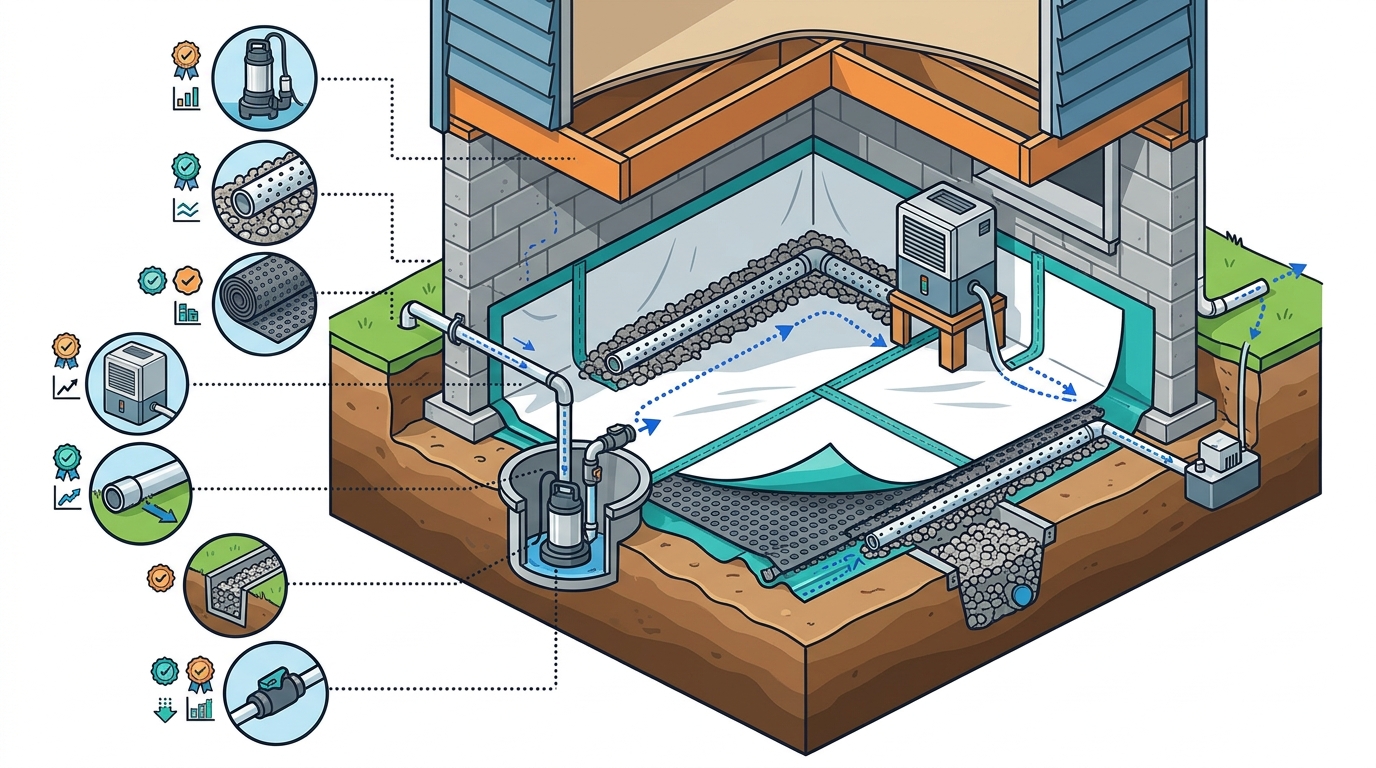
Perimeter interior drain tile is the most reliable method for managing groundwater pressure. This system involves installing a perforated pipe along the interior edge of the foundation wall, typically buried in a bed of gravel. It captures water before it reaches the floor and directs it to a sump pit. This is the gold standard for homes with chronic water intrusion issues.
2. Sump Pump Systems
A sump pump is the active component that removes collected water from the crawl space. It sits in a pit at the lowest point of the drainage system and activates when water levels rise. For encapsulated spaces, a pump with a float switch and battery backup is essential to prevent flooding during power outages or heavy rain events.
3. French Drains
A French drain is a trench filled with gravel and a perforated pipe that redirects surface water. In crawl spaces, this is often used to manage water that seeps in from the exterior or through the floor. It works well in conjunction with a vapor barrier by providing a dedicated channel for water to flow away from the living area.
4. Dimple Board and Drainage Mats
Dimple board is a plastic sheet with raised bumps that creates an air gap between the foundation wall and the vapor barrier. This gap allows water to flow down the wall and into the drainage system rather than pooling against the barrier. It is a crucial component for preventing hydrostatic pressure from pushing against the encapsulation liner.
5. Pop-Up Emitters
Pop-up emitters are devices that allow water to exit the drainage system at ground level. They are installed in the exterior soil and rise when water flows through the pipe, then retract when the flow stops. This prevents water from backing up into the crawl space and ensures the system remains clear and functional year-round.
6. Condensate Pumps
A condensate pump is a small, low-voltage pump designed to move water from dehumidifiers. Since dehumidifiers are a standard part of any encapsulation project, you need a way to drain the collected water. A condensate pump can move this water to a floor drain or the main sump pit, keeping the dehumidifier running continuously without manual emptying.
7. PVC Pipe Fittings and Couplings
PVC pipe fittings are the connectors that join all drainage components into a single system. Elbows, tees, and couplings ensure a watertight seal between the drain tile, sump pit, and discharge line. Using high-quality, schedule 40 PVC ensures the system can withstand soil pressure and last for decades without leaking.
Choosing the Right Drainage System
The best drainage option depends on the specific moisture problem in your crawl space. For most encapsulation projects, a combination of dimple board, perimeter drain tile, and a sump pump provides the most comprehensive protection. Walder Foundation Products offers a complete range of these components, ensuring you can build a system that fits your specific site conditions. To find the right parts for your project, browse our waterproofing and drainage catalog.
Frequently Asked Questions
Do I need a sump pump if I have a vapor barrier?
Yes, a vapor barrier blocks moisture vapor but does not stop liquid water. If water is entering the crawl space from the ground or walls, you need a drainage system and a sump pump to remove it. The barrier and the pump work together to keep the space dry.
What is the difference between a French drain and a perimeter drain?
A perimeter drain is installed along the foundation wall to capture groundwater, while a French drain is a trench that manages surface water. In a crawl space, you often use a perimeter drain for the walls and a French drain for the floor if there is significant water pooling.
Can I install a drainage system myself?
Yes, many homeowners install interior drainage systems as a DIY project. However, it requires careful planning and execution to ensure the slope is correct and the connections are watertight. Using professional-grade materials from Walder Foundation Products can make the process smoother and more reliable.
How does dimple board work with a vapor barrier?
Dimple board is installed on the foundation wall before the vapor barrier. The dimples create a space for water to flow down the wall and into the drain tile at the bottom. This prevents water from getting trapped between the wall and the barrier, which could cause mold or damage the liner.
What size sump pump do I need for a crawl space?
The size of the sump pump depends on the amount of water entering the space and the size of the pit. For most residential crawl spaces, a 1/2 to 1 horsepower pump is sufficient. It is important to match the pump to the drainage system to ensure it can handle peak flow rates.