
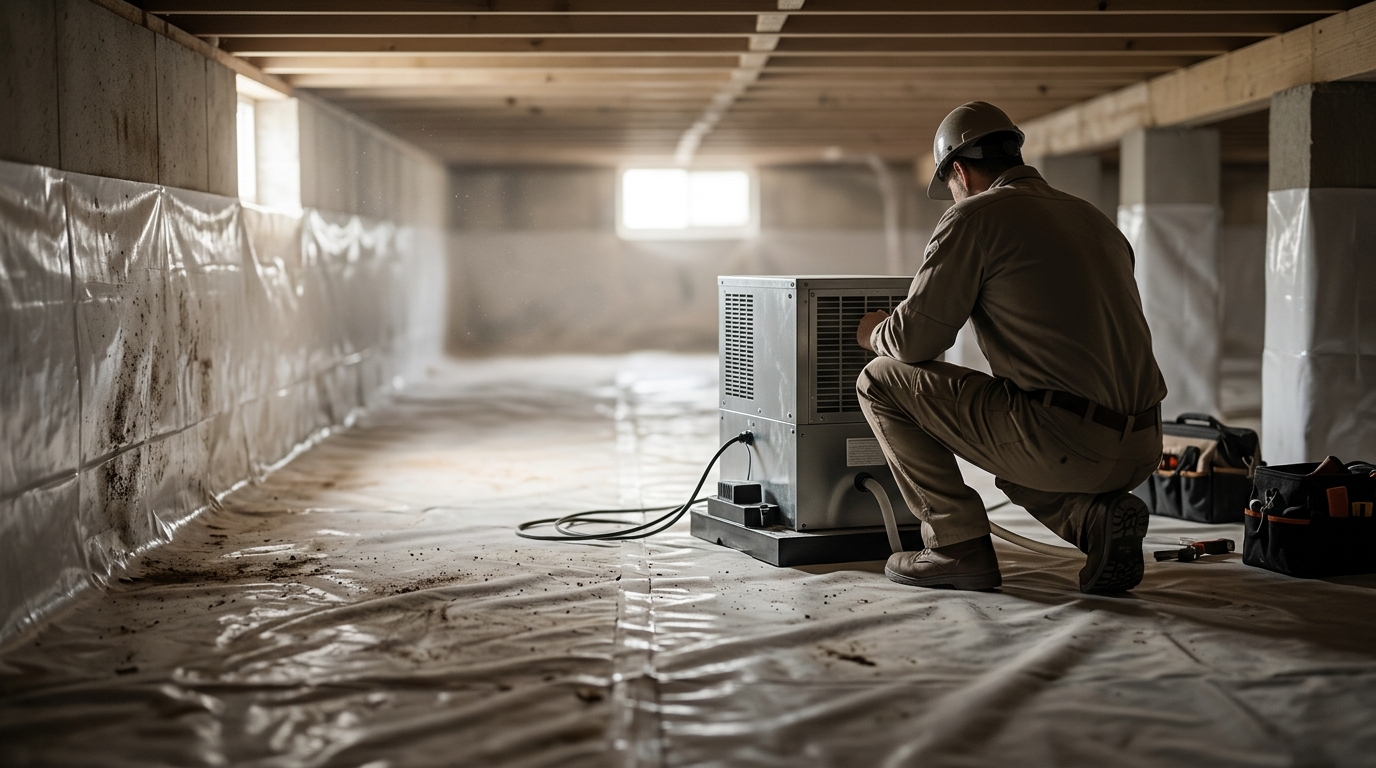
Understanding Virginia's Humidity Challenges
Virginia experiences high humidity levels, particularly during the summer months. This moisture creates an ideal environment for mold growth and structural decay. Contractors must account for these regional conditions when specifying equipment. The state's climate demands robust moisture control solutions that can handle sustained high humidity.
Regional Climate Impact
Calculating the Right Capacity
Dehumidifier capacity is measured in pints per day. This rating indicates how much moisture the unit can remove in 24 hours. Contractors must match this rating to the crawl space size. A unit that is too small will run constantly and fail to maintain proper humidity levels. For additional details, review the About Walder Foundation Products page.
Size and Capacity Matching
For a typical 1,000 square foot crawl space, a 50-pint unit is often sufficient. Larger spaces may require 70 or 100-pint models. Contractors should measure the actual square footage before making a recommendation. This ensures the client receives a unit that performs efficiently and cost-effectively.
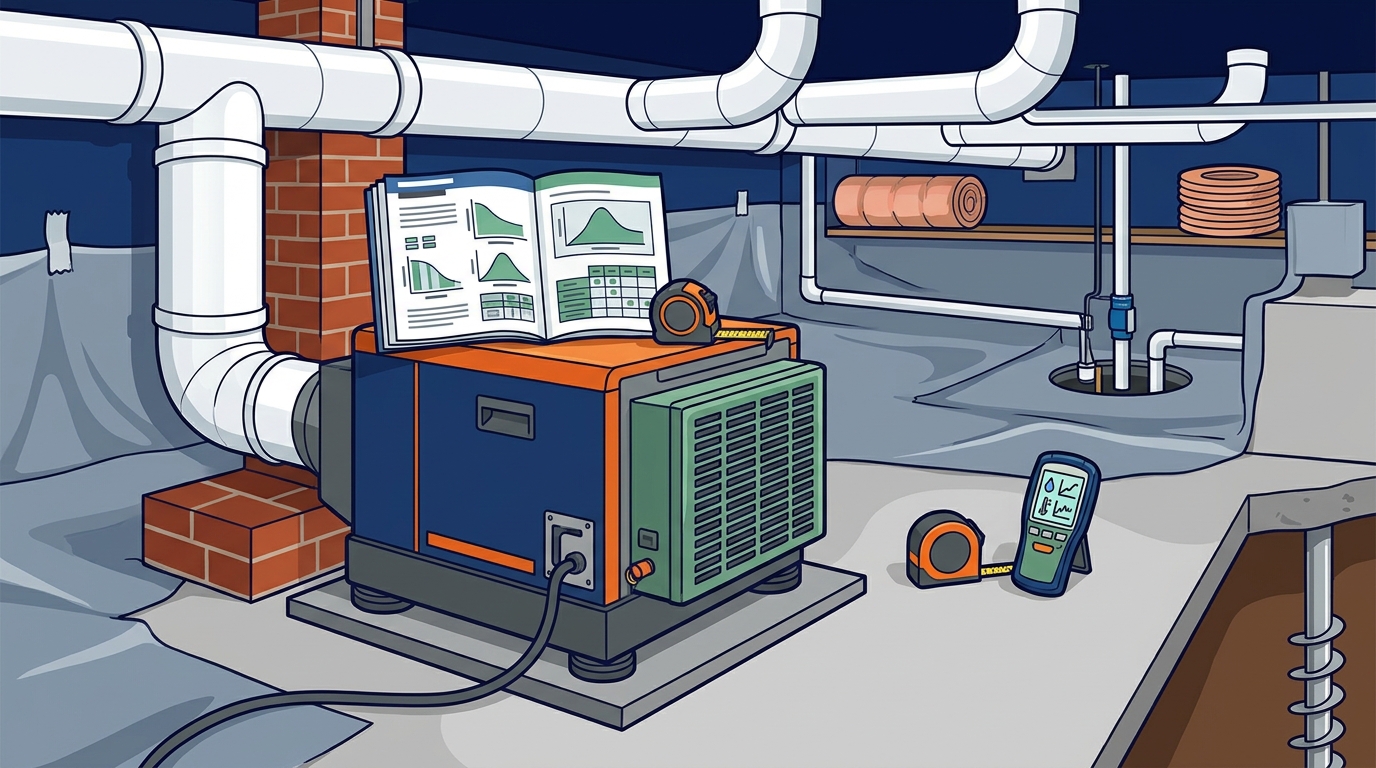
Drainage and Installation Considerations
Placement and Accessibility
The unit must be placed on a level surface. Dehumidifier risers can elevate the unit to improve drainage and reduce vibration. Contractors should ensure the location allows for easy filter access and maintenance. Proper placement extends the lifespan of the equipment and ensures optimal performance.
Filter Maintenance and Air Quality
Dehumidifiers require regular filter maintenance to operate efficiently. Clogged filters reduce airflow and increase energy consumption. Contractors should recommend washable filters for ease of maintenance. This reduces long-term costs for the homeowner and ensures consistent performance.
Filter Types and Replacement
Washable MERV 8 filters are a popular choice for crawl space applications. These filters capture dust and allergens while allowing for easy cleaning. Contractors should educate clients on the proper cleaning procedure. Regular maintenance is critical for maintaining indoor air quality and equipment longevity.
Professional Support and Resources
Contractor Pricing and Benefits
Professional contractors can access special pricing through contractor pricing programs. This allows for better margins on dehumidifier sales. Contractors should take advantage of these programs to remain competitive. Reliable supply and support are key to building a successful foundation repair business.
Key Takeaways
- Match dehumidifier capacity to crawl space square footage.
- Choose units with continuous drainage options for professional installations.
- Elevate units using risers to improve drainage and reduce vibration.
- Recommend washable filters for easy maintenance and cost savings.
- Utilize contractor pricing programs to improve profit margins.
- Provide clients with clear maintenance instructions for long-term performance.
Frequently Asked Questions
What size dehumidifier do I need for a crawl space?
The size depends on the square footage of the crawl space. A 50-pint unit is suitable for spaces up to 1,000 square feet. Larger spaces may require 70 or 100-pint models. Contractors should measure the space accurately before making a recommendation.
Do crawl space dehumidifiers need to be drained manually?
No, professional units should have continuous drainage options. This allows the unit to run without manual intervention. Gravity drain or built-in pump options are preferred for crawl space applications. This ensures consistent moisture control and reduces maintenance burden.
How often should dehumidifier filters be cleaned?
Filters should be cleaned every one to two months, depending on usage. Clogged filters reduce efficiency and increase energy consumption. Contractors should provide clients with a maintenance schedule. Regular cleaning ensures optimal performance and extends the life of the unit.
Can I use a standard home dehumidifier in a crawl space?
Where should the dehumidifier be placed in the crawl space?
The unit should be placed on a level surface in a central location. Elevating the unit on risers can improve drainage and reduce vibration. Ensure the location allows for easy access to the filter and controls. Proper placement is critical for efficient operation and maintenance.
What is the ideal humidity level for a crawl space?
The ideal relative humidity level for a crawl space is below 50 percent. Maintaining this level prevents mold growth and wood rot. Dehumidifiers help achieve and maintain this target. Contractors should monitor humidity levels after installation to ensure the unit is performing correctly. Learn more: Contact Us.