
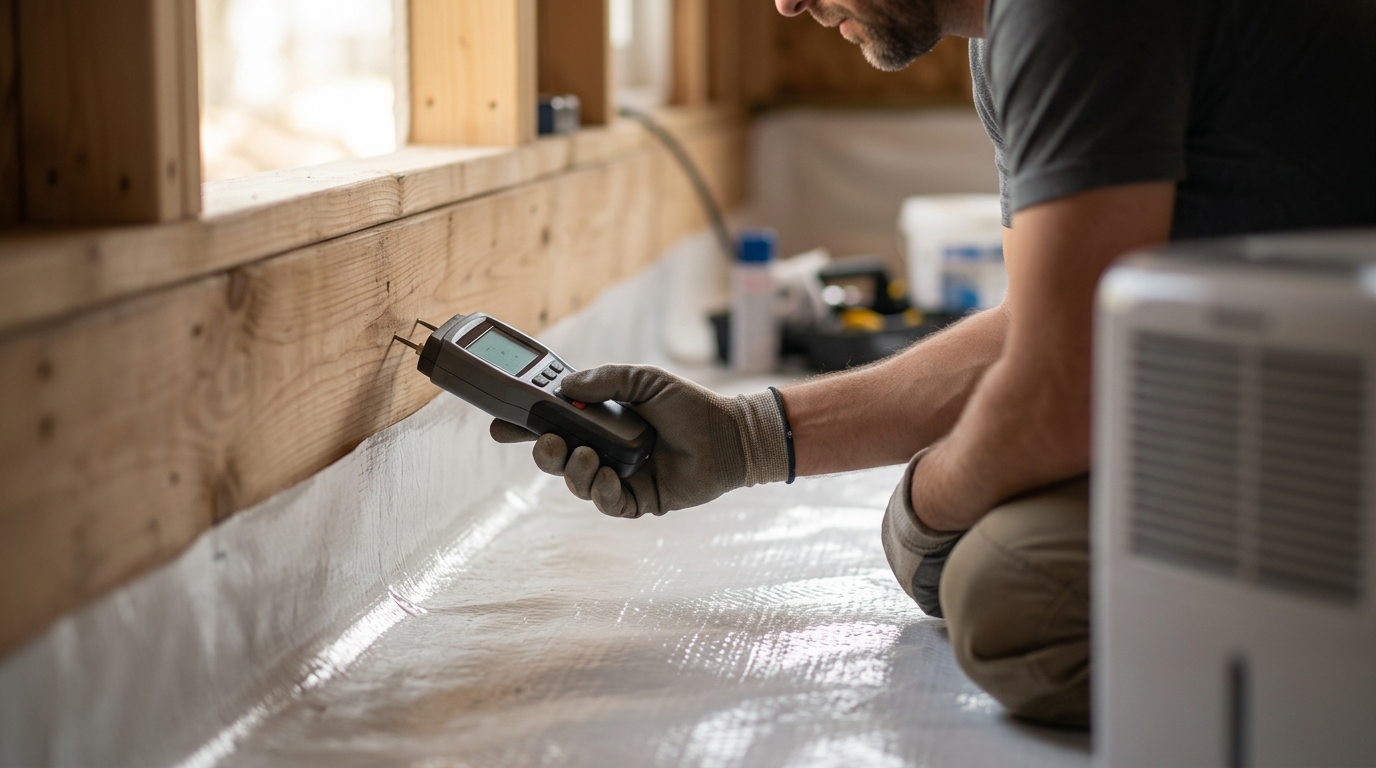
What moisture conditions should I check before buying a crawl space dehumidifier?
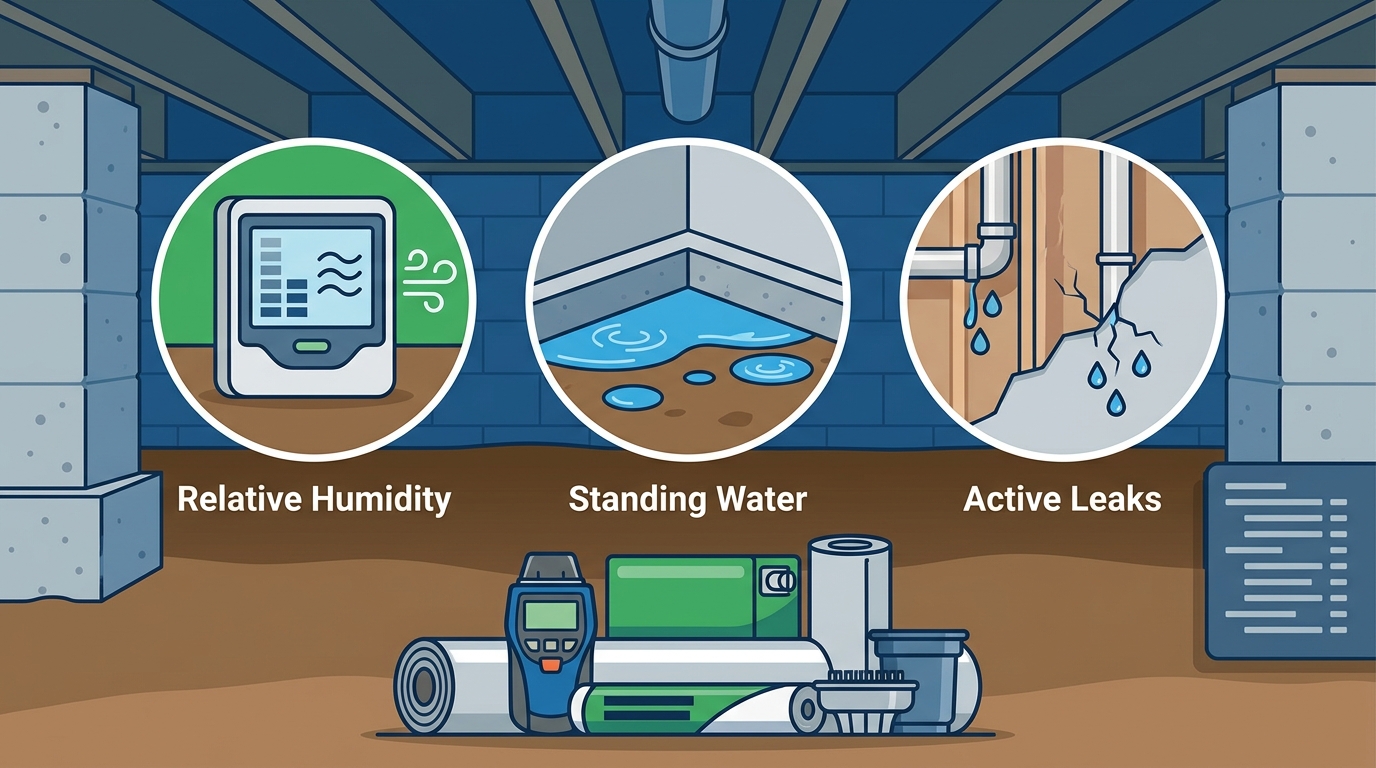
Before purchasing a crawl space dehumidifier, you must measure relative humidity, check for standing water, and inspect for active leaks. These three conditions determine whether a dehumidifier is the correct solution or if you need drainage first. Walder Foundation Products supplies the tools and materials needed to assess these conditions accurately before you invest in equipment.
Relative Humidity Baselines
The first condition to check is the ambient relative humidity (RH) within the crawl space. Crawl space relative humidity is the percentage of water vapor present in the air compared to the maximum amount the air can hold at that temperature. Industry standards generally recommend keeping crawl space RH between 30% and 50% to prevent mold growth and wood decay. If your readings consistently exceed 60%, a dehumidifier is likely necessary to bring the environment into a safe range.
Use a digital hygrometer to take readings at different times of the day and in different corners of the space. This helps identify if the humidity is uniform or if there are localized pockets of high moisture. Consistent high readings indicate that the space is holding too much moisture for natural ventilation to handle.
Standing Water and Saturation
The second critical check is the presence of standing water or saturated soil. Standing water is liquid water that has accumulated on the ground surface of the crawl space and is not draining away. If you see puddles, wet soil, or water pooling around the foundation, a dehumidifier alone will not solve the problem. You must address the water source first.
Check the ground level against the foundation walls. If the soil is saturated, it will continue to release moisture into the air faster than most dehumidifiers can remove it. In these cases, you need to install a sump pump or improve exterior grading before adding a dehumidifier. Walder Foundation Products offers a wide range of waterproofing and drainage products to help manage active water intrusion.
Active Leaks and Intrusion Points
The third condition involves identifying active leaks or intrusion points. An active leak is a visible path where water enters the crawl space from the exterior, such as through foundation cracks, window wells, or vent openings. If water is actively entering the space during rain, a dehumidifier will struggle to keep up with the influx of moisture.
Inspect the foundation walls for cracks, especially after heavy rain. Check window wells for proper drainage and ensure that exterior vents are sealed if you are encapsulating the space. Sealing these entry points is a prerequisite for effective dehumidification. You can find crawl space encapsulation materials to help seal these gaps.
Condensation and Mold Signs
The fourth check is for visible signs of condensation and mold. Condensation is the formation of liquid water on surfaces due to temperature differences, while mold is a type of fungus that grows in damp environments. If you see water droplets on pipes, joists, or insulation, or if you notice black or green spots on wood, the space is already experiencing moisture-related damage.
These signs indicate that the current humidity levels are too high for the materials in the space to remain dry. A dehumidifier can help reduce these levels, but you should also consider adding insulation to prevent condensation on cold surfaces. Insulation and foam products can help stabilize surface temperatures and reduce condensation risk.
Soil Vapor and Barrier Integrity
The final condition to assess is the integrity of any existing vapor barrier. A vapor barrier is a plastic sheeting installed over the crawl space floor to prevent soil moisture from evaporating into the air. If your existing barrier is torn, missing, or not sealed properly, the soil will continue to release moisture into the crawl space.
Check the seams and edges of the barrier. If it is compromised, replace it with a new, high-quality barrier before installing a dehumidifier. This reduces the total moisture load on the dehumidifier, allowing it to operate more efficiently. Ground vapor barriers are essential for long-term moisture control.
Key Takeaways
- Measure relative humidity with a digital hygrometer; aim for 30-50% RH.
- Check for standing water; address drainage before buying a dehumidifier.
- Identify and seal active leaks in foundation walls and window wells.
- Look for condensation and mold as signs of excessive moisture.
- Ensure a vapor barrier is installed and intact to reduce soil moisture.
- Use a dehumidifier as a final step after addressing water sources.
Frequently Asked Questions
What is the ideal relative humidity for a crawl space?
The ideal relative humidity for a crawl space is between 30% and 50%. This range helps prevent mold growth and wood decay while maintaining a healthy indoor environment.
Can a dehumidifier fix standing water in a crawl space?
No, a dehumidifier cannot fix standing water. You must address the source of the water, such as by installing a sump pump or improving drainage, before using a dehumidifier.
How often should I check crawl space humidity?
You should check crawl space humidity at least once a month, and more frequently during wet seasons. Consistent monitoring helps you catch issues before they cause damage.
Do I need a vapor barrier if I have a dehumidifier?
Yes, a vapor barrier is still recommended even if you have a dehumidifier. The barrier reduces the amount of moisture the dehumidifier has to remove, making it more efficient and cost-effective.
What size dehumidifier do I need for a crawl space?
The size of the dehumidifier you need depends on the square footage of your crawl space and the current humidity levels. A larger space or higher humidity will require a more powerful unit.