
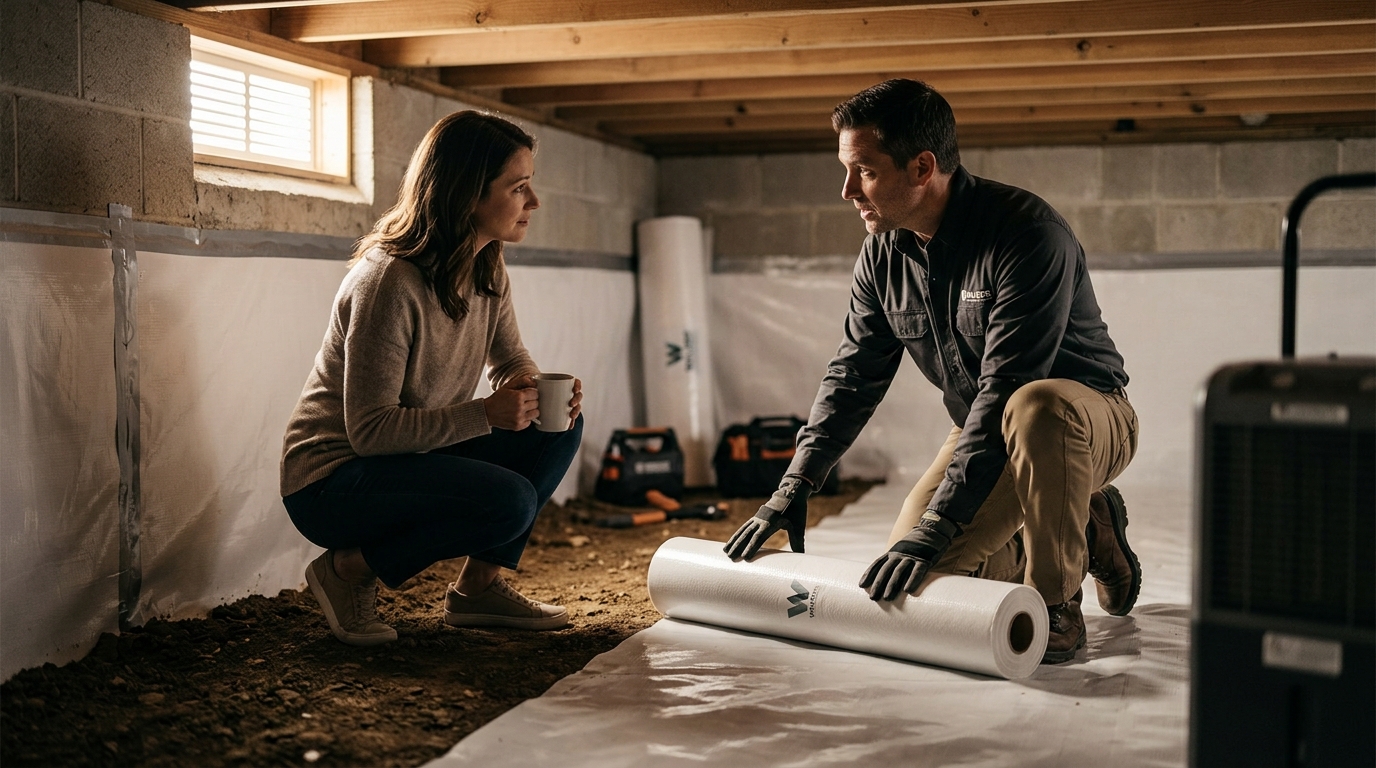
Choose a vapor barrier with a permeance rating below 1.0 perm for most crawl space conditions. This low-permeance material blocks moisture vapor from the soil, preventing condensation and mold. Walder Foundation Products supplies these specialized materials to contractors who need reliable moisture control.
Understanding Vapor Permeance Ratings
Vapor permeance is the measure of how much water vapor passes through a material in a given time. It is expressed in perms, where one perm equals one grain of water vapor per square foot per hour. A lower number indicates a tighter barrier. For crawl spaces, the goal is to stop soil moisture from entering the conditioned space.
Most building codes and industry standards recommend a Class I vapor retarder for crawl space floors. This classification requires a permeance rating of 1.0 perm or less. Using a material with a higher rating allows too much moisture to pass through, leading to dampness and structural decay. Contractors must select materials that meet this specific threshold to ensure long-term performance.
The Impact of Soil Moisture Levels
Soil moisture is the primary driver of vapor movement in a crawl space. In regions with high water tables or frequent rainfall, the soil releases significant amounts of vapor. A 6-mil polyethylene sheet is the industry standard for these conditions. It provides a permeance rating well below 1.0 perm, effectively sealing the ground.
Even in drier climates, seasonal changes can cause moisture spikes. A robust barrier prevents these fluctuations from affecting the home. Walder Foundation Products offers various ground vapor barriers designed to handle these environmental stresses. Selecting the right thickness ensures the material remains intact despite foot traffic and installation challenges.
Interaction with Wall Insulation
The choice of floor barrier must align with your wall insulation strategy. If you install air-permeable insulation on the walls, you must manage vapor carefully. According to the Building America Solution Center, vapor retarder plastic should not be installed over fibrous insulation on basement or crawlspace walls. This can trap moisture within the insulation, causing mold and reducing R-value.
Instead, rigid foam or spray foam should be installed directly against the concrete walls. These materials act as both insulation and a vapor barrier. When combining a low-permeance floor barrier with rigid wall insulation, you create a sealed envelope. This approach is critical for maintaining indoor air quality and energy efficiency.
Material Durability and Thickness
Contractors should consider the specific site conditions when choosing thickness. A standard 6-mil poly sheet works for smooth, prepared surfaces. For rough terrain, a heavier gauge material prevents tears that would compromise the vapor seal. Walder Foundation Products stocks these durable options to ensure your installation lasts for decades.
Installation Best Practices for Sealing
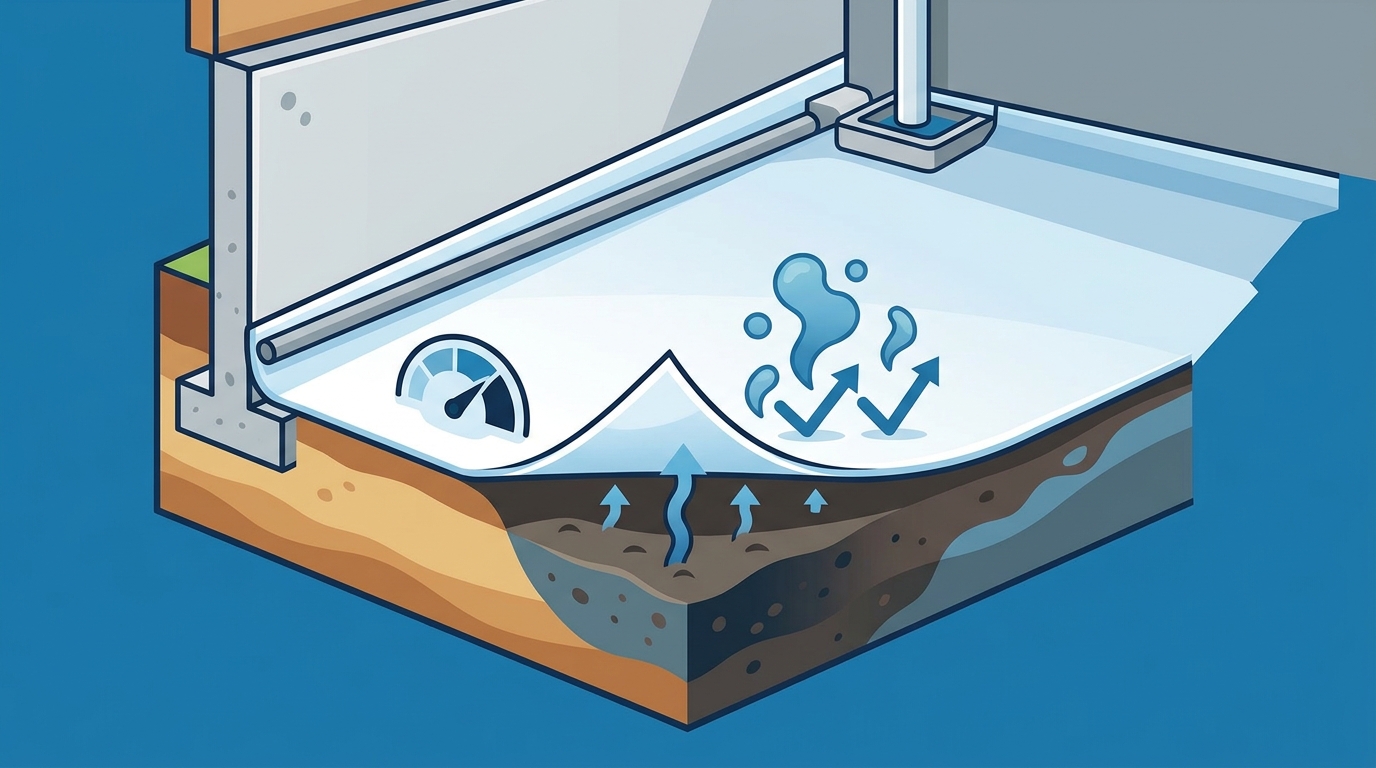
Even the best material fails if installed incorrectly. Seams must be overlapped and taped with a compatible adhesive. Gaps at the walls and around pipes allow moisture to bypass the barrier. Proper sealing ensures the entire floor acts as a single unit. This attention to detail is what separates a professional installation from a DIY attempt that fails over time.
Use the right tools to secure the barrier. Fastening guns and specialized tapes help maintain the seal. A well-installed barrier reduces relative humidity in the crawl space significantly. This protects the subfloor and joists from rot. It also improves the overall comfort of the home above.
Key Takeaways
- Choose a vapor barrier with a permeance rating of 1.0 perm or less for crawl space floors.
- A 6-mil polyethylene sheet is the standard minimum for most residential applications.
- Do not place plastic vapor retarders over fibrous wall insulation to avoid trapping moisture.
- Use rigid foam or spray foam directly on concrete walls for best results.
- Select heavier gauge materials like 10-mil or 12-mil for rocky or uneven soil conditions.
- Properly tape all seams and wall connections to maintain a continuous vapor seal.
Frequently Asked Questions
What is the ideal permeance rating for a crawl space vapor barrier?
The ideal rating is 1.0 perm or lower. This is known as a Class I vapor retarder. It effectively blocks moisture from the soil from entering the crawl space.
Can I use a 4-mil plastic sheet for my crawl space?
While 4-mil sheets have low permeance, they are very thin and tear easily. A 6-mil sheet is the recommended minimum for durability and long-term performance.
Should I put a vapor barrier on the crawl space walls?
It depends on your insulation. If using fibrous insulation, do not use a plastic barrier on the walls. If using rigid foam, the foam itself acts as the barrier.
How does soil type affect my choice of vapor barrier?
Rocky or uneven soil requires a thicker, more durable barrier like 10-mil or 12-mil woven material. Smooth soil can be handled by standard 6-mil polyethylene.
Where can I buy professional-grade vapor barriers?
You can purchase professional-grade materials from Walder Foundation Products. They offer a wide range of options for contractors and DIYers.
Conclusion
Selecting the correct vapor permeance rating is critical for a healthy crawl space. Aim for a Class I rating of 1.0 perm or less. Pair this with proper wall insulation and sealing techniques. Contact Walder Foundation Products to find the right materials for your specific project needs.