
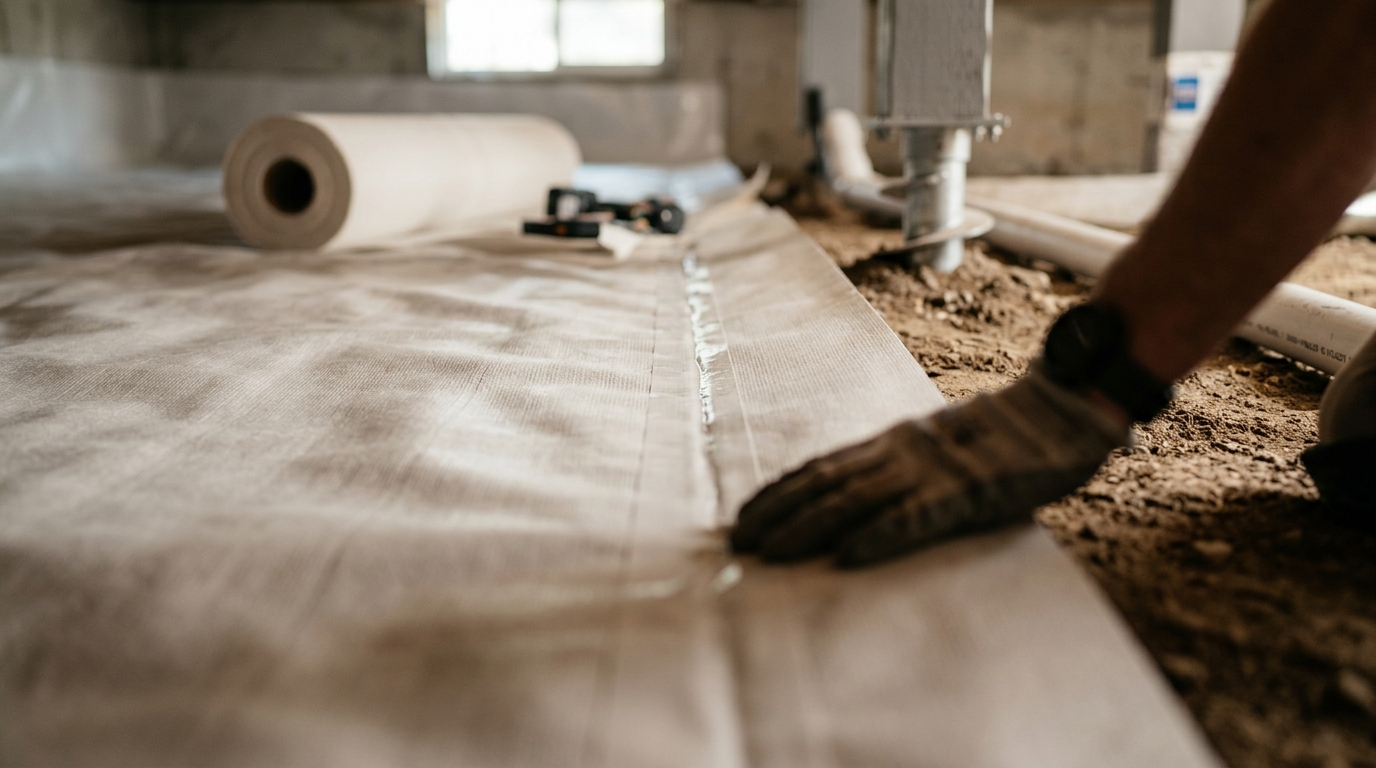
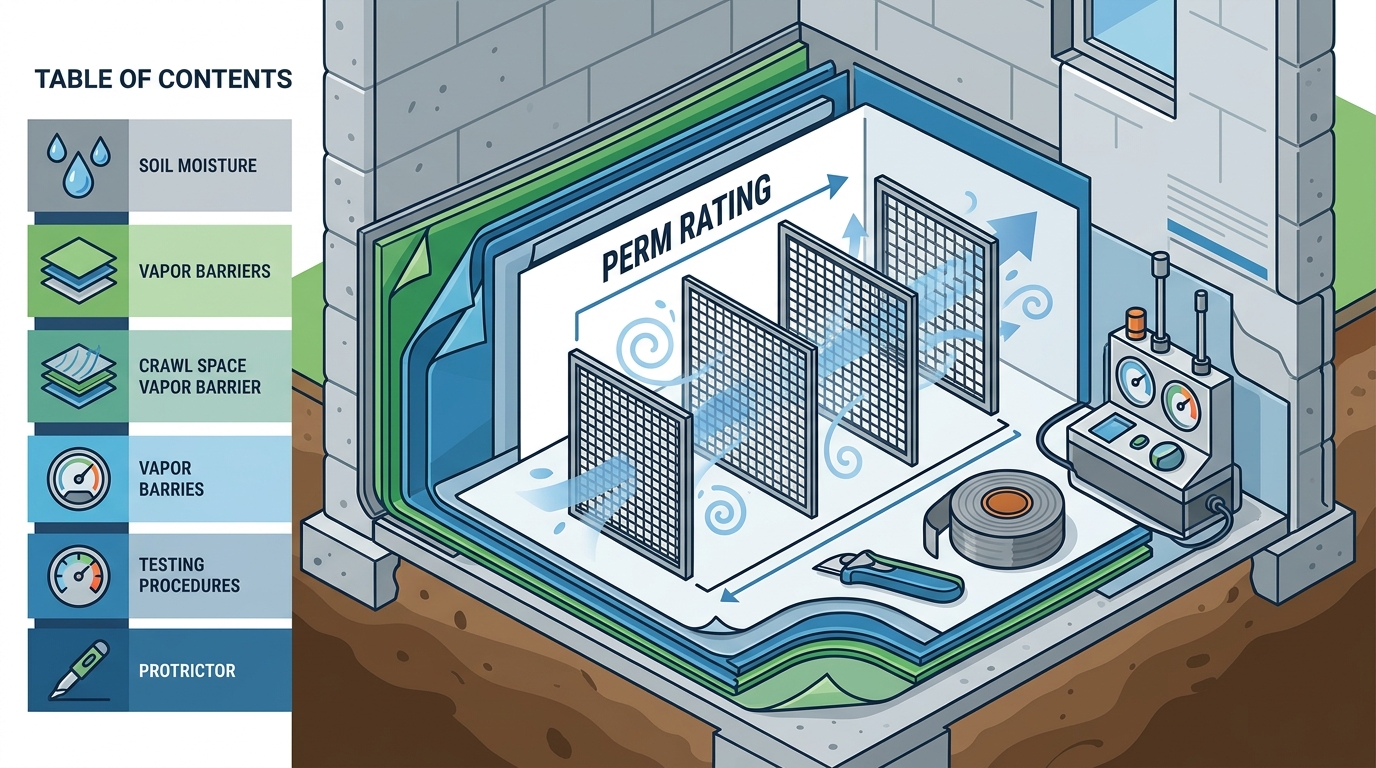
Perm rating measures a material's resistance to water vapor transmission. In crawl spaces, a lower perm rating indicates a tighter seal that blocks moisture from the soil. This metric is the primary technical standard for evaluating vapor barrier effectiveness.
The Science of Vapor Transmission
Water vapor moves through materials via diffusion, a process driven by pressure and humidity differences. Perm rating is the measurement of how many grains of water vapor pass through a square foot of material in 24 hours. A material with a perm rating of 1.0 is considered a vapor retarder, while a rating below 0.1 is classified as a vapor barrier.
In a crawl space, the soil beneath the home acts as a constant source of moisture. Without a proper barrier, this vapor migrates upward through the subfloor. A high-perm material allows this moisture to escape into the living space, leading to elevated indoor humidity levels.
Standard vs. High-Performance Barriers
The difference is critical for long-term performance. A 0.1 perm barrier is ten times more effective at blocking vapor than a 1.0 perm barrier. This distinction becomes even more important in regions with high soil moisture or during seasonal humidity spikes.
Impact on Indoor Air Quality
Moisture that bypasses a vapor barrier can lead to mold growth and musty odors. The stack effect in a home pulls air from the crawl space into the living areas. If the vapor barrier has a high perm rating, it allows this moist air to enter the home. A low-perm barrier keeps the crawl space dry and prevents the transport of soil gases and odors.
By selecting a barrier with a verified low perm rating, contractors can significantly improve the indoor air quality of the finished home. This is a key selling point for homeowners who are concerned about health and comfort.
Installation and Seam Integrity
The perm rating of the material is only as good as the installation. If seams are not properly sealed, the effective perm rating of the entire system increases. This is why vapor barrier tape and adhesives are essential components of a professional installation. A high-perm tape can negate the benefits of a low-perm liner if used at the seams.
Contractors must ensure that all seams, penetrations, and edges are sealed with a compatible product. This creates a continuous barrier that maintains its low perm rating across the entire crawl space floor and walls.
Choosing the Right Barrier for Your Project
When selecting a vapor barrier, contractors should look for products with published perm ratings. Not all manufacturers provide this data, so it is important to choose brands that are transparent about their performance metrics. Walder Foundation Products offers a range of wall vapor barriers and ground liners that meet or exceed industry standards for perm rating.
By understanding the perm rating, contractors can make informed decisions that lead to better project outcomes and higher customer satisfaction. This technical knowledge sets professional contractors apart from DIY efforts and ensures long-lasting results.
Key Takeaways
- Perm rating measures water vapor transmission in grains per square foot per 24 hours.
- A perm rating below 0.1 is classified as a vapor barrier, while 1.0 is a vapor retarder.
- Lower perm ratings provide better protection against soil moisture and indoor humidity.
- Seam integrity is critical; a high-perm tape can compromise a low-perm liner.
- Choosing a barrier with a verified low perm rating improves indoor air quality.
- Contractors should select products with published perm ratings for transparency.
Frequently Asked Questions
What is a good perm rating for a crawl space vapor barrier?
A perm rating below 0.1 is considered a high-performance vapor barrier. This rating provides the best protection against moisture transmission from the soil.
How is perm rating measured?
Perm rating is measured in grains of water vapor per square foot per 24 hours. The lower the number, the more resistant the material is to vapor transmission.
Does the thickness of the barrier affect the perm rating?
Thickness can affect perm rating, but it is not the only factor. The material composition and density also play a significant role in determining the final perm rating.
Can I use a standard polyethylene sheet as a vapor barrier?
Standard polyethylene has a perm rating of 0.5 to 1.0, which makes it a vapor retarder rather than a true vapor barrier. It is less effective than high-performance liners.
Why is seam sealing important for perm rating?
Seams are the weakest points in a vapor barrier system. If not properly sealed, the effective perm rating of the entire system increases, allowing more moisture to pass through.
Where can I find vapor barriers with low perm ratings?
Contractors can find high-performance vapor barriers with low perm ratings at Walder Foundation Products, which offers a wide range of professional-grade materials.