
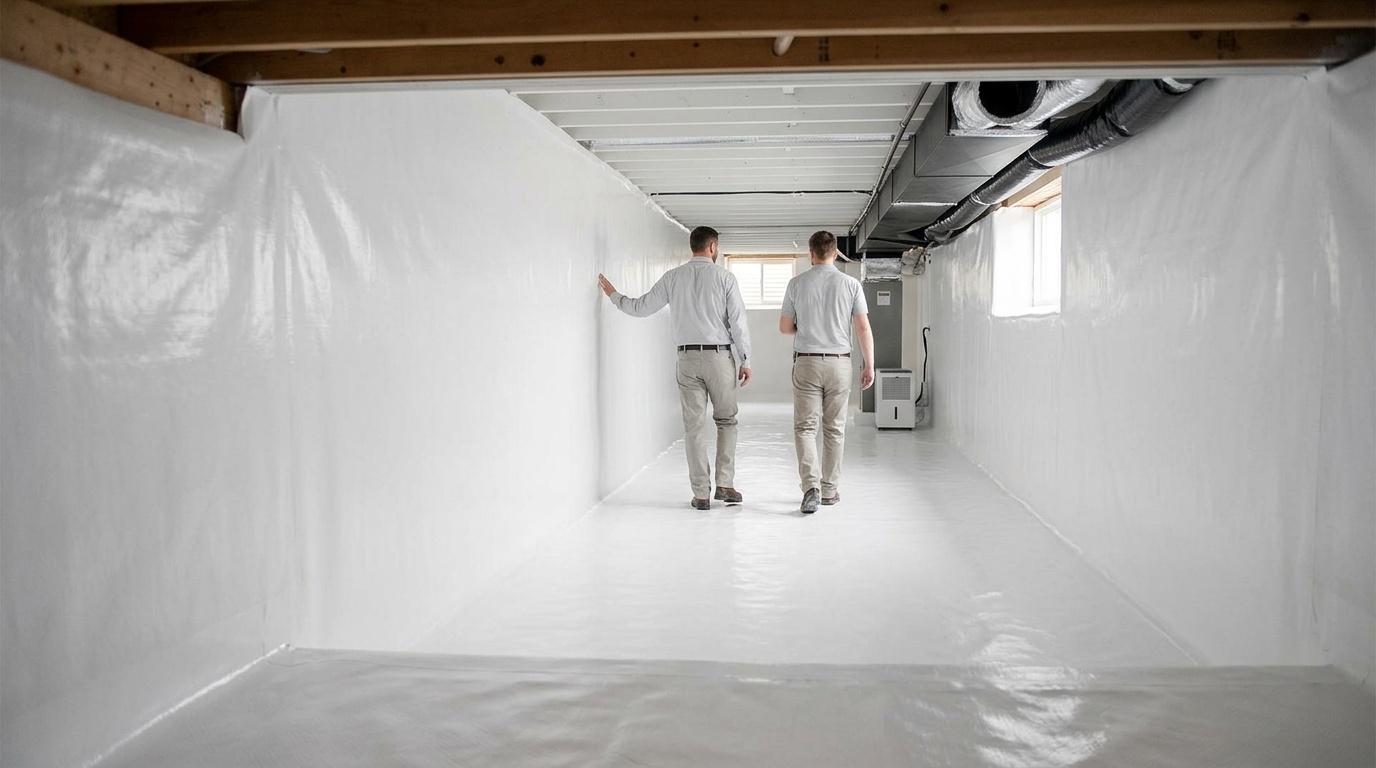
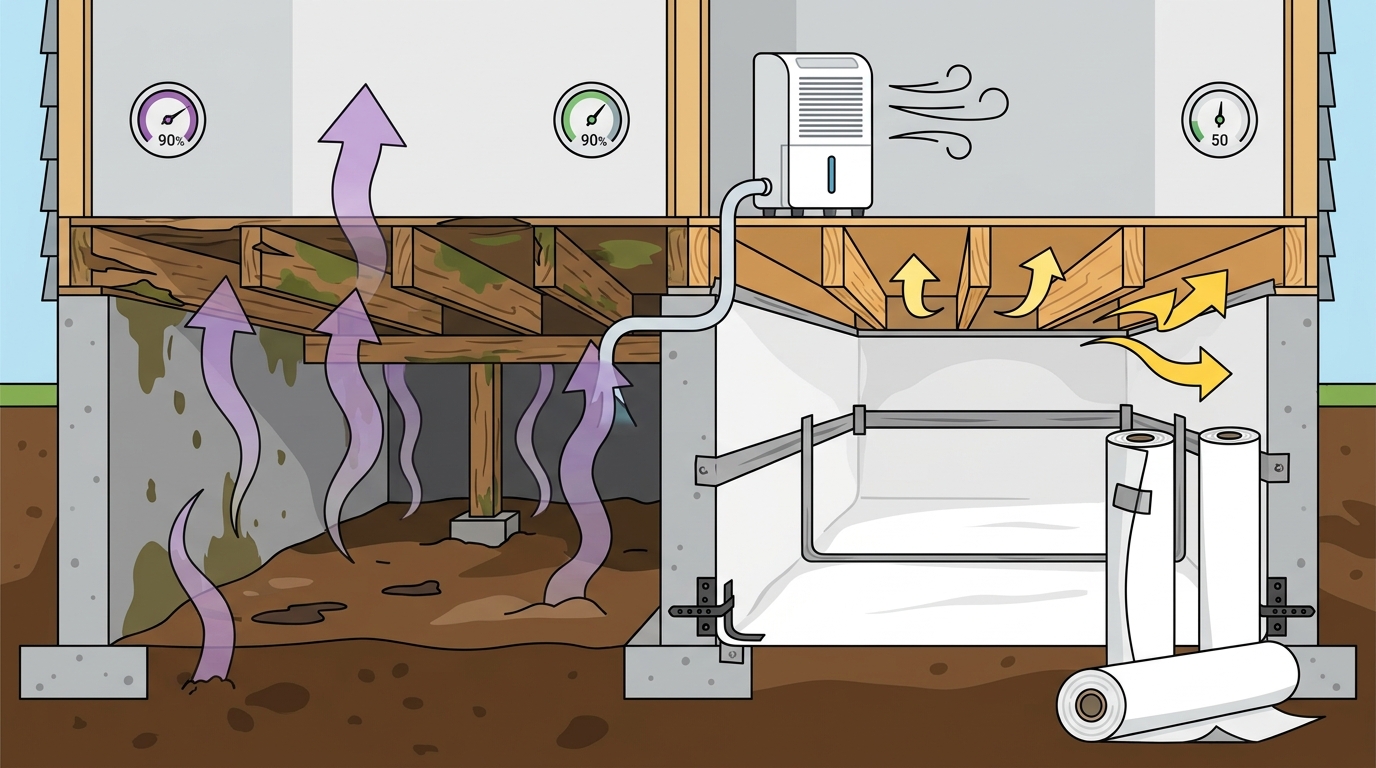
Uncontrolled moisture migration through the ground is the primary catalyst for structural decay in residential foundations. According to the EPA, crawl spaces are naturally prone to high humidity levels that can exceed 90 percent during humid seasons. This persistent moisture creates an environment where mold spores thrive and wooden structural components rot. Effective vapor barrier performance is not merely a cosmetic upgrade. It is a critical engineering requirement that dictates the longevity of your home's foundation and the quality of the air circulating in your living spaces above. (About Walder Foundation Products)
Understanding Vapor Barrier Specifications
When evaluating vapor barrier performance, the thickness of the polyethylene sheeting is the most immediate indicator of durability. Standard building codes often require a minimum of 6 mil thickness for ground vapor barriers. However, high-performance encapsulation projects frequently utilize 10 mil or 15 mil reinforced liners. These heavier gauges resist tearing during installation and provide a more robust barrier against punctures from sharp rocks or debris in the soil. (AprilAire 5822 Dehumidifier Hanging)
Material composition also plays a significant role in long-term efficacy. Reinforced barriers contain scrim mesh layers that prevent the plastic from stretching or tearing under tension. This is particularly important when the barrier is pulled taut across the ground and up the foundation walls. According to ASHRAE, proper vapor retarder selection is essential for controlling interstitial condensation within building assemblies. Without a high-quality barrier, moisture will continue to evaporate from the soil into the crawl space cavity.
Wall vapor barriers are equally important. These liners are applied to the interior of foundation walls to prevent capillary moisture from wicking up into the framing. Using a dedicated wall liner ensures that the entire crawl space envelope is sealed. This comprehensive approach stops moisture at the source rather than allowing it to migrate through the structure.
The Critical Role of Installation Integrity
The performance of any vapor barrier is directly tied to the precision of its installation. A barrier with minor gaps or unsealed seams will fail to perform its intended function. Professional installers use heavy-duty tapes to seal all seams and overlaps. The tape must be compatible with the polyethylene material to maintain a permanent bond over time.
Fastening the barrier to the foundation walls requires specialized hardware. Christmas tree fasteners are commonly used to secure the liner to concrete or masonry surfaces. These fasteners provide a strong hold without damaging the integrity of the barrier. Proper attachment ensures that the liner remains in place and does not sag or detach due to air pressure changes.
Sealing penetrations is another critical step. Any pipes, wires, or ducts passing through the barrier must be sealed with appropriate flashing or tape. This prevents air leakage and moisture intrusion at these weak points. A comprehensive seal creates a continuous barrier that effectively isolates the crawl space from the ground below.
Moisture Control and Dehumidification
Even with a perfect vapor barrier, residual moisture can remain in the crawl space air. This is where dehumidification becomes essential. A vapor barrier stops ground moisture, but it does not remove existing humidity from the air. Installing a high-capacity dehumidifier is necessary to maintain optimal humidity levels, typically between 30 and 50 percent.
Dehumidifiers work by condensing moisture from the air and collecting it in a reservoir or draining it away. According to the Department of Energy, maintaining proper humidity levels in crawl spaces can reduce mold growth and improve energy efficiency. This is especially important in regions with high groundwater tables or frequent rainfall.
Proper drainage is also a key component of moisture control. Installing a sump pump system can help manage water accumulation in the crawl space. This system collects water in a pit and pumps it away from the foundation. Combining a vapor barrier with effective drainage and dehumidification creates a comprehensive moisture management strategy.
Foundation Repair and Structural Support
Moisture damage often leads to structural issues that require professional repair. Settling foundations can cause floors to become uneven and walls to crack. Addressing these issues is crucial before encapsulating the crawl space to ensure long-term stability.
Helical piles are a common solution for foundation stabilization. These steel piles are driven into the ground until they reach stable soil or bedrock. They provide a secure anchor for lifting and supporting the foundation. According to FEMA, proper foundation support is vital for preventing catastrophic structural failure in flood-prone areas.
Carbon fiber kits are another effective method for reinforcing basement walls. These strips are bonded to the interior of the wall to resist inward bowing. They provide a strong, non-invasive solution for stabilizing cracked or leaning walls. Addressing structural issues before encapsulation ensures that the new barrier remains effective and the foundation stays level.
Insulation and Thermal Performance
Vapor barriers also play a role in thermal performance. By sealing the crawl space, you prevent cold air from entering the living space above. This reduces heat loss and lowers energy bills. Proper insulation works in tandem with the vapor barrier to create a comfortable and efficient home.
Foam board insulation is often used on foundation walls. It provides a high R-value per inch and resists moisture absorption. This makes it an ideal choice for the damp environment of a crawl space. According to ENERGY STAR, sealing and insulating crawl spaces can save homeowners an average of 15 percent on heating and cooling costs.
Blown-in cellulose or fiberglass insulation can also be used on the floor joists. However, this method requires careful attention to vapor control to prevent moisture from reaching the insulation. Encapsulating the walls and floor with a vapor barrier is generally the preferred method for maximum performance and durability.
Key Takeaways
- Barrier Thickness Matters: Use 10 mil or 15 mil reinforced liners for superior durability and puncture resistance.
- Seal Everything: All seams, overlaps, and penetrations must be sealed with compatible tape to prevent air leakage.
- Dehumidification is Essential: A vapor barrier alone cannot remove humidity; a dedicated dehumidifier is required for complete moisture control.
- Structural Integrity First: Address foundation settling or wall bowing before encapsulation to ensure long-term stability.
- Thermal Benefits: Proper insulation and sealing can reduce heating and cooling costs by up to 15 percent.
- Professional Installation: Correct fastening and taping techniques are critical for the barrier to perform as designed.
- Comprehensive System: Combine vapor barriers, drainage, and dehumidification for the best crawl space performance.
Frequently Asked Questions
What is the best thickness for a crawl space vapor barrier?
While 6 mil is the code minimum, 10 mil or 15 mil reinforced barriers are recommended for better durability and resistance to tearing during and after installation.
Do I need a dehumidifier if I have a vapor barrier?
Yes. A vapor barrier stops ground moisture, but it does not remove humidity from the air. A dehumidifier is necessary to maintain optimal indoor air quality and prevent mold.
How do I seal the vapor barrier to the foundation walls?
Use heavy-duty poly tape and Christmas tree fasteners to secure the liner to the concrete or masonry walls. Ensure all seams are tightly sealed to prevent air leakage.
Can I install a vapor barrier myself?
While DIY installation is possible, professional installation ensures proper sealing and fastening. Incorrect installation can lead to moisture issues and reduced barrier performance.
What is the difference between a vapor barrier and a moisture barrier?
A vapor barrier is specifically designed to block water vapor transmission. A moisture barrier may refer to a broader range of materials that resist liquid water but may not be as effective against vapor.
How often should I replace my crawl space vapor barrier?
A high-quality installed vapor barrier can last for decades. However, it should be inspected annually for tears, gaps, or damage that could compromise its effectiveness.
Does encapsulating a crawl space increase home value?
Yes. A dry, encapsulated crawl space improves air quality, prevents structural damage, and increases energy efficiency, all of which are attractive to potential buyers.
Contact Walder Foundation Products
Ready to transform your crawl space? Walder Foundation Products offers a comprehensive range of high-performance vapor barriers, dehumidifiers, and foundation repair solutions. Visit our product catalog to find the materials you need. Contact our team at Walder Foundation Products to discuss your project requirements and get expert advice.