
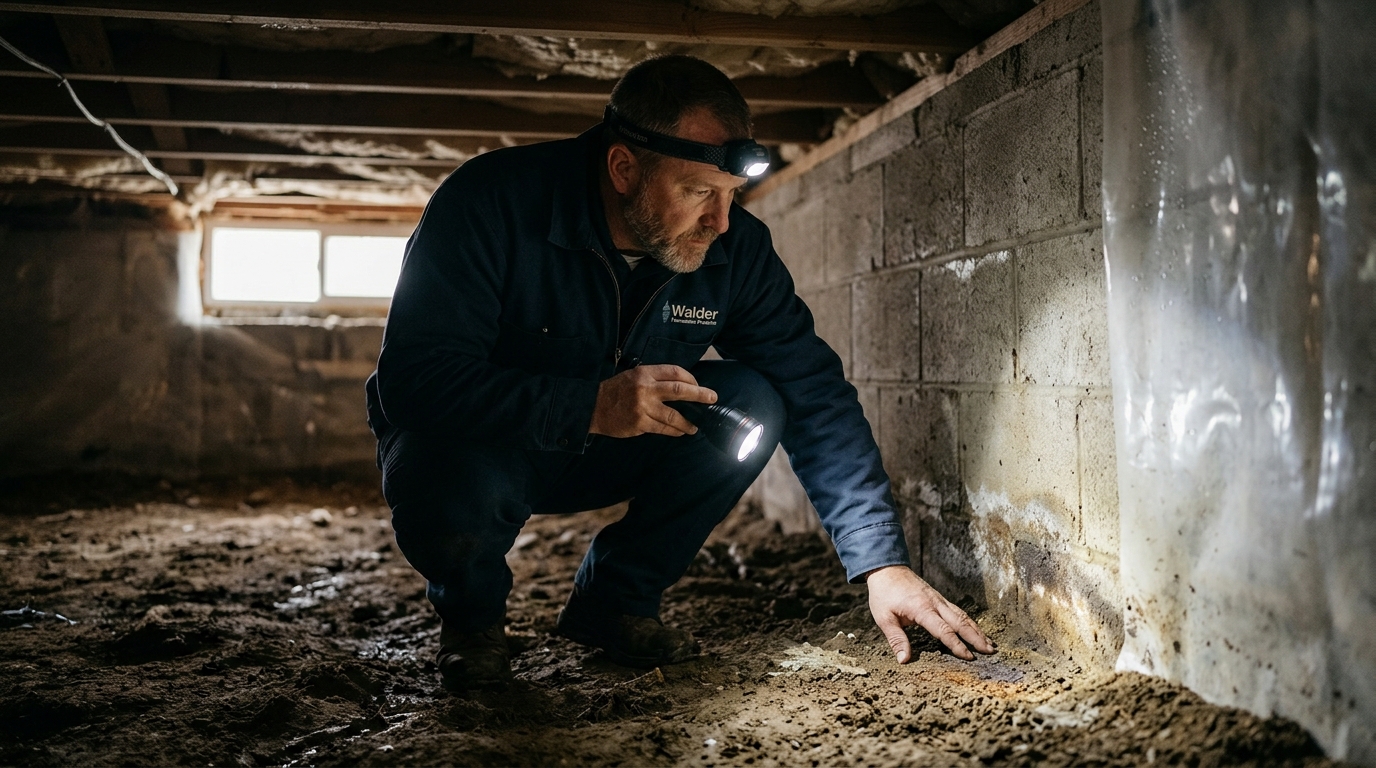
Identifying water sources in a crawl space requires a systematic inspection of the perimeter, floor, and structural components to distinguish between external infiltration and internal condensation. Contractors and homeowners must look for specific visual cues, such as damp soil, active seepage, or mineral deposits, to determine the root cause. Waterproofing and drainage solutions are only effective when the specific entry point is correctly diagnosed. This guide outlines the professional methods used to trace moisture origins before applying permanent repairs.
Inspecting the Perimeter for External Infiltration
External water intrusion is the most common cause of wet crawl spaces, typically driven by poor grading or failed drainage systems. Water from the surface flows toward the foundation when the soil slope is incorrect or when gutters discharge directly against the wall. To identify this, inspect the soil immediately adjacent to the foundation for signs of saturation or erosion channels.
Visual Indicators of Surface Water
Look for dark, damp soil that remains wet long after a rainstorm. If the ground is saturated within a few feet of the foundation, surface water is likely pooling and seeping through the soil. Check for standing water in low spots near the house, which indicates that the landscape is not draining away from the structure.
Mineral deposits, often called efflorescence, appear as white, chalky crusts on the foundation wall. These deposits form when water dissolves minerals in the concrete and evaporates, leaving the residue behind. The presence of efflorescence confirms that water has been moving through the wall or soil for an extended period.
Diagnosing Internal Condensation and Vapor Migration
Internal moisture is distinct from external leaks because it originates from within the building envelope or the soil itself. Condensation is the process where water vapor in the air turns into liquid upon contact with a cooler surface. In crawl spaces, this often occurs on the underside of the subfloor or on the foundation walls during temperature fluctuations.
To differentiate condensation from a leak, observe the pattern of moisture. Condensation typically appears as a uniform film of water or small droplets across a large area, rather than a localized stream. If the moisture is present on the vapor barrier or the soil surface without a visible source of liquid flow, internal vapor migration is the likely culprit. This condition is often exacerbated by high humidity levels in the surrounding soil.
The Role of Vapor Barriers
A properly installed ground vapor barrier prevents soil moisture from entering the air. If water is found on top of an existing barrier, it may indicate a tear or a failure in the seam tape. If water is found on the foundation wall above the barrier line, it suggests that moisture is rising through the wall via capillary action or condensing on the cooler concrete surface.
Tracing Water Flow Patterns and Entry Points
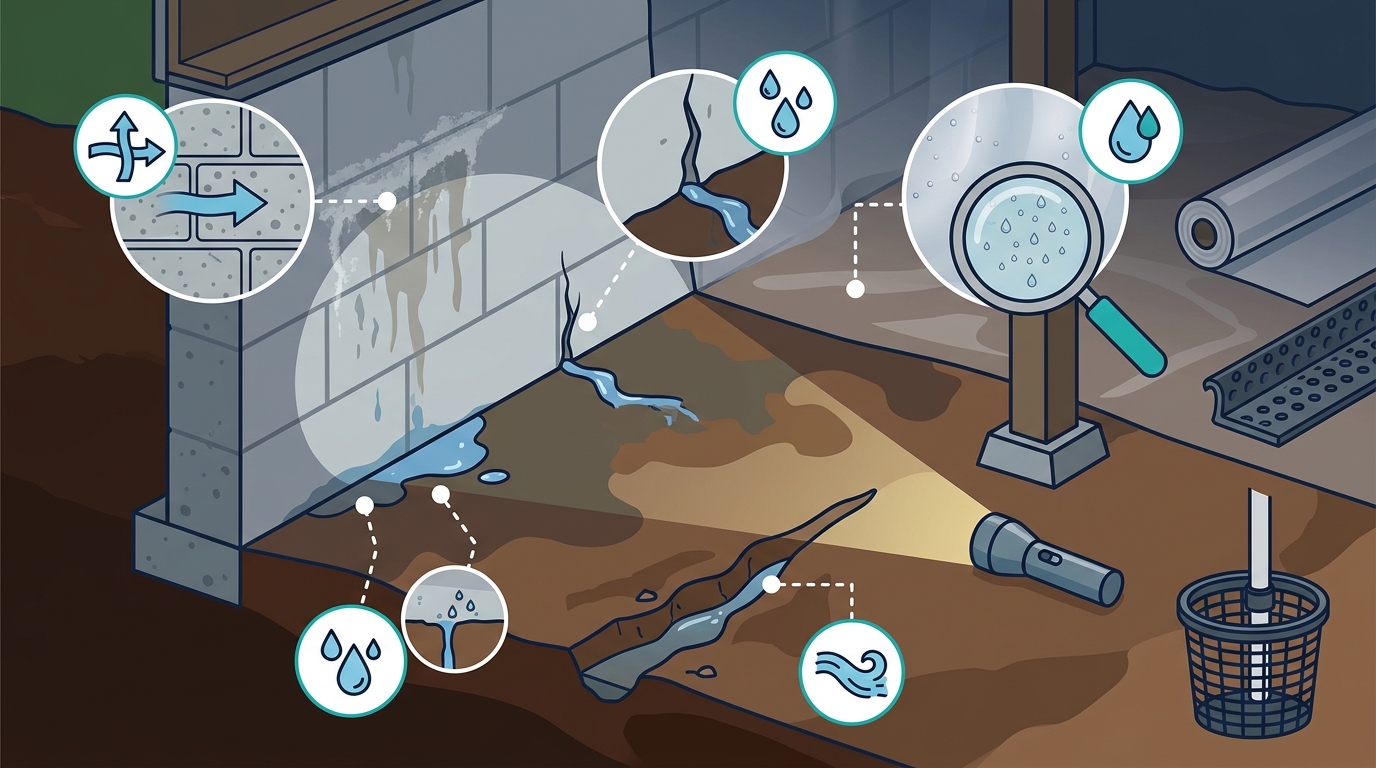
Once moisture is detected, the next step is to trace the path of the water to its origin. Water follows gravity, so it will flow from high points to low points. By observing the direction of the flow, you can identify the highest point of entry. This is critical for determining whether the water is coming from a crack, a joint, or the soil itself.
Use a flashlight to inspect the foundation walls for cracks, particularly at the corners where the wall meets the floor. Hairline cracks can allow significant amounts of water to enter during heavy rains. Additionally, check the area where the foundation wall meets the floor slab. This joint is a common entry point for water that has been pooling in the soil.
Testing for Active Leaks
During a rain event, monitor the crawl space to see if the water level rises. If the water level increases rapidly, there is an active leak. If the water level remains stable or decreases slowly, the issue is likely condensation or residual moisture from a previous event. This real-time observation helps contractors prioritize repairs and select the appropriate crawl space kits for the specific problem.
Assessing Drainage and Sump Pump Functionality
Existing drainage systems can sometimes be the source of the problem if they are clogged or malfunctioning. A failed sump pump can cause water to back up into the crawl space, while a clogged perimeter drain can allow water to pool against the foundation. Inspect the sump pump pit for debris and test the pump's operation to ensure it is discharging water away from the house.
Check the discharge pipe to ensure it is not blocked or frozen. If the discharge pipe is too short, water may be splashing back onto the foundation. Properly sized and installed drainage products are essential for managing water that has already entered the system. If the drainage system is functioning correctly but the crawl space remains wet, the issue is likely external infiltration that is overwhelming the system's capacity.
Verifying System Capacity
Compare the volume of water entering the system with the capacity of the sump pump and discharge pipe. If the water volume exceeds the system's capacity, the water will overflow into the crawl space. This is a common issue in areas with high rainfall or poor soil drainage. Upgrading the system with a larger pump or additional discharge points may be necessary to resolve the problem.
Key Takeaways
- External infiltration is the most common cause of wet crawl spaces, driven by poor grading and failed drainage.
- Condensation is identified by a uniform film of moisture on cooler surfaces, distinct from localized leaks.
- Efflorescence, or white mineral deposits, confirms that water has been moving through the foundation wall.
- Tracing water flow from high to low points helps identify the primary entry point for repairs.
- Malfunctioning sump pumps or clogged drains can cause water to back up into the crawl space.
- Proper diagnosis requires distinguishing between active leaks and residual moisture from previous events.
- Professional inspection is recommended to ensure the correct waterproofing solution is applied.
Frequently Asked Questions
How can I tell if the water is from a leak or condensation?
Leaks typically present as localized streams or pools of water, often near cracks or joints. Condensation appears as a uniform film of droplets on cooler surfaces, such as the subfloor or foundation walls, and is often more prevalent during temperature changes.
What does efflorescence indicate about water intrusion?
Efflorescence is a white, chalky deposit left behind when water evaporates from concrete. Its presence indicates that water has been moving through the foundation wall or soil for an extended period, confirming a history of moisture intrusion.
Should I install a vapor barrier if I have a leak?
A vapor barrier alone will not stop an active leak. It is designed to block soil moisture and condensation. If you have an active leak, you must first repair the entry point, such as a crack or joint, before installing a vapor barrier to manage the remaining moisture.
How often should I inspect my crawl space for water?
It is recommended to inspect the crawl space at least twice a year, in the spring and fall, and immediately after heavy rainstorms. Regular inspections help identify minor issues before they escalate into significant water damage or structural problems.
Can a dehumidifier solve a water leak problem?
No, a dehumidifier manages humidity in the air but does not stop liquid water from entering the space. It is an effective tool for controlling condensation and maintaining air quality, but it must be used in conjunction with proper waterproofing and drainage solutions.
Conclusion
Accurately identifying the source of water in a crawl space is the foundation of any successful repair strategy. By systematically inspecting the perimeter, assessing internal conditions, and testing drainage systems, you can distinguish between external infiltration and internal condensation. This diagnostic process ensures that the appropriate materials and techniques are applied to resolve the issue permanently. For contractors and homeowners seeking reliable solutions, contacting Walder Foundation Products provides access to the expertise and high-quality products needed to manage crawl space moisture effectively. Learn more: Contact Us.