
Helical Piles vs. Push Piers: A Contractor's Guide to Foundation Repair
Helical piles offer immediate load capacity, precise torque verification, and minimal vibration, making them superior to push piers for sensitive structures and variable soils. This guide explores the technical advantages of helical systems, detailing how installation metrics, soil compatibility, and weight independence impact project success. We examine the operational benefits that make helical piles a preferred choice for modern foundation repair professionals.
Installation Torque Verification
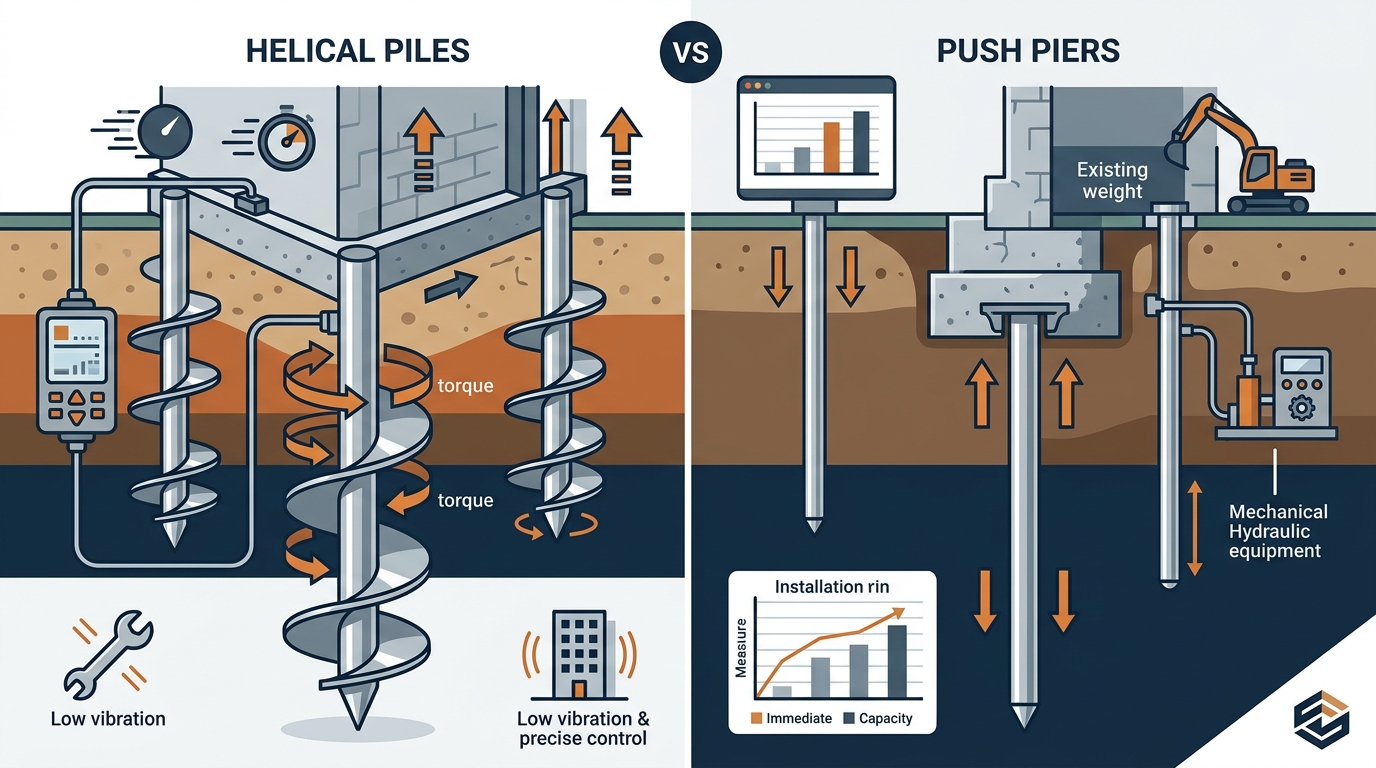
Torque verification is the primary method for determining the load capacity of a helical pile. Unlike push piers, which rely on estimated soil resistance, helical piles provide a direct correlation between installation torque and ultimate bearing capacity. This relationship allows contractors to confirm that a pile has reached its design depth and load requirement in real-time.
The Torque-Capacity Relationship
The capacity of a helical pile is calculated using a specific torque coefficient. This coefficient is determined by the soil type and the geometry of the helix. By measuring the torque required to drive the pile, engineers can predict the static load capacity with high accuracy. This data is recorded during installation, providing a permanent record of the pile's performance.
Quality Control and Documentation
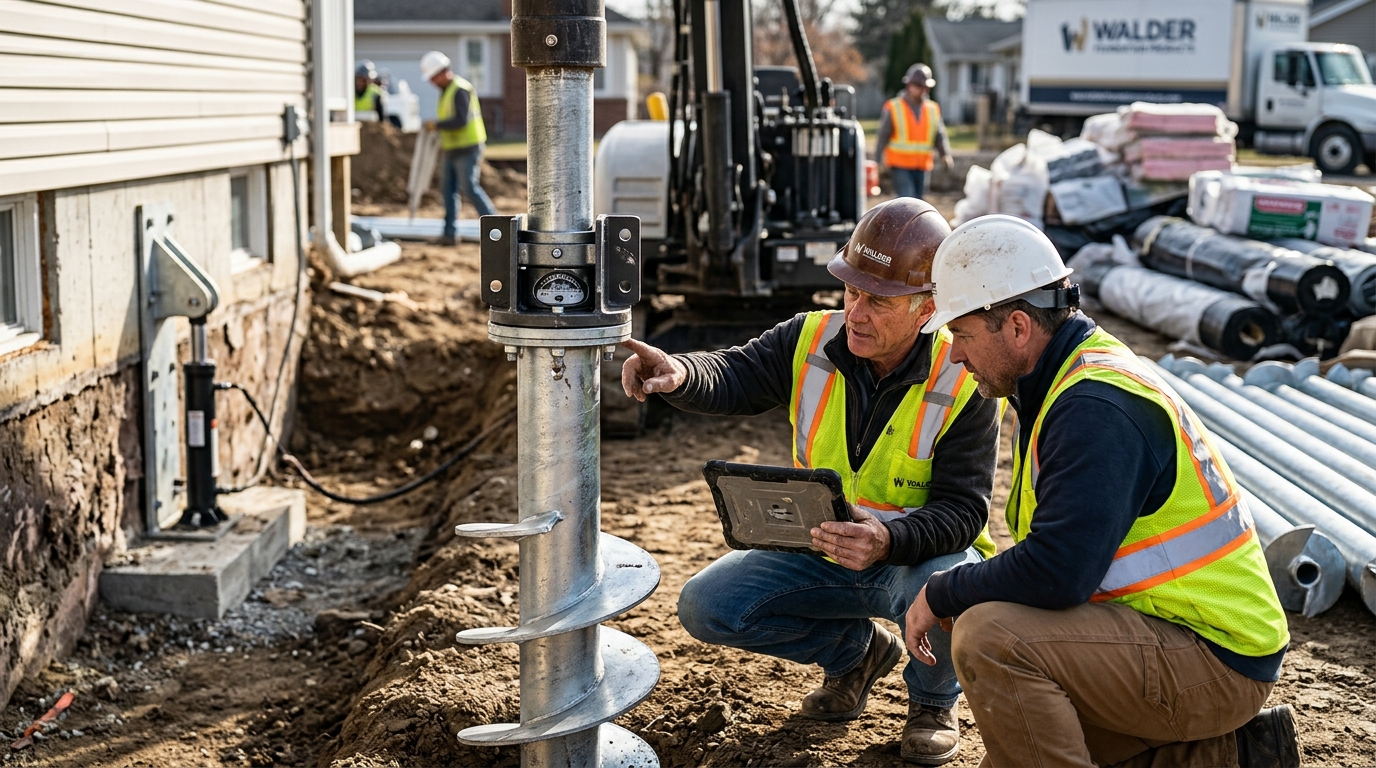
Documentation of torque values is essential for warranty claims and engineering sign-off. Walder Foundation Products supplies the necessary hardware for these systems, ensuring that contractors have access to reliable components. The ability to verify capacity on-site reduces the need for post-installation testing, saving time and money. This level of precision is a significant advantage over push piers, where capacity is often assumed rather than measured.
Vibration Sensitive Structures
Helical piles are installed using a low-vibration screwing action. This method is ideal for structures that are sensitive to shock or vibration, such as historic buildings, hospitals, or facilities with sensitive equipment. The slow, controlled rotation of the pile minimizes the transmission of energy into the surrounding soil and structure.
Protecting Historic and Sensitive Buildings
Traditional push piers require high-pressure hydraulic rams to drive steel piers into the ground. This process generates significant vibration that can crack plaster, damage masonry, or disturb foundations of older buildings. Helical piles avoid this issue entirely. The screwing action is gentle and predictable, allowing for safe installation in close proximity to fragile structures.
Operational Benefits for Contractors
Reduced vibration also means less noise and disruption to the surrounding area. This is a major benefit for urban projects or residential neighborhoods. Contractors can work in tighter spaces and during restricted hours without causing excessive disturbance. The quiet operation of helical pile drivers makes them a preferred choice for projects where community relations are a concern.
Soil Conditions Suitability
Helical piles perform well in a wide range of soil conditions, including soft clays, silts, and sandy soils. Their design allows them to gain bearing capacity through both skin friction and end bearing. This versatility makes them suitable for sites with variable soil profiles, where push piers might struggle to reach competent strata.
Performance in Cohesive and Cohesionless Soils
In cohesive soils like clay, helical piles rely heavily on skin friction along the shaft and the helix. In cohesionless soils like sand, they gain capacity through end bearing on the helix. This dual mechanism ensures reliable performance regardless of the soil type. Push piers, by contrast, require a specific depth to reach a load-bearing layer, which may not be present in all soil profiles.
Adaptability to Site Conditions
Site conditions can change significantly over a short distance. Helical piles can be adjusted in length and configuration to accommodate these changes. Contractors can extend the pile or add additional helices to reach the required depth and capacity. This adaptability is a key advantage in complex foundation repair projects. Walder Foundation Products offers a range of helical pile components to support these varied applications.
Weight Independent Installation
Helical piles can be installed using a variety of equipment, from small hand tools to large excavators. This weight independence means that installation is not limited by the size of the machinery available. Contractors can choose the appropriate equipment based on site access and project requirements.
Equipment Flexibility
Site Access and Logistics
Site access is a critical factor in foundation repair. Helical piles can be installed in areas with limited overhead clearance or narrow access points. This makes them ideal for retrofitting existing buildings or working in dense urban settings. The ability to use lighter equipment also reduces the risk of damaging surrounding landscaping or hardscapes. Contractors can plan their logistics more efficiently, knowing that the installation method is adaptable to the site.
Helical Piles vs. Push Piers Comparison
| Feature | Helical Piles | Push Piers |
|---|---|---|
| Capacity Verification | Real-time torque measurement | Estimated based on depth |
| Vibration Level | Low (screwing action) | High (hydraulic ramming) |
| Soil Versatility | High (clay, silt, sand) | Moderate (requires competent strata) |
| Equipment Weight | Variable (hand to excavator) | Heavy (large hydraulic rams) |
| Installation Speed | Fast (continuous rotation) | Moderate (cyclic ramming) |
Key Takeaways
- Helical piles provide real-time capacity verification through torque measurement.
- Low-vibration installation protects sensitive and historic structures.
- Helical piles perform reliably in a wide range of soil conditions.
- Installation is weight independent, allowing for flexible equipment choices.
- Site access is less of a constraint with helical pile systems.
- Walder Foundation Products supplies the necessary hardware for these systems.
- Helical piles are generally faster to install than push piers.
Frequently Asked Questions
How is the capacity of a helical pile determined?
The capacity is determined by measuring the installation torque and applying a specific torque coefficient. This coefficient is based on the soil type and the geometry of the helix. The resulting value represents the static load capacity of the pile.
Can helical piles be used in soft clay?
Yes, helical piles perform well in soft clay. They gain capacity through skin friction along the shaft and the helix. This makes them suitable for sites where push piers might struggle to reach a load-bearing layer.
What equipment is needed to install helical piles?
Helical piles can be installed using hand-held drivers, skid steers, or excavators. The choice of equipment depends on the site access and the required depth. This flexibility is a major advantage over push piers.
Are helical piles suitable for historic buildings?
Yes, helical piles are ideal for historic buildings. The low-vibration screwing action minimizes the risk of damage to fragile structures. This makes them a preferred choice for preservation projects.
How does torque verification benefit the contractor?
Torque verification provides a permanent record of the pile's capacity. This documentation is essential for engineering sign-off and warranty claims. It reduces the need for post-installation testing, saving time and money.
Where can I find helical pile components?
Contractors can find helical pile components at Walder Foundation Products. They offer a range of lead sections, extensions, and brackets to support various applications.
Conclusion
Helical piles offer distinct advantages over push piers in foundation repair. Their ability to provide real-time capacity verification, low-vibration installation, and weight independence makes them a versatile and reliable choice. Contractors who understand these benefits can select the right system for each project, ensuring long-term performance and customer satisfaction. For professionals seeking high-quality foundation repair materials, Walder Foundation Products provides the necessary components to execute these projects with confidence.