
Helical Piles vs. Push Piers: A Contractor's Guide to Foundation Repair
Helical piles offer superior advantages over push piers for lightweight structures and minimal excavation scenarios. They provide immediate load capacity and require less heavy equipment. This guide covers the specific structural and logistical benefits of helical piles. It helps contractors select the right deep foundation system for their projects. For additional details, review the .
Lightweight Structure Suitability
Load Capacity and Soil Interaction
The load capacity of a helical pile depends on soil type and depth. In cohesive soils, the helical plates generate significant friction. In granular soils, the end bearing provides stability. This dual mechanism makes helical piles versatile for various soil conditions. They are less likely to cause soil disturbance compared to driven piles. This is crucial for structures near existing foundations or utilities.
Residential and Commercial Applications
Residential projects often benefit from the quiet and clean installation of helical piles. They are suitable for crawl space underpinning and foundation stabilization. Commercial applications include stabilizing light steel buildings and retaining walls. The ability to install helical piles in tight spaces is a major advantage. Contractors can access difficult sites without large equipment. This flexibility makes helical piles a preferred choice for many foundation repair jobs.
Minimal Excavation Requirements
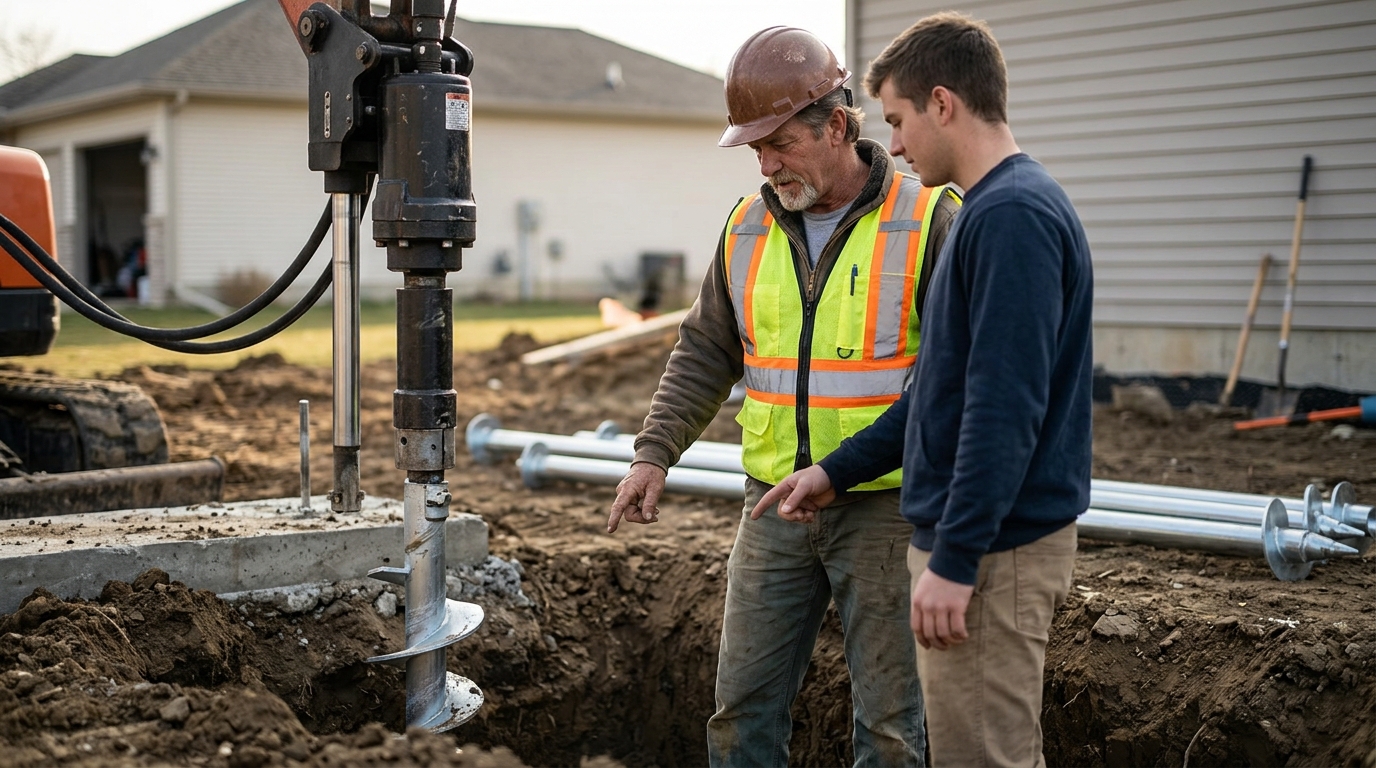
Helical piles require minimal excavation compared to traditional concrete footings or push piers. Installation involves drilling or screwing the pile into the ground. This process eliminates the need for large trenches or deep pits. It reduces the time and cost associated with site preparation. Contractors can install helical piles in existing structures with little disruption. This is especially beneficial for occupied buildings or sensitive landscapes.
Equipment and Access Considerations
Helical piles can be installed using small, compact equipment. This allows access to tight urban sites and narrow driveways. The reduced equipment size minimizes the risk of damage to surrounding property. It also lowers the logistical complexity of the project. Contractors can mobilize and demobilize quickly. This efficiency is a key advantage over push piers, which often require larger rigs.
Environmental and Site Impact
Minimal excavation reduces the environmental impact of foundation repair. It preserves existing landscaping and hardscaping. The process generates less waste and noise. This is important for projects in residential neighborhoods. It also helps meet local regulations regarding construction impact. Contractors can complete projects faster with less site disturbance. This leads to higher customer satisfaction and fewer complaints.
Helical Piles vs. Push Piers Comparison
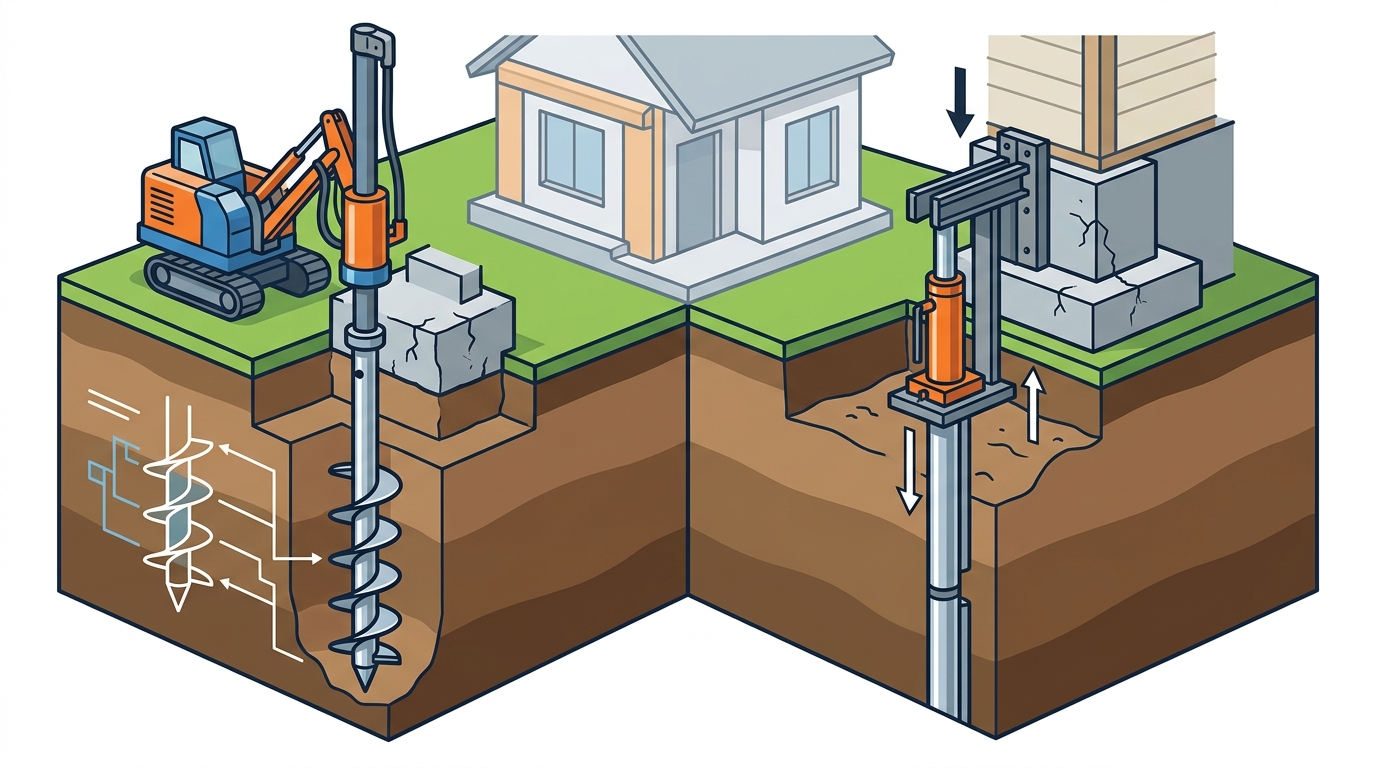
The following table summarizes the key differences between helical piles and push piers. It helps contractors make informed decisions based on project requirements.
| Feature | Helical Piles | Push Piers |
|---|---|---|
| Installation Method | Torqued into soil | Hydraulically pushed |
| Equipment Size | Small to medium | Large hydraulic rig |
| Excavation Required | Minimal | Moderate to high |
| Load Capacity | High, torque-based | High, friction-based |
| Soil Disturbance | Low | Moderate |
| Best For | Lightweight structures, tight sites | Heavy loads, deep foundations |
Key Takeaways
- Helical piles are ideal for lightweight structures due to their torque-based installation.
- They require minimal excavation, reducing site disruption and cost.
- Small equipment allows access to tight urban and residential sites.
- Helical piles provide immediate load capacity upon installation.
- They are less disruptive to existing foundations and utilities.
- Push piers are better suited for heavy loads and deep foundations.
- Contractors should assess soil conditions and structure weight before choosing.
- Walder Foundation Products offers both helical piles and push piers for various needs.
Frequently Asked Questions
What is the main advantage of helical piles over push piers?
The main advantage is minimal excavation and suitability for lightweight structures. Helical piles can be installed with small equipment in tight spaces.
Can helical piles support heavy commercial buildings?
Helical piles can support heavy loads, but push piers are often preferred for very deep or heavy foundations. The choice depends on soil conditions and load requirements.
How much excavation is needed for helical piles?
Minimal excavation is required. The pile is torqued into the ground, eliminating the need for large trenches or pits.
Are helical piles suitable for residential projects?
Yes, helical piles are ideal for residential projects due to their quiet and clean installation. They are less disruptive to occupied homes.
What equipment is needed to install helical piles?
Small to medium-sized equipment is sufficient. This allows access to tight sites and reduces logistical complexity.
Where can I buy helical piles and push piers?
You can purchase both helical piles and push piers from Walder Foundation Products. They offer a wide range of foundation repair materials.
Conclusion
Helical piles offer significant advantages over push piers for lightweight structures and minimal excavation projects. They provide immediate load capacity and require less heavy equipment. Contractors should evaluate soil conditions and structure weight to select the right system. Walder Foundation Products supplies professional-grade helical piles and push piers. Their team supports contractors with the right materials for every foundation repair job.