
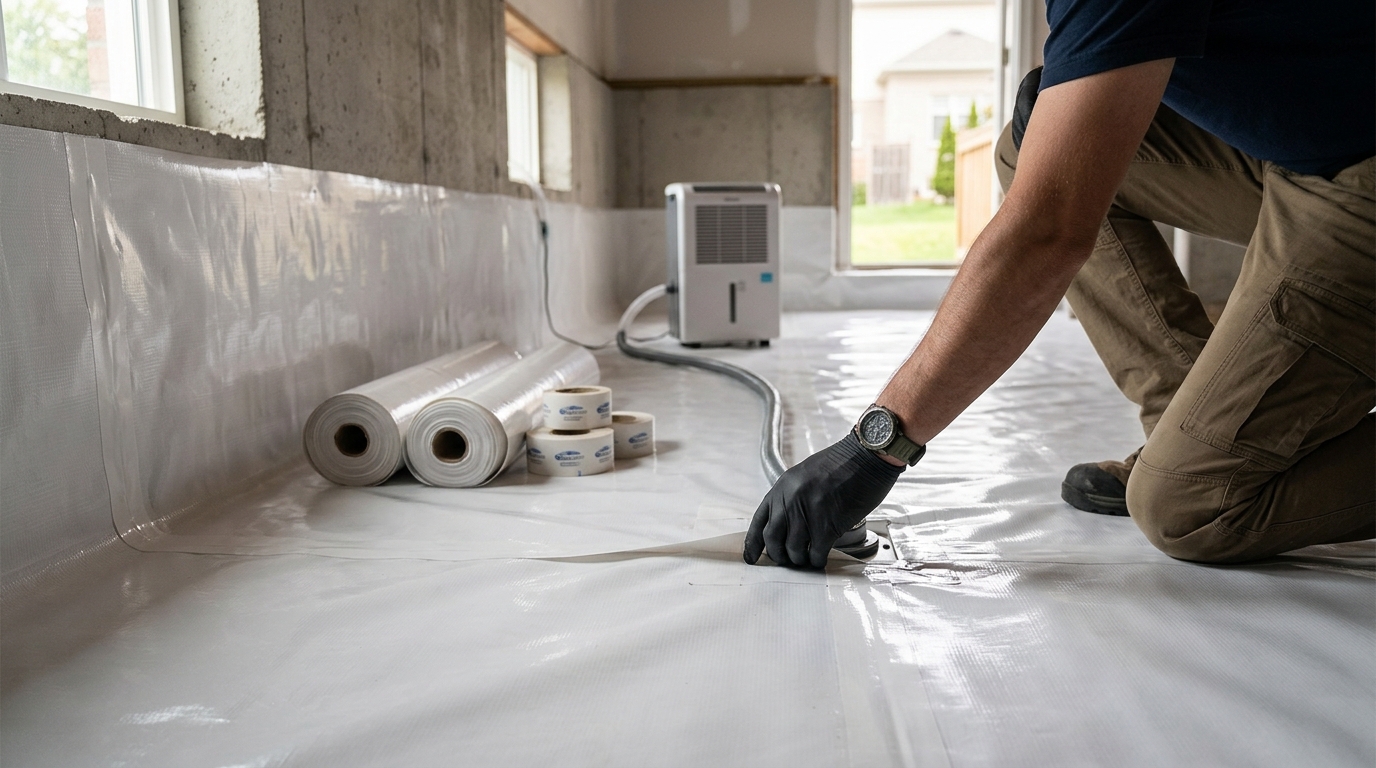
Vapor Barrier Performance Standards and Selection Criteria for Crawl Spaces
Crawl space encapsulation is no longer a luxury but a structural necessity for modern homes. According to the U.S. Department of Energy, unconditioned crawl spaces can account for up to 40 percent of the moisture entering a home, leading to significant structural decay and indoor air quality issues. The primary defense against this moisture intrusion is a high-performance vapor barrier. Selecting the correct barrier requires understanding specific performance metrics, material durability, and installation protocols. This guide details the critical standards and selection criteria for choosing the right vapor barrier for your project.
Understanding Vapor Barrier Standards
Before purchasing materials, it is essential to understand the regulatory and performance frameworks that define a quality vapor barrier. These standards ensure that the material will perform as intended over decades of exposure to soil gases and humidity.
ASTM E1745 Classification
The American Society for Testing and Materials (ASTM) provides the definitive classification system for vapor retarders. Vapor barriers are categorized by their water vapor transmission rate. Type A barriers are designed for permanent installation in contact with the earth, while Type B barriers are intended for temporary use during construction. For crawl space encapsulation, you must select a Type A barrier that meets specific puncture resistance and tear strength criteria.
IRC and Building Code Compliance
The International Residential Code (IRC) mandates that crawl spaces be enclosed with a continuous vapor retarder. This requirement exists because stagnant air in crawl spaces promotes mold growth and wood rot. Compliance is not optional for new construction or major renovations. Using a barrier that fails to meet these codes can void home insurance policies and complicate future property sales.
Definitional Requirement
A vapor barrier is a material with a permeance of less than 0.1 perm that prevents the passage of water vapor. This definition distinguishes it from vapor retarders, which may allow limited moisture transmission. In high-humidity environments, a true barrier is required to protect structural integrity.
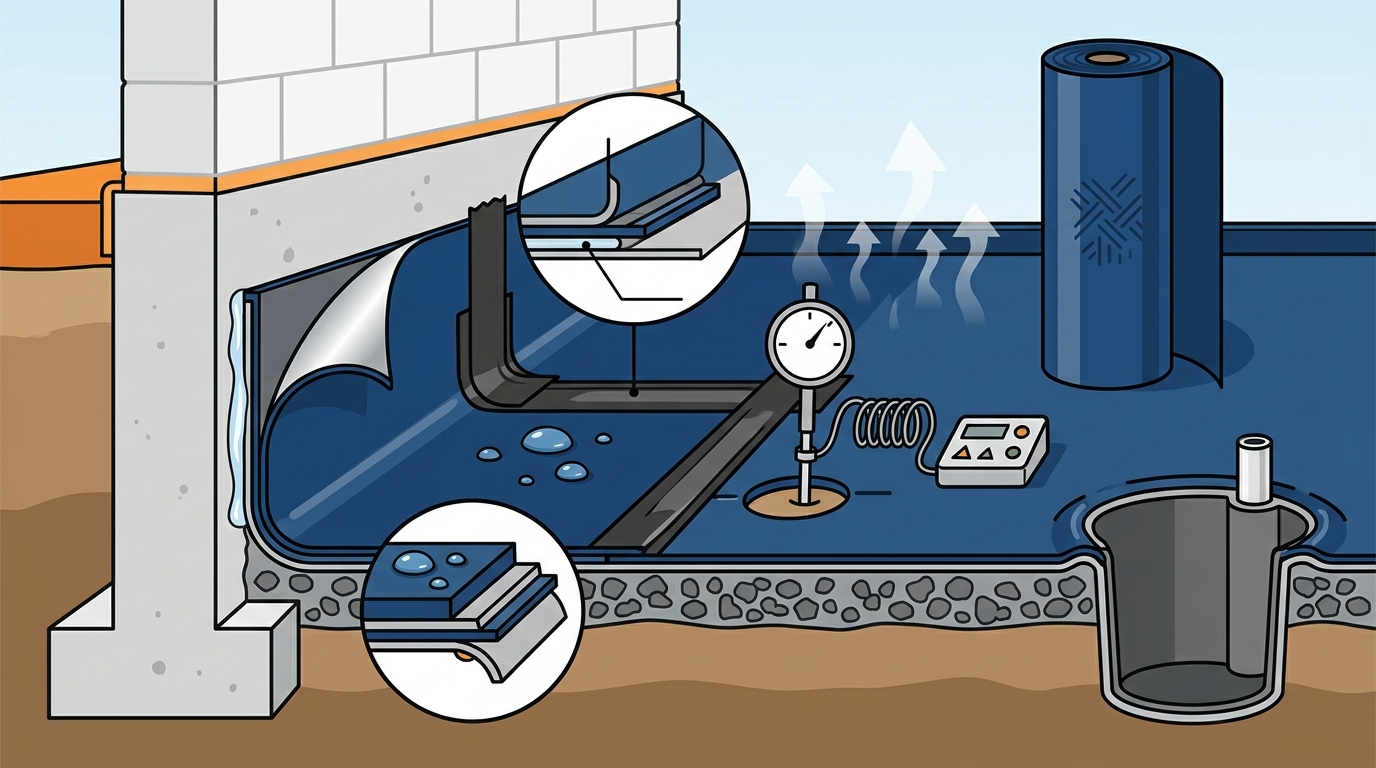
Material Comparison: Polyethylene vs. Composite
The market offers two primary categories of vapor barriers: standard polyethylene and reinforced composite materials. Each has distinct advantages depending on the specific conditions of your crawl space.
Standard Polyethylene Sheets
Standard polyethylene is the most common choice for DIY enthusiasts and budget-conscious contractors. It is flexible, easy to cut, and widely available. However, standard poly is susceptible to tearing during installation, especially in crawl spaces with sharp rocks or uneven dirt floors. It also lacks the tensile strength to resist long-term sagging when spanned between joists.
Reinforced Composite Barriers
Reinforced composite barriers incorporate layers of scrim or mesh between polyethylene sheets. This construction significantly increases puncture resistance and tensile strength. Composite barriers are less likely to sag over time and can withstand the weight of foot traffic during maintenance. They are the preferred choice for professional installations where long-term durability is paramount.
Definitional Requirement
Puncture resistance is the measure of a material's ability to withstand sharp objects penetrating its surface without creating a hole. High puncture resistance is critical in crawl spaces with rough soil conditions.
Thickness and Durability Metrics
Thickness is often mistaken for the sole indicator of quality, but it is only one factor. The relationship between thickness, weight, and durability must be evaluated holistically.
6 Mil vs. 10 Mil vs. 15 Mil
Standard residential vapor barriers are typically 6 mil thick. While adequate for smooth, prepared surfaces, 6 mil barriers are prone to tearing in rough environments. 10 mil barriers offer a significant upgrade in durability and are recommended for most professional applications. 15 mil barriers provide maximum protection for high-risk areas, such as crawl spaces with high water tables or heavy foot traffic.
Tear Strength and Elongation
Tear strength measures the force required to propagate a tear in the material. High tear strength ensures that minor punctures do not expand into large failures. Elongation refers to the material's ability to stretch before breaking. A barrier with high elongation can accommodate minor shifts in the foundation without rupturing.
UV Resistance
If the crawl space will be exposed to sunlight through vents or access doors, UV resistance is critical. Standard polyethylene degrades rapidly under UV exposure, becoming brittle and cracking. UV-stabilized barriers contain additives that prevent this degradation, ensuring the material remains intact for years.
Installation Protocols and Sealing
Even the highest-performance vapor barrier will fail if installed incorrectly. Proper installation is as important as material selection.
Sealing Seams and Penetrations
Vapor barriers must be sealed continuously. Seams should overlap by at least six inches and be secured with high-quality tape. Proseal Liner® tape is an industry-standard choice for creating airtight seals. All penetrations, such as plumbing lines and electrical conduits, must be individually sealed to prevent moisture bypass.
Attachment to Foundation Walls
The barrier must be securely attached to the foundation walls and piers. This prevents air from flowing behind the barrier, which can lead to condensation on the cold concrete. Fasteners such as Christmas tree clips or cap nails are used to secure the barrier without damaging its integrity.
Integration with Dehumidification
A vapor barrier works in tandem with a dehumidifier to control humidity. The barrier stops ground moisture, while the dehumidifier manages ambient humidity. AprilAire dehumidifiers are often recommended for their ability to maintain optimal humidity levels in encapsulated spaces.
Comparing Top Vapor Barrier Products
Selecting the right product involves comparing specific features, pricing, and availability. The table below outlines key options available through Walder Foundation Products.
| Product Name | Material Type | Key Feature | Best Use Case | Link |
|---|---|---|---|---|
| Proseal Liner® Ground Vapor Barrier | Reinforced Polyethylene | High puncture resistance | Rough crawl space floors | View Product |
| WFP Pro Tape 9 Mil | Polyethylene Tape | Strong adhesive bond | Sealing seams and penetrations | View Product |
| Terma-Foam® Foam Board | Rigid Foam | Insulation and moisture barrier | Foundation wall insulation | View Product |
| WFP Crawl Space Recessed Vent Cover | Aluminum/Plastic | Airtight seal | Vent sealing | View Product |
Key Takeaways
- ASTM E1745 Type A is the required standard for permanent crawl space vapor barriers.
- 10 mil thickness offers the best balance of durability and cost for most residential applications.
- Reinforced composite materials provide superior puncture resistance compared to standard polyethylene.
- Proseal Liner® tape is essential for creating a continuous, airtight seal across all seams.
- Integration with dehumidification is critical for long-term moisture control in encapsulated spaces.
- UV stabilization prevents material degradation in crawl spaces with sunlight exposure.
- Walder Foundation Products offers a comprehensive range of encapsulation materials for contractors and DIYers.
Frequently Asked Questions
What is the difference between a vapor barrier and a vapor retarder?
A vapor barrier has a permeance of less than 0.1 perm, effectively stopping moisture. A vapor retarder allows some moisture transmission and is less effective in high-humidity environments.
How thick should a crawl space vapor barrier be?
For most residential applications, a 10 mil thick barrier is recommended. Thinner barriers may tear easily, while thicker barriers offer diminishing returns for standard use.
Can I install a vapor barrier myself?
Yes, DIY installation is possible with careful planning. However, professional installation ensures proper sealing and compliance with building codes.
What tape should I use for sealing vapor barriers?
Use a heavy-duty polyethylene tape such as Proseal Liner® tape. Standard duct tape loses adhesion in humid environments and will fail quickly.
Do I need a dehumidifier in an encapsulated crawl space?
Yes, a dehumidifier is necessary to manage ambient humidity and prevent condensation on cold surfaces within the encapsulated space.
How often should I inspect my crawl space vapor barrier?
Inspect the barrier annually for tears, gaps, or moisture accumulation. Prompt repairs prevent minor issues from becoming major structural problems.
What is the lifespan of a crawl space vapor barrier?
A high-quality, properly installed vapor barrier can last 20 years or more. UV exposure and physical damage are the primary factors that reduce lifespan.
Where can I buy vapor barrier materials?
Walder Foundation Products offers a wide selection of vapor barriers, tapes, and accessories. Visit our product catalog for details.
Get Started with Walder Foundation Products
Protect your home with the highest quality vapor barrier materials. Walder Foundation Products, a family-owned distributor based in Ashland, Virginia, provides everything you need for crawl space encapsulation. From heavy-duty vapor barriers to professional-grade tapes and dehumidifiers, we have the tools for success. Browse our full catalog today and start your project with confidence.