
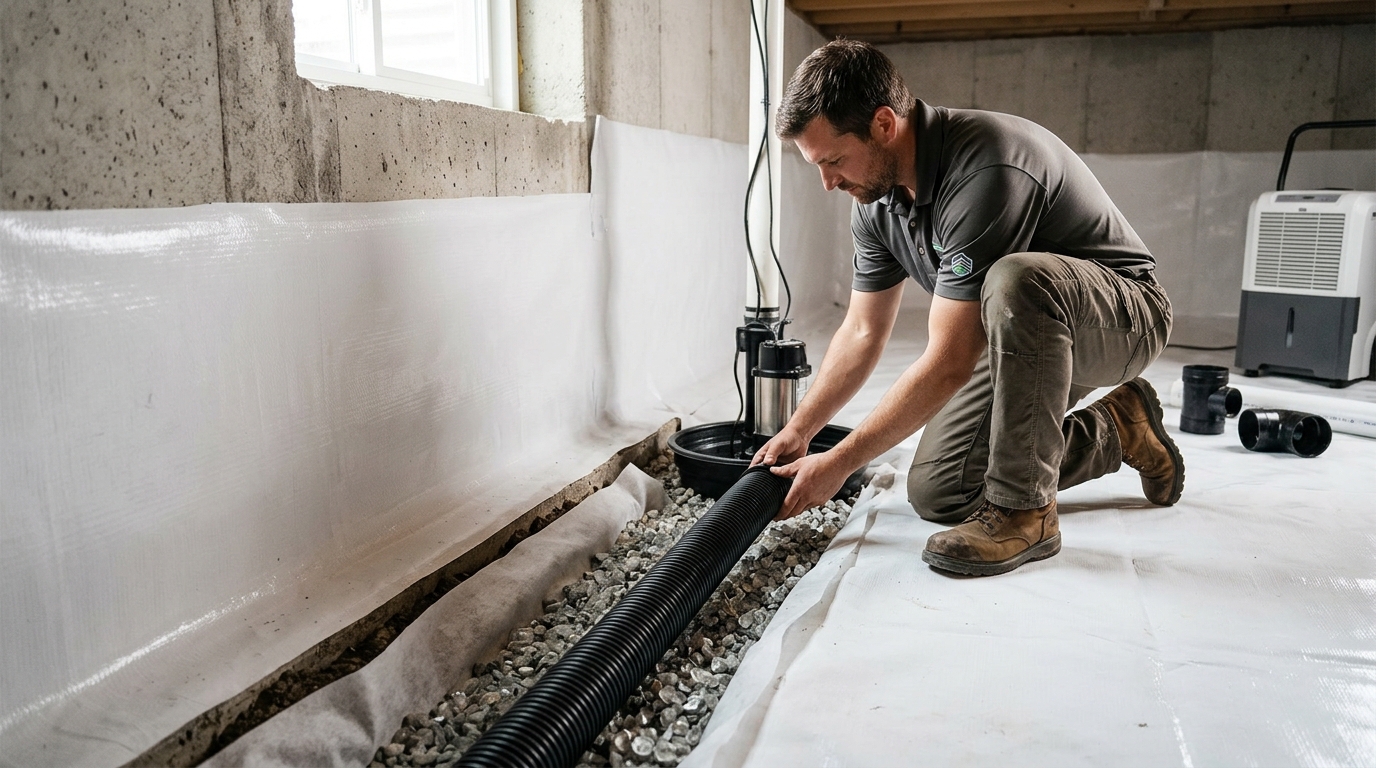
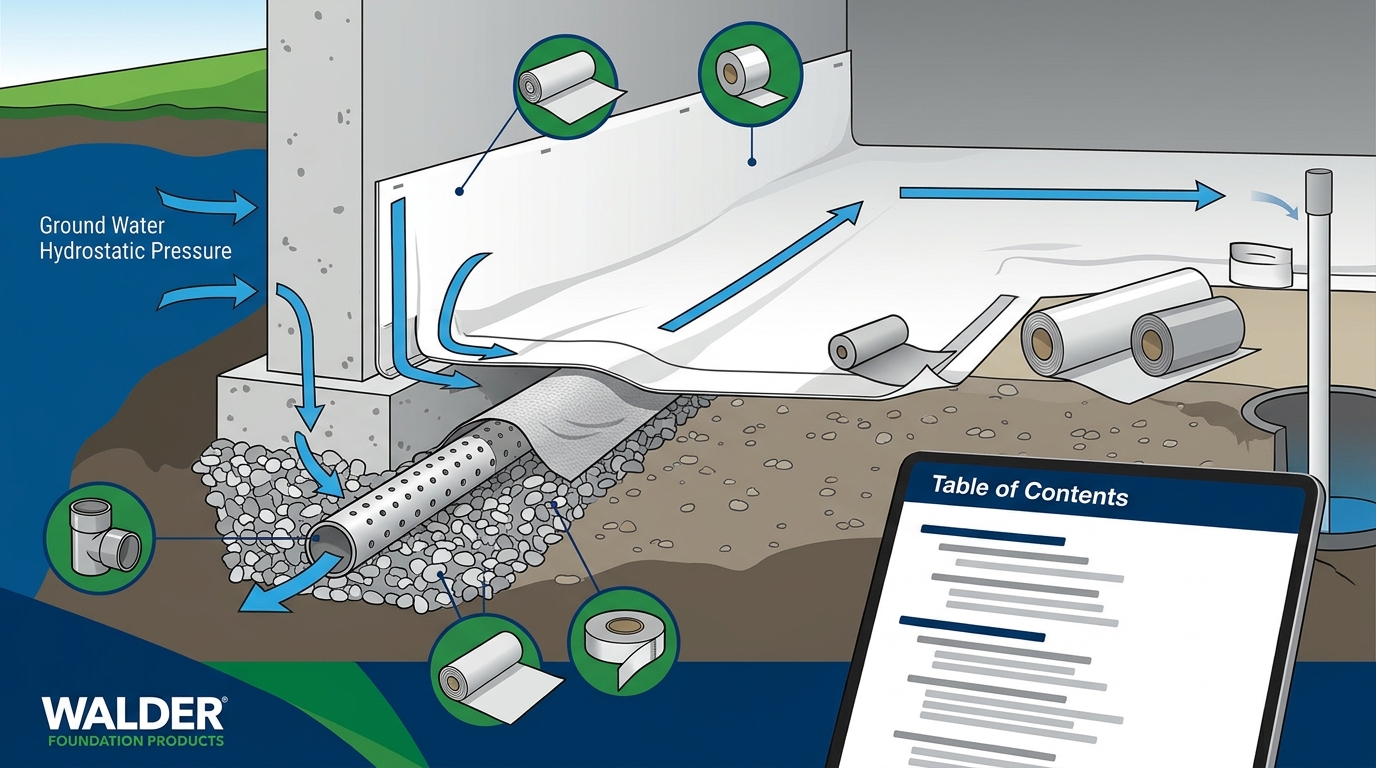
Pairing a crawl space moisture barrier with a perimeter drainage system is the most effective way to manage hydrostatic pressure and prevent water intrusion. A vapor barrier alone cannot stop liquid water from entering the space, so a dedicated drainage network is required to move water away from the foundation. Walder Foundation Products supplies the professional-grade components needed to build these integrated systems for residential and commercial applications.
Perimeter Drainage and Dimple Board
Perimeter drainage is the primary defense against water pooling around the foundation walls. This system typically involves a perforated pipe installed at the base of the wall, covered by gravel and a dimple board. The dimple board creates a drainage channel that allows water to flow freely toward the pipe while preventing soil from clogging the perforations. Contractors should ensure the pipe has a proper slope, usually between 1/4 and 1/2 inch per foot, to maintain gravity-fed flow.
Walder Foundation Products offers the Pro SafeDrain Basement Waterproofing System, which is designed to handle high-volume water flow. By integrating this system with a ground vapor barrier, you create a sealed environment where water is captured and directed to a sump pump rather than seeping through the soil.
Concrete Slab Drainage Systems
For crawl spaces with concrete slabs, water often migrates beneath the slab and becomes trapped. A slab drainage system, such as the Pro SafeTrack Basement Waterproofing System, addresses this by creating a dedicated channel under the slab. This system uses a perforated pipe and a drainage mat to collect water and direct it to a sump pit. It is particularly useful in areas with high water tables or where the slab is not properly sloped.
When pairing a slab drainage system with a moisture barrier, the barrier is typically installed on the walls and over the slab. The drainage system operates independently beneath the slab, ensuring that water does not rise through the concrete via capillary action. This dual approach protects both the structural integrity of the slab and the air quality of the crawl space.
Sump Pump Integration and Discharge
A drainage system is only as effective as its discharge point. Sump pumps are the standard method for removing collected water from the crawl space. The pump should be sized to handle the maximum expected water flow, which depends on the local rainfall intensity and the size of the drainage area. A backup power source is highly recommended to prevent flooding during power outages.
Proper discharge is critical to prevent water from re-entering the foundation. The discharge pipe should extend at least 10 feet away from the house and slope away from the structure. Walder Foundation Products provides waterproofing and drainage products that include sump pump accessories and discharge components. Ensuring the discharge point is clear of debris and vegetation is a key maintenance task for contractors.
Sealing the Barrier to the Drainage System
The interface between the moisture barrier and the drainage system is a common point of failure. If the barrier is not properly sealed around the drainage pipe and sump pit, water can bypass the barrier and enter the crawl space. Contractors should use compatible tapes and adhesives to create a watertight seal at all penetrations. The ground vapor barriers available from Walder Foundation Products are designed to be compatible with these sealing methods.
It is also important to consider the height of the barrier relative to the drainage system. The barrier should extend up the walls and overlap the slab, but it must not obstruct the flow of water into the drainage pipe. A well-designed system allows water to enter the drainage channel while keeping the barrier intact. This requires careful planning and installation to ensure both components work together seamlessly.
Maintenance and Long-Term Performance
Regular maintenance is essential for the long-term performance of a drainage and barrier system. Contractors should advise clients to inspect the sump pump and drainage pipes at least twice a year. Clogs from soil or debris can reduce the system's effectiveness and lead to water backup. Flushing the drainage pipe with a garden hose is a simple way to clear minor clogs.
Monitoring the moisture levels in the crawl space can also help identify issues early. A crawl space dehumidifier can help manage humidity levels, but it is not a substitute for proper drainage. If the dehumidifier is running constantly, it may indicate a drainage issue that needs to be addressed. Walder Foundation Products offers a range of monitoring and control devices to help maintain optimal conditions.
Key Takeaways
- Perimeter drainage with dimple board is the standard for managing water around foundation walls.
- Slab drainage systems are necessary for crawl spaces with concrete slabs to prevent capillary action.
- Sump pumps must be sized correctly and have a proper discharge point to prevent re-entry.
- Sealing the moisture barrier around drainage penetrations is critical to prevent bypass.
- Regular maintenance and monitoring are required to ensure long-term system performance.
- Walder Foundation Products provides integrated systems that combine drainage and barrier components.
Frequently Asked Questions
Can I install a moisture barrier without a drainage system?
While a moisture barrier can reduce humidity, it cannot stop liquid water from entering the crawl space. A drainage system is required to manage water intrusion and prevent structural damage.
What is the best type of drainage pipe for crawl spaces?
Perforated PVC pipe is the standard for crawl space drainage. It should be wrapped in gravel and covered with a dimple board to prevent clogging.
How do I seal a vapor barrier around a sump pit?
Use a compatible tape or adhesive to create a watertight seal around the sump pit and drainage pipe. Ensure the barrier overlaps the slab and extends up the walls.
Do I need a sump pump if I have a drainage system?
Yes, a sump pump is necessary to remove water from the drainage system and discharge it away from the foundation. A backup power source is recommended.
How often should I maintain a crawl space drainage system?
Inspect the system at least twice a year. Flush the drainage pipe and check the sump pump to ensure it is functioning properly.
Can a dehumidifier replace a drainage system?
No, a dehumidifier manages humidity but does not remove liquid water. A drainage system is required to handle water intrusion and prevent structural damage.
Conclusion
Pairing a crawl space moisture barrier with a robust drainage system is essential for protecting your foundation and improving indoor air quality. By selecting the right components and ensuring proper installation, you can create a long-lasting solution that manages water effectively. Walder Foundation Products provides the professional-grade materials and resources you need to deliver high-quality results for your clients. To explore our full range of drainage and barrier products, visit our waterproofing and drainage section.