
What Vapor Permeance Ratings Actually Mean for Your Crawl Space Protection
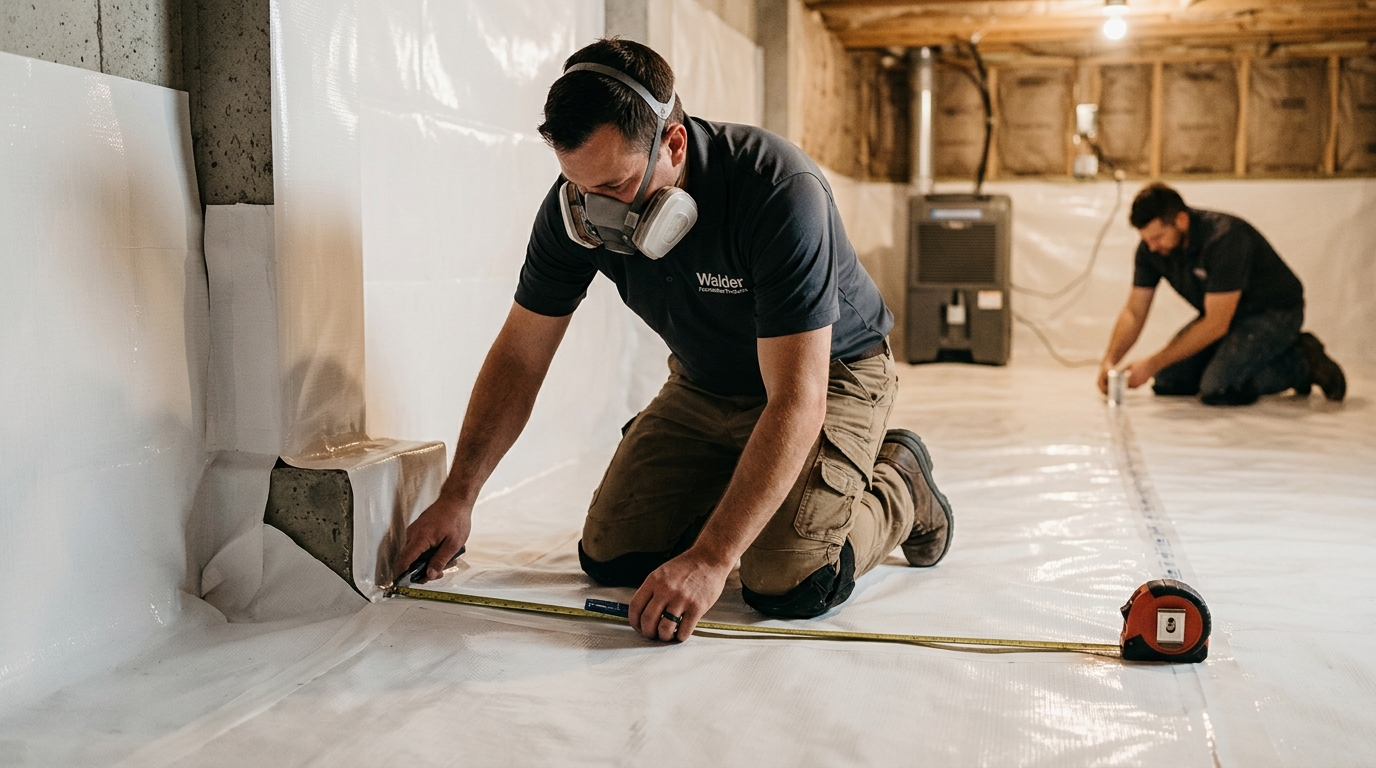
Vapor permeance ratings measure how easily water vapor passes through a material, expressed in perms. For crawl space protection, a lower perm rating indicates a tighter barrier that blocks moisture migration from the soil. Contractors at Walder Foundation Products use these ratings to select materials that prevent condensation, mold, and structural decay in conditioned crawl spaces.
Defining Perms and Vapor Permeance
Vapor permeance is the rate at which water vapor passes through a material under specific temperature and humidity conditions. The standard unit of measurement is the perm, where one perm equals one grain of water vapor passing through one square foot of material per hour under a one-pound per square inch pressure difference. A material with a permeance of 1.0 perm allows very little moisture to pass, while a material with a permeance of 100 perms allows significant vapor transmission.
Understanding this metric is critical because it distinguishes between a true vapor barrier and a vapor retarder. Many homeowners confuse these terms, leading to improper material selection. When you see a product labeled as a "vapor barrier," it typically has a permeance rating of 0.1 perms or less. This low rating ensures that the material effectively stops the movement of moisture from the ground into the crawl space environment.
Classifying Materials by Permeance Class
The building industry classifies materials into three main categories based on their permeance ratings. Class I materials are vapor barriers with a permeance of 0.1 perms or less. Class II materials are vapor retarders with a permeance between 0.1 and 1.0 perms. Class III materials are vapor retarders with a permeance between 1.0 and 10 perms. Materials with a permeance greater than 10 perms are considered vapor permeable and are generally not suitable for primary moisture control in crawl spaces.
For example, standard 6-mil polyethylene sheeting typically has a permeance rating well below 0.1 perms, placing it firmly in the Class I category. This makes it the industry standard for ground vapor barriers. In contrast, some older or lower-quality liners may fall into the Class II or III categories, offering less protection against moisture intrusion. Contractors should always verify the specific perm rating of the liner they are installing to ensure it meets the required performance standards for the local climate and soil conditions.
Impact on Crawl Space Moisture Control
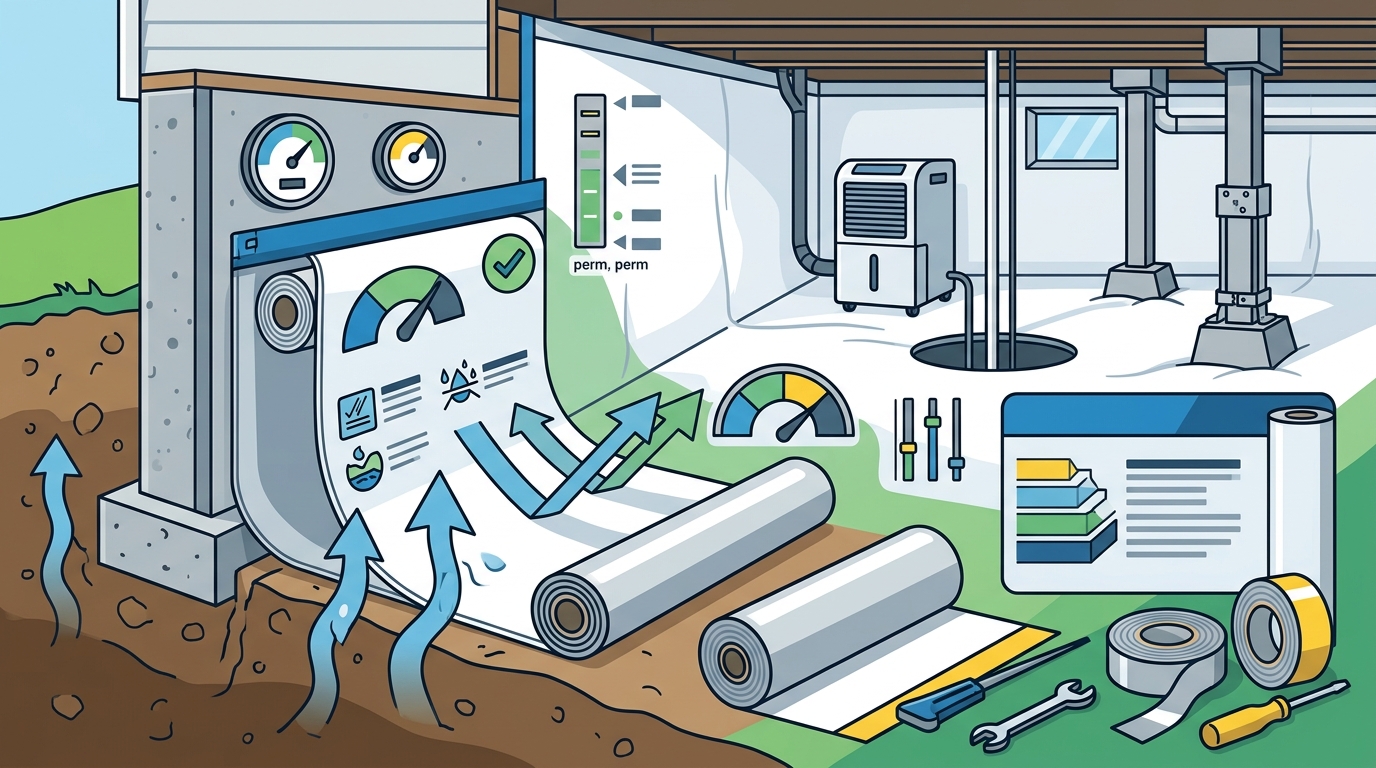
The permeance rating of your vapor barrier directly impacts the humidity levels within the crawl space. A high-permeance material allows soil moisture to migrate into the air, raising the relative humidity. When relative humidity exceeds 60%, the risk of mold growth and wood rot increases significantly. By using a Class I vapor barrier with a permeance of 0.1 perms or less, you create a sealed environment that keeps humidity levels low and stable.
This control is essential for protecting the structural integrity of the home. Moisture that penetrates a low-permeance barrier can condense on joists, subfloors, and insulation, leading to costly repairs. Walder Foundation Products offers a range of ground vapor barriers specifically engineered to meet these strict permeance standards. Selecting the right material ensures that the barrier performs as intended, blocking moisture before it can cause damage.
Selecting the Right Barrier for Your Project
Choosing the correct vapor barrier requires more than just looking at the perm rating. You must also consider the material's durability, puncture resistance, and seam integrity. A material with a perfect 0.0 perms rating is useless if it tears easily during installation or if the seams fail over time. High-quality liners are designed to withstand the rigors of installation and the long-term pressure of soil and moisture.
Common Misconceptions About Permeance
A common misconception is that thicker always means better. While thickness can contribute to puncture resistance, it does not automatically guarantee a lower permeance rating. Some thin, high-density materials can have lower permeance than thicker, less dense materials. The key is the density and structure of the material, not just its thickness. Another misconception is that all plastic sheeting is the same. In reality, there are significant differences in the quality and performance of various polyethylene and other polymer-based liners.
Contractors must rely on manufacturer data sheets to verify the actual permeance rating of a product. Marketing claims may not always reflect the true performance of the material. By understanding the technical specifications, you can make informed decisions that protect your clients' investments. This knowledge allows you to recommend the best solution for each specific crawl space condition, ensuring long-term performance and customer satisfaction.
Key Takeaways
- Vapor permeance is measured in perms, with lower values indicating better moisture resistance.
- Class I vapor barriers have a permeance of 0.1 perms or less and are ideal for crawl spaces.
- Class II and III materials are vapor retarders and may not provide sufficient protection against moisture.
- Material durability and seam integrity are as important as the permeance rating.
- Always verify manufacturer data sheets to confirm the actual permeance of a product.
- Proper installation techniques are critical to maintaining the effectiveness of the vapor barrier.
Frequently Asked Questions
What is a good perm rating for a crawl space vapor barrier?
A good perm rating for a crawl space vapor barrier is 0.1 perms or less. This classification ensures that the material acts as a true vapor barrier, effectively blocking moisture migration from the soil.
How does permeance differ from permeability?
Permeance is a property of a specific material or assembly, measured in perms. Permeability is a property of the material itself, independent of thickness. Permeance is the metric used to classify vapor barriers and retarders in building codes.
Can I use a vapor retarder instead of a vapor barrier?
It is generally not recommended to use a vapor retarder instead of a vapor barrier for primary moisture control in crawl spaces. Retarders allow more moisture to pass, which can lead to higher humidity levels and potential mold growth.
Does the thickness of the vapor barrier affect its permeance?
Thickness can affect permeance, but it is not the only factor. Density and material composition play significant roles. A thinner, high-density material may have a lower permeance than a thicker, less dense material.
How do I ensure the seams of my vapor barrier are sealed properly?
Use manufacturer-recommended tapes and adhesives to seal seams. Ensure that the surfaces are clean and dry before applying the tape. Overlap seams by at least 6 inches and press firmly to create a tight seal.
Where can I find reliable vapor barrier products for my projects?
You can find reliable vapor barrier products at Walder Foundation Products. They offer a wide range of high-quality materials designed for professional contractors, ensuring you have access to the best solutions for your crawl space projects.