
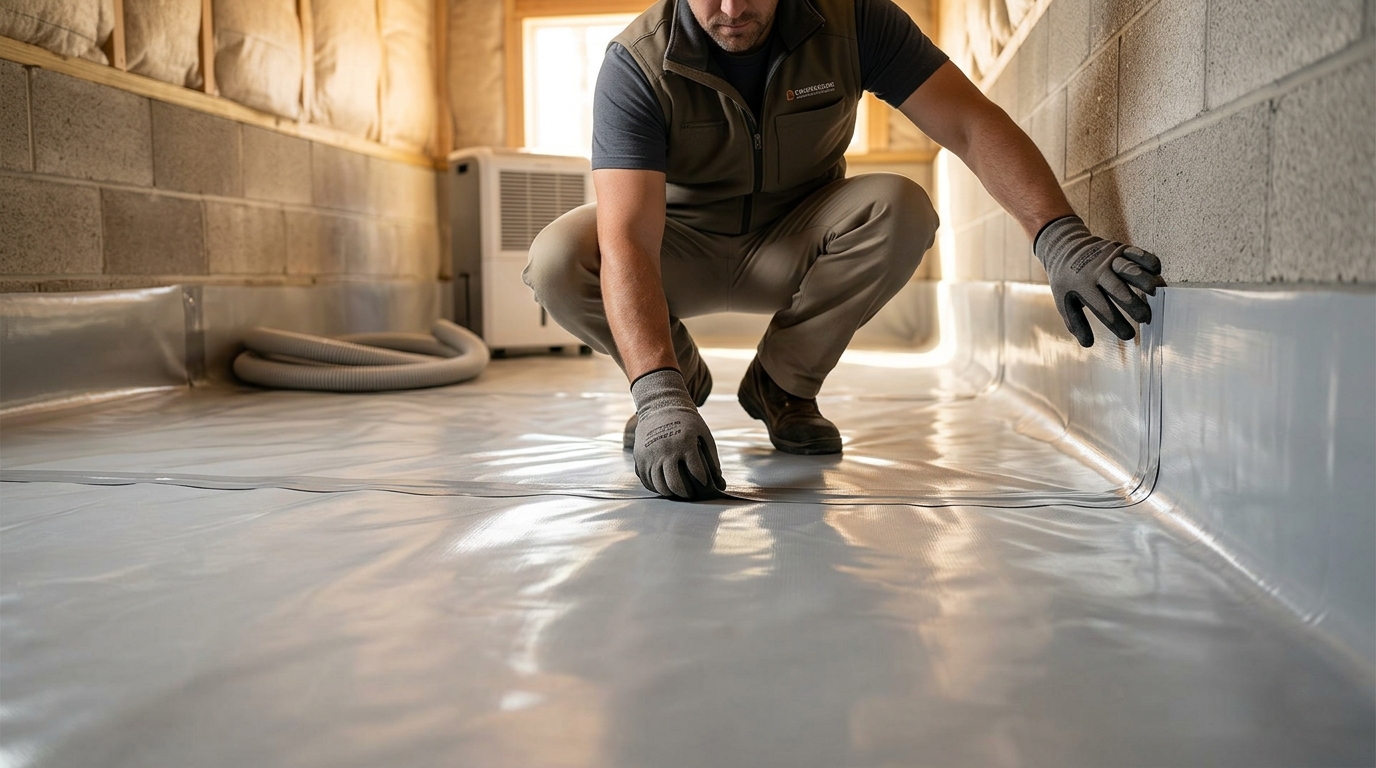
Crawl space encapsulation has evolved from a niche maintenance task into a fundamental component of modern home preservation. According to the National Association of Home Builders, moisture control in the crawl space is critical because it directly impacts the structural integrity of the foundation and the indoor air quality of the living spaces above. When a vapor barrier fails to meet specific performance thresholds, the consequences extend far beyond simple dampness. They include mold proliferation, wood rot, and significant energy inefficiency. Understanding the rigorous standards that define a high-performance vapor barrier is essential for contractors and homeowners who demand long-term durability and health safety. (About Walder Foundation Products)
Material Specifications and Thickness
The foundation of any effective vapor barrier lies in its physical composition. Not all plastic sheeting is created equal. The industry standard for high-performance crawl space encapsulation typically mandates a minimum thickness of 12 mils. While 6 mil polyethylene is common in general construction, it lacks the tensile strength required for the harsh environment of a crawl space. A 12 mil barrier provides the necessary resistance against punctures from sharp rocks, root intrusion, and the weight of insulation materials. (Walder Foundation Products)
At Walder Foundation Products, we distribute materials that meet these rigorous demands. Our inventory includes heavy-duty ground vapor barriers designed to withstand the abrasion of direct soil contact. These materials are engineered to resist tearing during installation and throughout the lifespan of the encapsulation system. Choosing a barrier that exceeds minimum code requirements ensures that the investment protects the home for decades rather than just a few years. (Crawl Space amp Foundation)
Permeability Ratings and ASTM Testing
Permeability is the measure of how easily water vapor can pass through a material. For a vapor barrier to be considered effective, it must have an extremely low permeability rating. The ASTM E1745 standard classifies vapor barriers into three classes based on their water vapor transmission rate. Class A barriers are the most impermeable, allowing less than 0.01 grains of moisture per square foot per hour. This level of protection is non-negotiable for preventing ground moisture from migrating into the home. (AprilAire 5822 Dehumidifier Hanging)
Class B barriers allow between 0.01 and 0.1 grains, while Class C barriers permit up to 1.0 grain. For critical performance standards, only Class A materials should be utilized in crawl space encapsulation projects. This distinction is vital because even small amounts of vapor transmission can lead to condensation on cold surfaces, such as HVAC ducts and wooden joists. By selecting Class A materials, you effectively seal the crawl space from the earth, creating a dry, conditioned environment that protects the structural components of the house. (AprilAire 5879 Dehumidifier Risers)
Critical Installation Protocols
Even the highest-quality vapor barrier will fail if installed incorrectly. Proper installation involves more than just laying the sheet on the ground. The barrier must be sealed to the foundation walls and piers to create a continuous air and vapor seal. This process often requires the use of specialized tapes and adhesives that are compatible with the vapor barrier material. Walder Foundation Products offers a comprehensive range of tapes and adhesives specifically designed for this purpose, ensuring that the seal remains intact over time.
Additionally, the vapor barrier should be extended up the foundation walls and secured with mechanical fasteners or adhesive strips. This vertical extension prevents moisture from wicking up the walls and entering the living space through capillary action. The barrier must also be sealed around all penetrations, including plumbing lines, electrical conduits, and HVAC ducts. Any gap, no matter how small, can become a pathway for moisture and pests, undermining the entire encapsulation system.
Seam Sealing and Tape Integrity
Seam sealing is one of the most critical aspects of vapor barrier performance. The seams where individual sheets of vapor barrier meet must be sealed with a high-quality, durable tape. Standard duct tape or masking tape will fail quickly in the humid environment of a crawl space. Instead, use a heavy-duty polyethylene tape that is designed to bond with the vapor barrier material.
The tape must be applied with sufficient overlap, typically at least 6 inches, to ensure a robust seal. It is also important to ensure that the surface is clean and dry before applying the tape. Any dirt, dust, or moisture on the surface can compromise the adhesive bond, leading to seam failure. By using high-performance tapes and following strict application protocols, you can ensure that the vapor barrier remains a continuous, impermeable layer.
Durability: Polyethylene vs. Composite
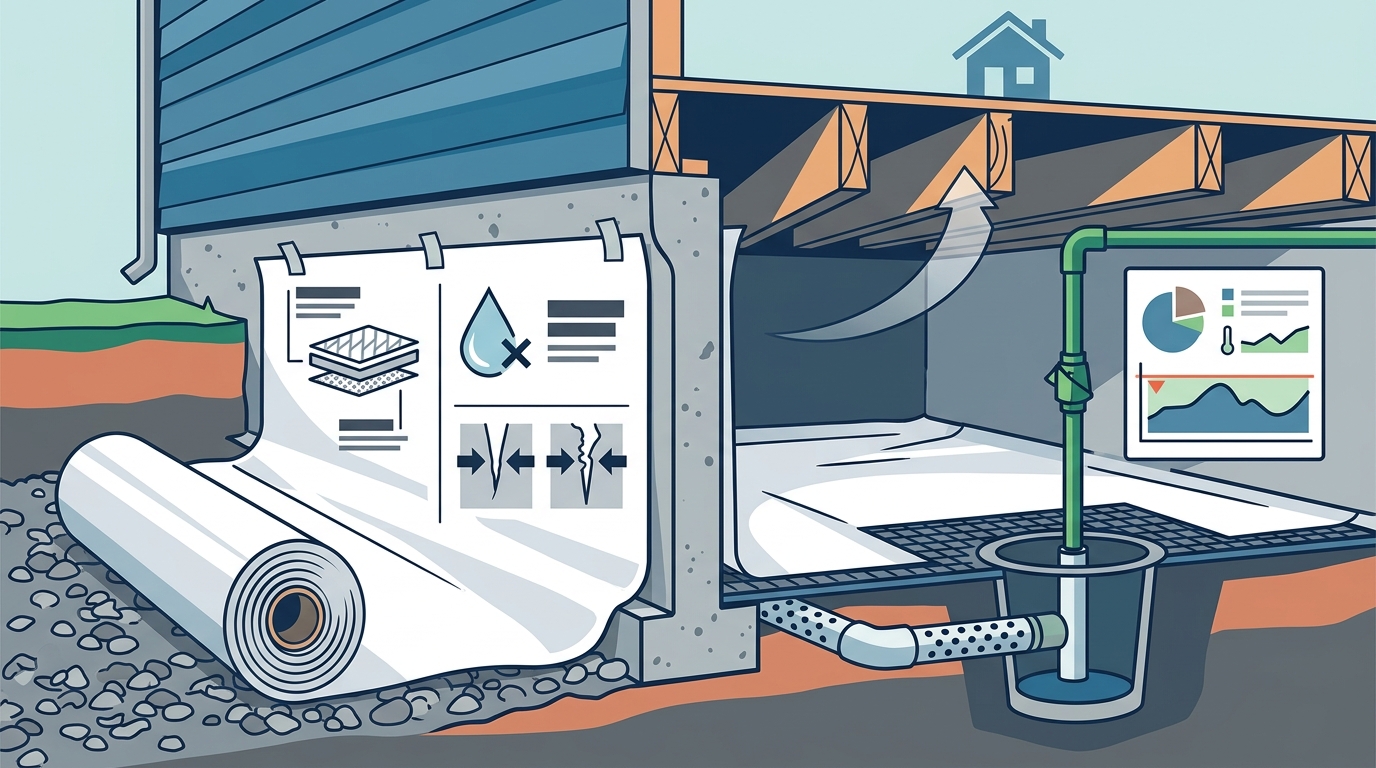
When selecting a vapor barrier, it is important to consider the long-term durability of the material. Traditional polyethylene barriers are effective but can be susceptible to tearing and puncturing. Composite vapor barriers, which combine multiple layers of material, offer enhanced durability and resistance to damage. These barriers often include a reinforced mesh or fabric layer that adds tensile strength and puncture resistance.
Composite barriers are particularly useful in crawl spaces with rough or uneven ground conditions. They provide an additional layer of protection against root intrusion and sharp objects. While they may come at a higher initial cost, the long-term benefits of increased durability and reduced maintenance make them a worthwhile investment for critical performance standards. Walder Foundation Products offers a variety of high-quality vapor barriers to meet the specific needs of any crawl space project.
Key Takeaways
- Thickness Matters: Use at least 12 mil vapor barriers for adequate puncture resistance and durability.
- Class A Rating: Select materials with an ASTM E1745 Class A rating for maximum moisture protection.
- Continuous Seal: Ensure the barrier is sealed to foundation walls and all penetrations to prevent vapor migration.
- Proper Taping: Use heavy-duty polyethylene tape with a 6-inch overlap for all seams.
- Vertical Extension: Extend the barrier up the foundation walls to prevent capillary moisture wicking.
- Material Choice: Consider composite barriers for enhanced durability in rough crawl space conditions.
- Professional Installation: Follow strict installation protocols to ensure the long-term effectiveness of the system.
Frequently Asked Questions
What is the minimum thickness for a crawl space vapor barrier?
The minimum recommended thickness for a high-performance crawl space vapor barrier is 12 mils. Thinner barriers, such as 6 mil, are prone to tearing and do not provide adequate protection against moisture and punctures.
How do I know if a vapor barrier is Class A?
Class A vapor barriers have a water vapor transmission rate of less than 0.01 grains per square foot per hour, as defined by the ASTM E1745 standard. Look for this rating on the product specifications to ensure maximum moisture protection.
Can I use regular duct tape to seal vapor barrier seams?
No, regular duct tape is not suitable for sealing vapor barrier seams. It will lose its adhesive properties in the humid environment of a crawl space. Use a heavy-duty polyethylene tape specifically designed for this purpose.
Do I need to seal the vapor barrier to the foundation walls?
Yes, it is critical to seal the vapor barrier to the foundation walls and piers. This creates a continuous seal that prevents moisture from entering the crawl space from the ground and the walls.
What is the difference between polyethylene and composite vapor barriers?
Polyethylene vapor barriers are made from a single layer of plastic, while composite barriers combine multiple layers, often including a reinforced mesh. Composite barriers offer greater durability and puncture resistance, making them ideal for rough crawl space conditions.
How often should I inspect my crawl space vapor barrier?
It is recommended to inspect the vapor barrier at least once a year. Look for tears, gaps, or signs of moisture accumulation. Address any issues promptly to maintain the effectiveness of the encapsulation system.
Can a vapor barrier prevent mold growth?
Yes, a properly installed and maintained vapor barrier can significantly reduce the risk of mold growth by controlling moisture levels in the crawl space. However, it is also important to address any existing mold issues and ensure proper ventilation and dehumidification.
Secure Your Crawl Space Today
Protecting your home starts with a high-performance crawl space encapsulation system. At Walder Foundation Products, we provide the premium materials and expert guidance you need to meet critical performance standards. From heavy-duty vapor barriers to specialized tapes and adhesives, our inventory is designed to ensure the long-term health and integrity of your home. Contact our team today to discuss your project requirements and discover how our products can help you achieve a dry, durable, and healthy crawl space.